Welcome to the 'Age, Medical Fitness, and Category Definitions' lesson, a key part of your 'Complete Spanish Driving License Theory Course for Categories B & BE'. This section lays the groundwork by explaining the essential legal and physical requirements set by the DGT before you can even consider hitting the road.
Lesson content overview
Navigating the requirements to obtain a Spanish driving license for categories B and BE involves understanding specific legal ages, mandatory medical fitness standards, and the precise definitions of these vehicle categories. These regulations, primarily outlined in the Royal Decree 920/2017 (Reglamento General de Conductores), are critical for ensuring road safety and compliance within Spain. This lesson will delve into these foundational aspects, providing a clear roadmap for aspiring drivers.
The journey to acquiring a driving license in Spain begins with meeting fundamental eligibility criteria. Beyond the theoretical and practical examinations, candidates must satisfy specific age thresholds and demonstrate adequate medical fitness. These requirements are not mere bureaucratic hurdles; they are designed to minimize risks on the road by ensuring that drivers possess the necessary maturity, physical capabilities, and cognitive functions to operate a vehicle safely. The Direccion General de Tráfico (DGT) mandates these standards to protect all road users and maintain high levels of traffic safety.
The minimum age at which an individual can apply for a driving license varies by category. For the most common passenger car licenses, categories B and BE, specific age limits apply, with a notable exception for early training.
For Category B, which covers standard passenger cars and light vans, the general minimum age is 18 years old. This age is considered the standard threshold where individuals are expected to possess the necessary maturity and judgment for independent vehicle operation. Aspiring drivers can begin the theoretical part of their training before turning 18, but they cannot sit for the practical driving test or be issued the full license until they reach this age.
Category BE is an extension of Category B, allowing for the towing of larger trailers. The minimum age for obtaining a Category BE license is also 18 years old. Since Category BE builds upon the permissions of Category B, it naturally shares the same age requirement, reflecting the increased responsibility associated with towing heavier loads.
Spain offers a conditional path for younger drivers through the "Programa de 350 horas" (350-hour program) or dual-system training. Under this specific program, a 17-year-old applicant may be eligible to apply for a provisional Category B license, known as a permiso de conducción provisional. This provisional license allows for supervised driving practice, bridging the gap between theoretical knowledge and practical experience. However, the full Category B license is still issued only upon reaching 18 years of age and successfully completing all examinations. This system aims to provide extensive supervised experience before full licensure.
If you are considering applying for a provisional license at 17, ensure you fully understand and comply with all aspects of the "Programa de 350 horas" as mandated by the DGT. This specialized training path has strict requirements.
The Spanish driving license system categorizes vehicles based on their type, weight, and capacity. Categories B and BE are fundamental for most private and light commercial vehicle users.
Category B is the most common driving license in Spain, authorizing individuals to operate a wide range of vehicles for personal and light commercial use.
A driving license that authorises the operation of motor vehicles with a Maximum Gross Vehicle Weight (MGV) of up to 3,500 kg. These vehicles can carry up to eight passengers in addition to the driver. With a Category B license, you can also tow a light trailer whose MGV does not exceed 750 kg, provided the combined MGV of the vehicle and trailer does not exceed 3,500 kg.
This category covers typical family cars, sedans, SUVs, light vans, and small pickups. It is the primary license sought by most new drivers. The rules associated with Category B emphasize the vehicle's weight and passenger capacity, ensuring that drivers are authorized for vehicles commensurate with their initial training and experience. It is important to remember that Category B does not permit the driving of motorcycles, heavy trucks, or buses; these require separate, specialized licenses.
For drivers who need to tow heavier trailers, caravans, or boat trailers, the Category BE license is necessary. This is an extension of the Category B license, implying that you must first hold a Category B license to obtain a BE license.
An extension of the Category B license that permits towing a trailer whose Maximum Gross Vehicle Weight (MGV) exceeds 750 kg, provided the combined MGV of the towing vehicle and the trailer does not exceed 4,250 kg.
The BE category is crucial for activities such as recreational towing, moving larger loads for work, or transporting specialized equipment. It requires additional knowledge and practical skills related to trailer coupling, maneuvering, and understanding the dynamics of a combined vehicle and trailer unit. Drivers often need to pass an additional practical assessment specific to trailer handling to demonstrate competence for this category.
Do not confuse Category BE with the B96 authorization. The B96 authorization allows for combined MGVs between 3,500 kg and 4,250 kg but is not a full BE license, which has different training and examination requirements. Always ensure you have the correct license for your specific towing setup.
Beyond age, a critical aspect of obtaining and retaining a Spanish driving license is demonstrating sufficient medical fitness. The DGT requires all applicants and renewing drivers to undergo a medical assessment to ensure they meet specific health criteria. This is formalized through a medical fitness certificate.
Every applicant for a new driving license and every driver renewing their license must obtain an official Certificado de Aptitud Psicofísica. This document is issued after a comprehensive medical examination conducted by DGT-approved medical centers. The examination assesses various physical and psychological parameters to confirm that the individual can safely operate a motor vehicle.
The certificate's validity typically lasts for 5 years for most conditions. However, for drivers with certain chronic medical conditions (e.g., diabetes, epilepsy, severe hypertension, progressive neurological disorders), the validity period may be significantly shorter, often requiring more frequent renewals to monitor their health status and its potential impact on driving ability. Failure to renew this certificate means driving without a valid health clearance, which can lead to legal penalties and insurance invalidation.
Visit a DGT-approved medical-psychotechnical examination center (Centro de Reconocimiento de Conductores).
Undergo a series of tests, including visual acuity, auditory capacity, neuromuscular coordination, and a general health assessment.
Receive your Certificado de Aptitud Psicofísica if you meet all the required standards. The center will often electronically transmit your data to the DGT.
Vision is paramount for safe driving, influencing a driver's ability to perceive road signs, traffic signals, other vehicles, and potential hazards at a safe distance. The DGT sets strict visual acuity standards.
Applicants must demonstrate a minimum corrected visual acuity of 0.5 (equivalent to Snellen 6/12) in each eye. Additionally, binocular visual acuity (using both eyes together) must be at least 0.5, with corrective lenses if needed. This means if you wear glasses or contact lenses, your vision with these aids must meet the standard.
Peripheral vision is also crucial for detecting hazards outside the direct line of sight. Drivers are required to have a minimum horizontal field of 120 degrees with both eyes open. Impairments in visual acuity or field may lead to restrictions on the license, such as a mandatory requirement to wear corrective lenses while driving, or, in severe cases, limitations on vehicle categories or even license denial.
The medical certificate will explicitly state if you require corrective lenses while driving. Failing to wear them when required is a serious infraction.
While vision often takes precedence, hearing plays a vital supplementary role in situational awareness, especially when visual cues are obstructed or insufficient. Drivers must be able to detect normal conversational speech (approximately 65 dB SPL) and distinguish important vehicle warning tones, such as emergency vehicle sirens, horns, and internal vehicle alerts.
Adequate hearing capacity ensures that drivers can react appropriately to auditory warnings that might signal an approaching emergency vehicle, a vehicle attempting to overtake, or a malfunctioning component within their own vehicle. Significant hearing impairment might lead to specific license restrictions, such as requiring auxiliary equipment, or limiting driving conditions where auditory cues are critical.
The ability to physically control a vehicle involves a complex interplay of motor control, reaction speed, and overall musculoskeletal integrity. The DGT's medical assessment includes evaluation of neuromuscular coordination.
Drivers must possess sufficient motor control and reaction speed to operate the steering wheel, accelerator, brake, and clutch pedals safely and effectively. This includes the ability to execute emergency maneuvers, such as braking, within a timely manner, generally requiring a reaction time of approximately 0.7 seconds to initiate braking after hazard perception. Physical limitations, such as severe arthritis, limited limb movement, or certain neurological conditions, may result in restrictions on the type of vehicle (e.g., automatic transmission only) or, in extreme cases, licence denial if safe operation cannot be assured.
Beyond the primary visual, auditory, and neuromuscular assessments, the medical examination for a Spanish driving license also considers other significant health factors:
The goal is always to balance individual mobility with collective road safety, ensuring that any medical condition is adequately managed to prevent incidents.
The overarching legal framework for driving licenses in Spain, including age limits, category definitions, and medical fitness standards, is primarily established by Royal Decree 920/2017, which approves the General Regulations for Drivers (Reglamento General de Conductores). This decree outlines the specifics for:
Adherence to Royal Decree 920/2017 is mandatory for all individuals applying for or holding a Spanish driving license. Any deviation from these regulations can lead to serious legal consequences, including fines, license suspension, or even criminal charges in severe cases.
A thorough understanding of these regulations is crucial to avoid common mistakes and legal infractions. Some frequent violations include:
These violations carry significant penalties and, more importantly, severely compromise road safety, increasing the risk of accidents.
The importance of age and medical fitness is amplified by various driving conditions and scenarios:
Understanding the rules in theory is one thing; applying them in real-world scenarios is another. Here are a few examples:
To successfully obtain and maintain a Spanish driving license for categories B and BE, remember these key points:
Understanding and adhering to these regulations is not just about passing an exam; it's about ensuring your safety and the safety of all other road users, making you a responsible and legally compliant driver in Spain.
Spanish driving licenses for categories B and BE require a minimum age of 18 years, with a provisional option at 17 through specific dual-system training. Category B permits vehicles up to 3,500 kg MGV and towing trailers up to 750 kg MGV, while Category BE extends this to tow heavier trailers provided combined MGV stays under 4,250 kg. All applicants must pass a DGT medical assessment (Certificado de Aptitud Psicofísica) verifying visual acuity of at least 0.5 corrected, 120-degree peripheral vision, adequate hearing (~65 dB), and neuromuscular reaction time around 0.7 seconds. The medical certificate is generally valid for 5 years, with stricter requirements for drivers with chronic health conditions. These standards are legally enforced under Royal Decree 920/2017.
A short set of high-value points that capture the most important learning from this lesson.
The minimum age for both Category B and BE licenses is 18 years, though a provisional license is available at 17 through the dual-system 'Programa de 350 horas' training program.
Category B covers vehicles up to 3,500 kg MGV with up to eight passengers and allows towing trailers up to 750 kg MGV when combined weight does not exceed 3,500 kg.
Category BE extends Category B to tow trailers exceeding 750 kg MGV, provided the combined vehicle and trailer MGV does not exceed 4,250 kg.
A valid Certificado de Aptitud Psicofísica from a DGT-approved center is mandatory for obtaining and renewing any driving license, typically valid for 5 years.
All medical fitness standards refer to corrected performance—drivers must use prescribed glasses or contact lenses to meet required visual thresholds.
Explore all units and lessons included in this driving theory course.
Minimum corrected visual acuity of 0.5 in each eye (Snellen 6/12 equivalent) and 120-degree horizontal peripheral vision are required for all drivers.
Hearing must allow detection of normal conversational speech at approximately 65 dB SPL to perceive sirens, horns, and other critical auditory warnings.
Neuromuscular coordination must support a reaction time of approximately 0.7 seconds for emergency braking to be considered safe.
B96 is not a full BE license—it only permits combined MGV between 3,500 and 4,250 kg and has different training and examination requirements than Category BE.
Drivers with chronic conditions (diabetes, epilepsy, hypertension) face shorter medical certificate validity periods and may have specific license restrictions.
Attempting to obtain a full Category B license at 17 without completing the mandatory dual-system training and provisional license program.
Driving without prescribed corrective lenses when the medical certificate explicitly requires them, which can invalidate insurance coverage.
Continuing to drive after the medical fitness certificate expires, rendering the driving authorization legally invalid.
Towing a trailer with combined MGV exceeding 4,250 kg while holding only a Category BE license, which requires C1+E instead.
Failing to report new diagnoses or health changes (such as epilepsy or mobility-affecting injuries) that could impact safe driving ability.
Lesson content overview
A short set of high-value points that capture the most important learning from this lesson.
The minimum age for both Category B and BE licenses is 18 years, though a provisional license is available at 17 through the dual-system 'Programa de 350 horas' training program.
Category B covers vehicles up to 3,500 kg MGV with up to eight passengers and allows towing trailers up to 750 kg MGV when combined weight does not exceed 3,500 kg.
Category BE extends Category B to tow trailers exceeding 750 kg MGV, provided the combined vehicle and trailer MGV does not exceed 4,250 kg.
A valid Certificado de Aptitud Psicofísica from a DGT-approved center is mandatory for obtaining and renewing any driving license, typically valid for 5 years.
All medical fitness standards refer to corrected performance—drivers must use prescribed glasses or contact lenses to meet required visual thresholds.
Explore all units and lessons included in this driving theory course.
Minimum corrected visual acuity of 0.5 in each eye (Snellen 6/12 equivalent) and 120-degree horizontal peripheral vision are required for all drivers.
Hearing must allow detection of normal conversational speech at approximately 65 dB SPL to perceive sirens, horns, and other critical auditory warnings.
Neuromuscular coordination must support a reaction time of approximately 0.7 seconds for emergency braking to be considered safe.
B96 is not a full BE license—it only permits combined MGV between 3,500 and 4,250 kg and has different training and examination requirements than Category BE.
Drivers with chronic conditions (diabetes, epilepsy, hypertension) face shorter medical certificate validity periods and may have specific license restrictions.
Attempting to obtain a full Category B license at 17 without completing the mandatory dual-system training and provisional license program.
Driving without prescribed corrective lenses when the medical certificate explicitly requires them, which can invalidate insurance coverage.
Continuing to drive after the medical fitness certificate expires, rendering the driving authorization legally invalid.
Towing a trailer with combined MGV exceeding 4,250 kg while holding only a Category BE license, which requires C1+E instead.
Failing to report new diagnoses or health changes (such as epilepsy or mobility-affecting injuries) that could impact safe driving ability.
Explore search topics learners often look for when studying Age, Medical Fitness, and Category Definitions. These topics reflect common questions about road rules, driving situations, safety guidance, and lesson level theory preparation for learners in Spain.
Browse additional driving theory lessons that cover connected traffic rules, road signs, and common driving situations related to this topic. Improve your understanding of how different rules interact across everyday traffic scenarios.
Understand the specific definitions, requirements, and differences between Category B and Category BE driving licenses in Spain. Covers minimum age limits and DGT medical fitness standards essential for eligibility.

This lesson examines the specific documents needed to start the Spanish license acquisition process, including personal identification, proof of residence, and a valid medical certificate (psicotécnico). It outlines the official DGT application form, associated fees, and the sequential steps for successful registration. The content also clarifies the age thresholds for categories B and BE and the conditions for license renewal.

This lesson provides a detailed breakdown of the D and D1 license categories, defining the vehicle dimensions and passenger capacities for each. It explains the DGT's eligibility requirements, including minimum age, medical certification, and mandatory psychological assessments for professional drivers. Learners will understand the complete procedural path to obtaining a professional bus or coach license in Spain.
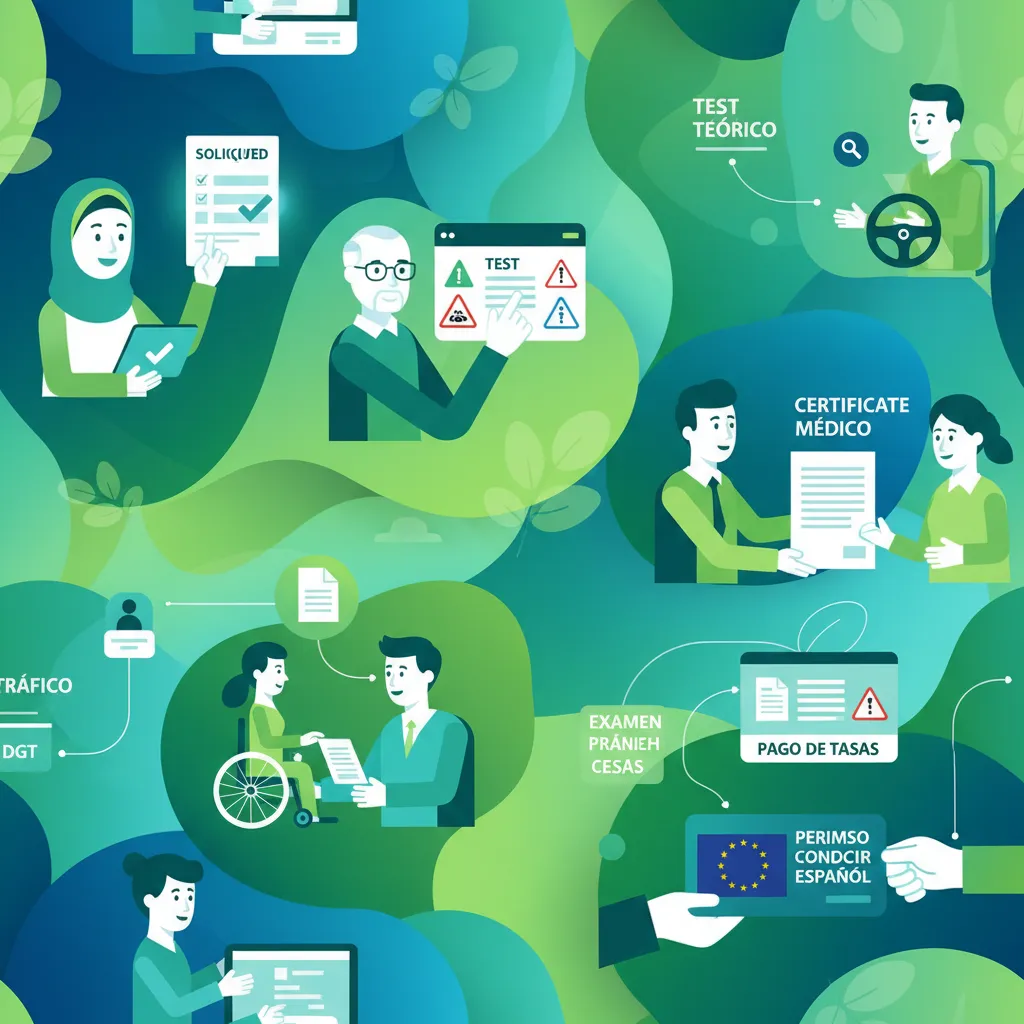
This lesson provides a step-by-step guide to the licensing process for professional truck drivers in Spain. It covers the necessary administrative procedures, including the mandatory medical examination and psychotechnical tests required for eligibility. Learners will understand the full scope of documentation needed for the application, such as training certificates and identity verification, to ensure a smooth process.

In this lesson, the structure and administration of the driving licence examinations are explained, covering both the theory and practical components. It details the format of the multiple-choice theory test, the pass criteria, and the process of registering for examinations through the DGT platform. The content also discusses test locations, scheduling, and the issuance of certification upon successful completion.

This lesson provides a detailed explanation of the legal definitions for Category C and C1 driving licences under Spanish law. It clarifies the maximum authorised mass (MAM) and gross vehicle weight limits that distinguish each category. The content also outlines the prerequisites for applicants, including minimum age, medical fitness, and required training qualifications for professional drivers.
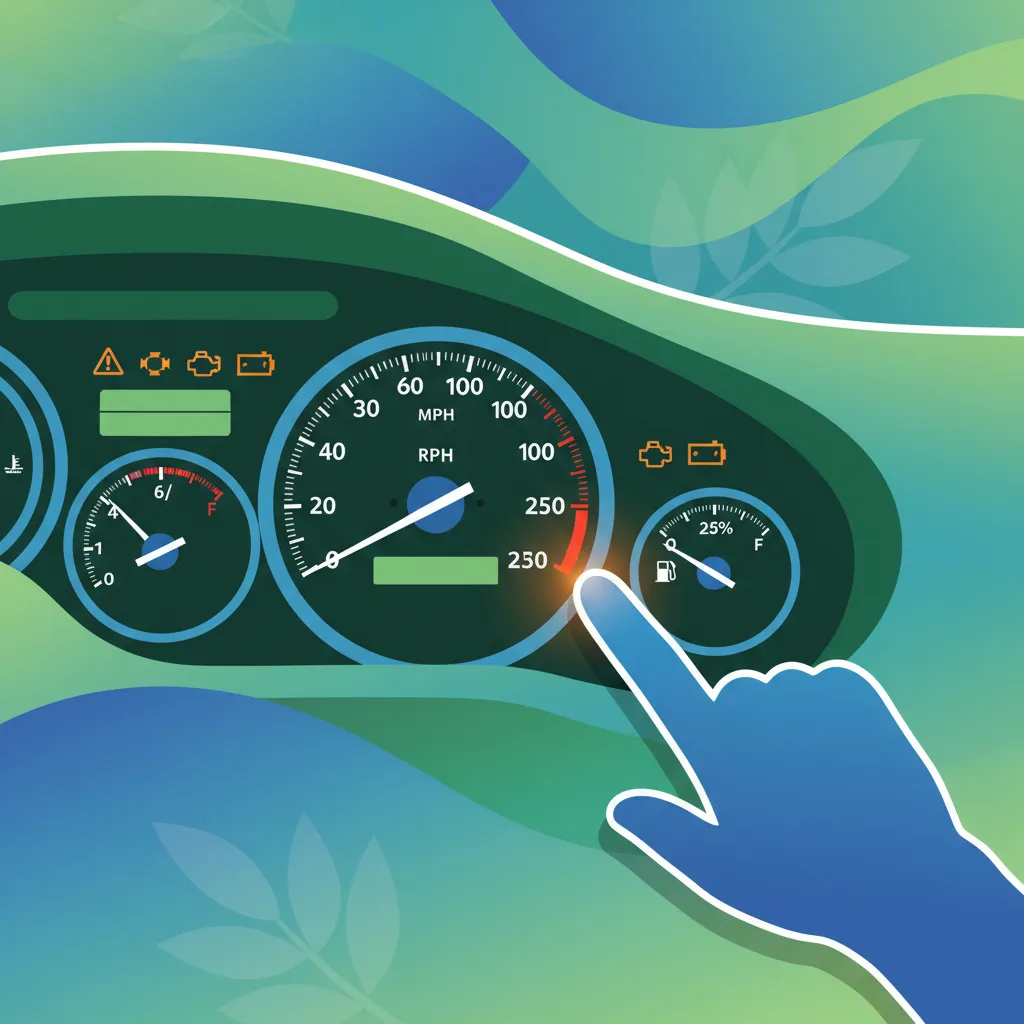
This lesson focuses on the primary components displayed on a vehicle's dashboard and their functional significance. Learners will identify instruments like the speedometer and fuel gauge and understand the meaning of key warning lights, including ABS, oil pressure, and check engine. The lesson explains how to interpret these signals while driving and the immediate actions required upon their illumination.
This lesson details the specific prerequisites for obtaining an AM licence, starting with the minimum age of fifteen and the mandatory medical fitness certificate. It guides learners through the administrative process at the DGT, including required identification, proof of residence, and parental consent for minors. The content explains the role of driving schools and the necessary steps for exam registration, ensuring a clear understanding of the entire application procedure.
Explore the DGT's mandatory medical fitness standards for obtaining and renewing Spanish driving licenses. Details requirements for visual acuity, hearing, and other health criteria to ensure road safety.
This lesson examines the specific documents needed to start the Spanish license acquisition process, including personal identification, proof of residence, and a valid medical certificate (psicotécnico). It outlines the official DGT application form, associated fees, and the sequential steps for successful registration. The content also clarifies the age thresholds for categories B and BE and the conditions for license renewal.
This lesson provides a detailed breakdown of the D and D1 license categories, defining the vehicle dimensions and passenger capacities for each. It explains the DGT's eligibility requirements, including minimum age, medical certification, and mandatory psychological assessments for professional drivers. Learners will understand the complete procedural path to obtaining a professional bus or coach license in Spain.

This lesson outlines the proper use and legal requirements of vehicle lighting and mirror systems. It covers headlamps, fog lights, turn signals, and brake lights, clarifying when each must be used according to DGT regulations. The lesson also explains the correct adjustment of rearview and side mirrors and strategies for effective blind-spot monitoring.
This lesson covers how environmental conditions such as rain, fog, and darkness affect driving safety. It instructs drivers on adjusting speed, using appropriate lighting, and increasing following distance to compensate for reduced visibility and traction. The lesson incorporates DGT safety recommendations for handling adverse weather to mitigate risk and maintain control.
This lesson outlines the mandatory lighting and visibility equipment as per DGT regulations. It covers the correct use of headlights (low and high beams), taillights, and turn signals, ensuring the moped is visible to others, especially at night or in poor weather. The importance of wearing high-visibility or reflective clothing is also emphasized as a critical measure to enhance personal safety by making the rider more conspicuous.
This lesson provides a step-by-step guide to the licensing process for professional truck drivers in Spain. It covers the necessary administrative procedures, including the mandatory medical examination and psychotechnical tests required for eligibility. Learners will understand the full scope of documentation needed for the application, such as training certificates and identity verification, to ensure a smooth process.
This lesson details the specific prerequisites for obtaining an AM licence, starting with the minimum age of fifteen and the mandatory medical fitness certificate. It guides learners through the administrative process at the DGT, including required identification, proof of residence, and parental consent for minors. The content explains the role of driving schools and the necessary steps for exam registration, ensuring a clear understanding of the entire application procedure.
Find clear answers to common questions learners have about Age, Medical Fitness, and Category Definitions. Learn how the lesson is structured, which driving theory objectives it supports, and how it fits into the overall learning path of units and curriculum progression in Spain. These explanations help you understand key concepts, lesson flow, and exam focused study goals.
The minimum age to obtain a Category B driving license in Spain is 18 years old. However, you can begin the theoretical and practical training process slightly before turning 18, but the license can only be issued once you have reached this age and passed all required tests.
The DGT requires drivers to meet specific medical standards, primarily focusing on visual acuity (with or without corrective lenses), hearing capacity, and general physical and psychological fitness. These ensure you can safely operate a vehicle and react appropriately to traffic situations.
While the core medical fitness requirements are similar for Category B and BE, the BE category implies driving heavier vehicles with trailers. The medical assessment will ensure you have the necessary physical coordination and stamina to handle the increased complexity of driving with a trailer, particularly during maneuvers and at speed.
If you don't meet the standard visual acuity or hearing capacity, you may still be able to obtain a license if corrective measures (like wearing glasses or hearing aids) allow you to reach the required threshold. In some cases, specific restrictions may be added to your license, or you might need further evaluation.
The points system primarily relates to traffic violations. However, serious medical conditions that impair your ability to drive safely could lead to a suspension or revocation of your license, which is a separate but related consequence enforced by the DGT to ensure road safety.
Use our powerful search functionality to pinpoint specific Spanish DGT driving theory practice sets. Filter by road sign categories, traffic law topics, or question difficulty to build custom study sessions and reinforce your knowledge precisely where it matters for your official exam.