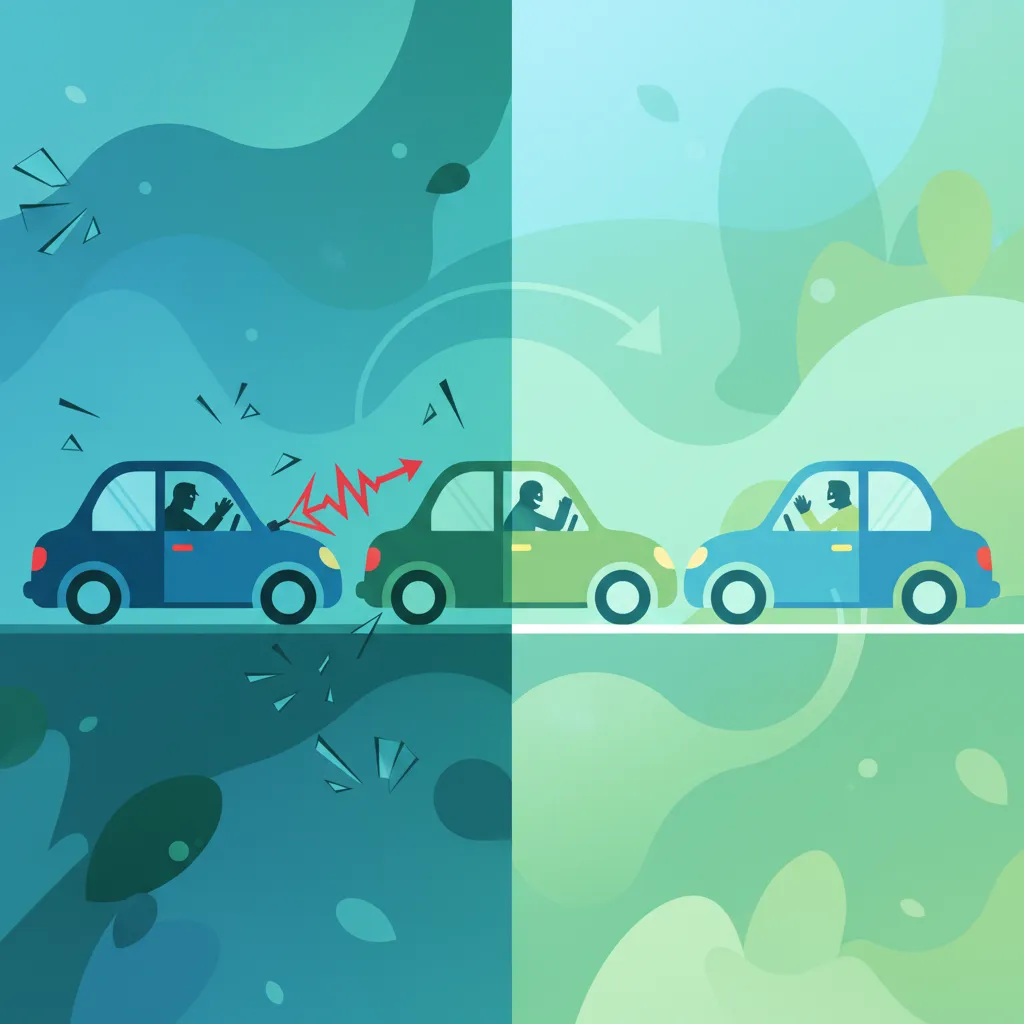
Navigating potential conflicts on the road is crucial for professional bus drivers. This lesson builds on defensive driving principles, teaching you how to effectively resolve right-of-way disputes and de-escalate tense situations. Understanding these traffic dynamics is essential for safe operation and maintaining courtesy on Spanish roads, preparing you for scenarios covered in the D/D1 theory exam.
Lesson content overview
Driving a bus or coach (Category D & D1) involves a unique set of responsibilities, particularly when navigating complex traffic scenarios. Professional drivers must not only adhere to traffic laws but also actively manage and resolve conflicts to ensure the safety and comfort of passengers and other road users. This comprehensive lesson delves into the dynamics of traffic conflicts, providing strategies for resolving right-of-way disputes, de-escalating tense situations, and maintaining a safe and courteous driving environment.
Traffic conflicts are situations where the intended paths of two or more road users intersect or interfere, creating a potential for collision or aggressive interaction. For professional bus and coach drivers, these conflicts are magnified by the vehicle's size, weight, and the presence of passengers. Effective conflict resolution is paramount, contributing significantly to accident reduction, enhanced passenger safety, and the promotion of a professional driving culture.
This module builds upon foundational knowledge of basic traffic rules, right-of-way principles, vehicle dimensions, and the legal responsibilities of professional drivers. It emphasizes proactive decision-making, clear communication, and strict adherence to legal priorities to manage and de-escalate potential hazards. When drivers correctly yield or assert priority, the risk of collisions and aggressive encounters is substantially reduced. The inherent physics of large vehicles, including increased stopping distances and extensive blind spots, underscore the critical need for early conflict anticipation and resolution.
The legal order that dictates which road user must proceed or yield is known as right-of-way. Correctly determining right-of-way is fundamental to preventing ambiguity, especially at busy intersections, roundabouts, and pedestrian crossings. Professional bus and coach drivers must consistently assess priority before initiating any maneuver.
Right-of-way determination is the process of applying Spanish traffic law to ascertain which vehicle or road user has the legal authority to proceed first. This is not always intuitive, particularly in uncontrolled environments, and demands a thorough understanding of DGT regulations. A common misunderstanding for large vehicle drivers is assuming priority due to vehicle size; however, traffic law applies equally to all, with specific considerations for heavy vehicles.
Professional drivers frequently encounter various situations requiring precise right-of-way determination:
At controlled intersections, traffic lights or stop/yield signs clearly indicate priority.
Conversely, uncontrolled intersections, lacking specific signage or signals, rely on general rules, typically granting priority to vehicles approaching from the right or those already within the intersection. For a bus approaching an uncontrolled intersection, it is crucial to yield to vehicles already engaged in the junction, while vehicles on the main road generally have priority over those entering from a side road.
In Spain, DGT Article 91 outlines priority at intersections, generally granting right-of-way to vehicles coming from the right at uncontrolled junctions, unless otherwise specified.
When entering a roundabout, the fundamental rule is to yield to traffic already circulating within the roundabout. This principle, vital for maintaining smooth traffic flow, is particularly important for large vehicles which require more space and time to maneuver. A bus entering a roundabout must always ensure a safe gap before merging into the circulating traffic flow.
Pedestrians always have priority at marked pedestrian crossings, especially zebra crossings. Drivers must slow down and stop if pedestrians are on the crossing or clearly intending to cross. This is a mandatory rule in Spain (DGT Article 84) to protect vulnerable road users. Failure to yield at a pedestrian crossing is a serious violation.
When merging onto a highway or where lanes split, the vehicle changing lanes or entering a new lane must yield to traffic already in that lane. For a large vehicle like a bus or coach, this requires significant foresight and early signaling due to longer vehicle length and slower acceleration. It is critical to find a safe gap well in advance.
The act of yielding for a bus or coach is fundamentally different from that of a smaller vehicle. The sheer dimensions, weight, and inherent blind spots of large passenger vehicles necessitate an adjusted yielding behavior to ensure safe maneuvers and prevent endangering passengers or other road users.
Due to their mass, buses and coaches have significantly longer braking distances compared to cars. This means that a bus must begin to slow down much earlier when preparing to yield, allowing ample time to come to a complete stop if necessary, or to adjust speed for a controlled yield.
Proactive Braking: Anticipate situations requiring a yield far in advance. Begin braking gently and progressively to account for the vehicle's mass and maintain passenger comfort.
Blind spots around a large vehicle are extensive. When yielding or changing lanes, constant vigilance using all mirrors is essential. Drivers must ensure no smaller vehicles, motorcycles, or cyclists are hidden in these zones. A quick head check, often referred to as a "lifesaver check," is crucial before any lateral movement.
The DGT Circular 2015/07 on Large Vehicle Maneuverability highlights the need for professional drivers to be especially attentive during yielding maneuvers, particularly due to the increased kinetic energy and inertia of buses.
Maintaining calm and preventing aggressive encounters is a hallmark of professional driving. De-escalation tactics and proactive conflict avoidance are crucial skills, particularly when operating a large passenger vehicle where the consequences of road rage can be severe.
Professional drivers should prioritize reducing aggression and preventing road rage situations. This involves thoughtful communication and strategic vehicle positioning.
For instance, if a driver behind is tailgating aggressively, a bus driver might gradually reduce speed, activate the turn signal early for the next maneuver, and gently move to a safer lane, allowing the impatient driver to pass without further provocation.
Anticipating potential conflicts and adjusting behavior before reaching them is a cornerstone of defensive driving, especially for bus and coach operators.
One of the most critical principles for a professional bus or coach driver is the unwavering commitment to safety, even if it means deviating from a strict timetable. Prioritizing safety over schedule is not merely a recommendation; it is a fundamental duty enshrined in DGT regulations, such as Article 10, which emphasizes the driver’s responsibility to avoid risk.
There will be instances where maintaining punctuality directly conflicts with safe operation. In such cases, the safety of passengers, other road users, and the driver must always take precedence.
Do not compromise safety for punctuality. This principle protects lives, prevents costly accidents, and safeguards the driver from legal liability.
Common misunderstandings include prioritizing punctuality at the expense of safety, especially when operating passenger-heavy vehicles. This approach is not only dangerous but also unprofessional and in direct violation of fundamental driving duties. A minor delay is always preferable to an accident.
Adherence to specific DGT regulations is non-negotiable for professional drivers. These rules are designed to prevent conflicts and ensure orderly traffic flow.
| Rule | Applicability | Rationale | Correct Example |
|---|---|---|---|
| Yield to pedestrians at zebra crossings | All vehicles, including buses, when pedestrians are on or about to cross. | Protect vulnerable users. | Bus slows and stops before the zebra crossing, allowing pedestrians to cross completely. |
| Right-of-Way at uncontrolled intersections | Vehicle already within the intersection has priority; entering traffic yields. | Prevent collisions at points without traffic lights. | Bus yields to a car already within the intersection, ensuring the junction is clear before proceeding. |
| Use of horn only when necessary | Horn may be used to avoid imminent collision or warn of presence. | Reduce noise pollution and prevent unnecessary aggression. | Bus lightly taps horn to alert a pedestrian who steps unexpectedly into its path. |
| Maintain safe following distance (2-second rule) | Applies to all vehicles, especially heavy buses. | Compensate for longer stopping distances. | Bus maintains at least a 2-second gap behind the vehicle ahead, increasing this in adverse conditions. |
| Signal lane changes at least 50m before maneuver | Mandatory for all lane changes, especially for large vehicles. | Give other road users time to react. | Bus activates its turn signal 60 meters before merging onto a highway or changing lanes in urban traffic. |
| Do not overtake on narrow bridges | Applies when bridge width < 2 × vehicle width + safety margin. | Prevent head-on collisions due to limited space. | Bus waits for oncoming traffic to pass and for the bridge to be clear before proceeding over a narrow bridge. |
| Stop before railway crossing when signals are active | Applies to all road users, including buses. | Avoid collisions with trains. | Bus stops 5 meters before the railway crossing when flashing lights or barriers indicate an approaching train. |
Effective conflict resolution requires adaptability. Driving conditions vary significantly, and a professional driver must adjust their approach based on external factors and the vehicle's state.
Understanding theoretical principles is only half the battle; applying them in real-world scenarios is crucial. Here are practical examples demonstrating correct and incorrect conflict resolution.
Effective conflict resolution is an indispensable skill for professional bus and coach drivers. It demands a holistic approach that integrates legal knowledge, vehicle-specific considerations, and a calm, proactive mindset.
By mastering these principles, professional bus and coach drivers contribute significantly to safer roads and uphold the highest standards of their profession.
This lesson teaches professional bus and coach drivers how to resolve right-of-way conflicts and de-escalate aggressive traffic situations on Spanish roads. It covers the legal hierarchy for determining priority at intersections, roundabouts, and pedestrian crossings; specific yielding techniques accounting for a bus's longer braking distances and extensive blind spots; and behavioral strategies for maintaining calm, avoiding confrontation, and prioritizing safety above schedule. Key DGT regulations including Articles 91, 84, and 94 are referenced, along with the 2-second following distance rule and mandatory signaling distances.
A short set of high-value points that capture the most important learning from this lesson.
Right-of-way is determined by DGT traffic law, not by vehicle size or type—buses and coaches have no inherent priority over other road users.
Large vehicles require significantly earlier braking distances and more space for yielding maneuvers than smaller cars.
De-escalation relies on calm, predictable driving behavior, appropriate horn use, and avoiding engagement with aggressive drivers.
Proactive conflict avoidance through continuous scanning, strategic positioning, and speed management prevents most conflicts before they develop.
Safety must always take precedence over schedule—skipping stops or waiting longer is preferable to forcing a risky maneuver.
Explore all units and lessons included in this driving theory course.
At uncontrolled intersections, priority generally goes to vehicles approaching from the right (DGT Article 91); vehicles already within the intersection have priority over those entering.
Pedestrians always have priority at zebra crossings—drivers must stop completely if pedestrians are on or about to use the crossing (DGT Article 84).
The horn may only be used to warn of an imminent collision or to indicate presence—never to express anger or impatience.
Maintain at least a 2-second following distance, increasing this for heavy loads and adverse conditions.
Signal lane changes at least 50 meters in advance to give other road users adequate reaction time.
Assuming that vehicle size grants priority—buses and coaches must yield like any other vehicle unless specific rules indicate otherwise.
Merging without sufficient early signaling, which is especially dangerous for large vehicles requiring more space and time to maneuver.
Not adjusting braking distance for the vehicle's mass and load, leading to late or insufficient stops.
Engaging with aggressive drivers through gestures or eye contact, which can escalate tension and compromise safety.
Attempting to maintain schedule by forcing maneuvers when conditions are unsafe, prioritizing punctuality over passenger and road user safety.
Lesson content overview
A short set of high-value points that capture the most important learning from this lesson.
Right-of-way is determined by DGT traffic law, not by vehicle size or type—buses and coaches have no inherent priority over other road users.
Large vehicles require significantly earlier braking distances and more space for yielding maneuvers than smaller cars.
De-escalation relies on calm, predictable driving behavior, appropriate horn use, and avoiding engagement with aggressive drivers.
Proactive conflict avoidance through continuous scanning, strategic positioning, and speed management prevents most conflicts before they develop.
Safety must always take precedence over schedule—skipping stops or waiting longer is preferable to forcing a risky maneuver.
Explore all units and lessons included in this driving theory course.
At uncontrolled intersections, priority generally goes to vehicles approaching from the right (DGT Article 91); vehicles already within the intersection have priority over those entering.
Pedestrians always have priority at zebra crossings—drivers must stop completely if pedestrians are on or about to use the crossing (DGT Article 84).
The horn may only be used to warn of an imminent collision or to indicate presence—never to express anger or impatience.
Maintain at least a 2-second following distance, increasing this for heavy loads and adverse conditions.
Signal lane changes at least 50 meters in advance to give other road users adequate reaction time.
Assuming that vehicle size grants priority—buses and coaches must yield like any other vehicle unless specific rules indicate otherwise.
Merging without sufficient early signaling, which is especially dangerous for large vehicles requiring more space and time to maneuver.
Not adjusting braking distance for the vehicle's mass and load, leading to late or insufficient stops.
Engaging with aggressive drivers through gestures or eye contact, which can escalate tension and compromise safety.
Attempting to maintain schedule by forcing maneuvers when conditions are unsafe, prioritizing punctuality over passenger and road user safety.
Explore search topics learners often look for when studying Conflict Resolution in Traffic Situations. These topics reflect common questions about road rules, driving situations, safety guidance, and lesson level theory preparation for learners in Spain.
Browse additional driving theory lessons that cover connected traffic rules, road signs, and common driving situations related to this topic. Improve your understanding of how different rules interact across everyday traffic scenarios.
Explore complex traffic conflict scenarios specific to professional bus drivers in Spain. Learn advanced techniques for resolving right-of-way disputes, handling aggressive drivers, and ensuring passenger safety in challenging situations, complementing basic conflict resolution theory.
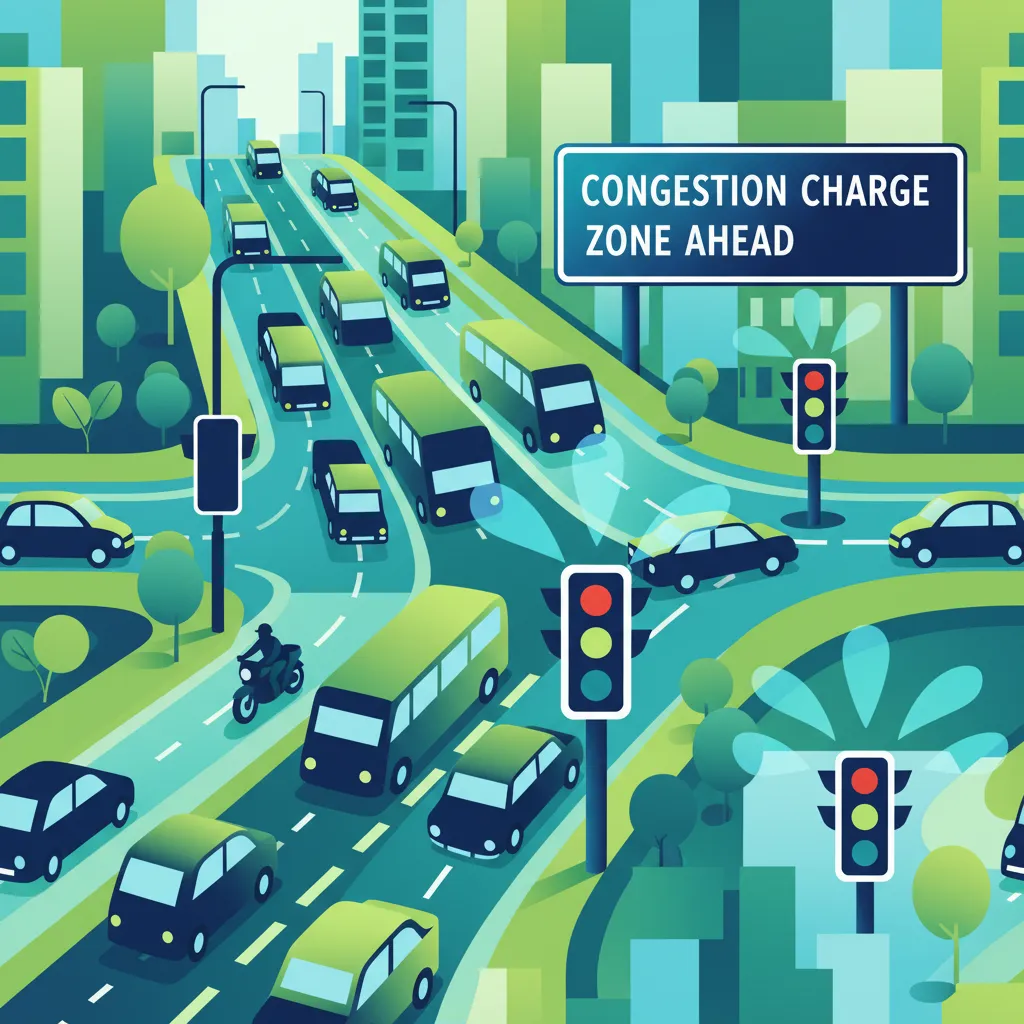
This lesson investigates the complex patterns of urban traffic flow, with a particular focus on peak hour congestion and its effect on bus schedules. Learners will study route optimization techniques and headway management to maintain consistent service intervals. The material also covers the analysis of lane occupancy, coordination with traffic signals, and strategies for prioritizing public transport during periods of high traffic density.
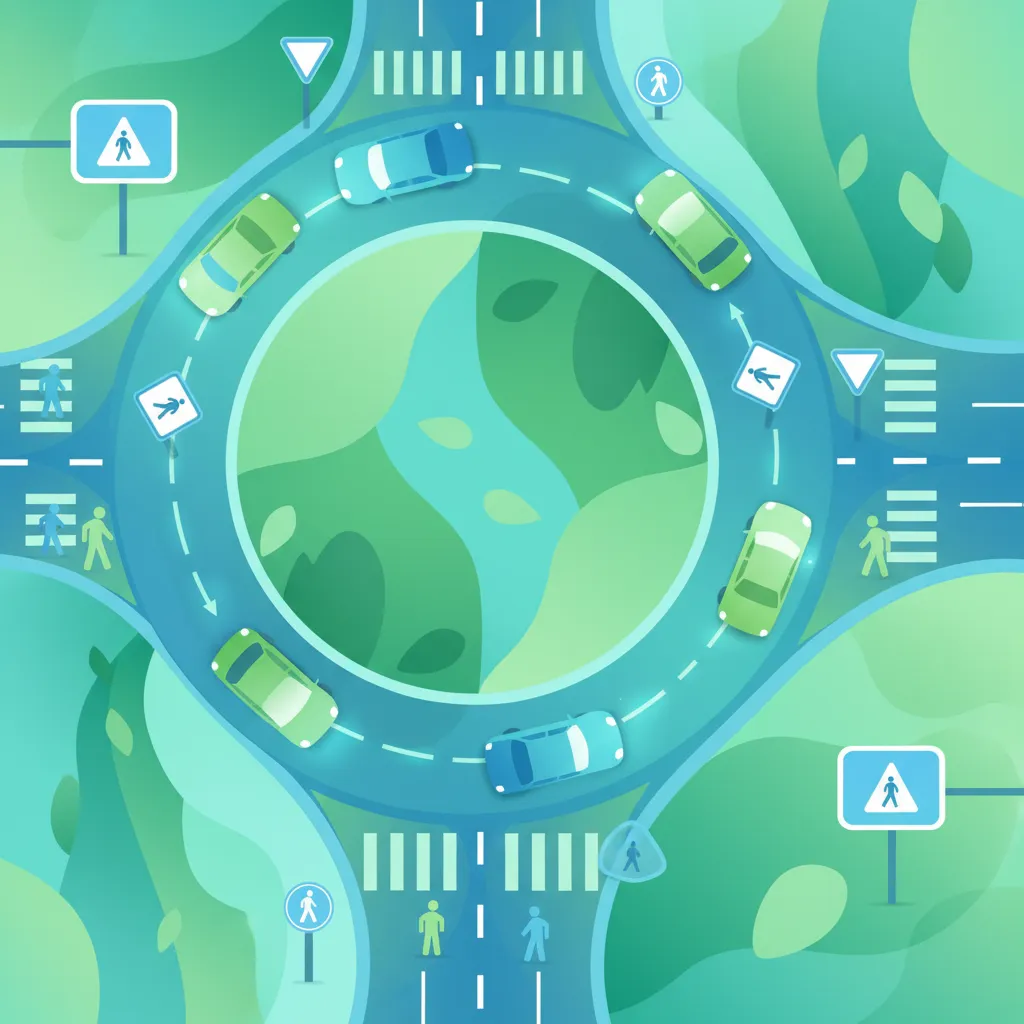
This lesson offers a comprehensive guide to navigating roundabouts in urban settings, explaining the correct protocols for entry, yielding, and circulation. Learners will be taught how to interpret lane markings and signage on multi-lane roundabouts and determine the correct vehicle positioning for safe entry and exit. The content emphasizes full compliance with Spanish city regulations that govern priority and right-of-way at these intersections.

This lesson outlines the best practices for precise vehicle positioning at urban bus stops and ensuring safe interaction with passengers. It covers the management of approach speed, correct alignment with the curb, and effective communication during boarding and alighting processes. Learners will also study how stopping maneuvers impact surrounding traffic flow and the importance of maintaining safety distances for efficient service.

This lesson outlines the core principles of defensive driving, focusing on maintaining a safe following distance, creating a protective space cushion around the vehicle, and anticipating potential hazards. Learners will be taught how to develop contingency plans for unexpected events and employ risk mitigation techniques to actively avoid accidents. The content reinforces the vital importance of remaining vigilant and proactive at all times when driving.

This lesson focuses on effective communication strategies for drivers, including clear verbal announcements, the use of standard hand signals, and providing multilingual support where necessary. Learners will study best practices for delivering concise information regarding routes, upcoming stops, and essential safety instructions. The content also highlights the importance of timing these announcements correctly to prevent confusion and ensure passenger confidence.

This lesson addresses overtaking procedures and lane discipline specifically for large coaches, emphasizing correct lane positioning and safe passing practices on multi-lane highways. It covers the legal rules for overtaking, the critical need for comprehensive blind spot checks before changing lanes, and the importance of signaling intentions early. Learners will also be taught how to maintain appropriate safety gaps when maneuvering around slower-moving traffic.

In this lesson, learners will acquire the necessary skills to maneuver buses and coaches within confined areas such as narrow city streets, bus depots, and passenger terminals. It details techniques for reverse driving, tight cornering, and parallel parking, emphasizing the critical importance of blind spot awareness and precise low-speed control. The content focuses on developing spatial awareness to avoid collisions while maintaining passenger comfort.

This lesson focuses on the high standards of professional behavior expected from drivers in the passenger transport sector, covering customer interaction skills and service quality benchmarks. Learners will explore effective communication techniques, methods for resolving conflicts calmly, and the importance of maintaining a professional demeanor, including appropriate dress and punctuality. The content emphasizes how courteous conduct directly enhances passenger satisfaction and promotes a positive company image.
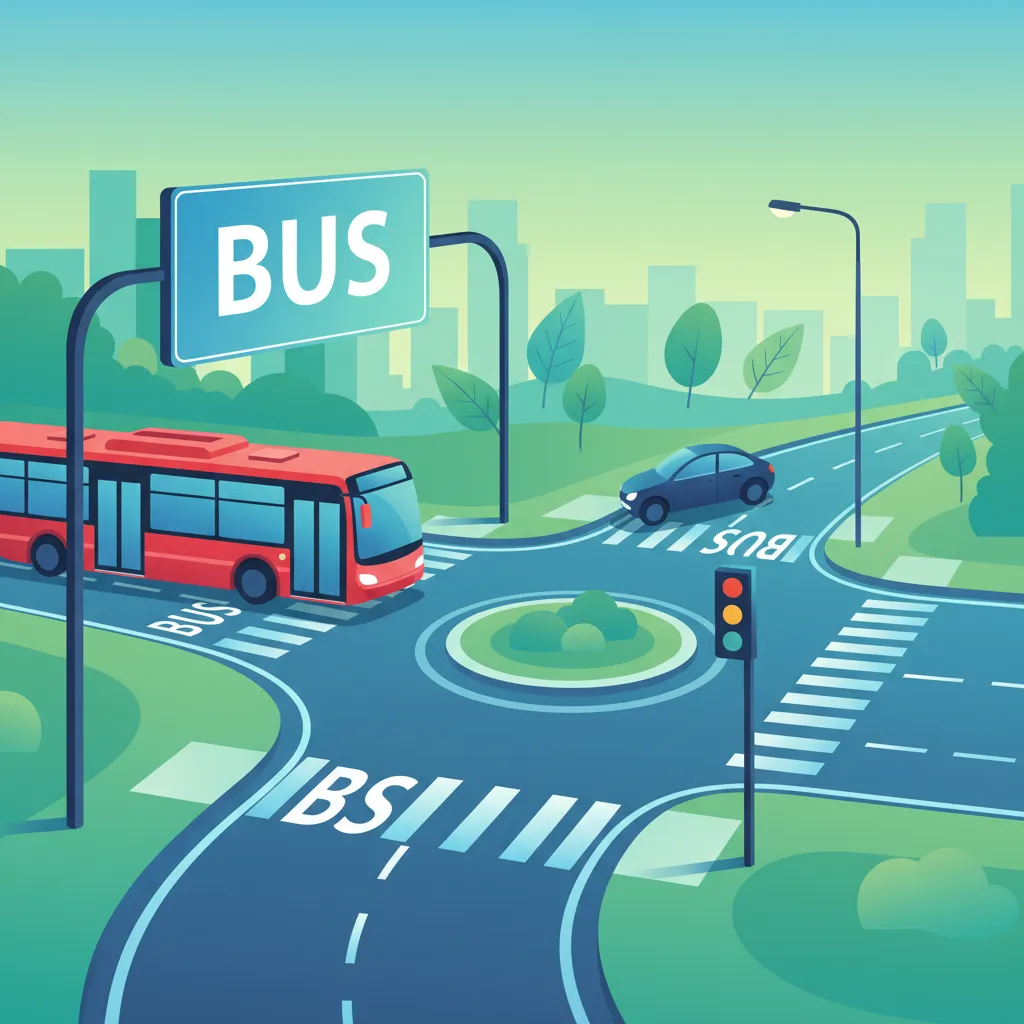
This lesson explores the regulations for dedicated bus lanes in urban environments, detailing the correct interpretation of associated lane markings and traffic signage. Learners will understand the specified times of operation, rules for sharing lanes with other vehicles, and the legal consequences of unauthorized entry. The module also provides clear guidelines for entering and exiting bus lanes at designated points to maintain traffic flow.
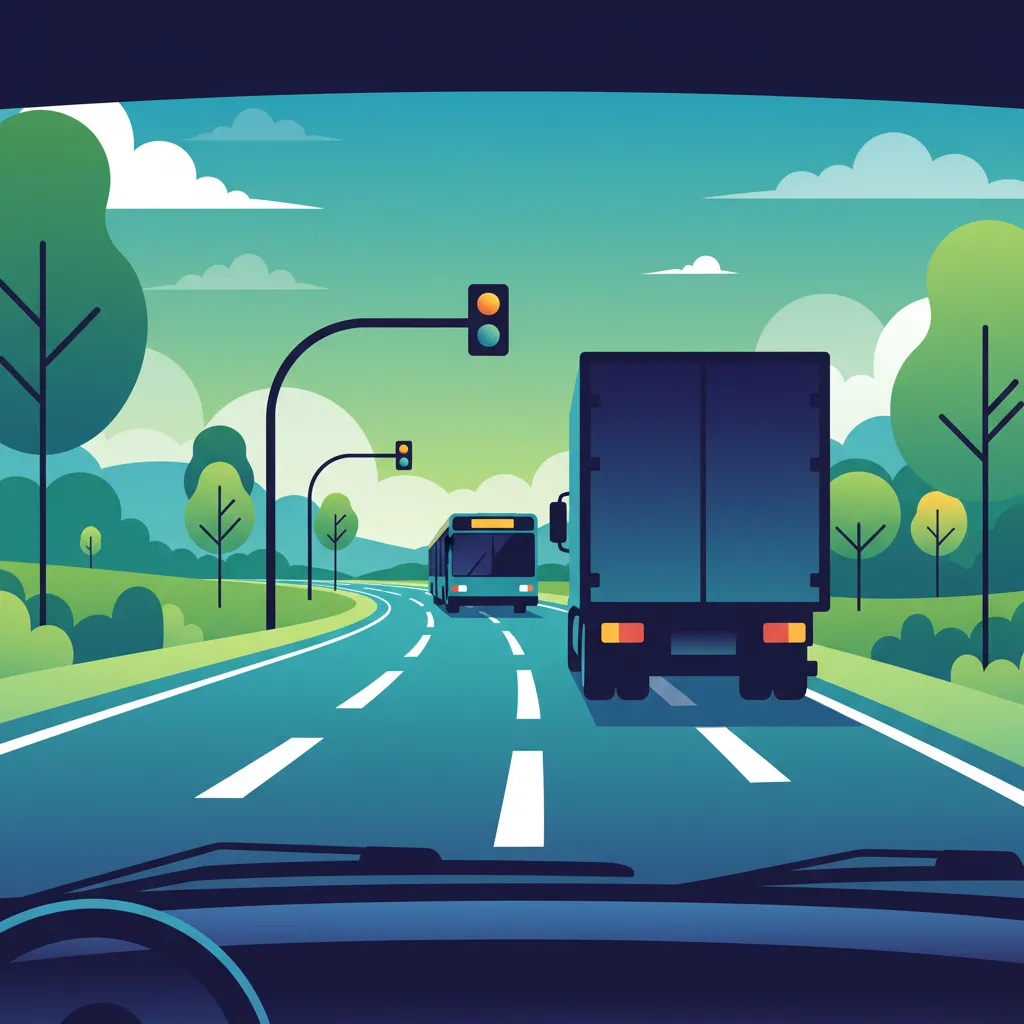
This lesson focuses on interaction dynamics with larger vehicles like cars, trucks, and buses, detailing their specific blind spot zones. Strategies for safely sharing lanes, overtaking etiquette, and proper approach when a bus stops are covered. The lesson also includes guidance on merging onto acceleration lanes following DGT policies.
Understand the specific challenges and techniques for yielding safely with buses and coaches in Spain. This lesson focuses on adapting standard right-of-way rules for large vehicles, considering braking distances, blind spots, and passenger safety.
This lesson addresses overtaking procedures and lane discipline specifically for large coaches, emphasizing correct lane positioning and safe passing practices on multi-lane highways. It covers the legal rules for overtaking, the critical need for comprehensive blind spot checks before changing lanes, and the importance of signaling intentions early. Learners will also be taught how to maintain appropriate safety gaps when maneuvering around slower-moving traffic.
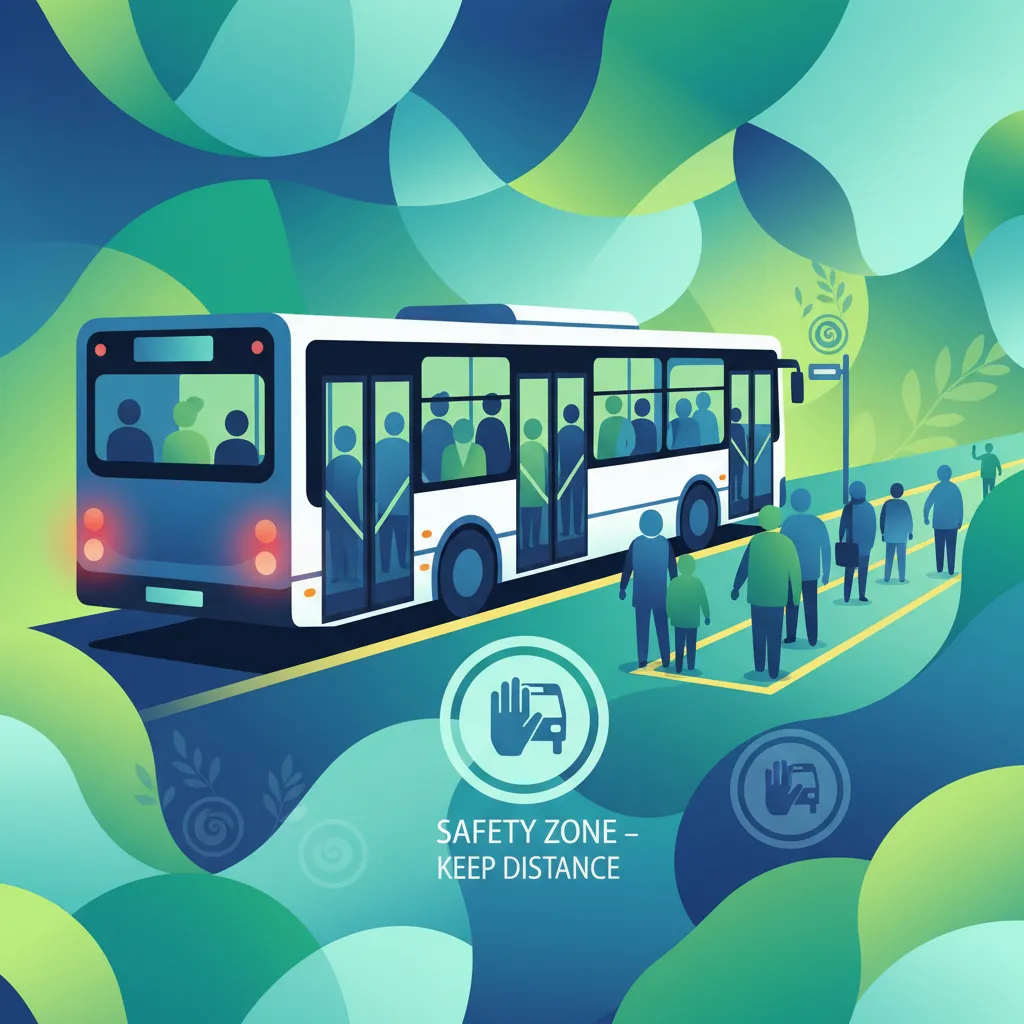
This lesson outlines the techniques for executing safe and precise stops at bus stops and transport stations, focusing on controlled deceleration and correct alignment with the stop line. Learners will understand the importance of maintaining clear passenger visibility, applying the parking brake correctly, and minimizing dwell time without compromising safety. The module also emphasizes the need for consistency in stop positioning to improve service predictability.
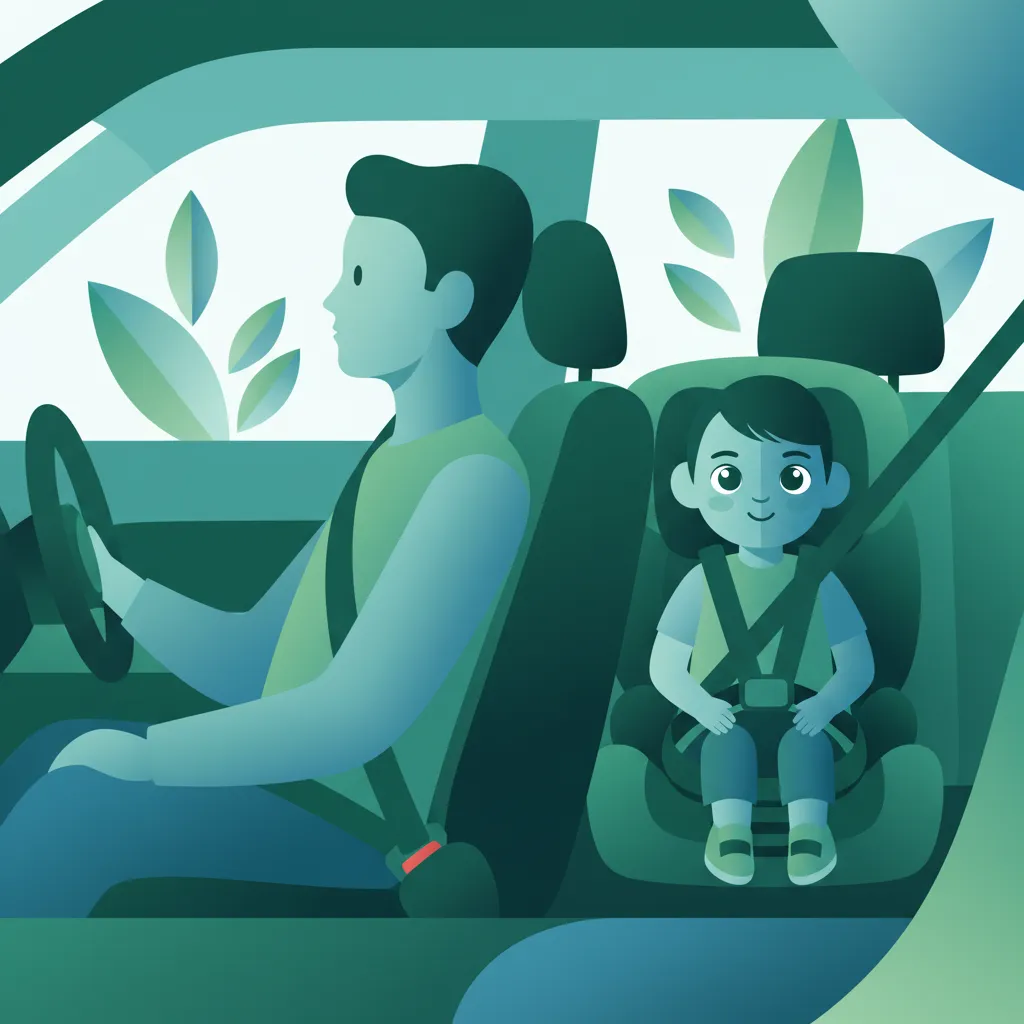
This lesson details the legal requirements for the use of seatbelts and child restraint systems in buses and coaches, as stipulated by DGT regulations. It specifies the age and size limits for various restraint devices and explains the verification checks drivers must perform. Learners will also review safety statistics that highlight the importance of correct usage and understand the legal penalties associated with non-compliance.
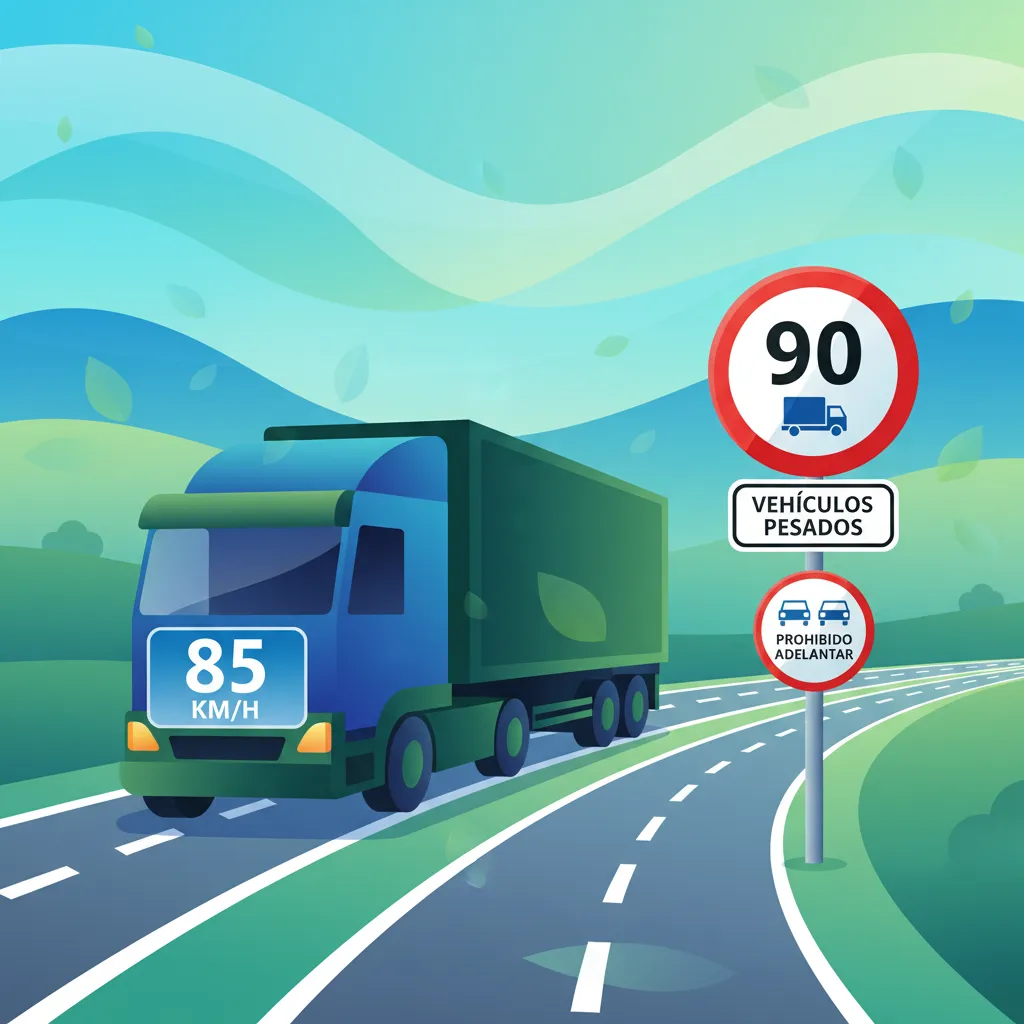
This lesson details the specific legal speed limits that apply to heavy passenger vehicles on Spanish highways, including variable speed zones that adjust based on traffic and weather conditions. Learners will understand the methods for speed monitoring, the function of speed control devices, and the legal consequences of non-compliance. The content also provides guidance on calculating a safe operating speed based on vehicle load and road conditions.
This lesson outlines the core principles of defensive driving, focusing on maintaining a safe following distance, creating a protective space cushion around the vehicle, and anticipating potential hazards. Learners will be taught how to develop contingency plans for unexpected events and employ risk mitigation techniques to actively avoid accidents. The content reinforces the vital importance of remaining vigilant and proactive at all times when driving.
This lesson offers a comprehensive guide to navigating roundabouts in urban settings, explaining the correct protocols for entry, yielding, and circulation. Learners will be taught how to interpret lane markings and signage on multi-lane roundabouts and determine the correct vehicle positioning for safe entry and exit. The content emphasizes full compliance with Spanish city regulations that govern priority and right-of-way at these intersections.
This lesson explores the regulations for dedicated bus lanes in urban environments, detailing the correct interpretation of associated lane markings and traffic signage. Learners will understand the specified times of operation, rules for sharing lanes with other vehicles, and the legal consequences of unauthorized entry. The module also provides clear guidelines for entering and exiting bus lanes at designated points to maintain traffic flow.
This lesson outlines the best practices for precise vehicle positioning at urban bus stops and ensuring safe interaction with passengers. It covers the management of approach speed, correct alignment with the curb, and effective communication during boarding and alighting processes. Learners will also study how stopping maneuvers impact surrounding traffic flow and the importance of maintaining safety distances for efficient service.
Find clear answers to common questions learners have about Conflict Resolution in Traffic Situations. Learn how the lesson is structured, which driving theory objectives it supports, and how it fits into the overall learning path of units and curriculum progression in Spain. These explanations help you understand key concepts, lesson flow, and exam focused study goals.
Common conflicts arise from right-of-way disputes at intersections, roundabouts, and during lane changes. Aggressive driving, such as tailgating or dangerous overtaking, can also escalate tensions. Understanding Spanish priority rules, especially for large vehicles, is key to avoiding many of these situations.
The best approach is to remain calm and avoid eye contact or any form of confrontation. Allow the aggressive driver to pass, maintain a safe following distance, and do not engage. Focus on your driving and adhering to traffic laws. If you feel threatened, consider pulling over in a safe, public location.
Always prioritize safety. If asserting your right-of-way could lead to an accident, especially with a smaller or more agile vehicle, or if another driver is clearly insistent, it's often safer to yield. This is particularly important when navigating complex urban environments or busy junctions as a large vehicle.
The DGT exam often presents scenarios requiring you to choose the safest and most appropriate response to a given traffic situation involving other road users. Questions may focus on identifying hazards, understanding driver behaviour, and applying correct priority rules to de-escalate potential conflicts or avoid accidents.
On Spanish autovías and autopistas, large vehicles like buses should use the right-hand lane whenever possible. When overtaking, ensure you have ample space and time, as your acceleration and speed capabilities are lower. Always signal your intentions clearly and be aware of smaller vehicles' blind spots.
Use our powerful search functionality to pinpoint specific Spanish DGT driving theory practice sets. Filter by road sign categories, traffic law topics, or question difficulty to build custom study sessions and reinforce your knowledge precisely where it matters for your official exam.