
Welcome to the Defensive Driving Strategies lesson, a crucial part of your Professional Bus and Coach Theory curriculum for the Spanish DGT exam. This lesson builds on your foundational knowledge of road rules, focusing on proactive techniques to ensure safety for yourself, your passengers, and other road users in Spain. Mastering these strategies is key to passing your DGT theory test and operating large passenger vehicles responsibly.

Lesson content overview
Driving a bus or coach (Category D & D1 license) is a significant responsibility, demanding an elevated level of skill, vigilance, and foresight. Defensive driving is a systematic approach that equips professional drivers with the mindset and techniques to anticipate potential hazards and react safely, thereby preventing accidents and ensuring the well-being of passengers and other road users. This lesson outlines the core principles of defensive driving, focusing specifically on the unique challenges and requirements of operating large passenger vehicles under Spanish traffic law.
Defensive driving extends beyond simply obeying traffic laws; it is about anticipating the unpredictable. This proactive methodology involves identifying potential threats before they fully materialize, ensuring the driver always has adequate time and space to respond effectively. For professional drivers, this approach aligns with critical legal obligations, such as the duty of care, and leverages fundamental physics principles, like braking distance and reaction time, to significantly reduce collision risk. It fosters a constant state of readiness, transforming reactive behavior into strategic, pre-emptive action.
A defensive driving mindset is crucial for professional drivers. It emphasizes continuous vigilance, situational awareness, and strategic decision-making to prevent accidents before they occur.
Defensive driving is built upon several foundational principles, each contributing to a comprehensive safety strategy:
Maintaining a safe following distance is perhaps the most fundamental aspect of defensive driving. For professional bus and coach drivers, this concept takes on even greater importance due to the extended braking distances and reduced agility associated with large passenger vehicles.
A safe following distance is defined as the time-based gap a driver maintains behind the vehicle leading them. The widely recognized standard for normal conditions is a 2-second gap. However, for buses and coaches, and particularly under varying conditions, this needs to be significantly adjusted.
The minimum longitudinal gap, measured in seconds or meters, that a driver must maintain behind the vehicle ahead to allow sufficient time to perceive, react, and stop safely.
For example, on a highway at 80 km/h, a 2-second gap translates to approximately 45 meters. In heavy rain, increasing this to a 3-second gap means maintaining roughly 65 meters. Failing to account for the increased mass and load of a bus or coach is a common misconception, as these factors directly impact braking performance.
The Spanish Reglamento General de Circulación explicitly mandates drivers to maintain a safe distance from the vehicle ahead. This regulation is designed to prevent collisions and ensure traffic fluidity. Tailgating, or driving too closely, is strictly prohibited and can result in penalties, reflecting its high risk factor. Professional drivers are expected to demonstrate a superior understanding and adherence to these rules, recognizing that their vehicle's characteristics necessitate greater prudence.
Believing that 'visual distance' is sufficient or neglecting the increased braking distance due to a heavy load are dangerous misunderstandings for Category D & D1 drivers. Always prioritize time-based measurements.
While safe following distance manages the space ahead, a comprehensive defensive driving strategy requires a full "space cushion"—a buffer zone on all sides of the vehicle. This protective zone is vital for buses and coaches, which have larger dimensions, numerous blind spots, and limited agility compared to smaller vehicles.
The buffer zone surrounding a vehicle on all sides—front, rear, and sides—that provides adequate clearance from other road users and allows for evasive actions.
Buses and coaches have significant blind spots, areas around the vehicle not visible through mirrors. These are much larger than those of a car and pose a substantial risk, especially to vulnerable road users like motorcyclists and cyclists.
A common misunderstanding for bus drivers is ignoring the vehicle's large turning radius or assuming mirrors alone guarantee safe side space. Always combine mirror checks with anticipation and appropriate lane positioning.
Hazard anticipation is the continuous process of observing the driving environment to detect cues that could potentially evolve into threats. This proactive identification is vital for professional drivers, allowing them to make early decisions and avoid dangerous situations.
Effective hazard anticipation relies on specific scanning techniques:
The focus of scanning adapts to the driving environment:
Don't over-rely on rear-view mirrors alone or focus only on the immediate vehicle ahead. A comprehensive scan involves constantly monitoring all directions, including what is happening behind and to the sides.
Even with the most vigilant hazard anticipation, unexpected events can occur. Contingency planning involves pre-defining response strategies for specific emergency scenarios. This preparedness significantly reduces reaction time and improves the likelihood of a safe outcome.
Professional drivers must know their vehicle's capabilities and how to perform critical maneuvers safely:
Identify the hazard and determine immediate braking is necessary.
Check mirrors quickly to be aware of traffic behind you, but do not hesitate.
Apply the brake pedal firmly and progressively. If your vehicle has ABS, apply maximum firm pressure and allow the system to work.
Maintain a firm grip on the steering wheel, keeping the vehicle straight.
Once the hazard is cleared or avoided, release brakes smoothly and regain control, checking mirrors again.
Never assume that the vehicle's automatic systems (like ABS or ESP) will compensate for every emergency. These are aids, not replacements, for skilled driver intervention and contingency planning.
Risk mitigation involves systematically reducing exposure to hazards through conscious and proactive driving choices. For professional bus and coach drivers, this means constantly adapting driving behavior to minimize potential dangers.
On a wet highway, reducing your speed by 10-20 km/h below the posted limit significantly increases your margin of safety and provides a longer stopping distance buffer.
Compliance with Spanish traffic law is non-negotiable for professional drivers. Many aspects of defensive driving are codified in the Reglamento General de Circulación and other specific regulations for passenger transport.
Ignorance of, or disregard for, defensive driving principles often leads to common traffic violations, carrying severe consequences for professional drivers.
Defensive driving principles must be dynamically applied, adapting to specific driving conditions and environments.
Let's illustrate defensive driving principles through common scenarios for professional bus and coach drivers.
Defensive driving strategies are rooted in scientific principles and an understanding of human behavior.
Statistical data consistently highlights the importance of defensive driving. For instance, rear-end collisions represent a significant percentage of bus and coach accidents. Adherence to safe following distances has been proven to substantially reduce the frequency and severity of these incidents. Understanding these statistics reinforces the real-world impact of defensive driving practices.
Explore all units and lessons included in this driving theory course.
Lesson content overview
Explore all units and lessons included in this driving theory course.
Explore search topics learners often look for when studying Defensive Driving Strategies. These topics reflect common questions about road rules, driving situations, safety guidance, and lesson level theory preparation for learners in Spain.
Browse additional driving theory lessons that cover connected traffic rules, road signs, and common driving situations related to this topic. Improve your understanding of how different rules interact across everyday traffic scenarios.
Explore advanced techniques in defensive driving for bus and coach operators. This lesson focuses on sophisticated hazard anticipation, managing complex space cushions, and detailed risk mitigation strategies tailored for Spanish traffic laws and DGT professional license requirements.

This lesson focuses on the core principles of defensive driving as they apply to operating a large truck. It explains the importance of managing the space around the vehicle to create a safety buffer and always having an 'escape route' in mind. The content emphasizes anticipating the actions of other road users and being prepared to react calmly and safely to unexpected situations.
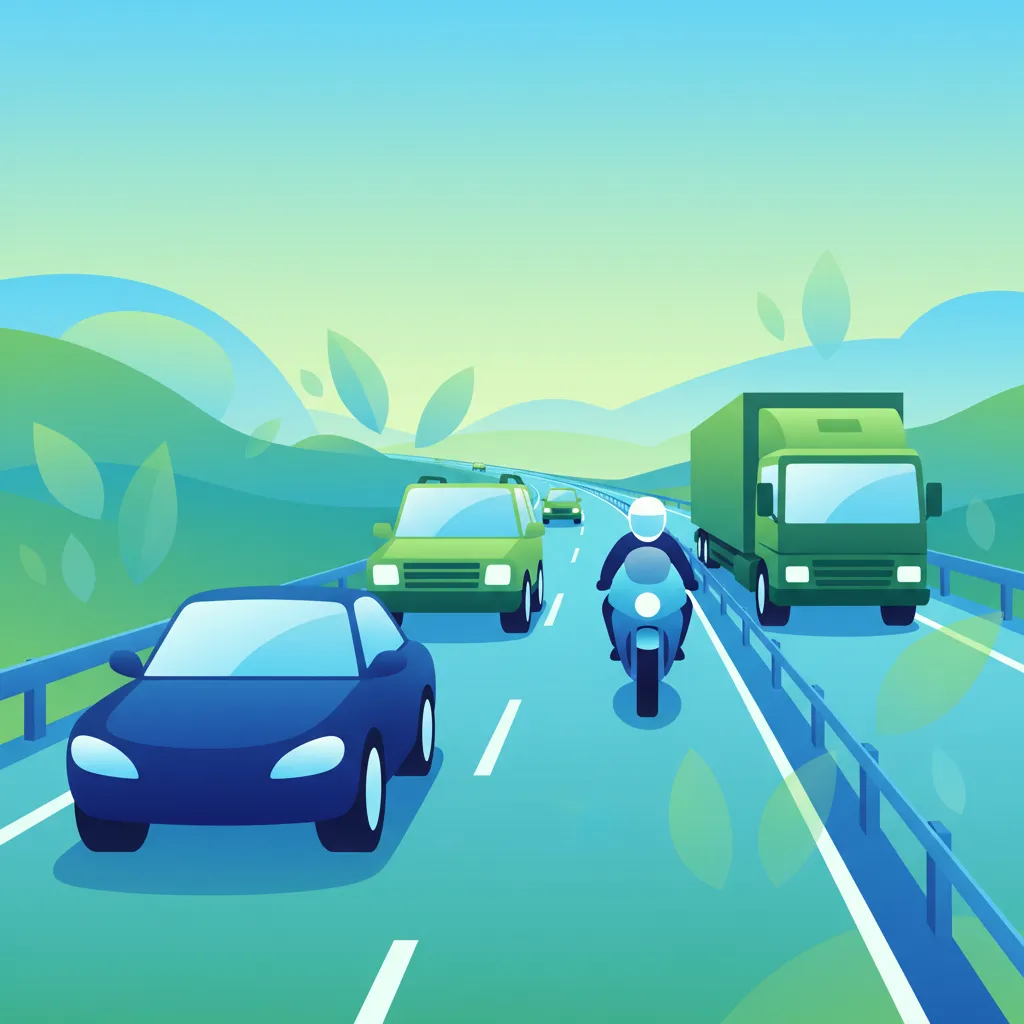
This lesson examines the principles of maintaining a safe following distance, including the 'two-second rule' and its adjustments for speed and weather. It focuses on effective blind-spot management, teaching drivers how to use mirrors and head checks. The content integrates DGT guidelines on creating a safety buffer around the vehicle to allow time to react to unexpected events.

This lesson examines the interaction between large vehicles, such as trucks, and vulnerable road users within roundabouts. It addresses the wide turning radius of heavy vehicles, the importance of checking blind spots, and the correct yielding behavior toward pedestrians and cyclists. Learners will understand how to maintain safe distances and anticipate the movements of different road users.

In this lesson, learners will acquire the necessary skills to maneuver buses and coaches within confined areas such as narrow city streets, bus depots, and passenger terminals. It details techniques for reverse driving, tight cornering, and parallel parking, emphasizing the critical importance of blind spot awareness and precise low-speed control. The content focuses on developing spatial awareness to avoid collisions while maintaining passenger comfort.
In this lesson, drivers learn how to identify risk zones where potential hazards are likely to develop. The content explains the use of proactive observation and scanning techniques to detect evolving dangers in the driving environment. Learners will practice anticipating the actions of other road users based on traffic patterns and context, adjusting their speed and position accordingly.

This lesson provides strategies for navigating tight, confined environments such as multi-story car parks and narrow urban lanes. It emphasizes the importance of slow and controlled movements, constant observation, and a thorough understanding of the vehicle's dimensions and turning circle. Learners will develop the skills to maneuver with precision while avoiding obstacles.

This lesson focuses on interaction dynamics with larger vehicles like cars, trucks, and buses, detailing their specific blind spot zones. Strategies for safely sharing lanes, overtaking etiquette, and proper approach when a bus stops are covered. The lesson also includes guidance on merging onto acceleration lanes following DGT policies.
Analyze real-world driving scenarios and identify common mistakes related to defensive driving for bus and coach drivers in Spain. This lesson provides practical examples of hazard anticipation, following distance, and space cushion management to enhance safe driving practices for the DGT theory.
In this lesson, learners will acquire the necessary skills to maneuver buses and coaches within confined areas such as narrow city streets, bus depots, and passenger terminals. It details techniques for reverse driving, tight cornering, and parallel parking, emphasizing the critical importance of blind spot awareness and precise low-speed control. The content focuses on developing spatial awareness to avoid collisions while maintaining passenger comfort.

This lesson addresses overtaking procedures and lane discipline specifically for large coaches, emphasizing correct lane positioning and safe passing practices on multi-lane highways. It covers the legal rules for overtaking, the critical need for comprehensive blind spot checks before changing lanes, and the importance of signaling intentions early. Learners will also be taught how to maintain appropriate safety gaps when maneuvering around slower-moving traffic.

This lesson addresses the dynamics of traffic conflicts, teaching drivers how to resolve right-of-way disputes and de-escalate potentially tense situations on the road. Learners will explore negotiation tactics, safe yielding practices, and strategies for remaining calm when encountering aggressive behavior from other drivers. The module emphasizes proper road etiquette and proactive conflict avoidance to help maintain a safe and courteous traffic environment.

This lesson is focused on the early identification of road hazards through the application of effective scanning techniques and the use of peripheral vision. Learners will practice recognizing visual cues that signal potential dangers, such as erratic vehicle movements, unexpected obstacles, or pedestrian behavior. The module also teaches proactive response strategies designed to mitigate these risks before they can escalate into dangerous situations.
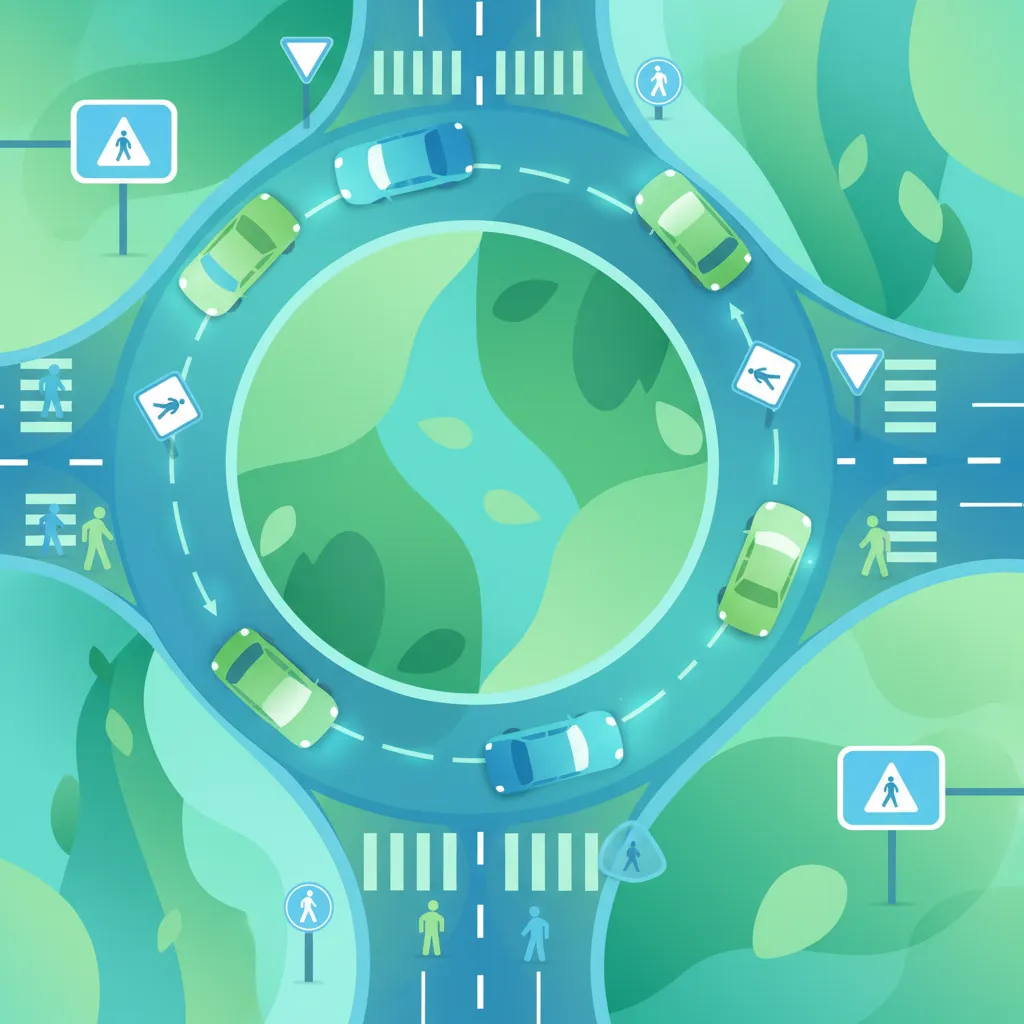
This lesson offers a comprehensive guide to navigating roundabouts in urban settings, explaining the correct protocols for entry, yielding, and circulation. Learners will be taught how to interpret lane markings and signage on multi-lane roundabouts and determine the correct vehicle positioning for safe entry and exit. The content emphasizes full compliance with Spanish city regulations that govern priority and right-of-way at these intersections.

This lesson outlines the best practices for precise vehicle positioning at urban bus stops and ensuring safe interaction with passengers. It covers the management of approach speed, correct alignment with the curb, and effective communication during boarding and alighting processes. Learners will also study how stopping maneuvers impact surrounding traffic flow and the importance of maintaining safety distances for efficient service.
This lesson examines the principles of maintaining a safe following distance, including the 'two-second rule' and its adjustments for speed and weather. It focuses on effective blind-spot management, teaching drivers how to use mirrors and head checks. The content integrates DGT guidelines on creating a safety buffer around the vehicle to allow time to react to unexpected events.

This lesson details the standard dimensions of buses and coaches, including length, width, height, and wheelbase. It explains how these measurements determine the vehicle's turning circle and its ability to maneuver in tight urban spaces with lane constraints. Learners will understand how to calculate necessary clearance zones and anticipate spatial needs to ensure safe and efficient operation.
Find clear answers to common questions learners have about Defensive Driving Strategies. Learn how the lesson is structured, which driving theory objectives it supports, and how it fits into the overall learning path of units and curriculum progression in Spain. These explanations help you understand key concepts, lesson flow, and exam focused study goals.
The space cushion refers to the safety margin you maintain around your bus – in front, behind, and to the sides. For a large vehicle like a bus, this cushion is even more critical. It provides you with adequate time and space to react to sudden braking, lane changes, or other hazards, ensuring you can stop or maneuver safely without impacting other vehicles or passengers.
The two-second rule is a minimum guideline for following distance. In Spain, as with most countries, it's essential for bus drivers. However, for large vehicles, especially in adverse weather or when carrying many passengers, you may need to increase this to three or even four seconds to ensure sufficient stopping distance and reaction time, adhering to DGT's safety focus.
Buses are larger, heavier, and have greater blind spots than standard cars. This means they require more time and space to stop and maneuver. Anticipating hazards – such as a child running into the street, a car suddenly braking, or a pedestrian stepping out from behind a parked vehicle – allows the driver to react proactively rather than reactively, which is vital for preventing accidents involving vulnerable road users.
Practicing defensive driving involves constant vigilance and applying learned strategies. In the context of your DGT theory preparation, it means carefully studying scenarios in the app, understanding why certain actions are safer, and visualizing yourself applying these techniques. On the road, it translates to always scanning ahead, checking mirrors frequently, being aware of your surroundings, and planning your moves well in advance, always considering the unique dynamics of your bus.
Common mistakes include tailgating (not maintaining a safe following distance), not checking blind spots adequately before changing lanes or turning, driving while fatigued, being distracted by passengers or devices, and reacting too late to potential hazards. Defensive driving means actively working to avoid these errors by staying focused, planning ahead, and always prioritizing safety above speed or convenience.
Use our powerful search functionality to pinpoint specific Spanish DGT driving theory practice sets. Filter by road sign categories, traffic law topics, or question difficulty to build custom study sessions and reinforce your knowledge precisely where it matters for your official exam.