
This lesson is crucial for professional truck drivers preparing for their DGT Category C and C1 licence in Spain. You will learn about all legally required emergency equipment, such as first-aid kits, fire extinguishers, warning triangles, and high-visibility vests. Understanding their proper use and performing regular checks is vital for managing on-road emergencies effectively, ensuring both your safety and that of others.
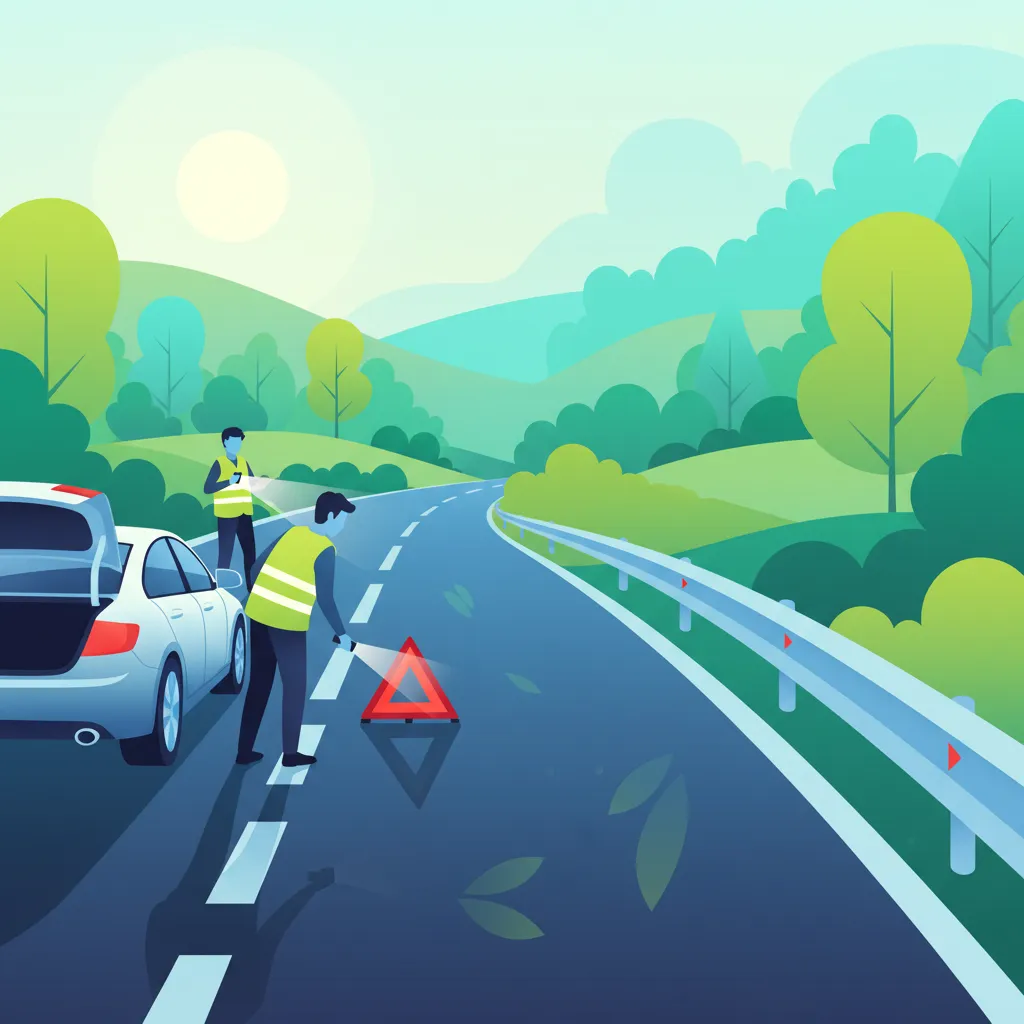
Lesson content overview
In the Official DGT Theory Course for Spanish Truck Licence Category C & C1, mastering emergency preparedness is paramount. This includes a thorough understanding of all legally required emergency equipment, its proper use, and the critical skill of mentally rehearsing emergency procedures. Professional drivers face unique challenges on the road, and being fully prepared for unforeseen incidents – from a simple breakdown to a more serious accident or fire – is not just about compliance, but about ensuring personal safety, the safety of others, and the integrity of the cargo and vehicle.
This lesson ensures that all Category C and C1 truck drivers are intimately familiar with their vehicle's emergency provisions. We will cover the specific items mandated by Spanish traffic regulations (DGT), how to maintain them, where to store them for quick access, and the methodology behind mental safety drills. By internalizing these practices, you can transform potential panic into a structured, effective response, minimizing risks and adhering to legal obligations under pressure.
Spanish DGT regulations stipulate specific emergency equipment that must be carried in all Category C and C1 professional trucks. These items are not optional extras; they are fundamental tools designed to mitigate risks and provide immediate assistance in a crisis. Ensuring their presence, functionality, and correct deployment is a core responsibility for every professional driver.
A well-stocked and readily accessible first-aid kit is indispensable for any vehicle, especially for professional trucks that often travel long distances or operate in remote areas. This kit is your immediate resource for treating injuries, ranging from minor cuts and abrasions to more severe wounds that require stabilization before professional medical help arrives. The DGT outlines specific requirements for the contents of these kits, ensuring they are comprehensive enough to address common roadside emergencies.
The first-aid kit must contain items such as sterile bandages, antiseptic wipes, scissors, adhesive tape, disposable gloves, and a resuscitation mask. It is critical to regularly check the kit's contents, ensuring that all items are present, in good condition, and have not passed their expiration dates. A kit with expired or missing items is as good as no kit at all in a real emergency. For instance, after a collision, the driver might use the kit to apply pressure to stop bleeding or to immobilize a limb until emergency services arrive. Do not assume a general household kit will suffice; DGT specifications are precise for professional vehicles.
Fires in heavy vehicles, while infrequent, can be devastating due to the presence of fuel, oil, and electrical systems. A certified fire extinguisher provides the driver with a crucial tool to suppress small fires quickly, preventing them from escalating into catastrophic events. For Category C and C1 trucks, the DGT mandates a specific type and rating of extinguisher to ensure it is effective against the most likely types of fires encountered.
According to DGT Article 5.1.3, all professional trucks, especially those over 3.5 tonnes, must carry a fire extinguisher with a minimum rating of 2 kg of dry-powder (type ABC). This type is versatile, suitable for fires involving solids (A), liquids (B), and electrical equipment (C). The extinguisher must be securely mounted in an easily accessible location within the vehicle, typically in the cabin or a designated, clearly marked compartment. Annual inspection of the extinguisher is mandatory, involving checking the pressure gauge to ensure it is in the operational range and verifying the last service date. A common mistake is using a small car extinguisher, which is inadequate for a heavy-duty truck, or neglecting the pressure gauge, which indicates its readiness. Should an engine overheat and start to emit smoke, the driver’s immediate action would be to retrieve this extinguisher and direct its spray at the base of the fire.
When a truck is forced to stop on the roadway due to a breakdown or accident, it instantly becomes a hazard to other road users. Warning triangles are highly visible, reflective devices designed to alert approaching traffic to the presence of a stationary vehicle from a safe distance, thereby reducing the risk of rear-end collisions.
DGT Article 5.1.4 requires Category C and C1 trucks to carry at least two warning triangles. These must be placed at specific minimum distances: at least 30 meters behind the vehicle on highways and at least 15 meters on ordinary roads. The purpose is to provide sufficient warning distance for other drivers to react safely, especially given the high speeds on motorways. It's a common misunderstanding to place triangles too close to the vehicle, which offers insufficient warning, or to forget to deploy them altogether, particularly on motorways where speeds are high. In an emergency stop, a driver should activate hazard lights, then don their high-visibility vest before placing one triangle 30 meters behind the vehicle and, if safe and necessary, another 30 meters ahead.
A high-visibility safety vest is a simple yet critical piece of personal protective equipment for professional drivers. Its purpose is to make the driver easily discernible to other road users, significantly reducing the risk of being struck when exiting the vehicle on a public road, especially in low light or adverse weather conditions.
DGT Article 5.1.5 mandates that the high-visibility safety vest must be worn before the driver leaves the vehicle in an emergency situation on a public road. This includes breakdowns, accidents, or any scenario requiring the driver to be on or near the roadway. The vest must be in good condition and easily accessible, typically stored within the cabin. Forgetting to wear the vest, particularly in tunnels, at night, or during heavy rain, dramatically compromises the driver's safety. For instance, when a truck breaks down on a motorway shoulder during a rainy night, the driver must put on the vest before even opening the door to step out and place warning triangles.
The mere presence of emergency equipment is not enough; its effectiveness hinges on its integrity and operational condition. Professional drivers are legally and ethically obligated to ensure that all mandatory equipment is well-maintained and ready for immediate use. This involves a systematic approach to checks and maintenance.
Equipment integrity means verifying that each item meets certification standards, is within its expiration dates, and remains fully functional. For example, a first-aid kit with expired antiseptics or a fire extinguisher with a faulty pressure gauge is effectively useless in an emergency. Regular inspections prevent equipment failure during a critical moment. Establishing a routine inspection schedule is key, and any item that is damaged, used, or expired must be immediately replaced. This vigilance is crucial for compliance and, more importantly, for ensuring that these life-saving tools perform when needed most.
Efficient emergency response is not only about having the right tools but also about being able to access them quickly and safely. The storage of emergency equipment in a Category C or C1 truck is a critical consideration, impacting both response time and overall vehicle safety.
All emergency gear must be stored in a location that is easily reachable, even in stressful situations, and without compromising load stability. Typically, this means securing items within the cabin or in clearly designated, accessible exterior compartments. Storing equipment under a heavy load, for example, would obstruct access and delay response, potentially exacerbating an emergency. Ensure that even in a fully loaded truck, the first-aid kit, fire extinguisher, warning triangles, and high-visibility vest can be retrieved in seconds. This principle ensures that precious time is not lost searching for or freeing up vital equipment when every second counts.
Beyond carrying the right equipment, a professional driver's readiness is significantly enhanced by mental safety drills. These are cognitive rehearsal techniques that simulate emergency scenarios, allowing the driver to internalize step-by-step responses without being in actual danger. While not legally mandated by the DGT, these drills are highly recommended for professional drivers as a best practice to improve reaction speed and decision quality under pressure.
Mental drills cultivate a cognitive framework that enables rapid, ordered actions, reducing panic and errors during a real emergency. They are not a replacement for actual equipment checks but a complementary strategy that prepares the mind. Drivers should periodically rehearse scenarios and continuously adapt their mental plans based on new road conditions, vehicle types, or cargo.
A highly effective mental safety drill framework is "Stop-Check-Signal-Assist":
Stop Safely: Mentally rehearse pulling the vehicle off the road safely, activating hazard lights, and securing the vehicle (parking brake).
Check Environment & Equipment: Consider the immediate surroundings (traffic, weather), check for vehicle damage, and confirm the accessibility and condition of emergency equipment.
Signal & Secure: Practice deploying warning triangles at correct distances, donning the high-visibility vest, and ensuring the driver's safety zone.
Assist & Act: Rehearse administering first aid if needed, using the fire extinguisher, or calling for roadside assistance and emergency services.
Integrating mental drills into your routine doesn't require extra time; it can be done during quiet moments in traffic, while waiting, or before starting a long journey. For instance, before setting off, a driver might quickly visualize: "What if I have a tire blow-out on this motorway section? Where would I pull over? How would I deploy my triangles and vest?" This consistent, low-stress rehearsal builds muscle memory for critical decision-making, ensuring a more measured and effective response when a real emergency strikes.
Adherence to DGT articles concerning emergency equipment and its usage is not just a recommendation; it is a legal requirement for all drivers operating Category C and C1 vehicles in Spain. Failure to comply can result in significant fines, demerit points on your driving licence, and increased liability in the event of an accident.
The key DGT articles governing emergency equipment for professional trucks include:
| Regulation | Rule Statement | Applicability | Legal Status | Rationale | Correct Example | Incorrect Example |
|---|---|---|---|---|---|---|
| DGT Article 5.1.2 | A first-aid kit must be present in the vehicle at all times. | All Category C & C1 vehicles on public roads. | Mandatory | Enables immediate medical care after accidents. | Driver has a complete kit with up-to-date consumables. | Driver’s kit missing gauze or past expiration dates. |
| DGT Article 5.1.3 | A fire extinguisher of at least 2 kg dry-powder rating must be carried and inspected annually. | Professional trucks, especially those over 3.5 t. | Mandatory | Allows suppression of small fires before escalation. | Annual inspection log shows a valid pressure reading. | Extinguisher pressure gauge indicates “0”; not replaced. |
| DGT Article 5.1.4 | Two warning triangles must be placed at minimum distances (30 m on highways, 15 m on other roads) from the stopped vehicle. | Any roadside stop, breakdown, or accident. | Mandatory | Warns following traffic to reduce collision risk. | Driver places triangles correctly after a breakdown on a motorway. | Driver places only one triangle or places them too close. |
| DGT Article 5.1.5 | High-visibility safety vest must be worn by the driver when exiting the vehicle during an emergency. | Any situation where the driver leaves the vehicle on a public road. | Mandatory | Improves driver visibility to other road users. | Driver dons vest before walking to the roadside. | Driver exits without vest in low-light conditions. |
| DGT Regulation 2-425 | Hazard warning lights (emergency flashing) must be activated when the vehicle is stationary and presents a hazard. | All vehicles stopped due to breakdown, accident, or obstruction. | Mandatory | Alerts surrounding traffic of a potential danger. | Driver turns on hazard lights after stopping on shoulder. | Hazard lights remain off while vehicle is disabled on road. |
These regulations are designed to establish uniform safety standards, ensuring that all professional drivers are equipped and prepared to handle emergencies, thereby protecting themselves and other road users.
Neglecting DGT regulations regarding emergency equipment can lead to serious consequences beyond just fines. These violations compromise safety and increase legal liability.
These violations are not merely administrative oversights; they represent a significant compromise of safety protocols that can have immediate and severe repercussions.
The effectiveness of emergency equipment and drills is highly dependent on adapting to the specific conditions of an incident. Weather, lighting, road type, and even the vehicle's state all influence the best course of action. Professional drivers must be prepared to adjust their response accordingly.
When an emergency occurs, professional drivers must consider vulnerable road users such as cyclists, pedestrians, and motorcyclists. Extra caution is needed when moving onto the roadway or assessing the scene. The high-visibility vest is essential to ensure you are seen by these users, who may have limited sight ranges or may not expect a stationary truck. Proper triangle placement reduces collision risk for all, including those on two wheels or on foot. Always ensure that any actions taken do not inadvertently create new hazards for these users.
The disciplined application of knowledge regarding emergency equipment and safety drills has profound impacts, directly affecting safety, legal standing, and operational efficiency.
Conversely, neglecting these preparations leads to increased injury severity, inability to suppress fires, higher collision risks, and potentially fatal accidents. In Spain, statistical data indicates that breakdowns without proper warning equipment contribute to a significant percentage of secondary collisions on motorways. Beyond safety, failure to comply with DGT regulations can lead to substantial fines and demerit points, alongside increased civil liability in accident litigation.
Understanding theory is one thing; applying it under pressure is another. These scenarios illustrate how emergency equipment and safety drills come into play in real-world professional driving situations.
Setting: A Category C truck experiences an engine failure on the hard shoulder of the A-7 motorway during moderate snowfall. Visibility is reduced. Rule: Activate hazard lights, wear a high-visibility vest before exiting the vehicle, and place two warning triangles at least 30 meters behind and ahead of the truck. Correct Behavior: The driver immediately activates hazard lights. Before opening the door, they don their high-visibility vest. Cautiously, they exit the vehicle, walk 30 meters along the hard shoulder (against the flow of traffic for better visibility of oncoming cars), and securely place the first warning triangle, ensuring it is visible above the snow. They then walk 30 meters ahead of the truck and place the second triangle. Incorrect Behavior: The driver simply turns on hazard lights. They exit the vehicle without a vest to quickly place one triangle just 10 meters behind the truck, then wait behind the vehicle, making themselves difficult to see by passing traffic in the snow and creating insufficient warning distance. Explanation: Proper warning devices and high-visibility clothing are crucial in adverse weather conditions to protect both the driver and passing traffic from secondary collisions. The increased distance ensures drivers have more time to react in reduced visibility.
Setting: A minor collision at a busy city intersection results in a passenger in the truck sustaining a minor leg injury, causing some bleeding. Rule: Provide immediate first aid using the certified first-aid kit before emergency services arrive. Correct Behavior: The driver, after securing the vehicle and activating hazard lights, retrieves the first-aid kit. They don gloves, assess the injury, and apply a pressure dressing to stop the bleeding, comforting the passenger while waiting for paramedics. Incorrect Behavior: The driver, flustered by the collision and traffic, calls emergency services but neglects to check the passenger or use the first-aid kit, allowing the bleeding to continue unnecessarily. Explanation: Prompt and effective first aid, even for minor injuries, can significantly reduce medical severity and stabilize the injured person until professional medical help is available.
Setting: While traveling at 90 km/h on a highway, the driver of a Category C truck experiences a sudden and severe load shift, making the vehicle unstable. Rule: Perform a mental safety drill to manage the situation, bring the vehicle to a safe stop, and then secure the load and deploy emergency equipment. Correct Behavior: The driver immediately engages their mental safety drill: they reduce speed gradually, activate hazard lights, carefully steer to the nearest safe pull-off area (hard shoulder or rest stop), and bring the vehicle to a controlled stop. Once stopped, they don their high-visibility vest, deploy warning triangles, and only then assess the shifted load and determine if it can be safely re-secured or if assistance is needed. Incorrect Behavior: The driver attempts to correct the load while continuing to drive, or brakes harshly in the middle lane, leading to a loss of control and a potentially severe accident due to the unstable load and sudden stop. Explanation: The mental drill structures the driver's response, prioritizing vehicle control and safety before addressing the root cause, preventing an escalation of the emergency.
This lesson has underscored the indispensable role of emergency equipment and mental safety drills in the professional life of a Category C and C1 truck driver. Understanding and diligently applying DGT regulations related to first-aid kits, fire extinguishers, warning triangles, and high-visibility vests is not merely a matter of legal compliance; it is a fundamental aspect of proactive safety management.
By integrating regular equipment checks, ensuring optimal storage, and consistently performing mental safety drills, you cultivate a state of continuous preparedness. This readiness minimizes the impact of unforeseen events, enhances your ability to respond effectively under pressure, and ultimately contributes to safer roads for everyone. Professional driving demands this level of vigilance, transforming potential chaos into controlled, effective emergency management.
This lesson covers DGT-mandated emergency equipment for Spanish Category C and C1 trucks, including first-aid kits, fire extinguishers, warning triangles, and high-visibility vests with their specific standards and usage requirements. It emphasizes the critical importance of regular equipment integrity checks to ensure items are present, functional, and within expiration dates. The lesson introduces the practical 'Stop-Check-Signal-Assist' mental safety drill framework for structured emergency responses, and addresses conditional variations for different weather conditions, road types, and vehicle states. Understanding and applying these regulations is essential for both DGT theory exam success and real-world safety compliance.
A short set of high-value points that capture the most important learning from this lesson.
DGT mandates that all Category C and C1 trucks carry a fire extinguisher of at least 2 kg dry-powder (ABC type) meeting UNE-EN 3 standards, inspected annually
Two warning triangles meeting UNE-EN 12899 must be deployed at least 30 meters behind the vehicle on motorways and 15 meters on ordinary roads
The high-visibility safety vest meeting UNE-EN ISO 20471 must be worn BEFORE exiting the vehicle during any emergency on a public road
Emergency equipment must be stored in accessible locations even when the truck is fully loaded; storing gear under cargo is dangerous
The 'Stop-Check-Signal-Assist' mental drill framework structures emergency responses to reduce panic and improve reaction time
Explore all units and lessons included in this driving theory course.
First-aid kit contents must be complete, in good condition, and within expiration dates; a kit with expired antiseptics or missing items is ineffective
Fire extinguisher pressure gauge must show operational range; an unchecked extinguisher is as dangerous as having none
Warning triangles must be placed at correct distances (30m/15m) regardless of road conditions, with increased distance recommended in poor visibility
The high-visibility vest is mandatory even during daylight; it becomes absolutely critical at night, in rain, fog, or tunnels
Hazard warning lights must be activated immediately when the vehicle becomes a hazard, before deploying other warning equipment
Using a small car fire extinguisher instead of the required 2 kg minimum rated for heavy vehicles
Placing warning triangles too close to the vehicle (e.g., 5 meters on a motorway) instead of the required 30 meters, providing insufficient warning distance
Exiting the vehicle without wearing the high-visibility vest first, especially in low-light or adverse weather conditions
Storing emergency equipment under cargo or in inaccessible locations, causing critical delays during emergencies
Forgetting to activate hazard lights when stopped as a hazard, leaving other road users unaware of the obstruction
Lesson content overview
A short set of high-value points that capture the most important learning from this lesson.
DGT mandates that all Category C and C1 trucks carry a fire extinguisher of at least 2 kg dry-powder (ABC type) meeting UNE-EN 3 standards, inspected annually
Two warning triangles meeting UNE-EN 12899 must be deployed at least 30 meters behind the vehicle on motorways and 15 meters on ordinary roads
The high-visibility safety vest meeting UNE-EN ISO 20471 must be worn BEFORE exiting the vehicle during any emergency on a public road
Emergency equipment must be stored in accessible locations even when the truck is fully loaded; storing gear under cargo is dangerous
The 'Stop-Check-Signal-Assist' mental drill framework structures emergency responses to reduce panic and improve reaction time
Explore all units and lessons included in this driving theory course.
First-aid kit contents must be complete, in good condition, and within expiration dates; a kit with expired antiseptics or missing items is ineffective
Fire extinguisher pressure gauge must show operational range; an unchecked extinguisher is as dangerous as having none
Warning triangles must be placed at correct distances (30m/15m) regardless of road conditions, with increased distance recommended in poor visibility
The high-visibility vest is mandatory even during daylight; it becomes absolutely critical at night, in rain, fog, or tunnels
Hazard warning lights must be activated immediately when the vehicle becomes a hazard, before deploying other warning equipment
Using a small car fire extinguisher instead of the required 2 kg minimum rated for heavy vehicles
Placing warning triangles too close to the vehicle (e.g., 5 meters on a motorway) instead of the required 30 meters, providing insufficient warning distance
Exiting the vehicle without wearing the high-visibility vest first, especially in low-light or adverse weather conditions
Storing emergency equipment under cargo or in inaccessible locations, causing critical delays during emergencies
Forgetting to activate hazard lights when stopped as a hazard, leaving other road users unaware of the obstruction
Explore search topics learners often look for when studying Emergency Equipment and Safety Drills. These topics reflect common questions about road rules, driving situations, safety guidance, and lesson level theory preparation for learners in Spain.
Browse additional driving theory lessons that cover connected traffic rules, road signs, and common driving situations related to this topic. Improve your understanding of how different rules interact across everyday traffic scenarios.
Understand the mandatory emergency equipment for Category C and C1 trucks in Spain according to DGT regulations. Covers first-aid kits, fire extinguishers, warning triangles, and safety vests, detailing legal specifications and compliance.
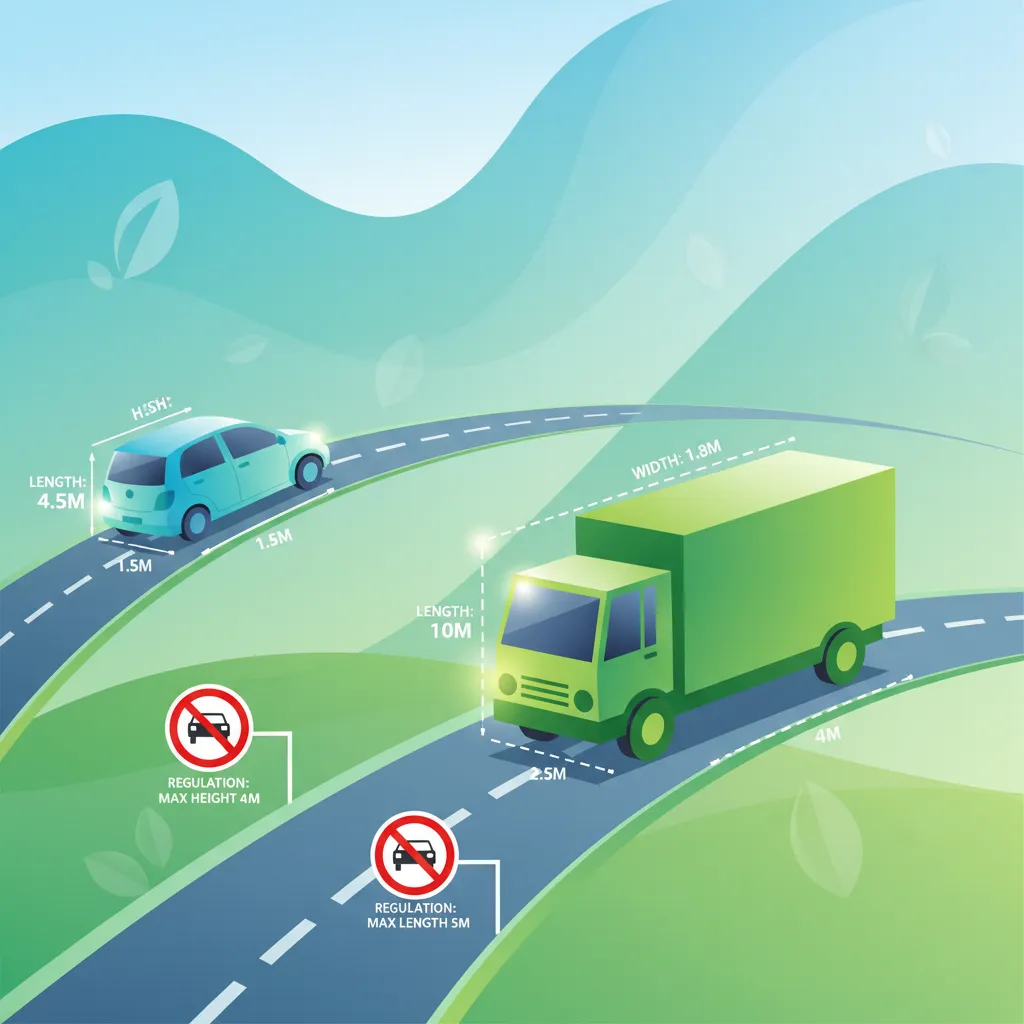
This lesson provides a detailed breakdown of the maximum permissible length, width, and height for heavy vehicles according to Spanish and EU regulations. It explains how these dimensions are measured and how they affect vehicle classification and route planning. The content emphasizes the critical importance of respecting clearance signs for bridges, tunnels, and other overhead structures to prevent accidents.

This lesson focuses on the core principles of defensive driving as they apply to operating a large truck. It explains the importance of managing the space around the vehicle to create a safety buffer and always having an 'escape route' in mind. The content emphasizes anticipating the actions of other road users and being prepared to react calmly and safely to unexpected situations.
This lesson outlines the correct and legally required procedures to follow in the event of a traffic incident or accident. It covers the driver's immediate responsibilities at the scene, including securing the area and contacting emergency services. The content details the process for documenting the incident and formally reporting it to the DGT and insurance companies as required by law.

This lesson addresses the procedures for responding to two critical emergencies: vehicle fires and hazardous material spills. It covers the different classes of fire and the correct use of a fire extinguisher. The content also explains the initial steps a driver should take in the event of a hazardous material leak, including isolating the area, notifying authorities, and following established safety protocols.

This lesson provides a step-by-step guide on what to do when a vehicle breaks down on the road. It explains how to safely bring the truck to a stop, activate hazard warnings, and place reflective warning triangles as required by law. The content also covers the procedures for contacting roadside assistance and communicating the nature of the problem and the vehicle's location accurately.
This lesson provides a broad overview of the key traffic regulations in Spain that directly impact professional truck drivers. It details the rules of priority at intersections, the interpretation of different road markings, and the principles of correct lane discipline. Furthermore, it explains the specific speed limits applicable to heavy vehicles and the legal protocols for safe overtaking and signaling.

This lesson addresses the practical aspects of maneuvering a large vehicle in various environments. It explains concepts like turning radius, off-tracking, and the vehicle's total footprint, which determine the space needed for turns and other maneuvers. Learners will develop the spatial awareness required to navigate tight corners, loading bays, and urban streets while maintaining safe clearance from obstacles.
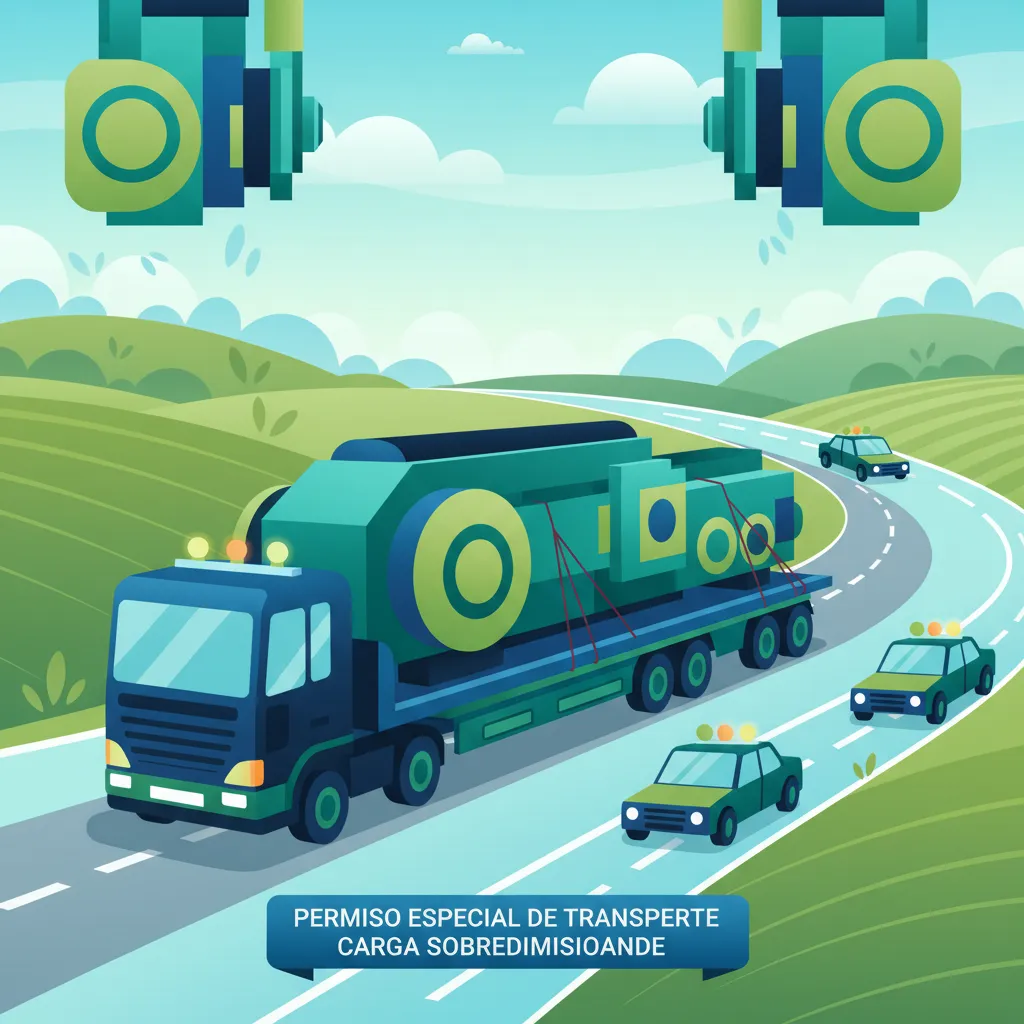
This lesson addresses the special regulations that apply to transporting loads that exceed standard legal dimensions or weight. It explains the process for obtaining the necessary special permits from the DGT and other authorities. The content also covers the requirements for route planning, the use of escort vehicles (pilot cars), and the mandatory signage and lighting for the vehicle.
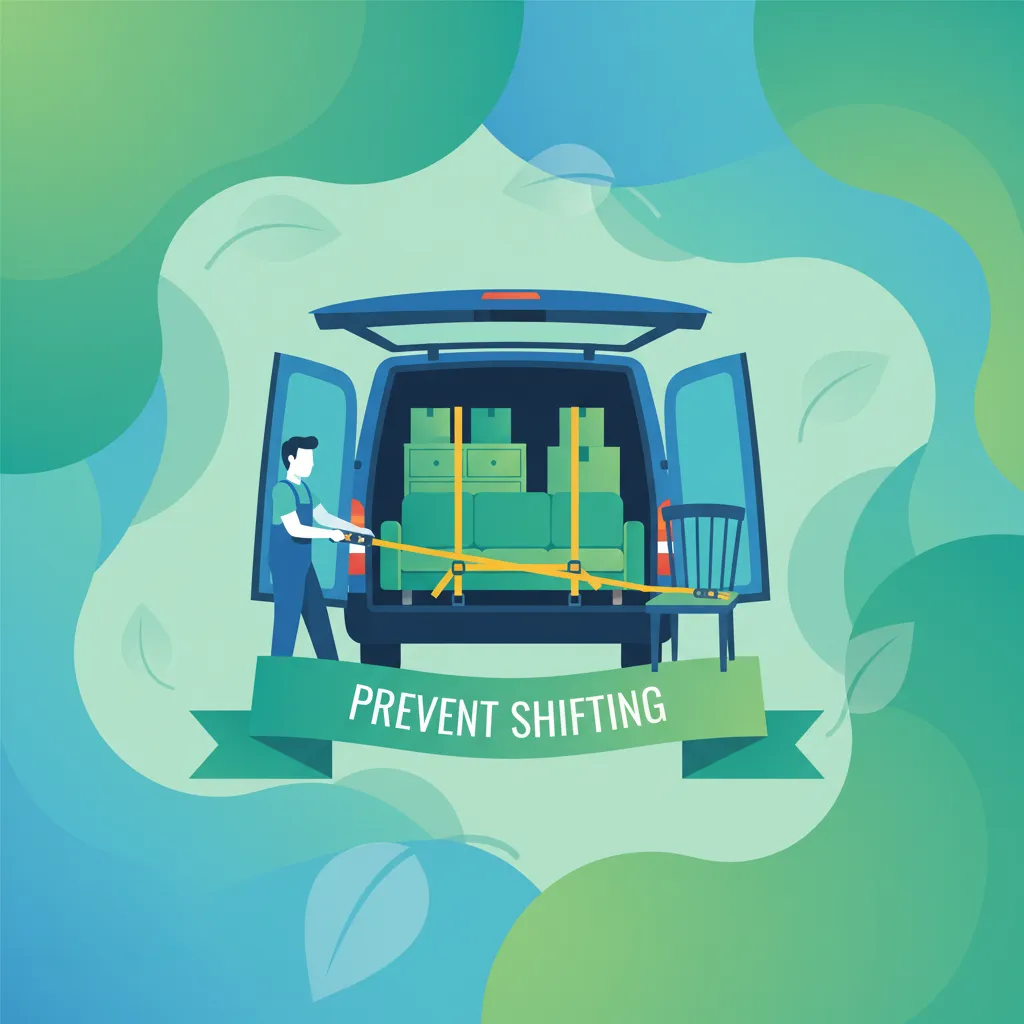
This lesson covers the legal requirements and practical techniques for securing cargo on a commercial vehicle. It details the various types of approved securement equipment, such as straps, chains, and blocking materials. Learners will understand the DGT regulations regarding the number and strength of tie-downs required for different types and weights of cargo to ensure it remains stable.

This lesson provides a step-by-step guide to the licensing process for professional truck drivers in Spain. It covers the necessary administrative procedures, including the mandatory medical examination and psychotechnical tests required for eligibility. Learners will understand the full scope of documentation needed for the application, such as training certificates and identity verification, to ensure a smooth process.
Learn to handle common emergency situations with trucks through guided scenarios and mental safety drills. Focuses on effective response, use of equipment, and adapting to varying conditions for Category C drivers.
This lesson addresses the procedures for responding to two critical emergencies: vehicle fires and hazardous material spills. It covers the different classes of fire and the correct use of a fire extinguisher. The content also explains the initial steps a driver should take in the event of a hazardous material leak, including isolating the area, notifying authorities, and following established safety protocols.
Find clear answers to common questions learners have about Emergency Equipment and Safety Drills. Learn how the lesson is structured, which driving theory objectives it supports, and how it fits into the overall learning path of units and curriculum progression in Spain. These explanations help you understand key concepts, lesson flow, and exam focused study goals.
According to DGT regulations, Category C and C1 trucks must carry a first-aid kit, a fire extinguisher (the type and capacity depend on the vehicle's maximum authorised mass), at least two warning triangles, and a high-visibility safety vest for the driver. It's crucial that all items are approved and in good condition.
While there isn't a specific DGT-mandated frequency, it's highly recommended to check your emergency equipment at least before every long journey and periodically during routine vehicle inspections. Ensure the fire extinguisher is charged, the first-aid kit is complete and unexpired, and triangles/vests are accessible and undamaged.
If your truck breaks down or is involved in an accident, you must wear the high-visibility vest before leaving the vehicle. Place one warning triangle at least 50 meters behind the vehicle and another at least 50 meters in front (if on a two-way road) or two triangles behind (if on a one-way road or motorway). They should be visible from at least 100 meters.
Yes, DGT regulations specify different capacities and types of fire extinguishers based on the Maximum Authorised Mass (MMA) of the vehicle. Lighter commercial vehicles (C1) may require a smaller extinguisher, while heavier trucks (C) will need a larger capacity one, often a 6kg dry powder type. Always check the specific requirements for your vehicle's MMA.
Mental safety drills involve mentally rehearsing how you would react to various emergency scenarios, such as a tire blowout, brake failure, or engine fire. This practice helps to reduce panic, improve reaction time, and ensure you follow correct procedures instinctively, which is critical for safety and compliance during actual incidents.
Use our powerful search functionality to pinpoint specific Spanish DGT driving theory practice sets. Filter by road sign categories, traffic law topics, or question difficulty to build custom study sessions and reinforce your knowledge precisely where it matters for your official exam.