
This lesson guides you through the legal and practical requirements for using rest areas and parking heavy goods vehicles in Switzerland. It builds on your understanding of vehicle weight and load security, ensuring you can manage fatigue while keeping your vehicle and cargo secure during necessary breaks. Mastering these rules is essential for both your theory exam and your professional driving career.
Lesson content overview
Long-distance journeys with heavy goods vehicles (Category C & C1) demand meticulous planning and adherence to strict safety protocols, especially concerning rest breaks and secure parking. Driver fatigue is a significant factor in road accidents, making regular, legally mandated breaks not just a recommendation but a critical safety requirement. Beyond fatigue management, the safe and secure parking of large vehicles at designated rest areas is paramount to prevent accidents, deter theft, and ensure the stability of the cargo. This lesson details the legal obligations and practical measures for professional drivers operating in Switzerland to safely utilize rest areas and immobilize their vehicles.
Professional drivers of heavy goods vehicles are subject to stringent regulations regarding driving and rest times. These rules are designed to prevent fatigue, maintain driver alertness, and ultimately enhance road safety for everyone.
Fatigue significantly impairs a driver's ability to concentrate, reduces reaction times, and compromises decision-making skills. Even minor lapses in attention can have catastrophic consequences when operating a large and heavy vehicle. Regular, sufficient rest is the only effective way to counter the cumulative effects of prolonged driving.
Under Swiss law, which aligns with European Union regulations (such as EU Directive 2002/15/EC), professional drivers are legally required to take specific breaks. A fundamental rule dictates a minimum 45-minute rest break after a maximum of 4.5 hours of continuous driving. This break can be taken in a single block or split into shorter periods, provided the first break is at least 15 minutes and the second is at least 30 minutes, totaling 45 minutes within the 4.5-hour driving period. These scheduled breaks are distinct from daily and weekly rest periods, which also have their own minimum duration requirements to ensure adequate recovery.
Always plan your route to include suitable rest stops. Anticipate your break times and identify designated lorry parks well in advance to avoid exceeding your driving limits.
Proper use of rest areas is crucial for compliance and safety. Heavy goods vehicles require specific facilities that differ from those for passenger cars.
Service areas and motorway rest stops in Switzerland are equipped with specific zones for heavy goods vehicles, known as lorry parks. These areas are clearly marked with signage indicating their purpose. Look for blue signs featuring a white truck icon. These signs ensure that you are parking in an area designed to accommodate the size, weight, and specific needs of your vehicle.
Parking in designated lorry parks offers several advantages and is often a legal requirement. These zones are built with stronger surfaces to support the weight of heavy vehicles, provide sufficient space for maneuvering, and are strategically located to minimize disruption to other traffic. Parking outside these areas, such as in passenger car zones, can lead to fines, obstruct traffic flow, and potentially damage the road surface. Moreover, lorry parks are often monitored for security, which is beneficial for cargo protection.
Immobilizing a heavy goods vehicle, especially on uneven terrain, requires more than simply turning off the engine. A sequence of precise steps ensures the vehicle remains stationary and safe.
The parking brake is the primary mechanism for immobilizing your heavy goods vehicle. It must be engaged every time you leave the vehicle, regardless of whether the ground appears flat. For Category C and C1 vehicles, this typically involves a robust mechanical system, often a hand lever or a foot pedal, which locks the wheels. Some modern trucks may feature electronic parking brakes that engage automatically.
Bring the vehicle to a complete stop using the service brake.
Engage the parking brake fully, ensuring it is securely set. For manual systems, a distinct "click" or firm resistance indicates proper engagement.
Confirm the parking brake warning light on the dashboard is illuminated.
Before exiting, gently try to move the vehicle slightly to verify the brake holds firm.
Never rely solely on the service brake or leaving the vehicle in gear to keep it stationary. The parking brake is the only reliable and legal method for immobilizing a parked vehicle.
While the parking brake is essential, it may not be sufficient on its own, especially on slopes or in adverse weather conditions. Wheel chocks are wedge-shaped devices placed against the wheels to provide a physical barrier against movement. Swiss Vehicle Safety Ordinance (VSO) mandates the use of wheel chocks on inclines exceeding a certain gradient.
A wedge-shaped block placed against a vehicle's wheel to prevent accidental movement, particularly on inclines or when performing maintenance.
After applying the parking brake, assess the slope's gradient and direction (uphill or downhill).
Place the wheel chocks firmly against the wheels on the downhill side of the vehicle. For a single axle, place chocks behind both wheels. For multiple axles, choose the drive axle or the axle with the heaviest load.
Ensure the chocks are snug against the tire and the ground, preventing any play.
If the vehicle is parked across a slope, place chocks on the downhill side of both the front and rear axles.
The VSO mandates wheel chocks when parking on an incline greater than 2%. For steeper grades, or in conditions of reduced traction (ice, wet leaves), their use becomes even more critical.
The selection of gear can provide an additional layer of security, though it should never replace the proper use of the parking brake and wheel chocks.
A parked heavy goods vehicle, especially one left unattended during a break, can be a target for theft or tampering. Protecting your vehicle and its contents is an integral part of safe parking practices.
Before leaving your vehicle, it is essential to ensure that your cargo is secure and inaccessible. This involves:
Failure to secure cargo can lead to theft, damage, or even spillage of goods, creating a hazard for other road users or for the driver upon return.
Beyond cargo, the vehicle itself can be a target. Always take precautions to prevent theft or unauthorized access to the cab:
Understanding the gradient of your parking spot is crucial for determining the necessary safety measures. Misjudging a slope can lead to severe accidents.
A gradient (or incline) is the steepness of a slope, often expressed as a percentage. A 2% grade means for every 100 meters of horizontal distance, the elevation changes by 2 meters.
Drivers should visually assess the slope and use any inclinometers or gradient indicators available in their vehicle. Be particularly cautious at night or in poor visibility, as slopes can be harder to judge.
Vehicle roll-away occurs when the force of gravity acting on the vehicle, coupled with its inertia, overcomes the resistance provided by the parking brake and friction. The heavier the vehicle and the steeper the slope, the greater the gravitational force attempting to move it.
The unintentional movement of a parked vehicle, often occurring on an incline, due to insufficient immobilization by brakes or chocks.
Wheel chocks work by providing a physical barrier that prevents the wheel from turning, thus counteracting the gravitational force. This redundancy is vital because mechanical failures, icy conditions, or even improper brake application can compromise the parking brake's effectiveness.
Adherence to parking and rest regulations for heavy goods vehicles in Switzerland is not optional. Non-compliance carries significant legal and safety implications.
The Swiss Road Traffic Act (SVG) and its associated ordinances, such as the Ordinance on Road Signs (VSOS) and the Vehicle Safety Ordinance (VSO), govern driving and parking regulations for all vehicles, including heavy goods vehicles. These laws specifically detail requirements for:
These regulations are designed to align with broader European standards for professional driving.
Violating these rules can lead to severe consequences:
Always double-check your parking security measures. A momentary oversight can have lasting and severe consequences.
While core principles remain constant, certain environmental and vehicle conditions necessitate adjustments to parking procedures.
At night, it can be harder to accurately assess the gradient of a parking spot. Always err on the side of caution. If uncertain about the flatness of the ground, use wheel chocks as a default safety measure. Park in well-lit designated areas if possible, and ensure your vehicle is visible to others, perhaps by leaving parking lights on if permitted and safe to do so.
Understanding these concepts is best solidified through practical application.
Scenario 1: Flat Rest Area Parking
Scenario 2: Inclined Lorry Park on a Mountain Road
Scenario 3: Nighttime Parking with a Partially Loaded Trailer
Mastering the use of rest areas and safe parking techniques is fundamental for all Category C and C1 drivers. It encompasses legal compliance, personal safety, and the protection of valuable cargo. By consistently adhering to mandatory rest breaks, utilizing designated lorry parks, and meticulously applying parking brakes, wheel chocks, and security measures, professional drivers ensure their own well-being and contribute significantly to overall road safety in Switzerland. Always remember: a moment of diligence in securing your vehicle can prevent a lifetime of regret.
This lesson covers the essential legal and practical requirements for using rest areas and parking heavy goods vehicles safely in Switzerland. Professional drivers must take a minimum 45-minute break after 4.5 hours of continuous driving to combat fatigue. When parking, the parking brake must always be applied and wheel chocks used on any incline exceeding 2%. Designated lorry parks must be used, and all cargo and cab doors must be secured during breaks. Non-compliance risks fines, license suspension, and serious safety incidents including vehicle roll-away.
A short set of high-value points that capture the most important learning from this lesson.
Swiss law mandates a minimum 45-minute rest break after a maximum of 4.5 hours of continuous driving for professional drivers.
The parking brake is the only reliable and legal method for immobilizing a parked heavy goods vehicle, regardless of how flat the surface appears.
Wheel chocks are mandatory on inclines exceeding 2% gradient and must be placed on the downhill side of the vehicle.
Always park in designated lorry parks marked with blue signs featuring a white truck icon; using passenger parking zones is illegal for heavy vehicles.
Cargo doors and cab doors must be locked during any break to prevent theft and tampering.
Explore all units and lessons included in this driving theory course.
45 minutes of break after 4.5 hours of driving, which can be split into 15 + 30 minutes minimum.
2% is the gradient threshold below which wheel chocks are not legally required, but always recommended as good practice.
Wheel chocks go on the downhill side of the wheels; for multiple axles, target the drive axle or heaviest loaded axle.
Never rely on leaving the vehicle in gear or the service brake alone to keep the vehicle stationary.
Nighttime parking on any slope requires extra caution as gradients are harder to judge in low visibility.
Believing that a flat-looking surface does not require the parking brake; vehicles can move due to wind, vibration, or imperceptible inclines.
Skipping wheel chocks on mild inclines (2-5%) because the gradient appears small; gravitational force on a heavy vehicle makes this dangerous.
Using passenger car parking zones instead of designated lorry parks, which can result in fines and obstruction.
Leaving cargo doors or cab doors unlocked during a break, increasing theft risk.
Failing to take mandatory breaks on time, thinking minor delays are acceptable, which violates legal requirements and increases fatigue risk.
Lesson content overview
A short set of high-value points that capture the most important learning from this lesson.
Swiss law mandates a minimum 45-minute rest break after a maximum of 4.5 hours of continuous driving for professional drivers.
The parking brake is the only reliable and legal method for immobilizing a parked heavy goods vehicle, regardless of how flat the surface appears.
Wheel chocks are mandatory on inclines exceeding 2% gradient and must be placed on the downhill side of the vehicle.
Always park in designated lorry parks marked with blue signs featuring a white truck icon; using passenger parking zones is illegal for heavy vehicles.
Cargo doors and cab doors must be locked during any break to prevent theft and tampering.
Explore all units and lessons included in this driving theory course.
45 minutes of break after 4.5 hours of driving, which can be split into 15 + 30 minutes minimum.
2% is the gradient threshold below which wheel chocks are not legally required, but always recommended as good practice.
Wheel chocks go on the downhill side of the wheels; for multiple axles, target the drive axle or heaviest loaded axle.
Never rely on leaving the vehicle in gear or the service brake alone to keep the vehicle stationary.
Nighttime parking on any slope requires extra caution as gradients are harder to judge in low visibility.
Believing that a flat-looking surface does not require the parking brake; vehicles can move due to wind, vibration, or imperceptible inclines.
Skipping wheel chocks on mild inclines (2-5%) because the gradient appears small; gravitational force on a heavy vehicle makes this dangerous.
Using passenger car parking zones instead of designated lorry parks, which can result in fines and obstruction.
Leaving cargo doors or cab doors unlocked during a break, increasing theft risk.
Failing to take mandatory breaks on time, thinking minor delays are acceptable, which violates legal requirements and increases fatigue risk.
Explore search topics learners often look for when studying Using Rest Areas and Parking Safely on Long Journeys. These topics reflect common questions about road rules, driving situations, safety guidance, and lesson level theory preparation for learners in Switzerland.
Browse additional driving theory lessons that cover connected traffic rules, road signs, and common driving situations related to this topic. Improve your understanding of how different rules interact across everyday traffic scenarios.
Understand the legal requirements for mandatory rest breaks and learn essential procedures for safely parking heavy goods vehicles in Switzerland. Covers secure parking, load protection, and prevention of vehicle roll-away in rest areas.

Fatigue is a major cause of accidents in the transport industry. This lesson teaches drivers to identify the early warning signs of tiredness, such as frequent yawning, heavy eyelids, and difficulty concentrating. It emphasizes that the only effective cure for fatigue is sleep and reinforces the legal and personal responsibility to take required breaks and never drive while tired.

Motorway driving requires constant concentration due to high speeds. This lesson emphasizes the importance of staying in the right-hand lane unless overtaking and the specific restrictions on lorry overtaking in Switzerland. It reinforces the need for a following distance of at least four seconds to compensate for the vehicle's long stopping distance and provides guidance on safely merging and exiting.
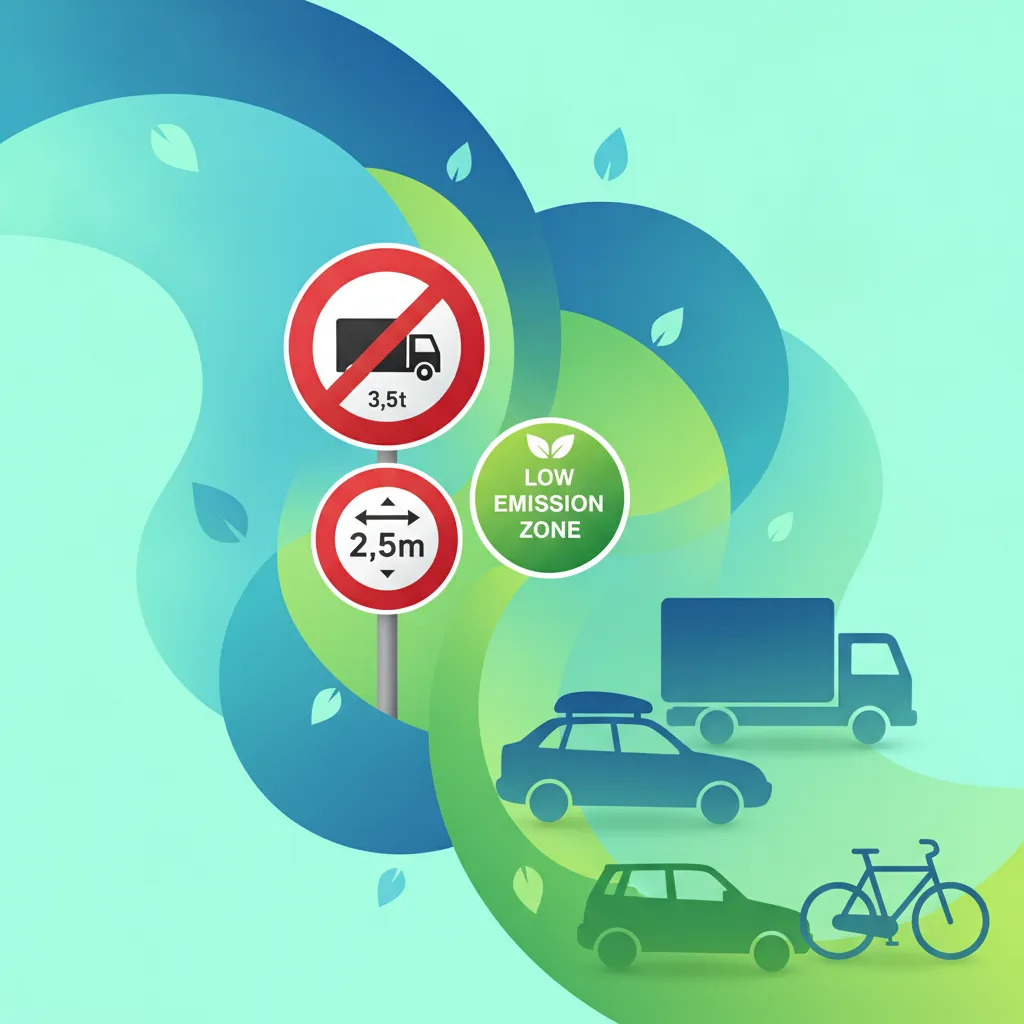
Many urban areas have restrictions to manage traffic and protect infrastructure. This lesson teaches drivers to identify and interpret traffic signs that prohibit access based on gross vehicle weight, axle load, height, or width. It also covers the growing prevalence of environmental or low-emission zones, which may restrict entry for older, more polluting vehicles.

Swiss law strictly regulates the maximum dimensions of commercial vehicles to ensure they can safely navigate the infrastructure. This lesson specifies the standard limits for vehicle height (4.0m), width (2.55m), and length for various lorry and trailer combinations. Adhering to these dimensions is crucial for avoiding collisions with bridges, tunnels, and other structures, and for navigating narrow roads.

This lesson explores the correct use of seat belts, the installation of child restraints, and the importance of securing loads. It covers weight distribution guidelines, maximum load limits, and conditions for towing a trailer. Guidance is also provided for safely transporting animals and ensuring all loads are properly secured to prevent movement.

Proper visibility is paramount for the safety of large vehicles, especially at night or in poor weather. This lesson covers the full range of required lights, including headlights, indicators, brake lights, and side and rear marker lights. It also explains the function of reflectors and the mandatory high-visibility conspicuity markings that outline the vehicle's shape to other drivers.
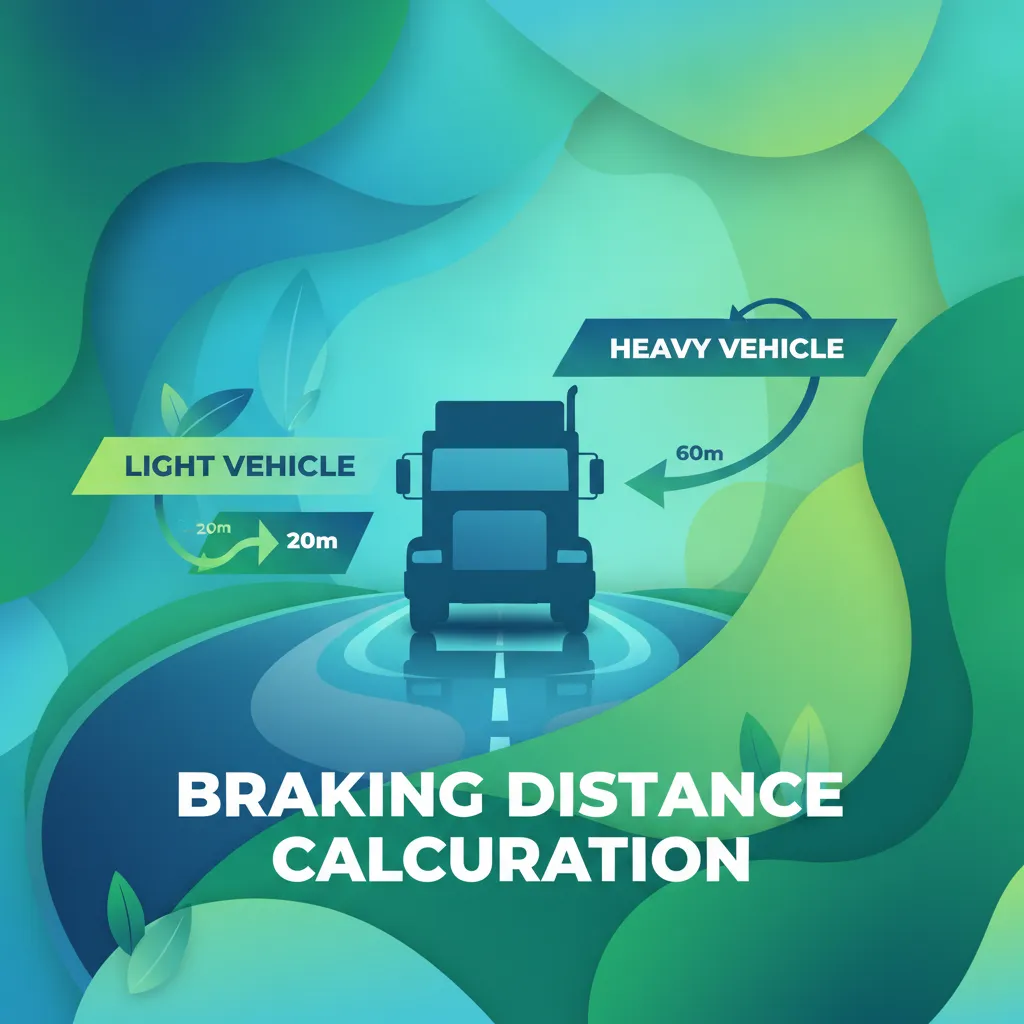
The immense mass of a loaded truck means its braking distance is far greater than that of a car. This lesson breaks down total stopping distance into reaction distance and braking distance, explaining how speed, weight, and road conditions have an exponential effect. It reinforces the necessity of maintaining a significantly larger following distance to ensure enough space to stop safely in an emergency.
After stopping for an emergency, making the scene safe is the top priority. This lesson details the procedure: activate hazard warning lights, put on high-visibility clothing before exiting the cab, and place the warning triangle at the correct distance behind the vehicle (at least 100m on motorways). This warns approaching traffic and creates a safer environment for the driver and emergency responders.

This lesson provides a clear definition of the Swiss heavy goods vehicle license categories. It details the weight limits and vehicle configurations for Category C (lorries over 3.5t) and C1 (lorries from 3.5t to 7.5t). Furthermore, it explains how categories CE and C1E grant the entitlement to tow heavy trailers, forming articulated vehicles or road trains, which is crucial for professional transport operations.

This lesson outlines the mandatory documentation required during any professional transport journey in Switzerland. Drivers must be able to present the vehicle registration document ('Fahrzeugausweis'), their valid driving license, and the OACP qualification card upon request. It also touches upon transport-specific documents like consignment notes, which are crucial for legal compliance during roadside inspections by authorities.
Learn critical techniques for parking heavy goods vehicles on inclines and understand how to adapt parking safety procedures for adverse weather conditions like rain, snow, and ice in Switzerland.

Wet or icy roads drastically reduce tyre grip and can double or triple braking distances. This lesson stresses the importance of significantly reducing overall speed and increasing following distances in such conditions. It advises on using brakes with extreme care to avoid skidding and explains how the vehicle's retarder should be used with caution as it can cause the drive wheels to lock up on slippery surfaces.
Weather has a profound impact on vehicle handling and visibility. This lesson teaches you how to reduce speed, increase following distances, and use controls smoothly to maintain traction in poor conditions. It also covers the legal requirements and practical application of snow chains in winter.

Heavy vehicles, especially those with a high centre ofgravity, are susceptible to rolling over. This lesson examines the primary causes, including excessive speed on bends or roundabouts, sudden steering manoeuvres, and the 'sloshing' effect of liquid loads in tankers. It reinforces that maintaining a sensible speed and driving smoothly are the best ways to mitigate this serious risk.
Controlling a heavy vehicle on a steep downhill grade requires a specific technique to avoid disaster. This lesson teaches the golden rule: select a low gear before starting the descent, one that is low enough to control the speed with minimal use of the service brakes. It explains how to effectively combine this with the engine brake or retarder to maintain a safe, steady speed and keep the service brakes cool and ready for an emergency.

Turning a long vehicle requires careful planning and execution. This lesson covers the correct procedure: approach, observation, signalling, and positioning the vehicle correctly to allow for the trailer's off-tracking without mounting the kerb. It also highlights the need for constant mirror checks throughout the turn to monitor for cyclists or other vulnerable road users who may enter the danger zone.

Driving in the Alps requires a high level of skill and vehicle sympathy. This lesson covers techniques for climbing steep gradients by selecting the correct gear to maintain momentum without straining the engine. It reiterates the critical importance of using low gears and auxiliary brakes for descending, to ensure the service brakes remain cool and effective for the entire descent.

This lesson examines the impact of various weather conditions on driving safety. It explains how to adjust speed in low visibility and the risks of aquaplaning in heavy rain. The content also covers using snow chains in snowy conditions, handling icy surfaces, and dealing with strong winds, particularly on bridges and open roads.
This lesson explores the regulations governing parking, including designated zones, no-parking areas, and rules for parking on hills. It discusses the correct use of the handbrake and the hill start technique to prevent rolling. The content also covers parallel and perpendicular parking methods and the interpretation of Swiss parking signs.

This lesson focuses on driving on mountain roads, addressing steep gradients, hairpin bends, and altitude-related challenges. You will learn proper techniques for climbing ascents and using engine braking on descents. The content also covers the use of snow chains, recognizing avalanche risks, and interpreting mountain road signs for safe alpine navigation.

High-sided lorries and trailers present a large surface area to the wind, making them susceptible to being pushed off course by strong crosswinds. This lesson highlights the danger, especially on exposed sections of road like bridges and viaducts, and when overtaking other large vehicles. It advises drivers to reduce speed and maintain a firm grip on the steering wheel when experiencing strong gusts.
Find clear answers to common questions learners have about Using Rest Areas and Parking Safely on Long Journeys. Learn how the lesson is structured, which driving theory objectives it supports, and how it fits into the overall learning path of units and curriculum progression in Switzerland. These explanations help you understand key concepts, lesson flow, and exam focused study goals.
Even with a functional parking brake, heavy vehicles can exert immense force. Wheel chocks provide a mechanical fail-safe to prevent the vehicle from rolling, which is critical for safety on Swiss alpine roads.
The primary risks are cargo theft and tampering with vehicle systems, such as fuel lines or braking circuits. Always park in designated, well-lit areas where possible and follow security protocols.
Yes, you must be able to recognize signs that denote lorry-specific parking zones, environmental limits, and any restrictions on vehicle dimensions within a service area.
Planning your route to include safe, legal parking spots before your driving time limit is reached is a core requirement of professional driving; failing to do so can lead to dangerous driver fatigue.
Pinpoint specific Swiss traffic rules, road signs, or driving situations you need to master. Use the practice search to start a focused revision session now and build confidence for your official driving theory exam.