
This lesson delves into the crucial aspect of maintaining a comfortable and safe environment inside your bus or coach. We'll explore the heating, ventilation, and air conditioning (HVAC) systems, focusing on how they ensure passenger comfort in all weather conditions and maintain air quality. Understanding these standards is vital for professional bus driving in Spain, as outlined by the DGT.
Lesson content overview
Maintaining an optimal interior environment is crucial for professional bus and coach drivers. This involves carefully managing heating, ventilation, and air-conditioning (HVAC) systems to ensure passenger comfort, safeguard health, and comply with strict legal standards. An effectively controlled cabin climate reduces driver fatigue, prevents issues like window fogging, and enhances the overall safety and pleasantness of the journey for everyone on board.
The interior climate of a bus or coach directly impacts passenger well-being and, consequently, the driver's ability to operate the vehicle safely and efficiently. Extreme temperatures, poor air quality, or high humidity can lead to a range of problems. Passengers may experience discomfort, leading to agitation or health complaints, while drivers can suffer from reduced concentration and impaired visibility due to condensation.
Proper climate control addresses several critical aspects. It ensures physiological comfort, preventing risks such as heat stress or hypothermia, which are especially important for vulnerable passengers like children or the elderly. Psychologically, a comfortable environment contributes to a calmer atmosphere, reducing noise and potential conflicts among passengers. From a safety perspective, clear windows are paramount for driver visibility, and adequate ventilation plays a vital role in clearing smoke during emergencies and reducing the spread of airborne pathogens.
The Heating, Ventilation, and Air-Conditioning (HVAC) system is a complex ensemble designed to regulate temperature, humidity, and air quality within the passenger compartment. Professional drivers must understand the basic function of its components to effectively operate and monitor the system.
The primary function of the HVAC system is to provide both heating and cooling. The heating unit, often referred to as the heater core, transfers heat generated by the engine's cooling system to the cabin air. This allows the interior to be warmed, especially during colder months. Conversely, the air conditioning unit removes heat from the cabin using a refrigerant cycle, providing cooling during hot weather. This unit includes a compressor, condenser, and evaporator, working together to absorb and dissipate heat. The driver's control panel allows for switching between these modes and adjusting the desired temperature.
Ventilation fans, or blower fans, are responsible for circulating air throughout the cabin. These powerful fans draw in fresh air from outside, push heated or cooled air through the system, and extract stale air. The ductwork is a network of channels that distributes this conditioned air to various vents located throughout the passenger compartment, ensuring an even distribution. Effective airflow is essential for maintaining temperature uniformity and fresh air circulation. Drivers should be aware of the fan's operation and report any unusual noises or reduced airflow.
Crucial for maintaining air quality, cabin air filters remove impurities from the air drawn into the vehicle. These typically include particulate filters that trap dust, pollen, and other solid particles. On some advanced systems, or for specific routes like school buses, microbial or HEPA-type filters may be installed to remove finer particles and reduce airborne microorganisms. Clogged filters significantly reduce airflow, diminishing HVAC efficiency and potentially leading to system overheating. Regular inspection and replacement are therefore critical.
Temperature and humidity sensors are electronic devices strategically placed within the cabin to measure the interior environment. They feed data to the control interface, which is the driver-operated panel where settings like temperature, fan speed, and air distribution are adjusted. Modern systems may feature automatic climate control, which uses sensor data to maintain a set temperature without constant manual adjustment. Drivers should be familiar with their specific vehicle's control interface and be able to interpret any warning lights related to sensor malfunctions.
Beyond temperature, the quality of the air within the bus or coach cabin is paramount for passenger health and comfort. This involves a continuous exchange of air, filtering out pollutants, and managing humidity levels.
To ensure a healthy environment, a constant supply of fresh air from outside is necessary, coupled with the removal of stale interior air. The fresh air intake system draws external air into the cabin. This can be either passive intake, relying on static vents and vehicle movement, or active intake, which uses powered fans to force fresh air in regardless of speed. Similarly, exhaust vents facilitate the removal of interior air. Drivers must ensure that intake vents are never obstructed, as this can severely compromise air quality.
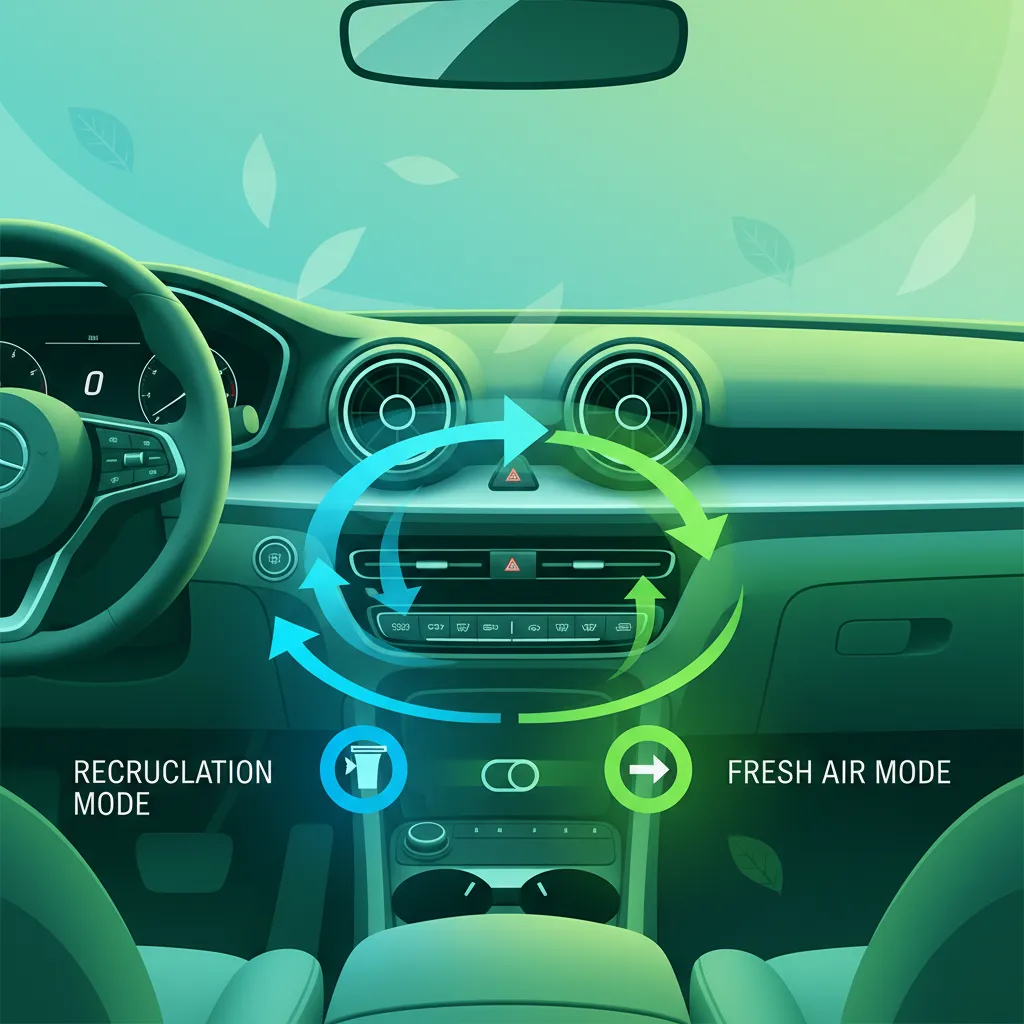
Recirculation Mode vs. Fresh Air: While recirculation mode can quickly cool or heat the cabin by reusing internal air, it should not be used continuously, especially on long journeys. Prolonged recirculation leads to a build-up of CO₂ and other airborne contaminants, impacting air quality and potentially causing drowsiness. Regularly switch to fresh air mode.
To prevent the accumulation of carbon dioxide (CO₂), odors, and airborne contaminants, a minimum air exchange rate is legally mandated. Spanish regulations, specifically Article 4.2 of the Reglamento de Vehículos de Transporte Público (RVTP), require a minimum fresh-air intake of 10% of the cabin volume per minute when the vehicle is moving. When stationary with doors closed, a minimum of 5% per minute is required. Adhering to these rates is essential for compliance with health standards and maintaining a fresh cabin environment. Drivers should ensure the HVAC system is capable of meeting these requirements and that filters are regularly inspected.
Controlling relative humidity (RH) within the cabin is vital, primarily to prevent condensation on windows, which severely obstructs driver visibility. High humidity can also lead to mold growth on upholstery and an uncomfortable, stuffy atmosphere. The ideal interior relative humidity range is typically between 30% and 60%. The HVAC system's air conditioning function helps to dehumidify the air. In cold or rainy conditions, using the defrost/defog function directs warm, dry air onto the windows to quickly evaporate moisture and maintain clear visibility.
Maintaining a stable and comfortable temperature is a core responsibility for professional drivers. Specific temperature ranges are recommended and sometimes legally mandated to ensure passenger well-being.
To maintain passenger health and prevent discomforts like heat stress or hypothermia, specific temperature targets are established. For summer operation, the target interior temperature should ideally be between 20°C and 25°C. In winter, the goal is to keep the cabin between 15°C and 22°C. The Reglamento de Transporte Público (Article 6.1) goes further by mandating that the temperature inside the passenger area may not exceed 30°C nor fall below 5°C during operation. Drivers must adjust the HVAC system before departure and continuously monitor conditions to ensure these values are maintained, even under maximum passenger load.
In larger buses and coaches, a single thermostat might not be sufficient to maintain uniform comfort throughout the entire cabin. Zone control systems allow for independent regulation of temperature and airflow in different sections of the passenger compartment, such as the front, middle, and rear zones, or separate areas for the driver and passengers. This prevents localized discomfort, such as hot spots near the rear doors or the driver's area being too cold while passengers are comfortable. While not explicitly mandated for all vehicles, zone control is highly recommended by the DGT for larger coaches (over 15 meters) to meet optimal comfort standards. Drivers should be trained to utilize these systems effectively to maximize passenger satisfaction.
Regular maintenance is not just about avoiding breakdowns; it's about ensuring the HVAC system operates efficiently, reliably, and in compliance with legal requirements. A well-maintained system guarantees consistent passenger comfort and reduces operational costs.
HVAC components, particularly filters, require routine inspection and replacement. Cabin air filters (particulate and microbial) must be replaced according to the manufacturer's schedule or more frequently in dusty environments. Clogged filters reduce airflow, strain the blower motor, and can compromise air quality. During the periodic Technical Inspection (ITV), cabin air filters are specifically inspected, and failure to comply can result in fines. Additionally, drivers should regularly check external intake vents to ensure they are free from obstructions like leaves or debris.
For air conditioning units, maintaining correct refrigerant levels is crucial. Low refrigerant can reduce cooling efficiency and eventually damage the compressor. Any signs of reduced cooling capacity should be reported immediately for a professional check. Furthermore, components like the evaporator and condenser coils can accumulate dirt and debris over time, impairing their ability to exchange heat. Periodic cleaning of these components helps maintain optimal performance and prevents the growth of mold or bacteria within the system.
All maintenance activities, including inspections, filter replacements, and repairs, must be accurately recorded in a vehicle's maintenance log. This documentation is essential for tracking service history, ensuring warranties remain valid, and demonstrating compliance with regulations, particularly during the ITV. Article 29 of the Spanish Reglamento de Vehículos de Transporte Público specifies inspection intervals for ventilation systems, reinforcing the mandatory nature of these tasks. A thorough pre-trip check by the driver should always include a functional verification of the HVAC system.
Operating professional passenger transport vehicles in Spain necessitates strict adherence to national and European regulations concerning cabin climate and ventilation. These legal frameworks are designed to protect passenger health and safety.
The Reglamento de Vehículos de Transporte Público (RVTP), specifically Article 4.2, mandates that the HVAC system must provide a minimum of 10% fresh-air exchange per minute when the vehicle is moving. This ensures sufficient ventilation to prevent the buildup of CO₂ and odors, crucial for passenger health and alertness. Furthermore, Article 6.1 of the Reglamento de Transporte Público sets clear temperature limits: the interior of the passenger area must not exceed 30°C nor fall below 5°C during operation. Drivers are legally responsible for ensuring these conditions are met throughout their routes.
Before commencing any route, professional drivers are legally obliged by the Reglamento de Seguridad del Transportista (Article 5) to verify that the HVAC system is fully functional. This pre-trip inspection includes checking that heating, air conditioning, and ventilation fans are all operational. Failure to perform these checks or operating a vehicle with a non-functional climate control system can lead to discomfort, safety risks (e.g., fogged windows), and potential fines.
During the periodic Inspección Técnica de Vehículos (ITV), which is an annual or biennial technical inspection for public transport vehicles, the cabin air filters and the overall functionality of the HVAC system are thoroughly inspected. According to Article 12.3 of the Reglamento de Vehículos, filters must be in good condition to pass. Non-compliance can result in a failed inspection and financial penalties.
Effective management of the cabin climate requires a nuanced approach, adapting to various external conditions and vehicle states. Professional drivers must develop strategies to ensure consistent comfort and safety.
The number of passengers significantly impacts the cabin's thermal load. A fully loaded bus generates more body heat, requiring the HVAC system to work harder to maintain a comfortable temperature. Drivers should anticipate this and adjust settings proactively. Conversely, an empty or lightly loaded vehicle may allow the system to operate at lower fan speeds, potentially saving energy. Additionally, factors like low battery voltage can affect fan speed, so drivers must verify vehicle health during pre-trip checks.
While passenger comfort is paramount, drivers should also be mindful of the HVAC system's impact on fuel consumption and emissions. Air conditioning, especially when used at full capacity, can increase fuel consumption by 10-15% at highway speeds.
When conditions allow, utilize an Economical Mode (Eco-Mode) if your vehicle is equipped with one. This mode balances comfort with reduced power consumption, optimizing fuel efficiency without severely compromising the passenger experience.
Avoid running the AC at full blast unnecessarily. Pre-cooling or pre-heating the cabin before passengers board can be more efficient than trying to rapidly change the temperature with a full load.
In the event of a primary HVAC system failure or power loss, alternative ventilation methods become critical for safety. Manual ventilation, such as operable windows and louver vents, must be functional and accessible from the interior without external tools. Regulations require windows to be able to open at least 5 cm from the interior. Drivers must be familiar with the location and operation of all manual vents and windows. In an emergency, such as smoke in the cabin, knowing how to quickly activate these backup systems is essential for passenger evacuation and air clearance.
Professional drivers must be adept at recognizing and responding to common issues related to cabin climate control. Early detection and appropriate action can prevent discomfort, breakdowns, and safety hazards.
This lesson covers the essential HVAC systems that professional D and D1 category bus drivers must understand to maintain passenger comfort and comply with Spanish regulations. The HVAC system controls heating, cooling, ventilation, and air quality through components including the heater core, air conditioning unit, blower fans, ductwork, filters, and electronic sensors. Spanish law (RVTP and Reglamento de Transporte Público) mandates specific minimum air exchange rates and temperature limits to protect passenger health and safety. Drivers are legally required to perform pre-trip HVAC checks and ensure systems meet ITV standards, while managing factors like humidity, CO₂ levels, and zone control to prevent issues such as window condensation, passenger discomfort, and energy waste.
A short set of high-value points that capture the most important learning from this lesson.
HVAC systems in buses regulate temperature, humidity, and air quality to ensure passenger comfort and driver safety.
The heater core transfers engine heat to warm the cabin, while the air conditioning unit uses a refrigerant cycle to cool it.
Fresh air intake must be at least 10% of cabin volume per minute while moving and 5% when stationary with doors closed (RVTP Article 4.2).
Cabin air filters (particulate and microbial) require regular inspection and replacement to maintain air quality and HVAC efficiency.
The defrost/defog function is critical for maintaining driver visibility by directing warm, dry air onto windows.
Explore all units and lessons included in this driving theory course.
RVTP Article 6.1 mandates interior temperatures between 5°C and 30°C during operation for public transport vehicles.
The ideal interior relative humidity range is 30% to 60% to prevent condensation on windows and mold growth.
Recirculation mode should not be used continuously as it causes CO₂ buildup and drowsiness; alternate with fresh air mode.
A pre-trip check must verify all HVAC functions (heating, AC, ventilation fans) before starting any route.
Windows must be operable from the interior without tools and capable of opening at least 5 cm for emergency ventilation.
Running the HVAC in continuous recirculation mode, which leads to high CO₂ levels and passenger drowsiness.
Failing to clear window fogging promptly in cold or rainy conditions, which severely reduces driver visibility.
Operating with obstructed intake vents or blocked grille panels, which reduces airflow and strains the system.
Neglecting routine maintenance schedules for filters, refrigerant levels, and coil cleaning, resulting in ITV failures.
Not adjusting HVAC settings proactively for full passenger loads, which increases thermal load and reduces comfort.
Lesson content overview
A short set of high-value points that capture the most important learning from this lesson.
HVAC systems in buses regulate temperature, humidity, and air quality to ensure passenger comfort and driver safety.
The heater core transfers engine heat to warm the cabin, while the air conditioning unit uses a refrigerant cycle to cool it.
Fresh air intake must be at least 10% of cabin volume per minute while moving and 5% when stationary with doors closed (RVTP Article 4.2).
Cabin air filters (particulate and microbial) require regular inspection and replacement to maintain air quality and HVAC efficiency.
The defrost/defog function is critical for maintaining driver visibility by directing warm, dry air onto windows.
Explore all units and lessons included in this driving theory course.
RVTP Article 6.1 mandates interior temperatures between 5°C and 30°C during operation for public transport vehicles.
The ideal interior relative humidity range is 30% to 60% to prevent condensation on windows and mold growth.
Recirculation mode should not be used continuously as it causes CO₂ buildup and drowsiness; alternate with fresh air mode.
A pre-trip check must verify all HVAC functions (heating, AC, ventilation fans) before starting any route.
Windows must be operable from the interior without tools and capable of opening at least 5 cm for emergency ventilation.
Running the HVAC in continuous recirculation mode, which leads to high CO₂ levels and passenger drowsiness.
Failing to clear window fogging promptly in cold or rainy conditions, which severely reduces driver visibility.
Operating with obstructed intake vents or blocked grille panels, which reduces airflow and strains the system.
Neglecting routine maintenance schedules for filters, refrigerant levels, and coil cleaning, resulting in ITV failures.
Not adjusting HVAC settings proactively for full passenger loads, which increases thermal load and reduces comfort.
Explore search topics learners often look for when studying Cabin Climate and Ventilation Standards. These topics reflect common questions about road rules, driving situations, safety guidance, and lesson level theory preparation for learners in Spain.
Browse additional driving theory lessons that cover connected traffic rules, road signs, and common driving situations related to this topic. Improve your understanding of how different rules interact across everyday traffic scenarios.
Understand DGT regulations for maintaining optimal bus cabin temperature, humidity, and air quality. Learn about HVAC system requirements, air exchange rates, and condensation prevention for passenger comfort and safety.

This lesson explains the fundamental DGT regulations that govern public transport services, including requirements for operational permits and route authorizations. It covers the mandatory schedules for vehicle inspections, standards for emissions, and the legal importance of adhering to timetables and service quality. Learners will also understand the nature of regulatory audits and compliance checks that operators must undergo.

This lesson details the legal requirements for the use of seatbelts and child restraint systems in buses and coaches, as stipulated by DGT regulations. It specifies the age and size limits for various restraint devices and explains the verification checks drivers must perform. Learners will also review safety statistics that highlight the importance of correct usage and understand the legal penalties associated with non-compliance.

This lesson examines the significant impact of various weather conditions on driving safety, including rain, fog, snow, ice, and high winds. Learners will understand how each condition can affect vehicle traction, reduce visibility, and alter driver perception, learning the appropriate adjustments to speed, following distance, and braking. The module also covers the use of vehicle safety features to mitigate risks in adverse weather.
This lesson details the specific legal speed limits that apply to heavy passenger vehicles on Spanish highways, including variable speed zones that adjust based on traffic and weather conditions. Learners will understand the methods for speed monitoring, the function of speed control devices, and the legal consequences of non-compliance. The content also provides guidance on calculating a safe operating speed based on vehicle load and road conditions.

This lesson provides a comprehensive overview of the legal and practical requirements for making public transport accessible to all passengers, including those with disabilities. It covers the correct use of designated wheelchair spaces, ramp operation, priority seating, and the function of tactile and auditory alerts. Learners will understand their obligations to assist passengers safely and respectfully, ensuring full compliance with accessibility legislation.

This lesson provides detailed guidance on accommodating passengers with disabilities, covering the correct operation of wheelchair ramps, allocation of priority seating, and use of communication aids. Learners will understand the legal accessibility standards set by the DGT, the training required for staff, and techniques for preserving passenger dignity during boarding and travel. Emphasis is placed on safety, respect, and full compliance with all accessibility regulations.

This lesson focuses on safe and efficient methods for passenger boarding and alighting at designated stops and stations, highlighting correct stop positioning and controlled door operation. It covers the proper deployment of wheelchair ramps, the use of safety signage, and the delivery of clear announcements to manage passenger movement effectively. Learners will develop techniques for controlling speed and performing safety checks to minimize stop times while maximizing safety.

This lesson focuses on effective communication strategies for drivers, including clear verbal announcements, the use of standard hand signals, and providing multilingual support where necessary. Learners will study best practices for delivering concise information regarding routes, upcoming stops, and essential safety instructions. The content also highlights the importance of timing these announcements correctly to prevent confusion and ensure passenger confidence.

This lesson outlines the core principles of defensive driving, focusing on maintaining a safe following distance, creating a protective space cushion around the vehicle, and anticipating potential hazards. Learners will be taught how to develop contingency plans for unexpected events and employ risk mitigation techniques to actively avoid accidents. The content reinforces the vital importance of remaining vigilant and proactive at all times when driving.

This lesson focuses on the high standards of professional behavior expected from drivers in the passenger transport sector, covering customer interaction skills and service quality benchmarks. Learners will explore effective communication techniques, methods for resolving conflicts calmly, and the importance of maintaining a professional demeanor, including appropriate dress and punctuality. The content emphasizes how courteous conduct directly enhances passenger satisfaction and promotes a positive company image.
Learn about essential maintenance schedules for bus and coach HVAC systems, including filter replacement and refrigerant checks. Understand common issues and troubleshooting steps for ensuring system efficiency and compliance.

This lesson focuses on the correct procedures for managing mechanical failures while ensuring the safety of all passengers. Learners will study safe pull-over techniques, the proper use of hazard warning lights, and effective communication with passengers during a breakdown. The content also covers the use of emergency tools, coordination with roadside assistance, and protocols for maintaining a safe environment until help arrives or service is restored.

This lesson examines the complex braking systems found in heavy passenger vehicles, with a focus on air brakes and anti-lock braking systems (ABS). It covers how these systems impact stopping distance, brake fade, and overall safety under different load and weather conditions. Learners will also study the required maintenance schedules and safety checks to ensure the braking components remain in optimal working order.

This lesson covers the importance of proper air brake maintenance for ensuring optimal stopping power and safety. It explains the process of checking and adjusting slack adjusters to compensate for brake lining wear. Learners will understand how to perform routine pre-trip inspections, including checking for air leaks and ensuring the system is balanced for even braking performance.

This lesson details the critical documents necessary for the legal operation of a passenger transport vehicle, such as the vehicle registration, driver's license, and insurance policy. It explains the function of the technical inspection certificate (ITV) and the necessity of maintaining accurate driver logbooks and records. Understanding these documentation requirements is essential for passing compliance audits and ensuring lawful operation.
This lesson focuses on safe and efficient methods for passenger boarding and alighting at designated stops and stations, highlighting correct stop positioning and controlled door operation. It covers the proper deployment of wheelchair ramps, the use of safety signage, and the delivery of clear announcements to manage passenger movement effectively. Learners will develop techniques for controlling speed and performing safety checks to minimize stop times while maximizing safety.

This lesson examines the locations and proper use of all emergency exits on buses and coaches, as well as the development and execution of clear evacuation plans. Learners will explore the designation of passenger assembly points, the interpretation of emergency signage, and procedures for assisting passengers with reduced mobility. The content emphasizes the value of conducting regular evacuation drills and delivering pre-trip safety briefings.
This lesson focuses on effective communication strategies for drivers, including clear verbal announcements, the use of standard hand signals, and providing multilingual support where necessary. Learners will study best practices for delivering concise information regarding routes, upcoming stops, and essential safety instructions. The content also highlights the importance of timing these announcements correctly to prevent confusion and ensure passenger confidence.

This lesson details the standard dimensions of buses and coaches, including length, width, height, and wheelbase. It explains how these measurements determine the vehicle's turning circle and its ability to maneuver in tight urban spaces with lane constraints. Learners will understand how to calculate necessary clearance zones and anticipate spatial needs to ensure safe and efficient operation.
This lesson examines the significant impact of various weather conditions on driving safety, including rain, fog, snow, ice, and high winds. Learners will understand how each condition can affect vehicle traction, reduce visibility, and alter driver perception, learning the appropriate adjustments to speed, following distance, and braking. The module also covers the use of vehicle safety features to mitigate risks in adverse weather.

In this lesson, learners will acquire the necessary skills to maneuver buses and coaches within confined areas such as narrow city streets, bus depots, and passenger terminals. It details techniques for reverse driving, tight cornering, and parallel parking, emphasizing the critical importance of blind spot awareness and precise low-speed control. The content focuses on developing spatial awareness to avoid collisions while maintaining passenger comfort.
Find clear answers to common questions learners have about Cabin Climate and Ventilation Standards. Learn how the lesson is structured, which driving theory objectives it supports, and how it fits into the overall learning path of units and curriculum progression in Spain. These explanations help you understand key concepts, lesson flow, and exam focused study goals.
Maintaining optimal cabin climate is crucial for passenger comfort, especially on long journeys or in extreme weather. It also contributes to passenger safety by preventing fogged windows and ensuring adequate fresh air circulation, which can impact driver alertness and overall passenger well-being. Good climate control is a standard expected of professional bus operators in Spain.
Basic maintenance typically involves checking and replacing air filters regularly to ensure good air quality, inspecting for leaks in the system, ensuring the defrost and demist functions are working correctly, and confirming that heating and cooling elements are operational. Routine checks prevent breakdowns and ensure efficient performance, which is often tested in DGT theory exams.
Adequate ventilation ensures a constant supply of fresh air and removal of stale air, reducing the concentration of CO2, pollutants, and airborne pathogens. This is vital for preventing passenger drowsiness and discomfort, and is a key consideration for public health and safety on board, as required by DGT regulations.
While exact figures can vary based on external conditions and passenger preference, the goal is to maintain a comfortable and safe internal temperature, typically between 20-24°C, and relative humidity that avoids condensation. Regulations emphasize providing a safe environment, and exam questions will test your understanding of maintaining such conditions.
The DGT theory exam for D and D1 licenses includes questions on ensuring passenger comfort and safety. Understanding cabin climate and ventilation is part of this, assessing your knowledge of vehicle systems and passenger care responsibilities, ensuring you can operate a bus professionally and compliantly.
Use our powerful search functionality to pinpoint specific Spanish DGT driving theory practice sets. Filter by road sign categories, traffic law topics, or question difficulty to build custom study sessions and reinforce your knowledge precisely where it matters for your official exam.