
Welcome to the 'Vehicle Handling & Dimensions' unit. This lesson focuses on the physical characteristics of buses and coaches, specifically their dimensions and turning radii. Understanding these factors is crucial for safe and efficient operation, particularly in complex urban environments, and will prepare you for relevant questions on your Spanish DGT theory exam.
Lesson content overview
As a professional driver aiming for a Spanish Driving License Category D or D1, a thorough understanding of vehicle dimensions and turning radii is not just theoretical knowledge – it is fundamental for safe, efficient, and compliant operation of large passenger vehicles. This lesson provides an in-depth exploration of the physical attributes that dictate how a bus or coach interacts with its environment, from bustling city streets to open highways. Mastering these concepts is crucial for route planning, maneuvering in confined spaces, and ensuring passenger safety, aligning with the core requirements of the Professional Bus and Coach Theory curriculum for Spanish Driving License – Category D & D1.
The physical dimensions of a bus or coach, including its length, width, height, wheelbase, and axle track, are more than just numbers. They directly influence the vehicle's maneuverability, its stability, and the amount of space it requires to operate safely on the road. For Category D and D1 license holders, precise knowledge of these measurements, combined with an understanding of turning geometry, is indispensable for navigating complex traffic scenarios, adhering to legal restrictions, and preventing accidents.
This understanding is paramount for urban environments, where lane constraints, tight turns, and numerous obstacles demand exceptional spatial awareness. It also plays a significant role in route assessment, ensuring that a planned journey can be safely undertaken without encountering clearances issues or impossible turning maneuvers.
Every component of a bus or coach contributes to its overall dimensions, which in turn define its capabilities and limitations on the road. Familiarity with these specific measurements is essential for professional drivers.
The overall length of a bus or coach is measured from its foremost point (usually the front bumper) to its rearmost point (including the rear bumper or any permanent extensions). This dimension is critical for determining whether a vehicle can fit within lane segments, parking bays, and designated stopping areas.
Spanish law, specifically Royal Decree 818/2009, sets maximum length limits. Vehicles for a Category D1 license are restricted to a maximum length of 8 metres. For a Category D license, the maximum length is generally 13 metres, with specific exceptions for articulated buses. Drivers must always be aware of their vehicle's precise length to avoid encroaching on other lanes or striking objects due to front or rear overhangs during turns.
The overall width of a bus or coach is the distance between its outermost edges, including side mirrors or any other permanent protrusions. In Spain, the standard maximum width for buses and coaches is 2.55 metres, including mirrors.
This dimension directly dictates how much of a lane the vehicle occupies and how much lateral clearance is needed from other vehicles, road furniture, or roadside obstacles. The Reglamento General de Circulación (RGC) dictates specific minimum lane widths for wider vehicles. For vehicles exceeding 2.5 metres in width, a minimum lane width of 3.0 metres is generally required to ensure safe passage. Failing to account for mirror extensions is a common mistake that can lead to side-swipe collisions, especially in narrow urban environments or when passing parked vehicles.
The overall height is the vertical distance from the ground to the highest point of the vehicle, which might include roof-mounted air conditioning units, luggage racks, or communication antennae.
This dimension is critical for anticipating clearance under bridges, tunnels, overhead power lines, and other elevated structures. The Spanish Highway Code (RGC) provides minimum clearance recommendations, generally 4.5 metres for standard buses and 5.0 metres for coaches, though specific signage on routes will always take precedence. Ignoring height restrictions can lead to severe accidents, structural damage, and potential injury to passengers. Always check route plans for height advisories, especially when driving an unfamiliar vehicle or in new areas.
The wheelbase is defined as the distance between the centres of the front and rear axles. For vehicles with multiple rear axles, it's typically measured to the centre of the foremost rear axle or an equivalent effective centre for stability.
A longer wheelbase generally results in a larger turning circle. This is a crucial factor for drivers to consider when negotiating turns and navigating intersections, as it determines the lateral space required for the vehicle to complete a maneuver. Passenger and cargo weight can also influence the effective wheelbase through suspension compression, slightly altering turning dynamics.
The axle track, also known as track width, is the lateral distance between the centres of the left and right wheels on the same axle. For most buses and coaches, a standard track width is around 1.8 metres. This dimension primarily affects vehicle stability, especially during turns and crosswinds, and contributes to the calculation of the inner turning radius. While less directly considered by the driver than overall length or width, it is an underlying factor in vehicle design that influences handling.
Understanding how a large vehicle turns is paramount. This involves distinguishing between inner and outer turning radii and comprehending the concept of the swept path.
When a vehicle turns, its wheels follow different paths. The inner turning radius is the radius of the smallest circle traced by the innermost point of the vehicle during a turn, which is typically the inner front wheel. Conversely, the outer turning radius is the radius traced by the outermost point of the vehicle (often the outermost front corner or mirror) as it completes the same turn.
The difference between the inner and outer turning radii is essentially the width of the vehicle. These radii define the minimum space required for a vehicle to execute a turn without encroaching on adjacent lanes, hitting curbs, or colliding with obstacles.
While professional drivers do not typically perform complex geometric calculations on the fly, understanding the relationship between vehicle dimensions and turning radii is vital for anticipatory driving.
For practical purposes, the outer radius can be approximately calculated as:
Outer Radius = Inner Radius + Vehicle Width
Spanish regulations establish specific minimum inner turning radii for different types of buses and coaches:
These values are crucial benchmarks for drivers when planning their approach to intersections, roundabouts, and any curved sections of the road. Maintaining awareness of these limits helps prevent dangerous maneuvers, such as cutting corners too sharply or needing to perform multiple adjustments during a single turn.
The swept path refers to the total area on the ground covered by a vehicle as it makes a turn. This includes the paths of all wheels and any vehicle overhangs (front, rear, and side). A swept path diagram is a visual representation that illustrates this area, taking into account both the inner and outer turning radii, as well as the vehicle's overall dimensions.
This diagram is extensively used by urban planners, road designers, and architects to ensure that roads, intersections, roundabouts, bus lanes, and parking spaces are adequately designed to accommodate large vehicles. For drivers, understanding the concept of a swept path helps in assessing potential conflicts with roadside obstacles, parked cars, cyclists, and pedestrians, especially when the rear of the bus "swings out" during a turn.
The way passengers and cargo are distributed within a bus or coach, referred to as load distribution, has a direct impact on its handling characteristics, including its turning performance. Uneven or excessive loading, particularly on one axle, can cause the vehicle's suspension to sag. This sag can slightly alter the vehicle's geometry, effectively changing its wheelbase and subsequently increasing the turning radius.
Maintaining balanced load distribution ensures that the vehicle's stability and handling characteristics remain predictable. Before each trip, especially when carrying varying numbers of passengers or cargo, professional drivers should be aware of the vehicle's load plan and ensure even distribution to prevent adverse effects on steering and turning. An overloaded rear axle, for instance, can lead to increased rear suspension compression, making the vehicle less responsive to steering inputs and requiring a larger turning circle.
Adherence to Spanish legal frameworks is non-negotiable for professional drivers. Several key regulations govern the dimensions and turning capabilities of buses and coaches, primarily outlined in the Reglamento General de Circulación (RGC) and Real Decreto 818/2009.
The Spanish licensing system differentiates between Category D1 (minibuses) and Category D (buses and coaches) due to their operational contexts and capacities.
Understanding these distinctions is crucial, as operating a vehicle that exceeds the dimensional limits of your license category constitutes a serious violation.
Article 81.2 of the Reglamento General de Circulación outlines the specific turning capabilities required for vehicles in Category D. As mentioned previously, these ensure that large vehicles can navigate standard road infrastructure without unduly impeding traffic or posing a safety risk. Drivers must know the specific turning radius requirements for the type of vehicle they are operating and adapt their driving accordingly. Failure to stay within the legally prescribed turning path often leads to encroachment into opposing lanes or onto sidewalks, increasing the risk of collision.
Article 14 of the RGC addresses the necessity of adequate lane width for vehicles, particularly those exceeding standard dimensions. For buses and coaches with an overall width greater than 2.5 metres (which is common for modern vehicles, measuring up to 2.55 metres including mirrors), maintaining a minimum lane width of 3.0 metres is typically required for safe passage. This regulation exists to ensure sufficient lateral clearance, minimizing the risk of side-swipe accidents with other vehicles, cyclists, or roadside barriers. When faced with narrower lanes, drivers must exercise extreme caution, reduce speed, and consider alternative routes if safe passage cannot be guaranteed.
Article 23 of the RGC mandates that drivers must respect vertical clearance limits. While the RGC provides general guidance, specific road signs indicating maximum height are absolute. For buses and coaches, standard recommendations suggest minimum clearances of 4.5 metres for most routes and 5.0 metres for coaches on main highways, but tunnels, bridges, and underpasses will have their own marked limits. Always check the height of your vehicle, especially if you are driving a new bus or coach, and plan your route to avoid areas with insufficient clearance. Collision with overhead structures can cause catastrophic damage and injury.
Effective driving goes beyond simply knowing the rules; it involves adapting to various conditions and unforeseen circumstances.
Environmental conditions significantly affect vehicle handling and required turning space.
The type of road dictates the typical turning challenges a driver will face.
The condition of the vehicle itself can influence its turning dynamics.
In urban environments, buses and coaches often share the road with vulnerable users such as cyclists and pedestrians. These individuals may inadvertently enter the swept path of a turning bus. Drivers must always assume the presence of vulnerable users and allow extra clearance, especially when initiating a turn. The vehicle's mirrors have blind spots, and extra vigilance, combined with appropriate signaling and slow, deliberate movements, is essential to prevent collisions.
Ignoring vehicle dimensions and turning radii can lead to several common and dangerous violations:
This lesson covers the critical physical dimensions of buses and coaches for professional drivers pursuing Category D or D1 licences in Spain. Key dimensions include overall length (ranging from 8m for D1 vehicles to 24m for articulated buses), width (maximum 2.55m including mirrors), and height (3.2–4.0m), all governed by Royal Decreto 818/2009. Understanding turning geometry—specifically inner and outer turning radii and swept path—is essential for navigating tight urban spaces, and drivers must account for load distribution effects on suspension and turning performance. Spanish traffic regulations (RGC Articles 14 and 23) mandate specific minimum turning radii, lane widths, and clearance heights that professional drivers must respect to ensure safety and legal compliance.
A short set of high-value points that capture the most important learning from this lesson.
Bus dimensions vary by type: city buses (10–12m), articulated buses (18–24m), and coaches (12–15m), with maximum widths of 2.55m including mirrors
The inner turning radius is determined by the vehicle's wheelbase and wheel position, while the outer turning radius equals inner radius plus vehicle width
Spanish regulations require minimum inner turning radii of 9m for city buses, 12m for articulated buses, and 13m for coaches
Vehicles wider than 2.5m must maintain a minimum lane width of 3.0m for safe passage under Article 14 of the RGC
Uneven load distribution can alter turning geometry by compressing suspension and changing the effective wheelbase
Explore all units and lessons included in this driving theory course.
Category D1 licences restrict vehicles to 8m maximum length; Category D allows up to 13m with exceptions for articulated buses
The swept path is the total ground area covered during a turn, including front and rear overhangs
Minimum overhead clearance is 4.5m for standard buses and 5.0m for coaches, though specific road signage always takes precedence
Mirror overhang extends the effective width of the vehicle beyond the main body, which must be accounted for in lane calculations
Articulated buses have a pivot joint that creates a unique outward swing of the rear section during turns
Assuming a vehicle fits in a lane based on body width alone without accounting for mirror extensions
Attempting the same turning speed in wet or icy conditions as on dry roads, leading to skidding
Underestimating the rear overhang swing of an articulated bus and striking roadside objects
Overloading one axle, which compresses suspension and increases the effective turning radius
Entering an underpass without verifying the vehicle's actual height against posted clearance signs
Lesson content overview
A short set of high-value points that capture the most important learning from this lesson.
Bus dimensions vary by type: city buses (10–12m), articulated buses (18–24m), and coaches (12–15m), with maximum widths of 2.55m including mirrors
The inner turning radius is determined by the vehicle's wheelbase and wheel position, while the outer turning radius equals inner radius plus vehicle width
Spanish regulations require minimum inner turning radii of 9m for city buses, 12m for articulated buses, and 13m for coaches
Vehicles wider than 2.5m must maintain a minimum lane width of 3.0m for safe passage under Article 14 of the RGC
Uneven load distribution can alter turning geometry by compressing suspension and changing the effective wheelbase
Explore all units and lessons included in this driving theory course.
Category D1 licences restrict vehicles to 8m maximum length; Category D allows up to 13m with exceptions for articulated buses
The swept path is the total ground area covered during a turn, including front and rear overhangs
Minimum overhead clearance is 4.5m for standard buses and 5.0m for coaches, though specific road signage always takes precedence
Mirror overhang extends the effective width of the vehicle beyond the main body, which must be accounted for in lane calculations
Articulated buses have a pivot joint that creates a unique outward swing of the rear section during turns
Assuming a vehicle fits in a lane based on body width alone without accounting for mirror extensions
Attempting the same turning speed in wet or icy conditions as on dry roads, leading to skidding
Underestimating the rear overhang swing of an articulated bus and striking roadside objects
Overloading one axle, which compresses suspension and increases the effective turning radius
Entering an underpass without verifying the vehicle's actual height against posted clearance signs
Explore search topics learners often look for when studying Bus and Coach Dimensions and Turning Radii. These topics reflect common questions about road rules, driving situations, safety guidance, and lesson level theory preparation for learners in Spain.
Browse additional driving theory lessons that cover connected traffic rules, road signs, and common driving situations related to this topic. Improve your understanding of how different rules interact across everyday traffic scenarios.
Understand how vehicle length, width, height, and wheelbase impact turning circles and swept paths. Essential knowledge for safe maneuvering and avoiding collisions in urban and highway driving according to Spanish regulations.

In this lesson, learners will acquire the necessary skills to maneuver buses and coaches within confined areas such as narrow city streets, bus depots, and passenger terminals. It details techniques for reverse driving, tight cornering, and parallel parking, emphasizing the critical importance of blind spot awareness and precise low-speed control. The content focuses on developing spatial awareness to avoid collisions while maintaining passenger comfort.

This lesson examines the interaction between large vehicles, such as trucks, and vulnerable road users within roundabouts. It addresses the wide turning radius of heavy vehicles, the importance of checking blind spots, and the correct yielding behavior toward pedestrians and cyclists. Learners will understand how to maintain safe distances and anticipate the movements of different road users.

This lesson explains the concept of turning radius and how it is influenced by a truck's wheelbase and overall length. It introduces the principle of off-tracking, where the rear wheels follow a tighter path than the front wheels during a turn. Understanding these dynamics is essential for drivers to accurately judge the space needed to navigate corners and turns without incident.
This lesson offers a comprehensive guide to navigating roundabouts in urban settings, explaining the correct protocols for entry, yielding, and circulation. Learners will be taught how to interpret lane markings and signage on multi-lane roundabouts and determine the correct vehicle positioning for safe entry and exit. The content emphasizes full compliance with Spanish city regulations that govern priority and right-of-way at these intersections.
This lesson addresses the practical aspects of maneuvering a large vehicle in various environments. It explains concepts like turning radius, off-tracking, and the vehicle's total footprint, which determine the space needed for turns and other maneuvers. Learners will develop the spatial awareness required to navigate tight corners, loading bays, and urban streets while maintaining safe clearance from obstacles.

This lesson addresses overtaking procedures and lane discipline specifically for large coaches, emphasizing correct lane positioning and safe passing practices on multi-lane highways. It covers the legal rules for overtaking, the critical need for comprehensive blind spot checks before changing lanes, and the importance of signaling intentions early. Learners will also be taught how to maintain appropriate safety gaps when maneuvering around slower-moving traffic.
This lesson focuses on interaction dynamics with larger vehicles like cars, trucks, and buses, detailing their specific blind spot zones. Strategies for safely sharing lanes, overtaking etiquette, and proper approach when a bus stops are covered. The lesson also includes guidance on merging onto acceleration lanes following DGT policies.
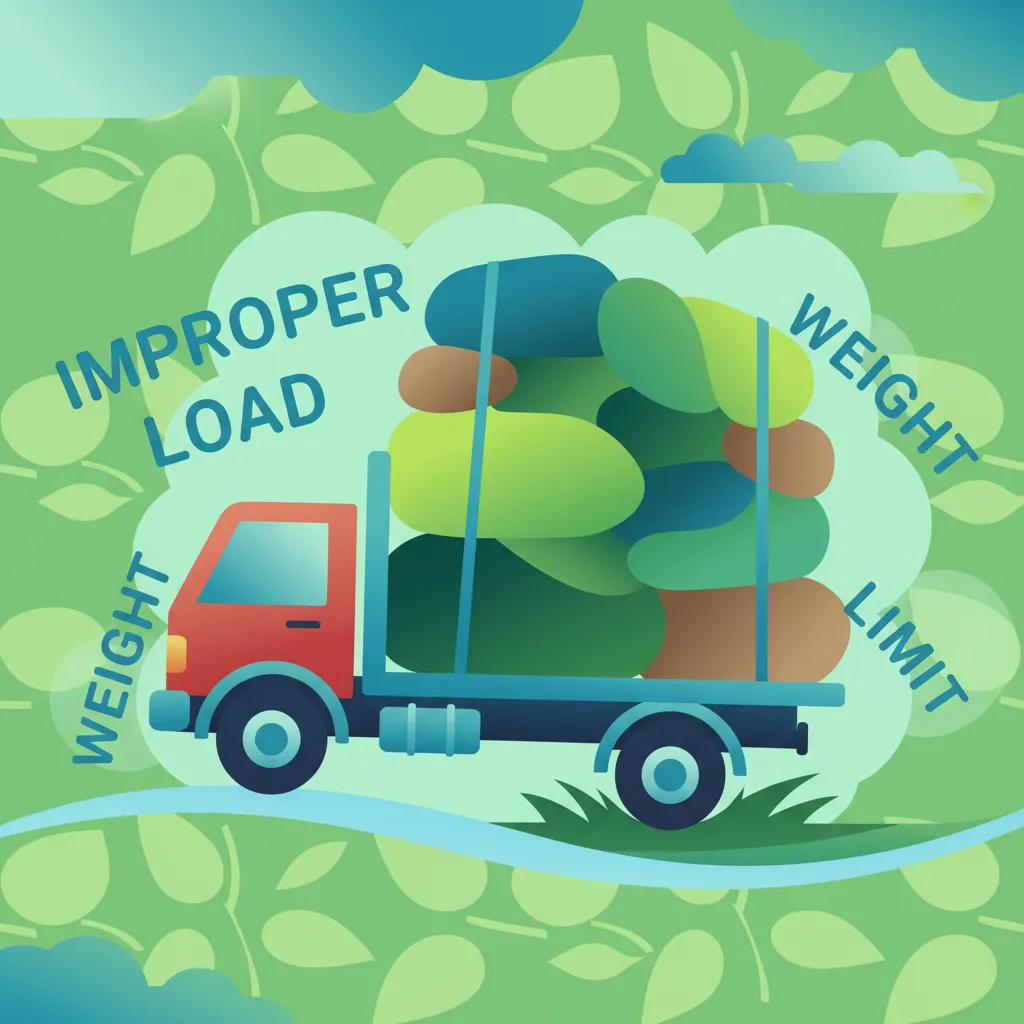
This lesson explains the critical importance of proper weight distribution and adherence to load limits for buses and coaches, focusing on gross vehicle weight and axle load regulations. It describes how passenger and cargo placement affects the centre of gravity, which in turn influences vehicle stability during acceleration, braking, and cornering. Learners will be taught best practices for load planning to ensure compliance and maintain safe handling.
This lesson outlines the best practices for precise vehicle positioning at urban bus stops and ensuring safe interaction with passengers. It covers the management of approach speed, correct alignment with the curb, and effective communication during boarding and alighting processes. Learners will also study how stopping maneuvers impact surrounding traffic flow and the importance of maintaining safety distances for efficient service.

This lesson provides strategies for navigating tight, confined environments such as multi-story car parks and narrow urban lanes. It emphasizes the importance of slow and controlled movements, constant observation, and a thorough understanding of the vehicle's dimensions and turning circle. Learners will develop the skills to maneuver with precision while avoiding obstacles.
Explore the specific Spanish DGT laws and regulations (RGC, RD 818/2009) governing vehicle dimensions, turning capabilities, lane usage, and height clearances for Category D and D1 bus drivers.
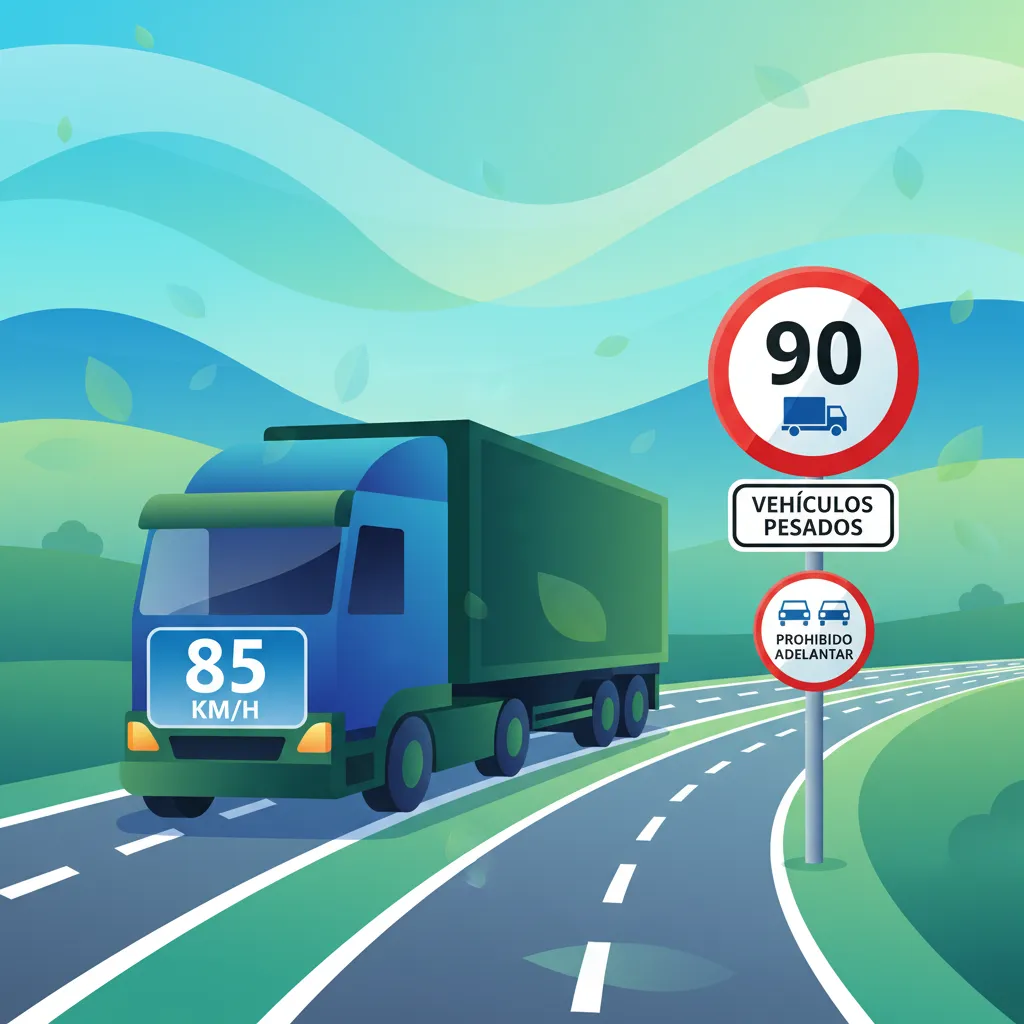
This lesson details the specific legal speed limits that apply to heavy passenger vehicles on Spanish highways, including variable speed zones that adjust based on traffic and weather conditions. Learners will understand the methods for speed monitoring, the function of speed control devices, and the legal consequences of non-compliance. The content also provides guidance on calculating a safe operating speed based on vehicle load and road conditions.
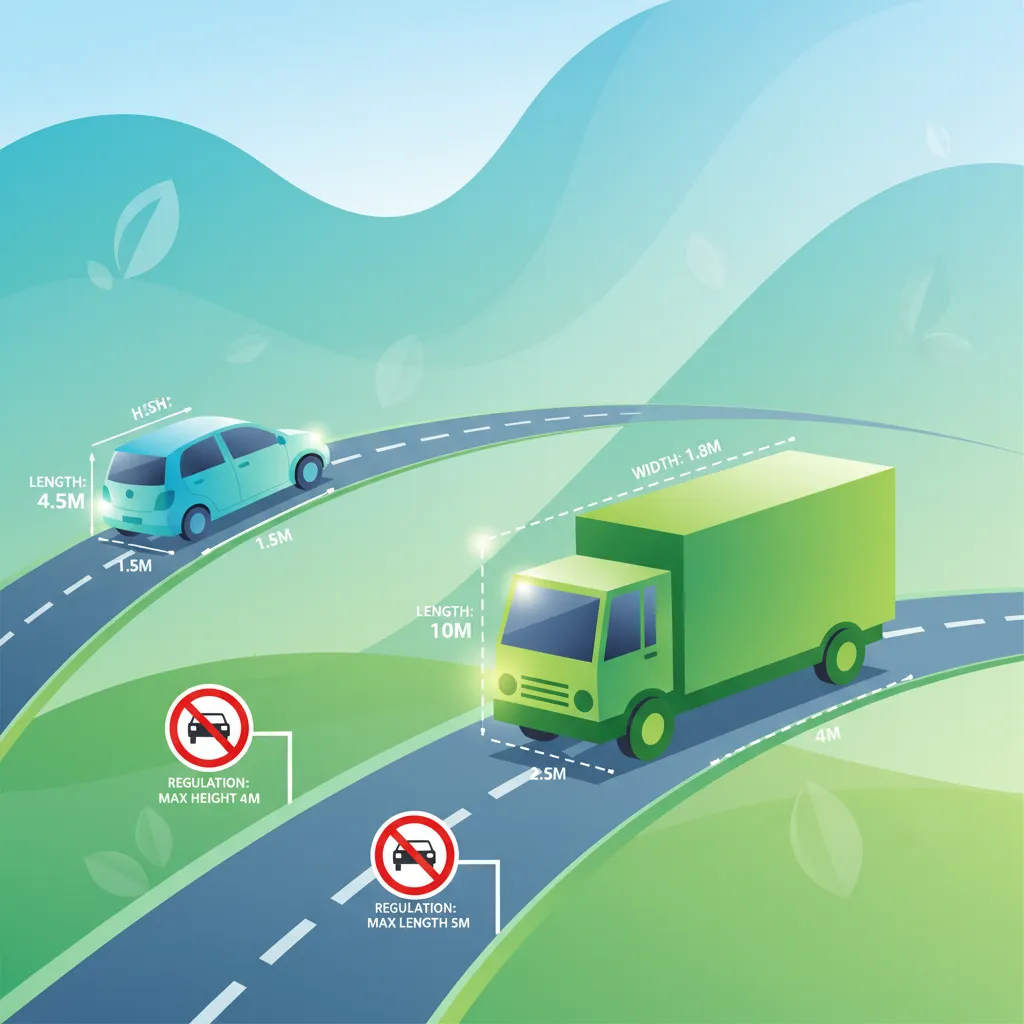
This lesson provides a detailed breakdown of the maximum permissible length, width, and height for heavy vehicles according to Spanish and EU regulations. It explains how these dimensions are measured and how they affect vehicle classification and route planning. The content emphasizes the critical importance of respecting clearance signs for bridges, tunnels, and other overhead structures to prevent accidents.
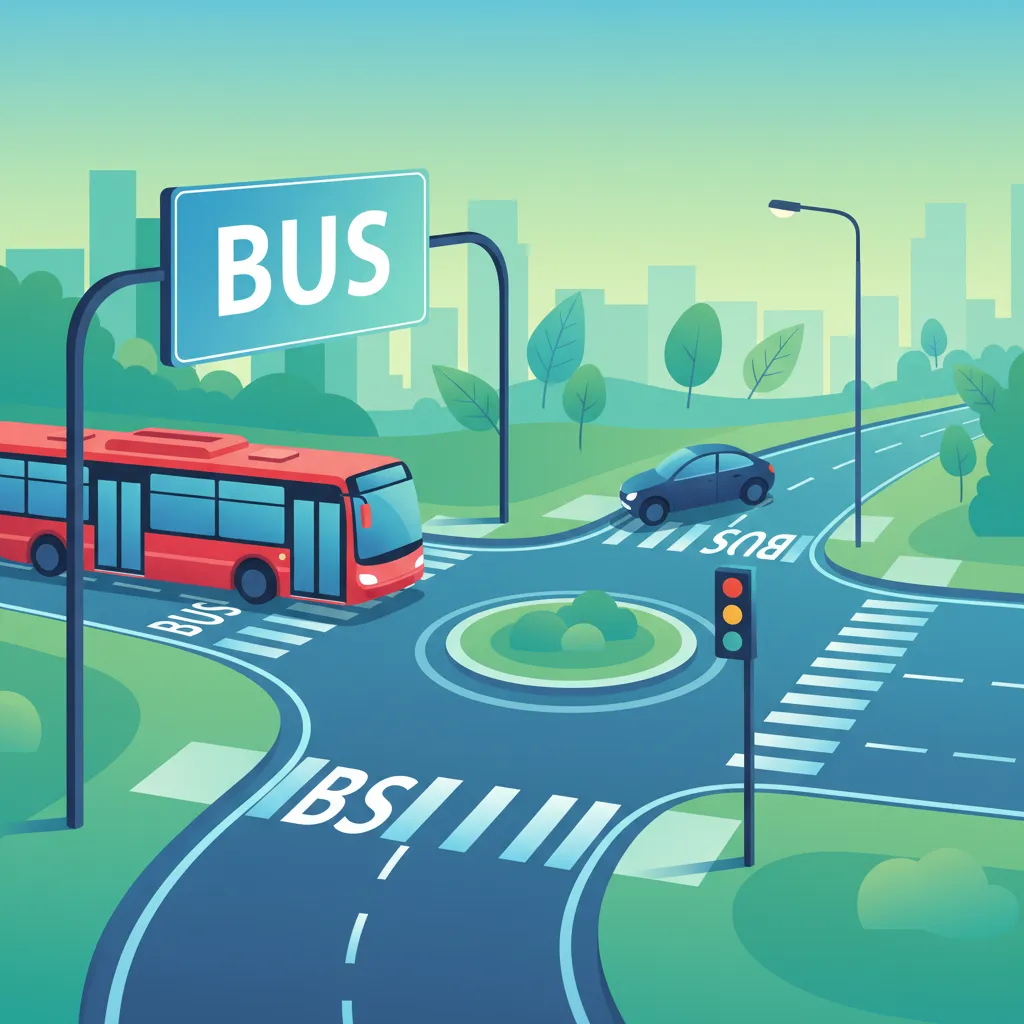
This lesson explores the regulations for dedicated bus lanes in urban environments, detailing the correct interpretation of associated lane markings and traffic signage. Learners will understand the specified times of operation, rules for sharing lanes with other vehicles, and the legal consequences of unauthorized entry. The module also provides clear guidelines for entering and exiting bus lanes at designated points to maintain traffic flow.
This lesson addresses overtaking procedures and lane discipline specifically for large coaches, emphasizing correct lane positioning and safe passing practices on multi-lane highways. It covers the legal rules for overtaking, the critical need for comprehensive blind spot checks before changing lanes, and the importance of signaling intentions early. Learners will also be taught how to maintain appropriate safety gaps when maneuvering around slower-moving traffic.
This lesson details the legal requirements for the use of seatbelts and child restraint systems in buses and coaches, as stipulated by DGT regulations. It specifies the age and size limits for various restraint devices and explains the verification checks drivers must perform. Learners will also review safety statistics that highlight the importance of correct usage and understand the legal penalties associated with non-compliance.
This lesson explains the fundamental DGT regulations that govern public transport services, including requirements for operational permits and route authorizations. It covers the mandatory schedules for vehicle inspections, standards for emissions, and the legal importance of adhering to timetables and service quality. Learners will also understand the nature of regulatory audits and compliance checks that operators must undergo.
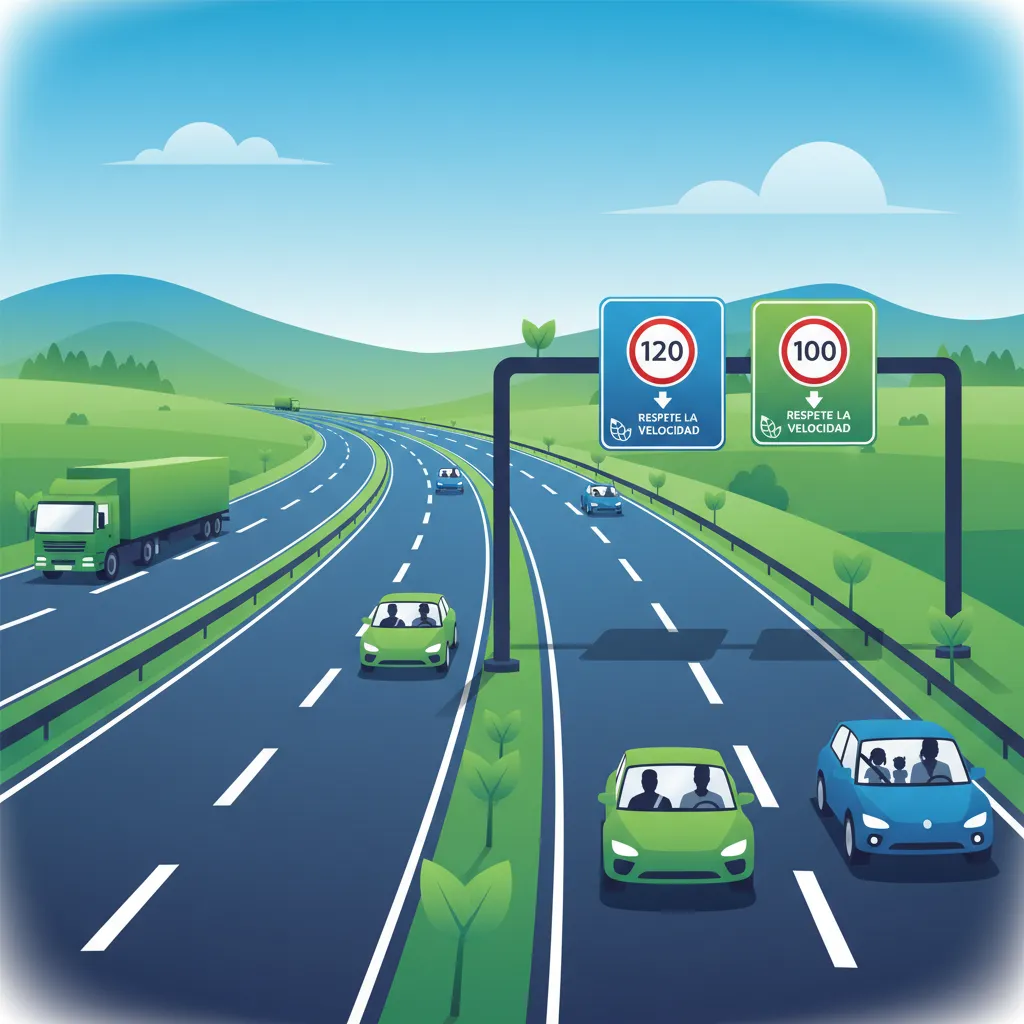
This lesson explains the classification differences between Spanish autovías and autopistas, detailing the specific speed limits and lane restrictions applicable to coaches on each. Learners will become proficient in interpreting motorway signage, adhering to minimum speed requirements, and recognizing vehicle type restrictions as enforced by the DGT. The module also covers the correct procedures for using entry and exit ramps to ensure safe and fluid traffic flow.

This lesson provides a comprehensive overview of the legal and practical requirements for making public transport accessible to all passengers, including those with disabilities. It covers the correct use of designated wheelchair spaces, ramp operation, priority seating, and the function of tactile and auditory alerts. Learners will understand their obligations to assist passengers safely and respectfully, ensuring full compliance with accessibility legislation.
This lesson focuses on the legal duty of care that professional bus drivers owe to their passengers, emphasizing the obligation to ensure safe transport. It examines the specific traffic laws applicable to heavy vehicles and the consequences of violations, such as fines and license sanctions. The content also details the mandatory procedures for reporting incidents and the essential insurance coverage required by the DGT.

This lesson provides a detailed outline of the legal framework that governs driver duty hours in Spain, specifying the maximum continuous driving time and mandatory rest periods defined by the DGT. Learners will understand the limits on cumulative work hours, the necessity of meticulous record-keeping, and methods for monitoring compliance with these regulations. The module also discusses the penalties for violations and reinforces the safety imperative of adherence.
Find clear answers to common questions learners have about Bus and Coach Dimensions and Turning Radii. Learn how the lesson is structured, which driving theory objectives it supports, and how it fits into the overall learning path of units and curriculum progression in Spain. These explanations help you understand key concepts, lesson flow, and exam focused study goals.
While all dimensions are important, the wheelbase and the overhangs (front and rear) are most critical for determining the turning radius. A longer wheelbase generally means a larger turning circle, requiring more space to complete a turn.
You need to visualize the entire path the bus will take, including the front swing, rear swing, and the inside wheel path. This involves understanding your turning radius and checking for obstructions like curbs, other vehicles, pedestrians, and street furniture. Practicing with the vehicle or using simulation tools can build this spatial awareness.
Yes, the DGT sets regulations regarding maximum dimensions (length, width, height) for different vehicle types, including buses, to ensure safety and compatibility with road infrastructure. These are typically detailed in the vehicle homologation and traffic regulations. For the theory exam, understanding how these dimensions affect driving is key.
Vehicle height is primarily important for clearance under bridges, tunnels, and low-hanging signs, rather than for the turning maneuver itself. However, a taller vehicle may have a higher center of gravity, which can affect stability during turns, especially at speed.
While not directly a dimension, how a bus is loaded can shift its center of gravity. This can subtly affect handling during turns. Properly distributed weight helps maintain stability and predictability, making it easier to manage the vehicle within its dimensional limits.
Use our powerful search functionality to pinpoint specific Spanish DGT driving theory practice sets. Filter by road sign categories, traffic law topics, or question difficulty to build custom study sessions and reinforce your knowledge precisely where it matters for your official exam.