
This lesson is crucial for professional truck drivers operating heavy goods vehicles (Category C/C1) in Spain. You will learn the principles of safe lane selection and correct overtaking protocols on multi-lane roads and highways, as per DGT regulations. Mastering these techniques, including blind spot checks and proper signaling, is vital for your DGT theory exam and ensuring safety on the road.

Lesson content overview
Navigating multi-lane roads and highways effectively requires a deep understanding of lane discipline and safe overtaking protocols, especially for professional truck drivers holding Category C and C1 licences. This lesson provides an in-depth guide to DGT regulations, best practices, and the critical considerations necessary for operating heavy vehicles safely and efficiently within the Spanish road network. Mastering these protocols is not just about compliance; it's about minimizing collision risk, protecting vulnerable road users, and ensuring optimal traffic flow for vehicles with longer stopping distances and reduced maneuverability.
This comprehensive guide is an essential part of your Official DGT Theory Course for Spanish Truck Licence Category C & C1, building upon foundational knowledge of vehicle dimensions, braking characteristics, and basic signaling procedures.
Safe lane selection and overtaking are fundamental aspects of professional truck driving, governed by a critical interplay of traffic law, vehicle dynamics, and human factors. For heavy vehicles, maintaining the correct lane and executing overtakes with precision reduces exposure to blind spots, prevents sudden braking, and respects the hierarchy of road users. Understanding the underlying principles is key:
This lesson integrates crucial concepts from your studies on Vehicle Dimensions & Limitations and Controls & Systems, and it lays a vital groundwork for future topics such as Highway Driving & Overtaking and Hazard Perception & Safety.
Effective lane management and overtaking are built upon several interconnected principles that professional drivers must internalize.
Lane discipline refers to the ongoing practice of maintaining the appropriate lane for your vehicle's current speed, intended direction, and planned maneuvers. Its primary purpose is to ensure predictable behavior from all drivers and to optimize the use of available road capacity. For truck drivers, this principle has significant implications, dictating when to stay in a lane, when to prepare for a change, or when to merge, directly influencing the availability and safety of overtaking opportunities.
Overtaking is a structured process for safely passing slower-moving traffic. The purpose of strict overtaking protocols is to prevent collisions that can arise from speed differentials and lateral movements. This involves a comprehensive assessment of various factors, including your speed, the distance to other vehicles, prevailing road markings, and a thorough check for blind spots.
Blind spots are areas around your truck that are not directly visible in your rear-view mirrors. Effective blind spot management involves actively knowing where these zones are and taking proactive steps to mitigate the risks they pose. This is critical for preventing lateral collisions during lane changes and merges, necessitating comprehensive mirror checks, physical head turns (shoulder checks), and timely, appropriate signaling.
Speed differential refers to the necessary difference in speed between your truck and the vehicle you intend to overtake, coupled with your truck's ability to accelerate and safely complete the maneuver. Its purpose is to guarantee sufficient clearance before you return to your original lane, ensuring you do not cut off the overtaken vehicle. This principle requires an accurate assessment of your truck's acceleration capabilities, especially when loaded, and consideration of the prevailing traffic flow.
Signaling involves the appropriate use of your truck's turn indicators to clearly convey your intended lane changes and overtaking actions to other road users. The purpose is to alert surrounding traffic well in advance, providing them with ample time to react and adjust their own driving. Signals must be activated sufficiently ahead of the maneuver and maintained until the lane change is fully completed.
Lane discipline is the continuous decision-making process to position your vehicle in the lane that best aligns with its speed, trajectory, and route. For professional truck drivers, strict adherence to lane discipline is legally mandated and crucial for safety.
The practical meaning for truck drivers is clear: generally, you stay in the right-most lane on multi-lane roads unless you are actively performing an overtaking maneuver. A common misunderstanding is the belief that a truck can occupy a left lane indefinitely without actively passing another vehicle, which is a violation of DGT regulations and disrupts traffic flow.
Overtaking zones are specific road areas where passing another vehicle is legally permitted. These zones are clearly indicated by road markings and, sometimes, signage. Recognizing and respecting these zones is paramount for safety.
The practical implication is straightforward: you may only overtake a slower vehicle within zones where road markings explicitly permit it. Attempting to overtake in a zone with solid lines, regardless of how slow traffic appears, is a dangerous and illegal act that often leads to head-on collisions or side-swipes. Overtaking is also typically forbidden at intersections, pedestrian crossings, and areas with limited visibility such as blind curves or crests of hills.
Blind spot management is the critical process of identifying and actively checking areas around your truck that are not visible through your various mirrors. Due to their size, trucks have significant blind spots, making this a crucial aspect of safe operation.
The practical application of blind spot management involves more than just a quick glance at your mirrors. Before initiating any lane change, merge, or turn, you must perform a thorough mirror check followed by a shoulder check (a quick head turn). This physical check ensures no smaller vehicles, motorcycles, or bicycles are attempting to overtake you or are riding in your blind spot. DGT Directive 07/2006 specifically mandates drivers to perform a visual check before any lane change.
Never rely solely on mirrors, especially with trucks that have large trailers. Always perform a physical shoulder check to confirm the blind spot is clear.
The concept of speed differential, combined with your truck's acceleration capability, dictates the feasibility and safety of an overtaking maneuver. This is the difference in speed required between your truck and the vehicle you intend to pass, ensuring you can complete the maneuver safely within the available road space.
The practical meaning is that you must ensure your truck can accelerate to a significantly higher speed than the vehicle you are passing without endangering yourself or others. DGT Article 81 explicitly states that overtaking must not be performed if the speed differential is insufficient to complete the maneuver safely. This prevents situations where a truck lingers alongside another vehicle, blocking traffic or creating a hazard.
The rate at which a vehicle can increase its speed. For heavy vehicles, this is heavily influenced by load, engine power, and gear selection.
Signaling is your primary means of communicating your intentions to other road users, using your vehicle's turn indicators. Clear and timely signaling is a legal requirement and a critical safety measure.
DGT Article 73.2 mandates that drivers must signal lane changes "before beginning the maneuver." For professional truck drivers, this translates to activating the appropriate indicator at least 5 seconds before you begin to move your vehicle laterally. This ample warning time allows other drivers, who need 2-3 seconds to process signals, to react and adjust their speed or position. A common mistake is delaying the signal until after the lane change has already begun, which can lead to unpredictable reactions from other drivers.
Always activate your turn signal well in advance of a maneuver and keep it engaged until the lane change is fully completed. This clear communication enhances safety for everyone on the road.
Adhering to DGT (Dirección General de Tráfico) regulations is mandatory for all drivers in Spain, and especially for professional truck drivers operating Category C and C1 vehicles. These rules are designed to ensure safety and maintain orderly traffic flow.
On multi-lane roads, DGT Article 80 bis specifies that vehicles with a maximum authorized mass exceeding 3,500 kg (including Category C/C1 trucks) must keep to the right-most lane available for their direction of travel. This applies unless they are actively overtaking another vehicle or preparing to turn left. On roads with a speed limit of 80 km/h or less, this rule is particularly strict.
Overtaking is strictly forbidden in specific zones to prevent collisions where visibility is limited or hazards are high. DGT Article 80.4 prohibits overtaking where there are double solid lines, indicating no crossing for either direction. Other prohibited zones include intersections, pedestrian crossings, level crossings, and areas with insufficient visibility (e.g., blind curves, hillcrests).
DGT Article 73.2 requires drivers to signal their intentions "before beginning the maneuver." For lane changes and overtaking, this means activating your turn indicators well in advance, typically recommended at least 5 seconds prior to initiating the lateral movement. The signal must remain active throughout the maneuver until the vehicle is fully in the new lane.
DGT Article 81 states that overtaking must not be performed if the speed differential between the overtaking and overtaken vehicle is insufficient to complete the maneuver safely. This implies that the overtaking vehicle must be able to accelerate quickly enough to pass and return to its original lane without obstructing or cutting off the overtaken vehicle. Additionally, maintaining a safe following distance before, during, and after the overtake is crucial.
Before any lane change or overtaking maneuver, DGT Directive 07/2006 emphasizes the need for a thorough visual check. This includes checking all mirrors (side and rear-view) and performing a physical shoulder check to ensure no vehicle is in your blind spot. This is especially vital for large trucks with extensive blind spots.
Overtaking vehicles that are stopped at traffic lights or in congested traffic is generally prohibited if road markings (e.g., solid lines, specific lane configurations) forbid it. This rule prevents end-of-queue accidents and ensures pedestrian safety around intersections.
Professional drivers must be acutely aware of common mistakes that lead to violations and accidents, particularly with heavy vehicles.
Safe lane selection and overtaking are dynamic processes that require constant adaptation to changing environmental and traffic conditions.
Understanding the cause-and-effect relationships inherent in driving maneuvers is critical for anticipating outcomes and making safe decisions.
Let's explore some practical driving situations to solidify your understanding of these protocols.
Decision Point: Should the truck overtake the slower car?
Correct Behavior: The truck driver first checks their mirrors and performs a shoulder check to ensure the left lane is clear and safe for overtaking. They then activate the left turn indicator at least 5 seconds before beginning the maneuver. Confirming the road markings are broken, allowing the overtake, the driver smoothly accelerates to a speed of approximately 100-105 km/h, passes the car, and maintains a safe lateral distance. Once past the car and with enough space visible in the right-side mirror to see the entire front of the overtaken vehicle, the driver signals right and returns to the right-most lane, maintaining appropriate speed.
Incorrect Behavior: The truck driver moves into the left lane without signaling or performing proper checks, accelerates slowly, and then swerves back into the right lane too early, cutting off the overtaken car and causing a dangerous situation.
Decision Point: Should the truck overtake the stopped bus?
Correct Behavior: The truck driver recognizes the solid line marking, which prohibits crossing into the left lane. They also factor in the reduced visibility and increased braking distance due to the rain. Understanding the dangers to potential pedestrians near the bus, the driver remains patient, slows down, and waits behind the bus, maintaining a safe distance until the bus moves or a safe, legal opportunity arises to proceed without crossing the solid line.
Incorrect Behavior: The truck driver ignores the solid line and the adverse weather, attempts to overtake the bus by swerving into the left lane, potentially colliding with oncoming traffic or endangering pedestrians stepping out from behind the bus.
Decision Point: Should the truck overtake the slower tractor-trailer?
Correct Behavior: The truck driver assesses their vehicle's acceleration capability with the heavy load. They confirm the left lane is clear via mirrors and a shoulder check. Activating the left indicator well in advance (at least 5 seconds), they initiate a smooth acceleration into the left-most lane. After passing the tractor-trailer with a safe margin, they check their right mirror, signal right, and return to the middle lane (or right-most lane if traffic permits and they are no longer overtaking) as promptly as possible, without obstructing faster traffic.
Incorrect Behavior: The truck driver attempts to overtake from the right lane (which is generally prohibited for heavy vehicles unless specific circumstances apply), fails to signal, or lingers in the left-most lane for an extended period after completing the overtake, causing an obstruction to faster-moving vehicles.
Decision Point: Should the truck overtake the cyclist?
Correct Behavior: The truck driver immediately identifies the solid white line and the limited visibility due to the curve. These conditions unequivocally prohibit overtaking. Despite the slower speed of the cyclist, the truck driver remains patiently behind the cyclist, maintaining a safe following distance until the road straightens, visibility improves, and road markings permit a safe and legal overtaking maneuver.
Incorrect Behavior: The truck driver attempts to overtake the cyclist within the curve, crossing the solid line, which places them at severe risk of a head-on collision with unseen oncoming traffic.
The principles of lane selection and overtaking are not arbitrary; they are deeply rooted in human perception, vehicle dynamics, visibility limitations, and risk management.
This lesson has equipped you with a robust understanding of the principles, regulations, and best practices for safe lane selection and overtaking, specifically tailored for professional truck drivers operating with Category C and C1 licences under DGT regulations.
Here are the key takeaways to remember:
This lesson covers the essential DGT regulations for safe lane selection and overtaking with Category C/C1 trucks in Spain. Key rules include mandatory right-lane discipline on multi-lane roads (Article 80 bis), prohibition of overtaking where solid lines exist (Article 80.4), and advance signaling requirements of at least 5 seconds before maneuvers (Article 73.2). The content emphasizes blind spot management through comprehensive mirror and shoulder checks, proper assessment of speed differential and acceleration capability before overtaking, and strict adherence to road markings indicating permitted versus prohibited zones. Understanding these protocols is critical for both passing the DGT theory exam and operating heavy vehicles safely on Spanish roads.
A short set of high-value points that capture the most important learning from this lesson.
Trucks must keep to the right-most lane on multi-lane roads unless actively overtaking, per DGT Article 80 bis
Always confirm overtaking zones by checking road markings—broken lines permit it, solid lines prohibit it
Activate turn indicators at least 5 seconds before any lane change and keep them on until the maneuver is complete
Perform both mirror checks and physical shoulder checks before every lane change to eliminate blind spot hazards
Only overtake when your truck's acceleration can create sufficient speed differential to complete the maneuver safely and return to your lane
Explore all units and lessons included in this driving theory course.
Overtaking is prohibited at intersections, pedestrian crossings, level crossings, and areas with double solid lines (DGT Article 80.4)
Heavy vehicles need significantly longer braking distances—factor in your load when judging stopping ability
DGT Directive 07/2006 mandates visual checks before any lane change, including shoulder checks
Minimum safe speed differential for heavy vehicles is typically at least 10 km/h faster than the vehicle being overtaken
Hazard lights are only for stationary emergencies or sudden decelerations—not for signaling overtaking maneuvers
Activating turn signals only as the lane change begins, leaving other drivers no time to react
Attempting to overtake when the truck cannot accelerate sufficiently, causing the vehicle to linger dangerously in the overtaking lane
Ignoring solid line markings near curves, intersections, or pedestrian crossings where overtaking is prohibited
Failing to perform a physical shoulder check and relying solely on mirrors, especially with trailers obscuring visibility
Overtaking in adverse weather conditions (rain, fog, snow) without accounting for reduced visibility and increased stopping distances
Lesson content overview
A short set of high-value points that capture the most important learning from this lesson.
Trucks must keep to the right-most lane on multi-lane roads unless actively overtaking, per DGT Article 80 bis
Always confirm overtaking zones by checking road markings—broken lines permit it, solid lines prohibit it
Activate turn indicators at least 5 seconds before any lane change and keep them on until the maneuver is complete
Perform both mirror checks and physical shoulder checks before every lane change to eliminate blind spot hazards
Only overtake when your truck's acceleration can create sufficient speed differential to complete the maneuver safely and return to your lane
Explore all units and lessons included in this driving theory course.
Overtaking is prohibited at intersections, pedestrian crossings, level crossings, and areas with double solid lines (DGT Article 80.4)
Heavy vehicles need significantly longer braking distances—factor in your load when judging stopping ability
DGT Directive 07/2006 mandates visual checks before any lane change, including shoulder checks
Minimum safe speed differential for heavy vehicles is typically at least 10 km/h faster than the vehicle being overtaken
Hazard lights are only for stationary emergencies or sudden decelerations—not for signaling overtaking maneuvers
Activating turn signals only as the lane change begins, leaving other drivers no time to react
Attempting to overtake when the truck cannot accelerate sufficiently, causing the vehicle to linger dangerously in the overtaking lane
Ignoring solid line markings near curves, intersections, or pedestrian crossings where overtaking is prohibited
Failing to perform a physical shoulder check and relying solely on mirrors, especially with trailers obscuring visibility
Overtaking in adverse weather conditions (rain, fog, snow) without accounting for reduced visibility and increased stopping distances
Explore search topics learners often look for when studying Lane Selection and Overtaking Protocols. These topics reflect common questions about road rules, driving situations, safety guidance, and lesson level theory preparation for learners in Spain.
Browse additional driving theory lessons that cover connected traffic rules, road signs, and common driving situations related to this topic. Improve your understanding of how different rules interact across everyday traffic scenarios.
Explore complex scenarios and advanced strategies for lane selection and safe overtaking for heavy vehicles on Spanish roads. Covers DGT regulations, blind spot management, and speed differential calculations in challenging situations. Essential for Category C and C1 licence holders.

This lesson provides a detailed guide to performing safe and legal overtaking maneuvers on the highway. It places strong emphasis on the techniques for thoroughly checking the large blind spots around a truck before initiating a lane change. The content also covers judging the necessary speed differential and distance required to complete the pass and return to the lane safely.
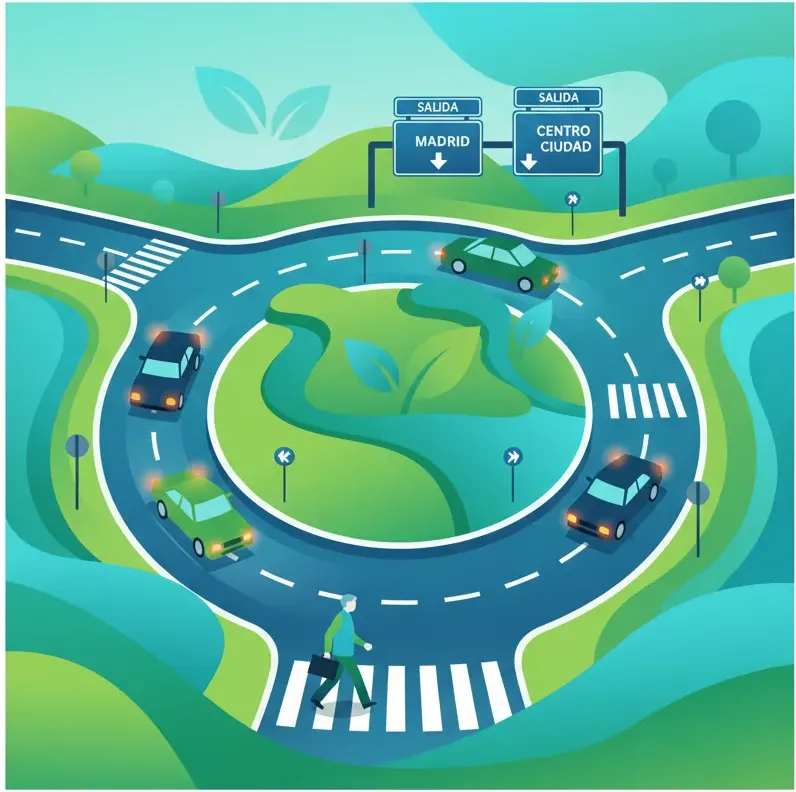
This lesson provides specific instructions on how to safely navigate complex junctions such as roundabouts and intersections with a large vehicle. It explains the rules of priority, the correct lane to use based on the intended exit, and the importance of proper vehicle positioning to account for off-tracking. The content also covers clear signaling to communicate intentions to other road users for safe and efficient passage.

This lesson explains the specific legal framework governing truck operations on Spain's high-speed road network. It details the different speed limits for trucks on autovías versus autopistas and the regulations regarding which lanes heavy vehicles are permitted to use. Learners will also understand how to interpret specific highway signage relevant to commercial vehicles and any applicable toll regulations.

This lesson provides a broad overview of the key traffic regulations in Spain that directly impact professional truck drivers. It details the rules of priority at intersections, the interpretation of different road markings, and the principles of correct lane discipline. Furthermore, it explains the specific speed limits applicable to heavy vehicles and the legal protocols for safe overtaking and signaling.

This lesson focuses on the critical relationship between speed, following distance, and overall traffic safety on highways. It explains how to calculate a safe following distance based on speed and weather conditions, accounting for a truck's longer stopping distance. The content also teaches strategies for managing speed to adapt smoothly to changing traffic flow, enhancing both safety and fuel efficiency.
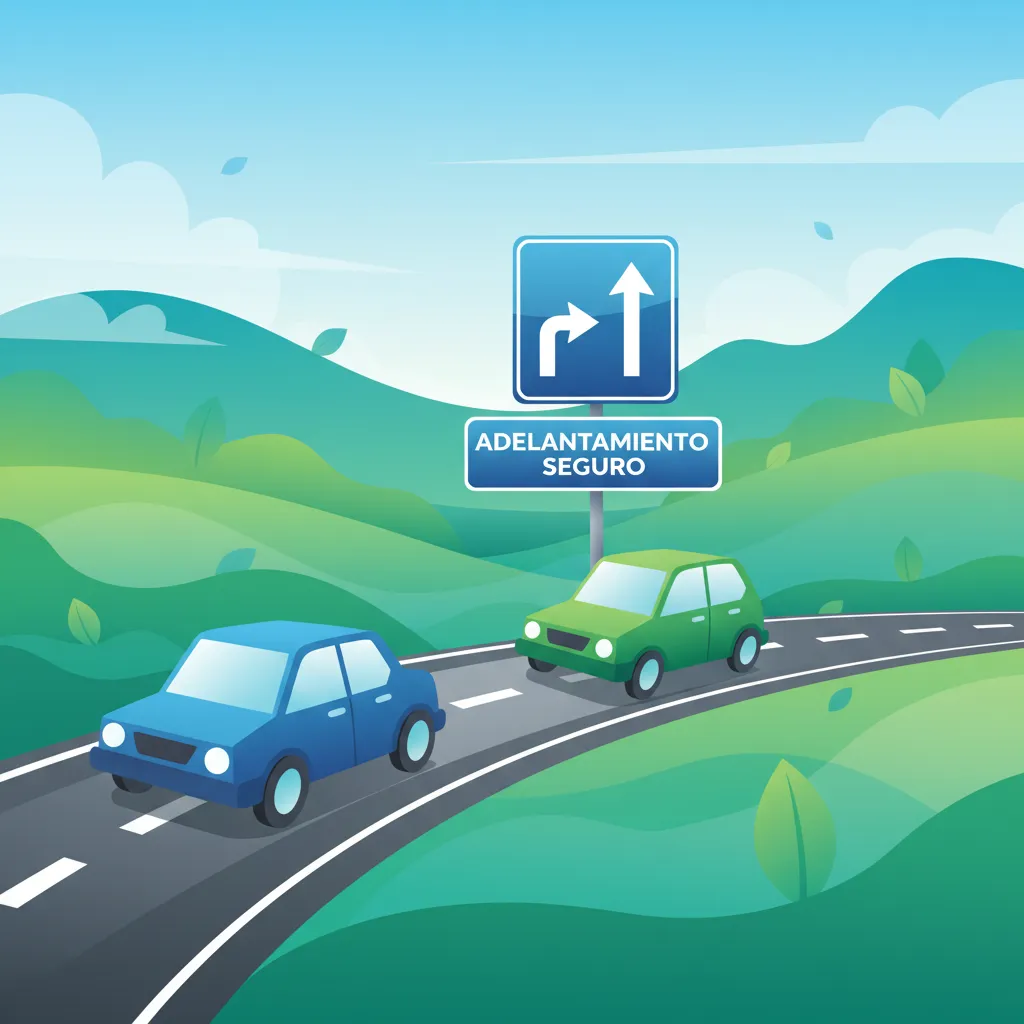
This lesson covers the legal overtaking procedures applicable on different road types, focusing on identifying safe passing zones and executing maneuvers correctly. Learners will be taught how to maintain adequate safety distances before, during, and after overtaking. The content includes DGT regulations for overtaking, appropriate signaling, and visibility checks to ensure safe completion of the maneuver.

This lesson focuses on the core principles of defensive driving as they apply to operating a large truck. It explains the importance of managing the space around the vehicle to create a safety buffer and always having an 'escape route' in mind. The content emphasizes anticipating the actions of other road users and being prepared to react calmly and safely to unexpected situations.
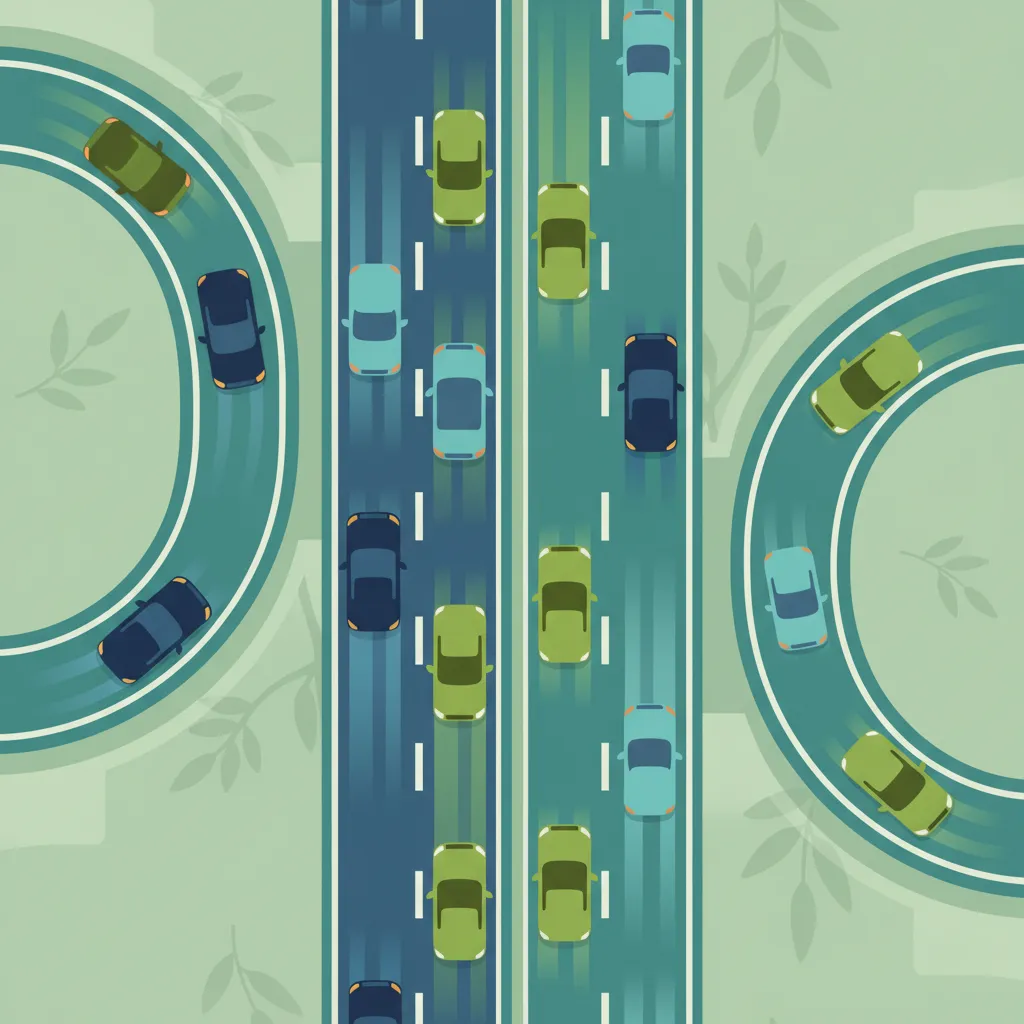
This lesson defines proper lane discipline on highways, emphasizing correct lane positioning and the rule to drive in the right-hand lane except when overtaking. It details safe merging onto main carriageways from an acceleration lane and effective exit strategies using deceleration lanes. Learners will understand DGT merge rules and the importance of signaling lane changes early.

This lesson focuses on the critical skill of safely interacting with vulnerable road users, such as pedestrians and cyclists, in an urban setting. It highlights the extensive blind spots around a truck and teaches drivers to be extra vigilant, especially at intersections and crosswalks. The content covers the legal requirements for yielding and the importance of making eye contact to confirm intentions.
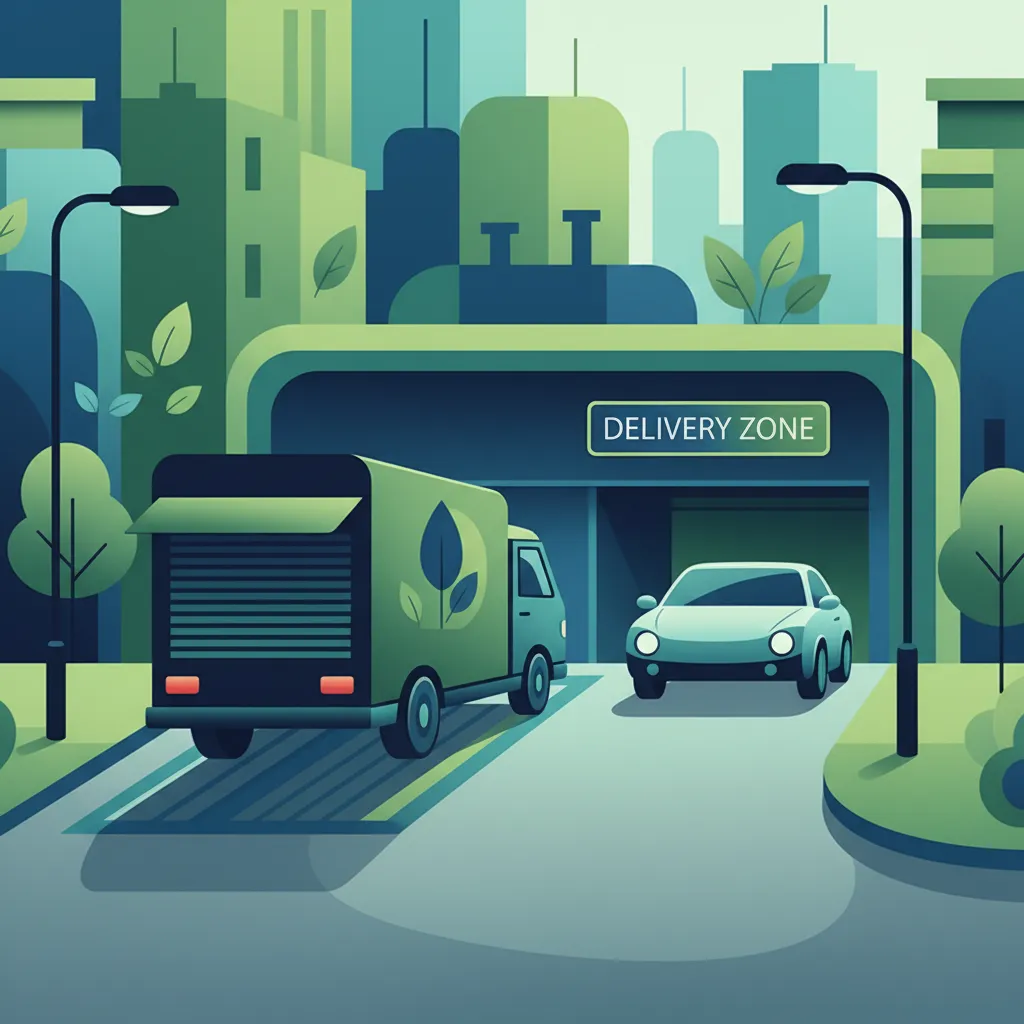
This lesson provides guidance on the practical aspects of parking and making deliveries in urban areas. It covers the techniques for safely maneuvering into and out of loading docks and designated delivery zones, which often involves precise reversing. The content also explains the specific parking regulations that apply to commercial vehicles and best practices for ensuring safety during loading and unloading.
Understand typical errors and critical safety concerns related to truck overtaking and lane selection on Spanish roads. This lesson details common violations of DGT rules, their consequences, and how to avoid dangerous situations for professional truck drivers.
This lesson provides a detailed guide to performing safe and legal overtaking maneuvers on the highway. It places strong emphasis on the techniques for thoroughly checking the large blind spots around a truck before initiating a lane change. The content also covers judging the necessary speed differential and distance required to complete the pass and return to the lane safely.
This lesson provides specific instructions on how to safely navigate complex junctions such as roundabouts and intersections with a large vehicle. It explains the rules of priority, the correct lane to use based on the intended exit, and the importance of proper vehicle positioning to account for off-tracking. The content also covers clear signaling to communicate intentions to other road users for safe and efficient passage.
This lesson provides a broad overview of the key traffic regulations in Spain that directly impact professional truck drivers. It details the rules of priority at intersections, the interpretation of different road markings, and the principles of correct lane discipline. Furthermore, it explains the specific speed limits applicable to heavy vehicles and the legal protocols for safe overtaking and signaling.
This lesson covers the legal overtaking procedures applicable on different road types, focusing on identifying safe passing zones and executing maneuvers correctly. Learners will be taught how to maintain adequate safety distances before, during, and after overtaking. The content includes DGT regulations for overtaking, appropriate signaling, and visibility checks to ensure safe completion of the maneuver.
This lesson focuses on the core principles of defensive driving as they apply to operating a large truck. It explains the importance of managing the space around the vehicle to create a safety buffer and always having an 'escape route' in mind. The content emphasizes anticipating the actions of other road users and being prepared to react calmly and safely to unexpected situations.
This lesson focuses on the critical relationship between speed, following distance, and overall traffic safety on highways. It explains how to calculate a safe following distance based on speed and weather conditions, accounting for a truck's longer stopping distance. The content also teaches strategies for managing speed to adapt smoothly to changing traffic flow, enhancing both safety and fuel efficiency.
This lesson explains the specific legal framework governing truck operations on Spain's high-speed road network. It details the different speed limits for trucks on autovías versus autopistas and the regulations regarding which lanes heavy vehicles are permitted to use. Learners will also understand how to interpret specific highway signage relevant to commercial vehicles and any applicable toll regulations.

This lesson addresses overtaking procedures and lane discipline specifically for large coaches, emphasizing correct lane positioning and safe passing practices on multi-lane highways. It covers the legal rules for overtaking, the critical need for comprehensive blind spot checks before changing lanes, and the importance of signaling intentions early. Learners will also be taught how to maintain appropriate safety gaps when maneuvering around slower-moving traffic.
This lesson focuses on the critical skill of safely interacting with vulnerable road users, such as pedestrians and cyclists, in an urban setting. It highlights the extensive blind spots around a truck and teaches drivers to be extra vigilant, especially at intersections and crosswalks. The content covers the legal requirements for yielding and the importance of making eye contact to confirm intentions.

This lesson examines the interaction between large vehicles, such as trucks, and vulnerable road users within roundabouts. It addresses the wide turning radius of heavy vehicles, the importance of checking blind spots, and the correct yielding behavior toward pedestrians and cyclists. Learners will understand how to maintain safe distances and anticipate the movements of different road users.
Find clear answers to common questions learners have about Lane Selection and Overtaking Protocols. Learn how the lesson is structured, which driving theory objectives it supports, and how it fits into the overall learning path of units and curriculum progression in Spain. These explanations help you understand key concepts, lesson flow, and exam focused study goals.
In Spain, heavy goods vehicles (Category C/C1) generally must keep to the rightmost lane or the lanes specifically designated for them. The leftmost lane (or lanes, if more than two) is typically reserved for overtaking and should only be used for the minimum time necessary to complete the maneuver.
While the DGT does not specify a precise speed differential, it is crucial that a Category C/C1 truck can complete an overtaking maneuver safely and reasonably quickly. This means ensuring there is a noticeable speed difference between your truck and the vehicle you are passing to minimize the time spent in the opposing lane or alongside the other vehicle.
Checking blind spots in a truck requires thorough use of all mirrors and, if equipped, blind spot monitoring systems. Before initiating any lane change or overtake, perform a systematic check: internal mirrors first, then external mirrors, followed by a quick head turn to cover areas not visible in mirrors, especially to the side you intend to move.
No, a continuous longitudinal line on the road prohibits overtaking for all vehicles, including Category C/C1 trucks. Overtaking is only permitted when there is a broken or dashed line on your side of the road, and it must be done safely and without endangering other road users.
If another vehicle overtakes your Category C/C1 truck unsafely, such as cutting you off or doing so on a continuous line, the primary action is to prioritize safety. Maintain your lane, adjust your speed if necessary to create space, and avoid any aggressive reactions. Report dangerous driving if it poses a significant threat.
Use our powerful search functionality to pinpoint specific Spanish DGT driving theory practice sets. Filter by road sign categories, traffic law topics, or question difficulty to build custom study sessions and reinforce your knowledge precisely where it matters for your official exam.