
This lesson breaks down the crucial concept of total stopping distance into reaction and braking components for heavy passenger vehicles. You will explore how speed, vehicle weight, and environmental factors influence your ability to stop safely, ensuring you are prepared for both the Swiss theory exam and the realities of professional driving.
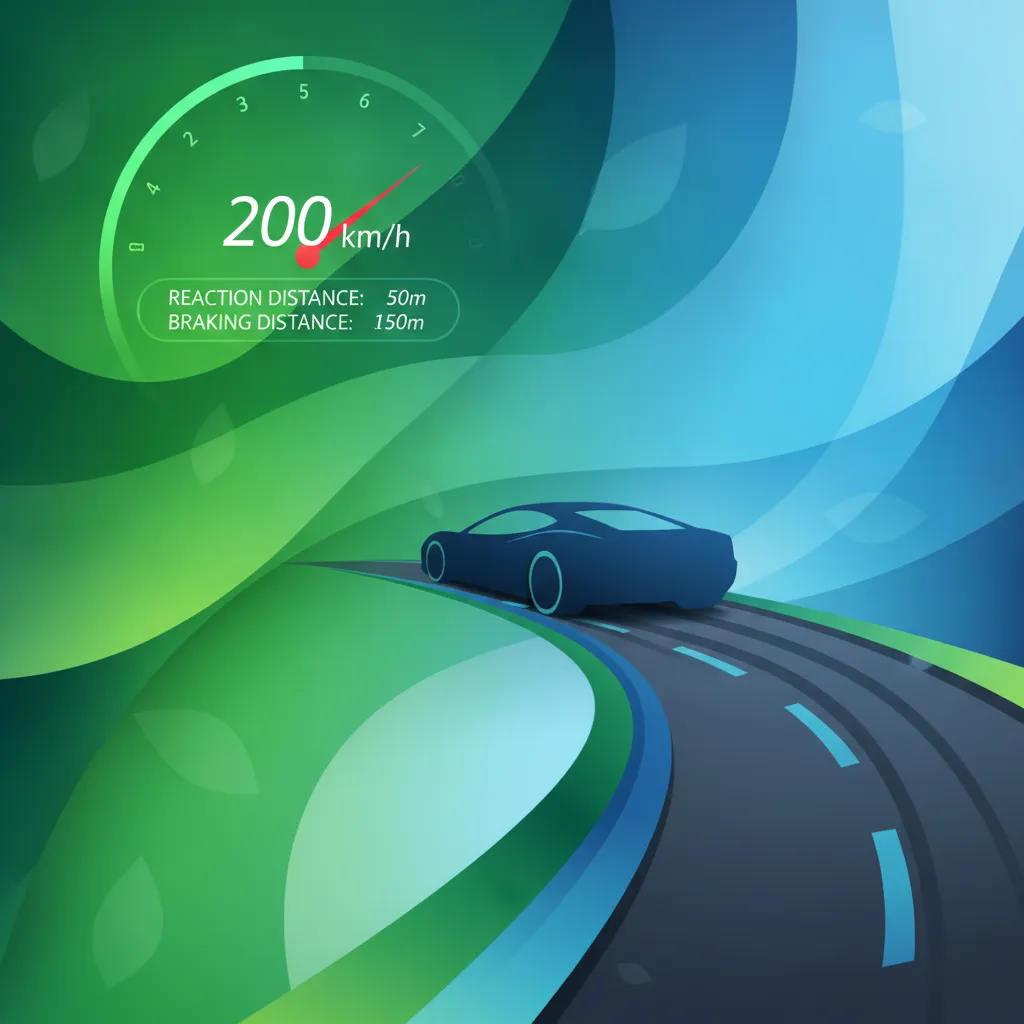
Lesson content overview
For professional drivers operating large passenger vehicles such as buses and coaches, a profound understanding of total stopping distance is not merely theoretical knowledge; it is a fundamental aspect of proactive hazard management and paramount for passenger safety. This lesson, part of your Swiss Category D Driving License Theory Course, delves into the critical components and influential factors that determine how long it takes to bring a heavy vehicle to a complete halt. By mastering these principles, you will be equipped to make informed decisions regarding speed, following distance, and braking techniques, thereby ensuring the safety and comfort of your passengers.
Total Stopping Distance (TSD) represents the complete distance your vehicle travels from the moment you perceive a hazard until it comes to a full and complete stop. This critical measurement is the sum of two distinct phases: the distance covered while the driver reacts, and the distance covered while the vehicle is actively braking. Understanding this distinction is crucial for appreciating the complexities involved in safe vehicle operation, especially with the unique dynamics of a bus or coach.
Total stopping distance is defined as the entire length a vehicle travels from the precise moment a driver becomes aware of a hazard on the road ahead, through their reaction, and until the vehicle is no longer moving. This comprehensive metric integrates both human response time and the physical capabilities of the vehicle and its interaction with the road surface. For professional drivers, calculating and constantly re-evaluating TSD is foundational to maintaining safe following distances, anticipating potential dangers, and executing controlled stops, which directly contributes to the prevention of accidents and the well-being of passengers.
Total stopping distance is inherently composed of two sequential and additive phases, each influenced by a unique set of variables:
Understanding both components separately and together allows for a holistic view of the forces and human factors at play when bringing a heavy vehicle to a standstill.
The thinking, or reaction, distance is the initial segment of the total stopping distance equation. It is a direct reflection of the driver's perception and processing capabilities, and it underscores the human element in vehicle control.
Thinking distance is precisely defined as the distance a vehicle travels during the time interval between a driver identifying a hazard and the initiation of the braking action. This interval encompasses perception, recognition, decision-making, and the physical act of moving a foot from the accelerator to the brake pedal. It is a period during which the vehicle continues to travel at its current speed, unaffected by any braking force.
Numerous factors can influence a driver's perception-reaction time, directly affecting the thinking distance. Professional bus and coach drivers must be acutely aware of these variables to consistently maintain safe operational margins.
For a rested, attentive driver under normal conditions, the average perception-reaction time is approximately 1.5 seconds. During this seemingly short period, a vehicle traveling at 80 km/h will cover around 33 metres before the brakes are even engaged. However, this "normal" reaction time can be significantly extended by various impairments:
Any factor that extends a driver's perception-reaction time directly increases the thinking distance, adding metres to the total stopping distance before any deceleration even begins. Professional drivers must manage these risks rigorously.
Thinking distance has a direct, linear relationship with vehicle speed. This means that if you double your speed, you double your thinking distance. This is because the reaction time itself typically remains constant, but the distance covered during that constant time increases proportionally with how fast the vehicle is moving.
For example, at 50 km/h, with a 1.5-second reaction time, a bus travels approximately 21 metres before the driver starts to brake. If the speed increases to 100 km/h, that same 1.5-second reaction time results in the vehicle covering about 42 metres – twice the distance – before braking can commence. This linear increase highlights why higher speeds inherently demand more immediate and vigilant hazard anticipation.
Once the driver has reacted and applied the brakes, the vehicle enters the braking distance phase. This is where the physical forces of deceleration come into play, bringing the vehicle to a halt.
Braking distance is defined as the distance a vehicle travels from the precise moment the brakes are effectively applied until it comes to a complete stop. This distance is a direct result of dissipating the vehicle's kinetic energy through friction generated by the braking system, tires, and road surface. It is influenced by a complex interplay of factors, making it highly variable.
Unlike thinking distance, braking distance does not increase linearly with speed; it increases exponentially. Specifically, braking distance is roughly proportional to the square of the vehicle's speed (v²). This principle means that doubling your speed does not merely double your braking distance—it quadruples it.
Consider this: if a bus needs 20 metres to stop from 40 km/h on a dry road, it would need approximately 80 metres to stop from 80 km/h (20 m * (80/40)² = 20 m * 2² = 20 m * 4 = 80 m). This exponential relationship is one of the most critical concepts for professional drivers to grasp, as it profoundly impacts safe speed choices and following distances. Even small increases in speed at higher ranges can lead to dramatically longer braking distances, making proactive speed management essential.
Remember the "speed squared" rule for braking distance: Double your speed, quadruple your braking distance. This is vital for anticipating how much space you need to stop safely.
Braking efficiency is a measure of how effectively a vehicle's braking system can convert kinetic energy into heat and stop the vehicle. This is influenced by several design and maintenance factors:
Total stopping distance is not a fixed value; it is a dynamic measurement that changes with every alteration in speed, vehicle condition, road surface, and driver state. Professional drivers must constantly assess and adapt to these variables.
As previously discussed, vehicle speed is the most influential factor impacting TSD. Thinking distance increases linearly with speed, while braking distance increases with the square of speed. This combined effect means that the total stopping distance grows disproportionately as speed rises. Drivers must internalize that doubling speed can more than triple the total stopping distance, significantly reducing the available reaction and braking time in critical situations.
The total mass of a bus or coach, including its structure, fuel, passengers, and luggage, directly affects its kinetic energy. A heavier vehicle has more kinetic energy, requiring more force and distance to bring it to a stop.
Professional drivers must always consider the number of passengers and the amount of luggage when judging appropriate speeds and following distances.
The condition of the road surface profoundly impacts the friction coefficient (µ) between the tires and the road, which is a critical determinant of braking distance.
On a clean, dry asphalt or concrete surface, tires typically achieve optimal grip. This provides the baseline for braking distances under ideal conditions. The friction coefficient is relatively high (µ ≈ 0.7 to 0.8), allowing for efficient deceleration.
Rain, dampness, or even oil spills drastically reduce the friction coefficient (µ ≈ 0.4 to 0.5). Water acts as a lubricant, reducing tire adhesion and extending braking distances by approximately 50-70% compared to dry conditions. Hydroplaning, where tires lose contact with the road surface due to a layer of water, is a severe risk in heavy rain, making braking almost impossible.
Ice and compacted snow present the most hazardous conditions for braking, as the friction coefficient drops dramatically (µ ≈ 0.1 to 0.2). Braking distances can easily triple or quadruple compared to dry roads. Even with specialized winter tires, significant reductions in speed and greatly increased following distances are absolutely mandatory.
Adverse weather conditions impact TSD in multiple ways:
Drivers must proactively reduce speed and increase following distances when driving in any adverse weather or low-visibility conditions.
The human element is central to the thinking distance. A driver's physical and mental state directly influences their ability to detect hazards and react promptly.
The mechanical integrity of the bus or coach directly influences braking distance and overall stopping performance.
Regular, thorough vehicle inspections and maintenance are not just regulatory requirements; they are fundamental to predictable and safe stopping distances.
The slope of the road, or gradient, also plays a role in total stopping distance:
For large passenger vehicles, the technique of braking is almost as important as the braking distance itself. Progressive braking is a key skill for Category D drivers.
Progressive braking is a graduated method of applying the brakes. It involves initiating braking with a gentle, smooth application of the service brakes, followed by a gradual increase in pressure as needed. This technique often incorporates the use of auxiliary braking systems, such as engine brakes (motorbremse) or retarders (Retarder), before the full force of the service brakes is required. The aim is to achieve smooth, controlled deceleration without abrupt jolts.
Anticipate the need to slow down early.
Begin with a light, smooth application of the service brakes, or engage the retarder/engine brake.
Gradually increase brake pedal pressure as the vehicle slows and the need for deceleration increases.
Release brake pressure smoothly just before coming to a complete stop to avoid a sudden jolt.
While progressive braking might seem to extend the time to stop slightly compared to a maximum emergency stop, its primary benefit lies in controlling load transfer and maintaining tire grip. By preventing sudden weight shifts and potential wheel lock-up, particularly in heavy vehicles, progressive braking can actually result in a shorter effective braking distance under non-emergency conditions. More importantly, it ensures passenger comfort and stability, minimizing the risk of injuries caused by abrupt deceleration. In an emergency, however, the driver must apply maximum braking force while still striving to maintain control.
Swiss traffic law places a strong emphasis on safety, particularly concerning professional passenger transport. Regulations concerning stopping distances are designed to prevent accidents and protect all road users.
Swiss traffic regulations mandate that drivers must always maintain a safe following distance from the vehicle ahead. This distance must be sufficient to allow the driver to stop safely, even if the vehicle in front brakes abruptly. While a precise numerical value often isn't universally fixed in meters for all speeds (like the "two-second rule" is a guideline), the legal obligation is to ensure the following distance always exceeds the total stopping distance for the current conditions. For buses and coaches, this is especially critical due to their longer stopping distances and the need to protect passengers from sudden movements.
For example, at 60 km/h on a dry road with an empty bus, the total stopping distance might be around 55 metres (e.g., 25m thinking + 30m braking). Therefore, a minimum following distance greater than 55 metres would be required. This must be adjusted significantly upward for heavier loads, adverse weather, or higher speeds.
In Switzerland, professional drivers of passenger vehicles are explicitly required to employ progressive braking techniques. This is not just a best practice but a fundamental operational standard for ensuring passenger comfort and safety. Abrupt or panic braking in a bus or coach can cause passengers to lose balance, fall, and sustain injuries. Adherence to progressive braking is a key aspect of a driver's duty of care and is subject to inspection by transport authorities.
Swiss traffic law obliges drivers to adjust their speed to prevailing road, traffic, and weather conditions, ensuring that they can stop within the visible, clear distance ahead. This means that posted speed limits are maximums under ideal conditions, not targets to be met regardless of circumstances. In adverse conditions such as rain, snow, ice, fog, or reduced visibility, drivers must reduce their speed significantly to ensure their total stopping distance remains manageable and within the limits of their vision. Failure to do so can result in serious penalties and is a major cause of accidents.
Misunderstandings or neglect of stopping distance principles are frequent causes of accidents involving heavy vehicles. Professional drivers must be aware of these pitfalls.
Following too closely, or tailgating, is one of the most common and dangerous violations. It occurs when a driver maintains a following distance that is less than the total stopping distance required for their speed and conditions. In the event of sudden braking by the lead vehicle, a rear-end collision becomes unavoidable. This risk is amplified for buses and coaches due to their longer inherent stopping distances.
Maintaining speeds suitable for dry roads when driving in wet, icy, or foggy conditions is a grave error. This failure to adjust for reduced friction or visibility leads to significantly longer actual stopping distances than the driver anticipates, making collision avoidance impossible.
While emergency braking may sometimes be necessary, abrupt, full-force application of brakes (panic braking) in a heavy bus or coach can be hazardous. It can lead to wheel lock-up, loss of steering control, jackknifing (for articulated buses), and severe passenger discomfort or injury due to sudden forward momentum. Progressive braking helps mitigate these risks, but in a true emergency, maximum controlled braking is paramount.
Drivers who fail to account for the increased mass of a fully loaded bus will underestimate their braking distance. This can lead to following too closely or misjudging the space needed for a safe stop, especially in downhill or slippery conditions.
Driving while fatigued significantly extends a driver's reaction time, effectively lengthening the thinking distance. This reduces the margin for error and increases the likelihood of an accident, even if the braking system is perfect.
Drivers may forget to account for the increased momentum and reduced braking effectiveness on downhill slopes. Maintaining speeds that would be safe on flat ground can be perilous on a descent, leading to overspeeding or brake fade.
The dynamic nature of total stopping distance demands that drivers continuously assess and adapt their driving strategy based on prevailing conditions.
| Condition | Variation in TSD Calculation | Reasoning |
|---|---|---|
| Dry Road | Baseline friction coefficient (µ ≈ 0.7-0.8) for braking. | Provides standard braking distance; TSD is minimized. |
| Wet Road | Reduced µ (≈ 0.4-0.5); braking distance increases by ~50-70%. | Lower tire-road adhesion requires more distance to dissipate kinetic energy. |
| Icy/Snow-Covered | Drastically reduced µ (≈ 0.1-0.2); braking distance can triple or quadruple. | Minimal traction; extreme caution, significantly reduced speed, and greatly increased following distance are vital. |
| Night Driving | Visual perception slower; reaction time may increase by ~0.2-0.3 seconds. | Reduced visibility, especially for hazards beyond headlight range, increases the time needed to perceive and react. |
| Heavy Load | Braking distance increases proportionally to mass. | Higher kinetic energy requires greater force and distance to dissipate; thinking distance unaffected. |
| Uphill Gradient | Braking distance slightly reduces (gravity assists). | Gravity helps slow the vehicle; however, higher speeds to overcome incline can offset this. |
| Downhill Gradient | Braking distance significantly increases (gravity adds momentum). | Gravity works with vehicle's motion; risk of speed creep and brake fade; requires engine braking/retarder. |
| Fatigued Driver | Reaction time may increase to 2.0-2.5 seconds or more. | Cognitive slowdown from exhaustion extends thinking distance; driver must take a break. |
| Distracted Driver | Reaction time can increase dramatically (1-2+ seconds extra). | Attention diverted from the road means delayed hazard detection and response. |
| Worn Brakes/Tires | Braking distance increases due to reduced friction or efficiency. | Compromised vehicle components cannot generate sufficient friction for optimal stopping. |
Understanding TSD in theory is essential, but applying it in real-world driving scenarios is where the professional driver's expertise truly shines.
Setting: A bustling city arterial road, 50 km/h speed limit, dry pavement, your bus is partially loaded during rush hour. Scenario: A child unexpectedly runs into the street from behind a parked car. Correct Behavior: Recognizing the high-risk urban environment, you maintained a conservative speed and increased following distance. Upon perceiving the child, you immediately and firmly apply progressive braking. Your 1.5-second reaction time covers about 21 metres, followed by approximately 14 metres of braking distance, bringing the bus to a controlled stop within 35 metres, narrowly avoiding a collision. Incorrect Behavior: Driving at the speed limit but tailgating or distracted. Your delayed reaction (e.g., 2.5 seconds due to distraction) means you travel over 34 metres before even touching the brakes. The child is hit as you had insufficient space to stop.
Setting: A rural secondary road, 80 km/h speed limit, light rain, your bus is fully occupied with passengers. Scenario: A car ahead brakes abruptly at a hidden junction. Correct Behavior: Anticipating reduced friction from the rain, you reduced your speed to 70 km/h and doubled your safe following distance. Your TSD at 70 km/h on wet roads (e.g., 30m thinking + 60m braking = 90m) is comfortably within your chosen following distance, allowing for a controlled, progressive stop without incident. Incorrect Behavior: Maintaining 80 km/h and a following distance only suitable for dry conditions. With the rain, your TSD extends significantly (e.g., 33m thinking + 80m braking = 113m). You collide with the car ahead.
Setting: A winding mountain pass, 7% downhill slope, 60 km/h speed limit, clear weather, fully loaded bus. Scenario: A stationary tractor is around a blind bend, requiring an immediate stop. Correct Behavior: You engaged your retarder and engine brake, keeping your speed below the limit (e.g., 50 km/h) to manage momentum. You increased your following distance and were prepared for increased braking needs. Upon seeing the tractor, you applied service brakes progressively but firmly, confident in your controlled speed and extended safety margin. Incorrect Behavior: Descending at 60 km/h relying only on service brakes. The increased momentum and risk of brake fade mean your braking distance is far greater than anticipated, leading to an overshoot or uncontrolled descent.
Setting: Highway with dense fog and heavy rain, speed limit 100 km/h, low traffic. Scenario: A sudden slowdown due to an accident ahead. Correct Behavior: Recognizing the extreme reduction in visibility and traction, you reduced your speed to 60 km/h, turned on your fog lights, and significantly increased your following distance. Your cautious approach ensures that your increased thinking distance (due to delayed perception in fog) and extended braking distance (due to wet road) are still well within the available stopping sight distance. Incorrect Behavior: Driving at 80 km/h (still below the limit but too fast for conditions), with insufficient following distance. Your delayed reaction in fog and extended braking on wet asphalt leads to a chain-reaction collision.
Understanding the scientific principles behind stopping distance reinforces the importance of responsible driving for professional operators.
This lesson covers the critical concept of Total Stopping Distance (TSD) for professional bus and coach drivers, breaking it into two components: Thinking Distance, which depends on perception-reaction time (approximately 1.5 seconds for alert drivers) and increases linearly with speed, and Braking Distance, which is governed by physics and increases with the square of speed, making it exponentially longer at higher speeds. Key factors that dynamically affect TSD include vehicle speed, vehicle mass and passenger load, road surface conditions (dry, wet, icy), weather and visibility, driver condition (fatigue, distraction), vehicle maintenance, and road gradient. The lesson emphasizes that Swiss regulations require progressive braking techniques for passenger comfort and safety, and drivers must always maintain a following distance greater than their calculated TSD for the prevailing conditions.
A short set of high-value points that capture the most important learning from this lesson.
Total Stopping Distance is the sum of Thinking Distance (reaction time) and Braking Distance (deceleration phase)
Thinking distance increases linearly with speed: doubling speed doubles the distance covered before braking begins
Braking distance increases with the square of speed: doubling speed quadruples braking distance
Vehicle mass, road surface friction, and driver condition all dynamically alter stopping distances in real-world conditions
Progressive braking is a mandatory professional standard in Switzerland for passenger safety and vehicle control
Explore all units and lessons included in this driving theory course.
At 80 km/h with normal reaction time (~1.5 seconds), a bus travels approximately 33 metres before brakes engage
The 'speed squared' rule: braking distance quadruples when speed doubles (e.g., 20m at 40 km/h becomes 80m at 80 km/h)
Friction coefficient drops dramatically from dry (µ ≈ 0.7-0.8) to wet (µ ≈ 0.4-0.5) to icy (µ ≈ 0.1-0.2) conditions
Swiss law requires drivers to adjust speed so they can stop within the visible, clear distance ahead
Fully loaded buses require significantly longer braking distances than empty vehicles due to increased kinetic energy
Tailgating: maintaining a following distance shorter than the TSD for current conditions, making collision unavoidable if the lead vehicle brakes suddenly
Ignoring adverse conditions: driving at speeds suitable for dry roads when conditions are wet, icy, or foggy
Panic braking in heavy vehicles: abrupt full-force braking can cause wheel lock-up, loss of steering, and passenger injuries
Underestimating load impact: failing to account for increased braking distance when the bus is fully loaded with passengers
Neglecting downhill gradients: not using engine braking or retarders on descents, leading to brake fade and extended stopping distances
Lesson content overview
A short set of high-value points that capture the most important learning from this lesson.
Total Stopping Distance is the sum of Thinking Distance (reaction time) and Braking Distance (deceleration phase)
Thinking distance increases linearly with speed: doubling speed doubles the distance covered before braking begins
Braking distance increases with the square of speed: doubling speed quadruples braking distance
Vehicle mass, road surface friction, and driver condition all dynamically alter stopping distances in real-world conditions
Progressive braking is a mandatory professional standard in Switzerland for passenger safety and vehicle control
Explore all units and lessons included in this driving theory course.
At 80 km/h with normal reaction time (~1.5 seconds), a bus travels approximately 33 metres before brakes engage
The 'speed squared' rule: braking distance quadruples when speed doubles (e.g., 20m at 40 km/h becomes 80m at 80 km/h)
Friction coefficient drops dramatically from dry (µ ≈ 0.7-0.8) to wet (µ ≈ 0.4-0.5) to icy (µ ≈ 0.1-0.2) conditions
Swiss law requires drivers to adjust speed so they can stop within the visible, clear distance ahead
Fully loaded buses require significantly longer braking distances than empty vehicles due to increased kinetic energy
Tailgating: maintaining a following distance shorter than the TSD for current conditions, making collision unavoidable if the lead vehicle brakes suddenly
Ignoring adverse conditions: driving at speeds suitable for dry roads when conditions are wet, icy, or foggy
Panic braking in heavy vehicles: abrupt full-force braking can cause wheel lock-up, loss of steering, and passenger injuries
Underestimating load impact: failing to account for increased braking distance when the bus is fully loaded with passengers
Neglecting downhill gradients: not using engine braking or retarders on descents, leading to brake fade and extended stopping distances
Explore search topics learners often look for when studying Understanding Total Stopping Distance: Factors and Calculation. These topics reflect common questions about road rules, driving situations, safety guidance, and lesson level theory preparation for learners in Switzerland.
Browse additional driving theory lessons that cover connected traffic rules, road signs, and common driving situations related to this topic. Improve your understanding of how different rules interact across everyday traffic scenarios.
Understand how speed, load, road conditions, and driver fatigue impact total stopping distance for buses and coaches. Essential theory for safe Swiss driving.
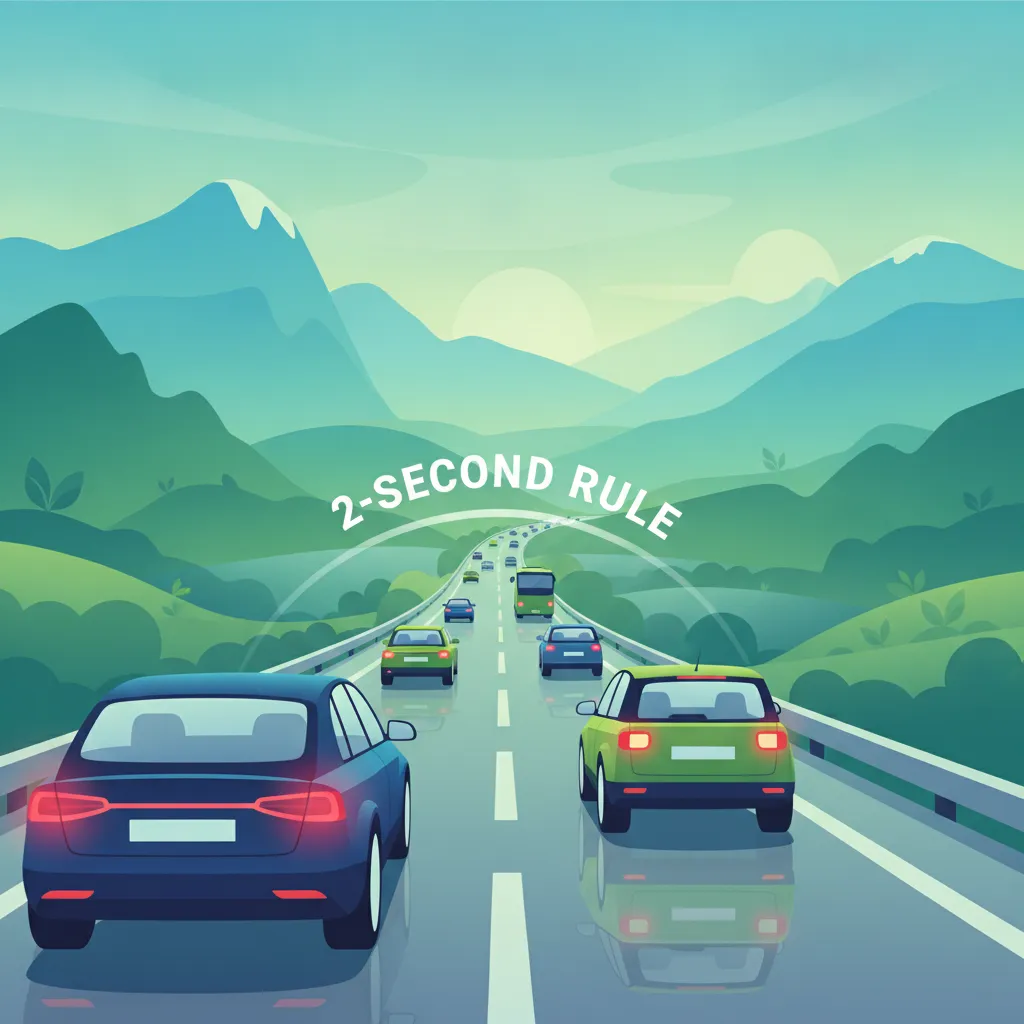
Buses and coaches require significantly more distance to stop than cars. This lesson explains why the 'two-second rule' is insufficient and teaches the appropriate methods for calculating a safe gap in various conditions. Maintaining an adequate safety cushion is one of the most important defensive driving skills.
This lesson focuses on the rules governing when and how to stop a vehicle safely. You will learn to calculate the required stopping distance, considering reaction time and braking distance. The content also covers how to adjust stopping behavior for different road conditions and safe stopping techniques on inclines to ensure the vehicle remains under control.
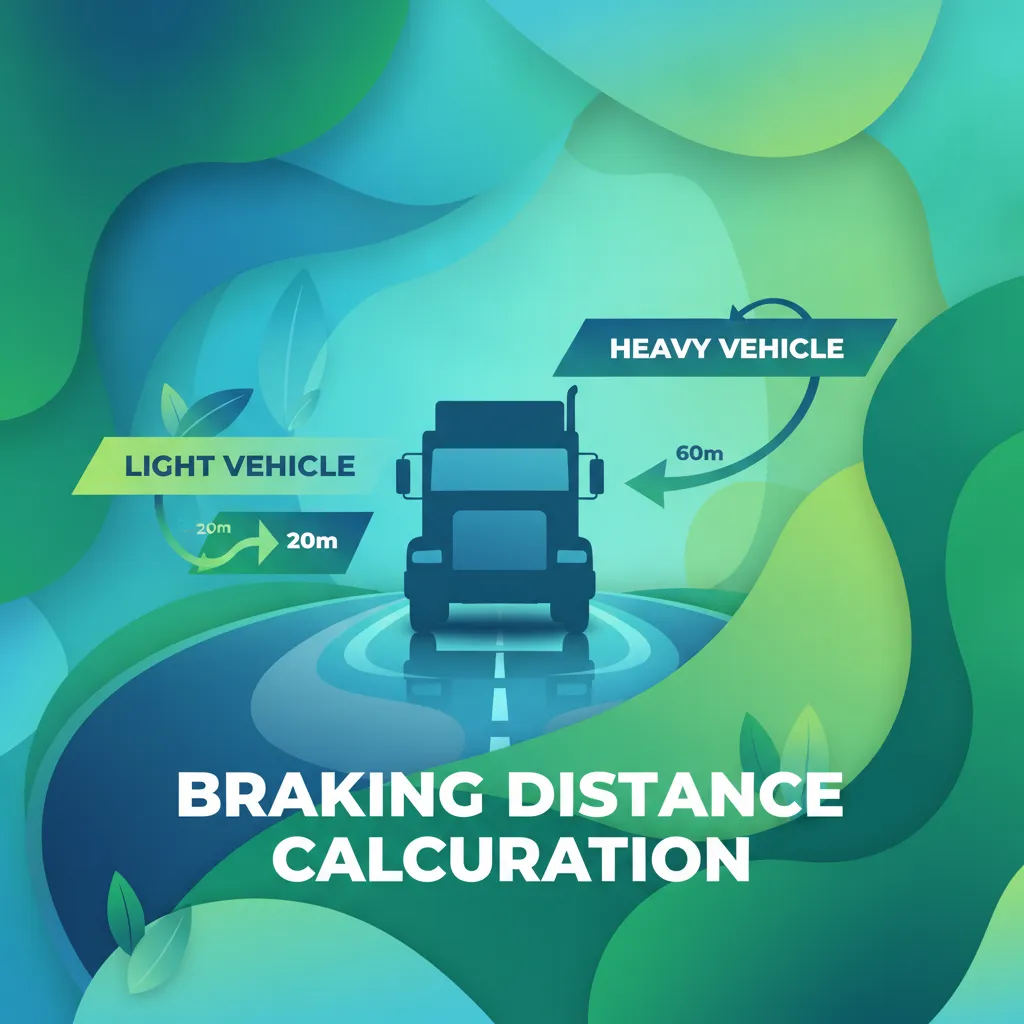
The immense mass of a loaded truck means its braking distance is far greater than that of a car. This lesson breaks down total stopping distance into reaction distance and braking distance, explaining how speed, weight, and road conditions have an exponential effect. It reinforces the necessity of maintaining a significantly larger following distance to ensure enough space to stop safely in an emergency.
This lesson focuses on calculating total stopping distance, incorporating perception-reaction distance and the vehicle's braking distance. You will also learn to determine an appropriate following gap based on speed, visibility, and road conditions. The content emphasizes maintaining a safe distance to avoid collisions, especially in adverse weather.
A stopped bus creates a significant visual obstruction for other road users. This lesson focuses on the risk of pedestrians stepping out from in front of the bus and cyclists passing unexpectedly on either side. It reinforces the need for exhaustive mirror and blind spot checks before moving off to prevent tragic 'pull-away' accidents.
Departing from a bus stop is a high-risk manoeuvre. This lesson details the critical sequence of actions: checking all passengers are clear of the doors, performing a comprehensive mirror and blind spot check, signalling, and waiting for a safe gap in traffic. This systematic approach is essential for preventing collisions with overtaking vehicles, cyclists, or pedestrians.
The approach to a stop sets the stage for a safe passenger exchange. This lesson covers signalling in good time, decelerating smoothly, and aiming for a final position that is close and parallel to the kerb. Proper positioning minimizes the step for passengers and prevents them from having to step into traffic.
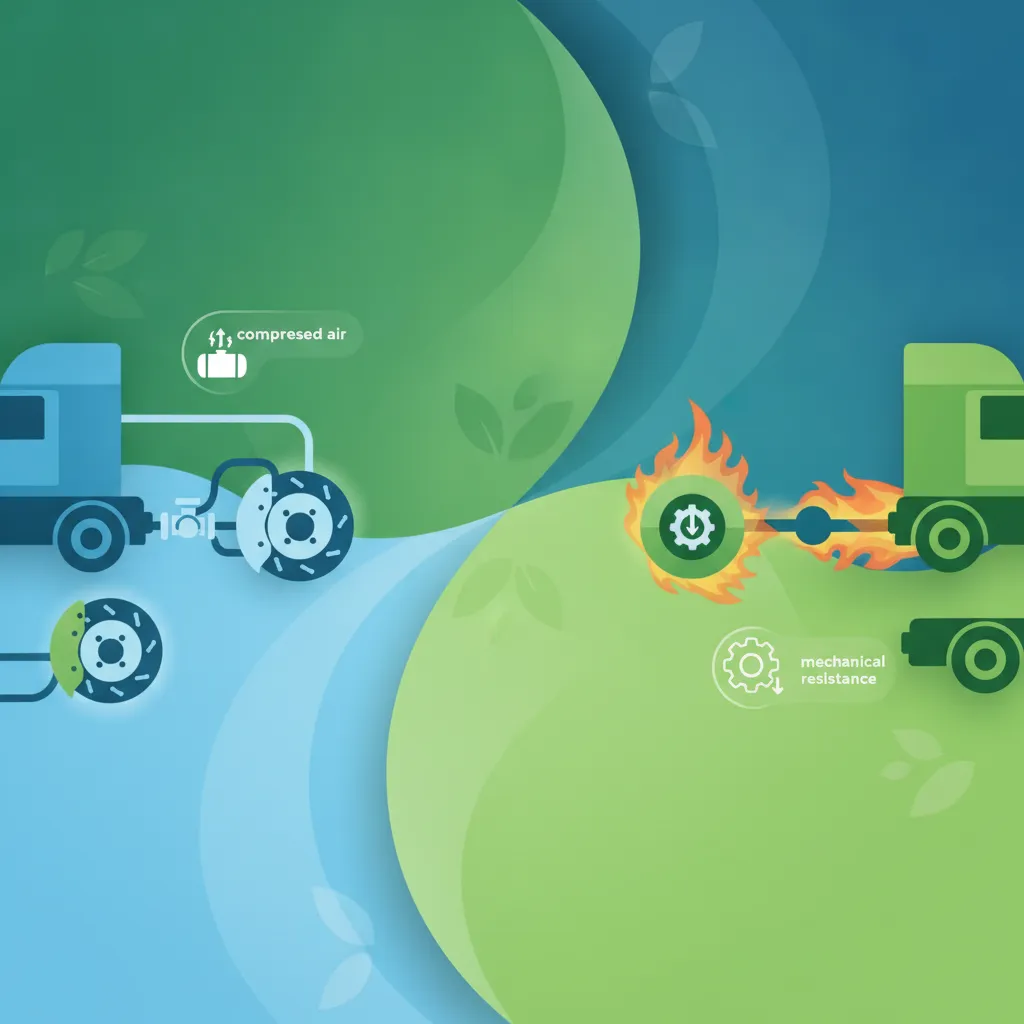
Large passenger vehicles rely on powerful air brake systems. This lesson explains how these systems work, including the importance of monitoring air pressure. It also details the function and proper use of auxiliary braking systems (retarders) to control speed on long descents and reduce wear on the service brakes.

This lesson focuses entirely on the technique of applying brakes smoothly and gradually. You will learn how to anticipate stops far in advance, applying gentle initial pressure and increasing it progressively. This method avoids sudden jolts, enhancing comfort and preventing falls, especially for standing passengers.
Weather has a profound impact on vehicle handling and visibility. This lesson teaches you how to reduce speed, increase following distances, and use controls smoothly to maintain traction in poor conditions. It also covers the legal requirements and practical application of snow chains in winter.
Learn how to adjust your driving based on urban, rural, mountain, and adverse weather conditions to maintain safe stopping distances for buses and coaches.
Buses and coaches require significantly more distance to stop than cars. This lesson explains why the 'two-second rule' is insufficient and teaches the appropriate methods for calculating a safe gap in various conditions. Maintaining an adequate safety cushion is one of the most important defensive driving skills.
This lesson focuses on calculating total stopping distance, incorporating perception-reaction distance and the vehicle's braking distance. You will also learn to determine an appropriate following gap based on speed, visibility, and road conditions. The content emphasizes maintaining a safe distance to avoid collisions, especially in adverse weather.
The legal speed limit is a maximum, not a target. This lesson teaches the professional driver's approach to speed management, which involves constantly assessing traffic, road, and weather conditions. You will learn to adjust your speed to ensure you can always stop safely within the distance you can see to be clear.
This lesson focuses on the rules governing when and how to stop a vehicle safely. You will learn to calculate the required stopping distance, considering reaction time and braking distance. The content also covers how to adjust stopping behavior for different road conditions and safe stopping techniques on inclines to ensure the vehicle remains under control.
This lesson focuses on general driving safety in areas with a high concentration of children. It stresses the importance of significantly reducing speed, being prepared for unexpected events, and scanning for children between parked cars. The driver must exhibit maximum vigilance in these high-risk environments at all times.
A stopped bus creates a significant visual obstruction for other road users. This lesson focuses on the risk of pedestrians stepping out from in front of the bus and cyclists passing unexpectedly on either side. It reinforces the need for exhaustive mirror and blind spot checks before moving off to prevent tragic 'pull-away' accidents.
Driving a bus in older parts of a city requires exceptional spatial awareness and precise control. This lesson focuses on assessing clearances, managing front and rear overhang, and negotiating tight turns around parked cars and buildings. A key theme is slow, careful, and deliberate manoeuvring to avoid contact.
Rural driving requires a different mindset from urban driving. This lesson covers how to position your vehicle on narrow roads, how to use passing places effectively, and how to anticipate hazards like slow-moving farm machinery, animals, and concealed junctions. Managing vehicle width and height is a key focus.
The approach to a stop sets the stage for a safe passenger exchange. This lesson covers signalling in good time, decelerating smoothly, and aiming for a final position that is close and parallel to the kerb. Proper positioning minimizes the step for passengers and prevents them from having to step into traffic.
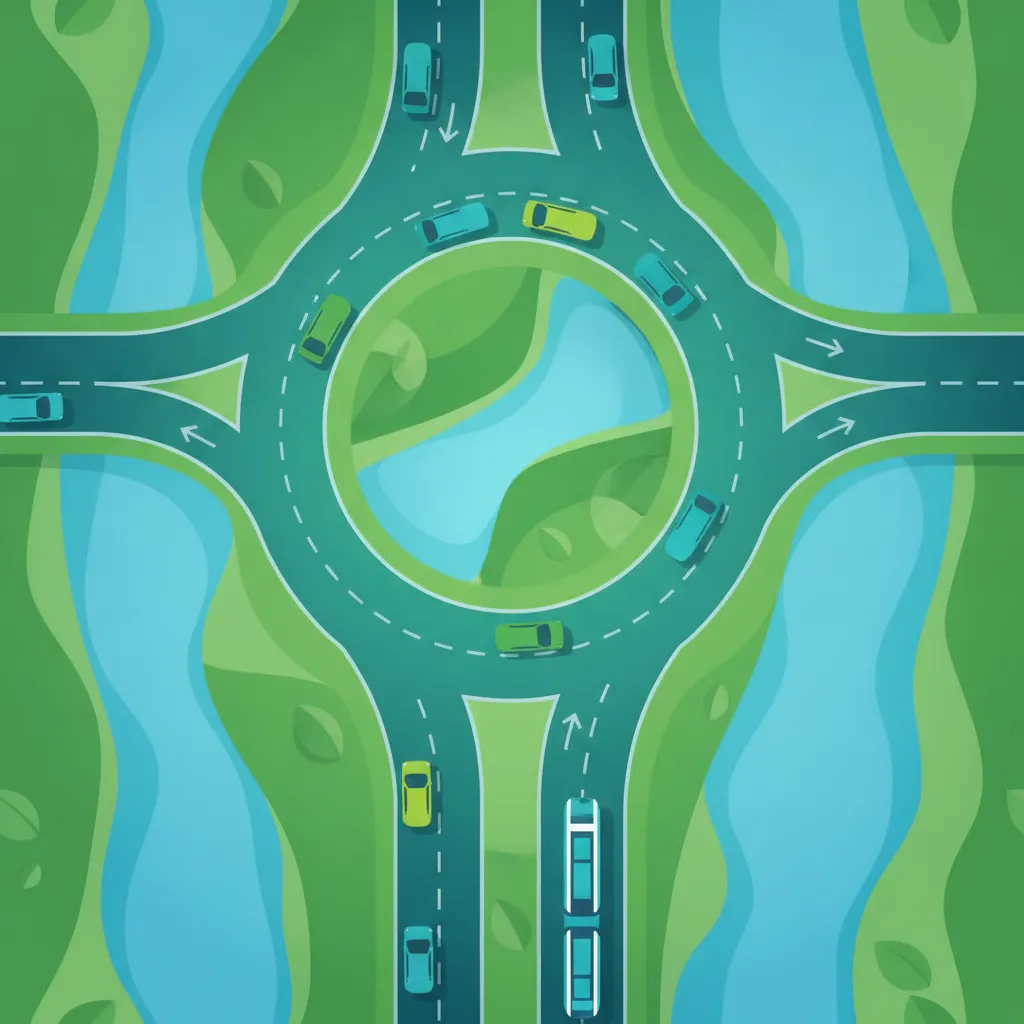
The size of a bus requires careful planning when negotiating complex intersections. This lesson teaches the importance of early lane selection, clear signalling, and comprehensive observation. It provides specific techniques for managing the vehicle's swept path through multi-lane roundabouts and other challenging urban junctions.
Find clear answers to common questions learners have about Understanding Total Stopping Distance: Factors and Calculation. Learn how the lesson is structured, which driving theory objectives it supports, and how it fits into the overall learning path of units and curriculum progression in Switzerland. These explanations help you understand key concepts, lesson flow, and exam focused study goals.
A coach has significantly higher mass and different braking system characteristics. The increased kinetic energy requires more distance to dissipate, and factors like air brake activation time add to the overall stopping duration.
Increased weight significantly increases the braking distance because more force is required to overcome the inertia of the vehicle. A fully loaded coach will always require more distance to come to a complete stop than an empty one.
The exam focuses on understanding the relationships between speed and distance. You must understand that doubling your speed increases your braking distance fourfold, which is a fundamental concept for professional passenger transport safety.
Adverse weather significantly reduces road friction. This extends your braking distance, requiring you to increase your following distance much further than you would on a dry, clear day to maintain the same margin of safety.
Pinpoint specific Swiss traffic rules, road signs, or driving situations you need to master. Use the practice search to start a focused revision session now and build confidence for your official driving theory exam.