
This lesson explores the physics behind jack-knifing, a critical danger for drivers of articulated goods vehicles. You will learn the mechanical and human factors that lead to loss of control and the defensive driving habits required to maintain stability on Swiss roads.

Lesson content overview
Jack-knifing is one of the most dangerous and uncontrolled situations an articulated vehicle driver can face. It occurs when the tractor unit and its semitrailer skid and fold in on each other, often resembling a pocket knife closing. This violent loss of control can lead to catastrophic accidents, severe injuries, and significant road blockages. For drivers of Category C and C1 goods vehicles, a thorough understanding of jack-knifing—its causes, dynamics, and, most importantly, prevention strategies—is not just recommended, but absolutely critical for safety and legal compliance on Swiss roads.
This lesson delves into the complex interplay of forces that lead to jack-knifing, exploring the primary causes such as harsh braking, excessive speed, and improper load distribution. It also provides comprehensive guidance on how to prevent such incidents through smooth driving techniques, effective speed management, correct brake balance, and diligent vehicle maintenance. Mastering these principles is fundamental to safely operating heavy goods vehicles and protecting all road users.
Jack-knifing is a specific type of skid that affects articulated vehicles, which consist of a powerful tractor unit pulling a separate semitrailer. Unlike a simple skid where a vehicle slides laterally, jack-knifing involves a dramatic, uncontrolled angular movement. The trailer, still moving forward with its momentum, pushes the tractor unit from behind. If the drive axles of the tractor unit have lost traction, they cannot resist this push, causing the tractor to pivot sharply around the articulation point (fifth wheel) and fold in on itself.
This folding motion is extremely dangerous because it can cause the vehicle to spin across multiple lanes of traffic, collide with other vehicles or roadside barriers, or even overturn. The driver completely loses steering control, making it impossible to correct the vehicle's trajectory. The consequences are often severe, ranging from major material damage and prolonged road closures to serious injuries or fatalities for the driver, other road users, and occupants of involved vehicles.
In a real-world scenario, a jack-knifed heavy goods vehicle can block an entire motorway, causing extensive traffic disruption and potential secondary accidents. Understanding the mechanics behind this phenomenon is the first step toward preventing it.
At its core, jack-knifing is a problem of unequal forces and insufficient traction. Newton's second law of motion (force = mass × acceleration) governs how braking forces affect each part of an articulated vehicle. When a heavy goods vehicle brakes, the braking force acts on all axles, attempting to decelerate the vehicle. However, the available grip or "traction" at each tyre-road interface is limited.
The articulation point, or fifth wheel, is the mechanical coupling that connects the tractor unit to the semitrailer. While it is designed to allow rotational movement for cornering, it also transfers longitudinal and lateral forces between the two units. In a normal braking situation, the braking forces are distributed optimally, and all wheels maintain sufficient grip, allowing controlled deceleration.
However, if the braking force applied to the drive axles of the tractor unit exceeds the frictional grip available, these wheels will lock up or skid. When the drive wheels lose traction, they no longer provide stability or contribute effectively to braking. At this critical moment, the heavy mass of the semitrailer, still moving forward due to its inertia, exerts a significant pushing force on the rear of the tractor unit through the fifth wheel. With the tractor's drive axles unable to resist this push, the trailer effectively shoves the tractor sideways, initiating the dangerous folding motion. The angle between the two vehicles rapidly closes, and the jack-knife occurs.
Several factors, often in combination, can lead to the loss of control that results in jack-knifing. Recognizing these causes is crucial for prevention.
Driving too fast for the prevailing road, weather, or traffic conditions is a leading cause of jack-knifing. Higher speeds mean greater kinetic energy, which requires much longer braking distances and places immense demands on the braking system and tyre grip. When a driver attempts to brake abruptly from excessive speed, especially on a curve or slippery surface, the chances of the drive axles losing traction dramatically increase.
The Danger of Overconfidence: Never assume that the legal speed limit is a safe speed under all conditions. Always adjust your speed to maintain full control, particularly with a heavy goods vehicle.
For Category C & C1 goods vehicles, the maximum permissible speed on Swiss motorways is generally 80 km/h, and 60 km/h on regular roads unless otherwise signposted. However, these limits are for ideal conditions. In rain, snow, ice, or fog, significantly lower speeds are necessary to ensure the vehicle can stop safely without losing control.
Sudden, forceful application of the service brakes is a common trigger for jack-knifing. This is particularly hazardous when:
The braking system of an articulated vehicle is complex, designed to distribute braking force proportionally between the tractor unit and the semitrailer. This "brake balance" is critical for stable deceleration.
Modern heavy goods vehicles often have advanced braking systems (e.g., EBS - Electronic Braking System) that automatically adjust brake force. However, proper maintenance and occasional manual adjustment (especially for older vehicles or unique loads) remain essential. Regulations typically require trailer brakes to be adjusted proportionally to the load (e.g., around 70% trailer, 30% tractor for optimal balance).
The way cargo is distributed within the semitrailer significantly impacts vehicle stability and braking performance.
Think about Centre of Gravity: Always aim to load cargo as low as possible and as centrally as possible, both longitudinally and laterally, to maintain optimal vehicle stability and predictable handling.
While less common as a direct cause, abrupt steering corrections combined with braking can also contribute to jack-knifing. If a driver suddenly swerves while braking, the lateral forces from steering combined with the longitudinal forces from braking can overload the tyre grip, especially on the drive axles. Smooth, deliberate steering inputs are always best, particularly with articulated vehicles.
Neglecting regular vehicle inspections and maintenance significantly increases the risk of jack-knifing.
Prevention is always better than cure, especially when dealing with the severe consequences of jack-knifing. Professional drivers of Category C and C1 goods vehicles must adopt a proactive, defensive driving style and adhere to best practices.
The most effective way to prevent jack-knifing is to drive at a speed appropriate for all conditions.
Scan Far Ahead: Look at least 15-20 seconds ahead to anticipate hazards and changes in road conditions.
Reduce Speed Early: Before entering curves, approaching junctions, or descending hills, reduce your speed to a safe level before you need to brake heavily.
Smooth Deceleration: Avoid sudden acceleration or deceleration. Gentle, progressive inputs maintain vehicle stability.
The manner in which brakes are applied is paramount for preventing jack-knifing.
Ensuring the tractor and trailer brakes are working harmoniously is vital.
Proper loading is a fundamental safety requirement that directly impacts jack-knifing risk.
Professional driving involves constantly scanning the road ahead and anticipating potential hazards.
A well-maintained vehicle is a safer vehicle.
Operating a Category C or C1 goods vehicle in Switzerland comes with stringent legal responsibilities, many of which directly relate to preventing jack-knifing and maintaining vehicle control. The Swiss Strassenverkehrsrecht (Road Traffic Act) and associated ordinances mandate safe operation, which implicitly includes avoiding dangerous situations like jack-knifing.
Professional drivers are expected to possess advanced knowledge of vehicle dynamics and apply this knowledge consistently. The responsibility for avoiding jack-knifing rests squarely with the driver through careful planning, execution, and vehicle upkeep.
The risk of jack-knifing is not constant; it varies significantly depending on external conditions and the vehicle's state.
Let's consider practical scenarios to reinforce the preventative measures.
Jack-knifing is a critical safety issue for drivers of Category C and C1 goods vehicles, stemming from an uncontrolled folding of the tractor unit and semitrailer. It is primarily caused by an imbalance of forces and a loss of traction on the tractor's drive axles while the trailer's momentum pushes forward.
Key elements for preventing jack-knifing include:
By consistently applying these principles, heavy goods vehicle drivers can significantly reduce the risk of jack-knifing, ensuring their safety, the safety of other road users, and compliance with Swiss road traffic regulations.
Jack-knifing is the uncontrolled folding of a tractor and semitrailer caused by drive-axle traction loss while the trailer's momentum pushes forward, resulting in complete loss of steering control. The primary causes are excessive speed for conditions and harsh braking, particularly when combined with turning. Prevention centres on smooth, anticipatory driving, effective use of engine braking on descents, proper brake balance between tractor and trailer, and correct load distribution to maintain drive-axle traction. Regular vehicle maintenance and awareness of weather and road conditions are essential for Swiss HGV drivers operating on motorways and mountain passes.
A short set of high-value points that capture the most important learning from this lesson.
Jack-knifing occurs when the semitrailer's momentum pushes the tractor unit after drive-axle traction is lost, causing the vehicle to fold at the fifth wheel.
The two primary triggers are excessive speed for conditions and harsh braking, especially while turning or on slippery surfaces.
Engine braking (Motorbremse) is essential on descents to maintain control and prevent brake fade, not just a supplementary technique.
Optimal load distribution keeps weight over the drive axles to maximize traction; rear-heavy loads significantly increase jack-knife risk.
Anticipatory driving that allows smooth, planned maneuvers is far safer than reactive, sudden inputs with heavy articulated vehicles.
Explore all units and lessons included in this driving theory course.
Brake before entering a curve, never during it; combine steering and braking simultaneously overloads tyre grip.
On steep Swiss descents, downshift early to engage engine braking and avoid continuous service brake use.
Trailer brake balance must be proportional to load; both too-weak and too-strong trailer brakes can initiate jack-knife.
Wet, icy, or snowy surfaces drastically reduce friction, requiring much lower speeds and gentler inputs.
Unsecured or poorly distributed cargo can shift suddenly, instantly altering axle loads and traction.
Assuming the legal speed limit is always safe; HGVs require significant speed reduction in adverse conditions.
Using service brakes continuously on long descents, leading to brake fade and loss of braking effectiveness.
Braking while simultaneously steering to avoid an obstacle, splitting tyre grip between two forces.
Driving an empty or lightly loaded trailer too aggressively; reduced trailer weight can cause different brake balance issues.
Neglecting pre-journey checks of tyre condition and brake function, which directly affects available traction.
Lesson content overview
A short set of high-value points that capture the most important learning from this lesson.
Jack-knifing occurs when the semitrailer's momentum pushes the tractor unit after drive-axle traction is lost, causing the vehicle to fold at the fifth wheel.
The two primary triggers are excessive speed for conditions and harsh braking, especially while turning or on slippery surfaces.
Engine braking (Motorbremse) is essential on descents to maintain control and prevent brake fade, not just a supplementary technique.
Optimal load distribution keeps weight over the drive axles to maximize traction; rear-heavy loads significantly increase jack-knife risk.
Anticipatory driving that allows smooth, planned maneuvers is far safer than reactive, sudden inputs with heavy articulated vehicles.
Explore all units and lessons included in this driving theory course.
Brake before entering a curve, never during it; combine steering and braking simultaneously overloads tyre grip.
On steep Swiss descents, downshift early to engage engine braking and avoid continuous service brake use.
Trailer brake balance must be proportional to load; both too-weak and too-strong trailer brakes can initiate jack-knife.
Wet, icy, or snowy surfaces drastically reduce friction, requiring much lower speeds and gentler inputs.
Unsecured or poorly distributed cargo can shift suddenly, instantly altering axle loads and traction.
Assuming the legal speed limit is always safe; HGVs require significant speed reduction in adverse conditions.
Using service brakes continuously on long descents, leading to brake fade and loss of braking effectiveness.
Braking while simultaneously steering to avoid an obstacle, splitting tyre grip between two forces.
Driving an empty or lightly loaded trailer too aggressively; reduced trailer weight can cause different brake balance issues.
Neglecting pre-journey checks of tyre condition and brake function, which directly affects available traction.
Explore search topics learners often look for when studying The Dangers of Jack-knifing and How to Avoid It. These topics reflect common questions about road rules, driving situations, safety guidance, and lesson level theory preparation for learners in Switzerland.
Browse additional driving theory lessons that cover connected traffic rules, road signs, and common driving situations related to this topic. Improve your understanding of how different rules interact across everyday traffic scenarios.
Explore the critical physics behind articulated vehicle stability. Learn how load distribution, braking forces, and speed impact vehicle dynamics and how these factors prevent dangerous situations like jack-knifing in Swiss driving theory for Category C vehicles.

Heavy vehicles, especially those with a high centre ofgravity, are susceptible to rolling over. This lesson examines the primary causes, including excessive speed on bends or roundabouts, sudden steering manoeuvres, and the 'sloshing' effect of liquid loads in tankers. It reinforces that maintaining a sensible speed and driving smoothly are the best ways to mitigate this serious risk.
Correct load distribution is essential for safe handling and braking. This lesson explains that loads should be placed as low as possible and distributed evenly to maintain a low centre of gravity and comply with axle weight limits. A high or poorly positioned centre of gravity dramatically increases the risk of rollover, especially when cornering or in an emergency manoeuvre.

Buses have a high centre of gravity, making them susceptible to rollover forces. This lesson explains how factors like passenger load, luggage placement, and speed affect vehicle stability. Understanding these principles is essential for safe cornering, navigating roundabouts, and handling the vehicle in strong crosswinds.
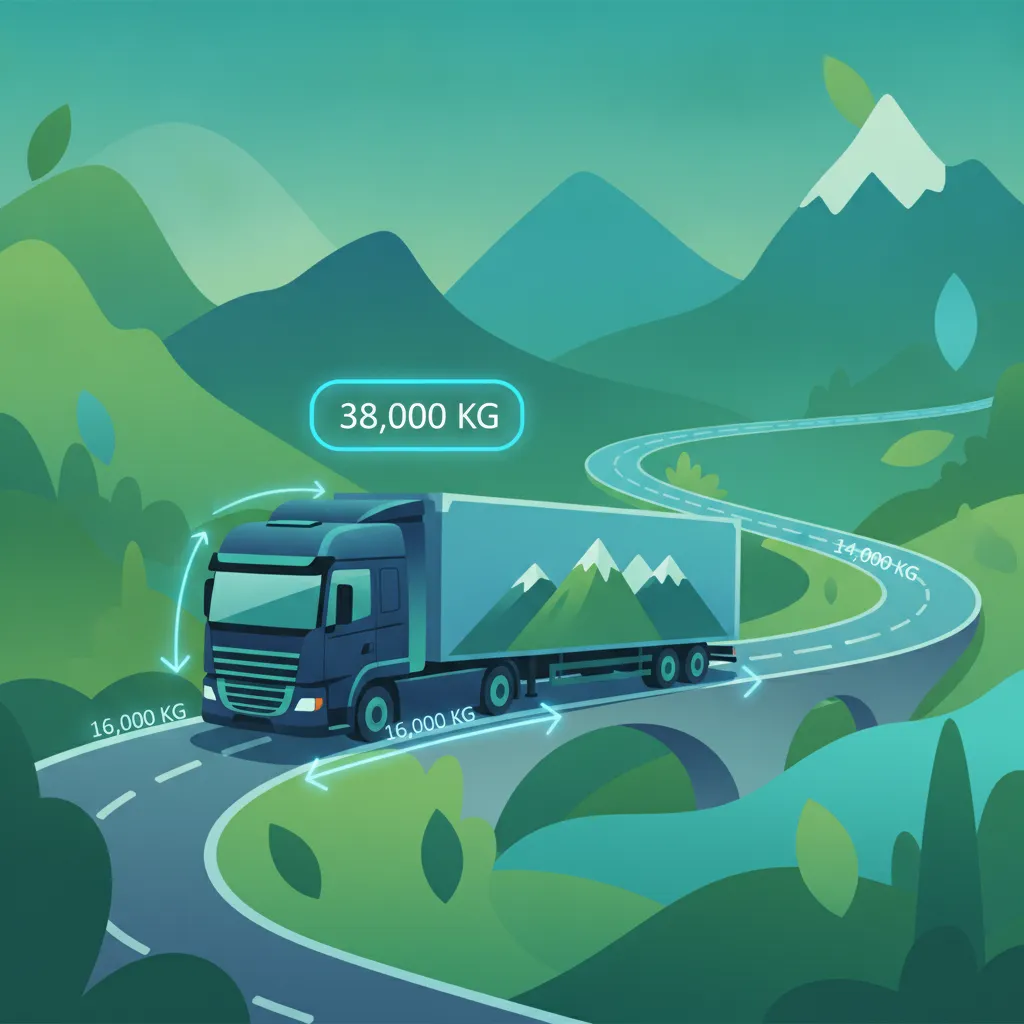
The total weight of a vehicle is supported by its axles, and Swiss regulations set strict limits on the load each axle can bear. This lesson explains how to correctly distribute a load to comply with maximum axle load (Achslast) limits, which is vital for vehicle stability, steering control, and braking efficiency. Incorrect distribution can lead to dangerous handling characteristics and cause significant damage to road surfaces.
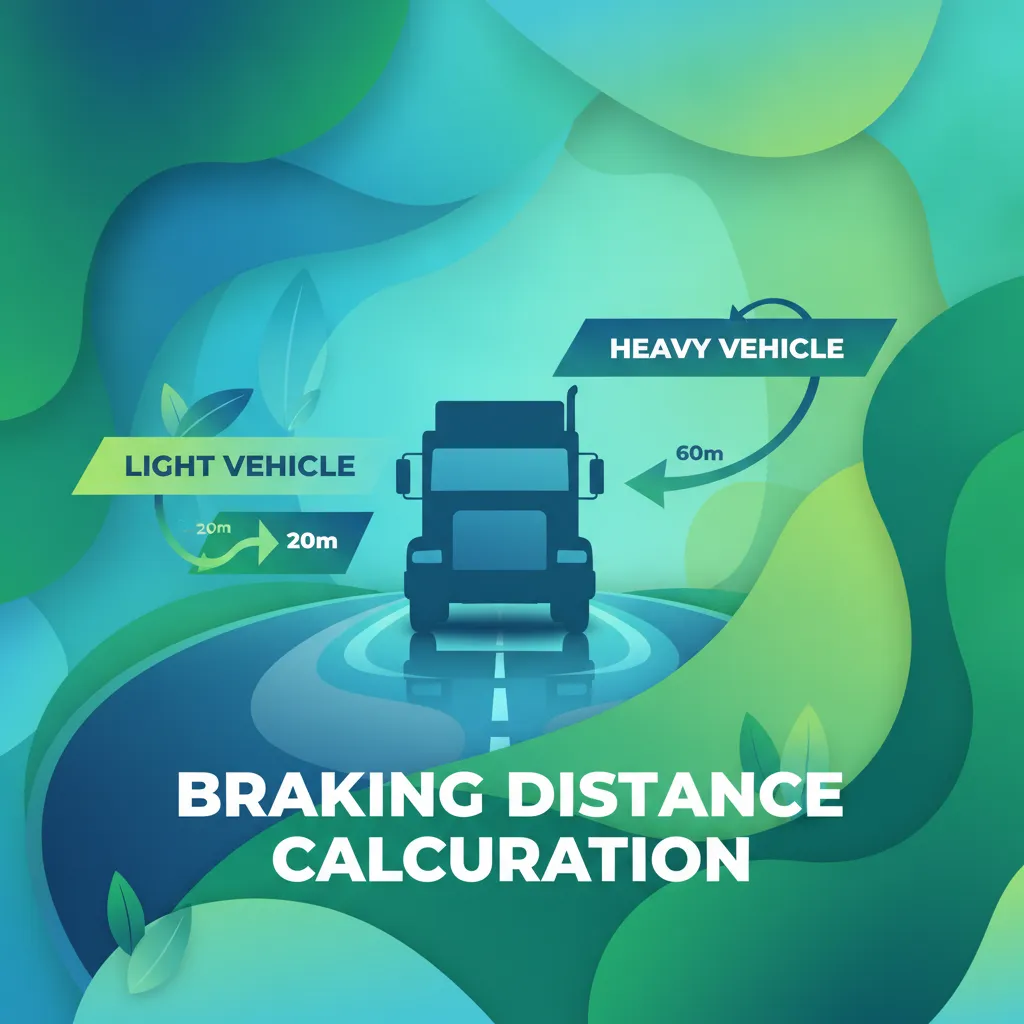
The immense mass of a loaded truck means its braking distance is far greater than that of a car. This lesson breaks down total stopping distance into reaction distance and braking distance, explaining how speed, weight, and road conditions have an exponential effect. It reinforces the necessity of maintaining a significantly larger following distance to ensure enough space to stop safely in an emergency.

The suspension system connects the vehicle's axles to its frame, supporting the massive weight and absorbing shocks from the road surface. This lesson describes the two common types: traditional leaf springs and modern air suspension. It explains how a well-maintained suspension is crucial for vehicle stability, proper handling, braking effectiveness, and preventing damage to the load and the vehicle itself.
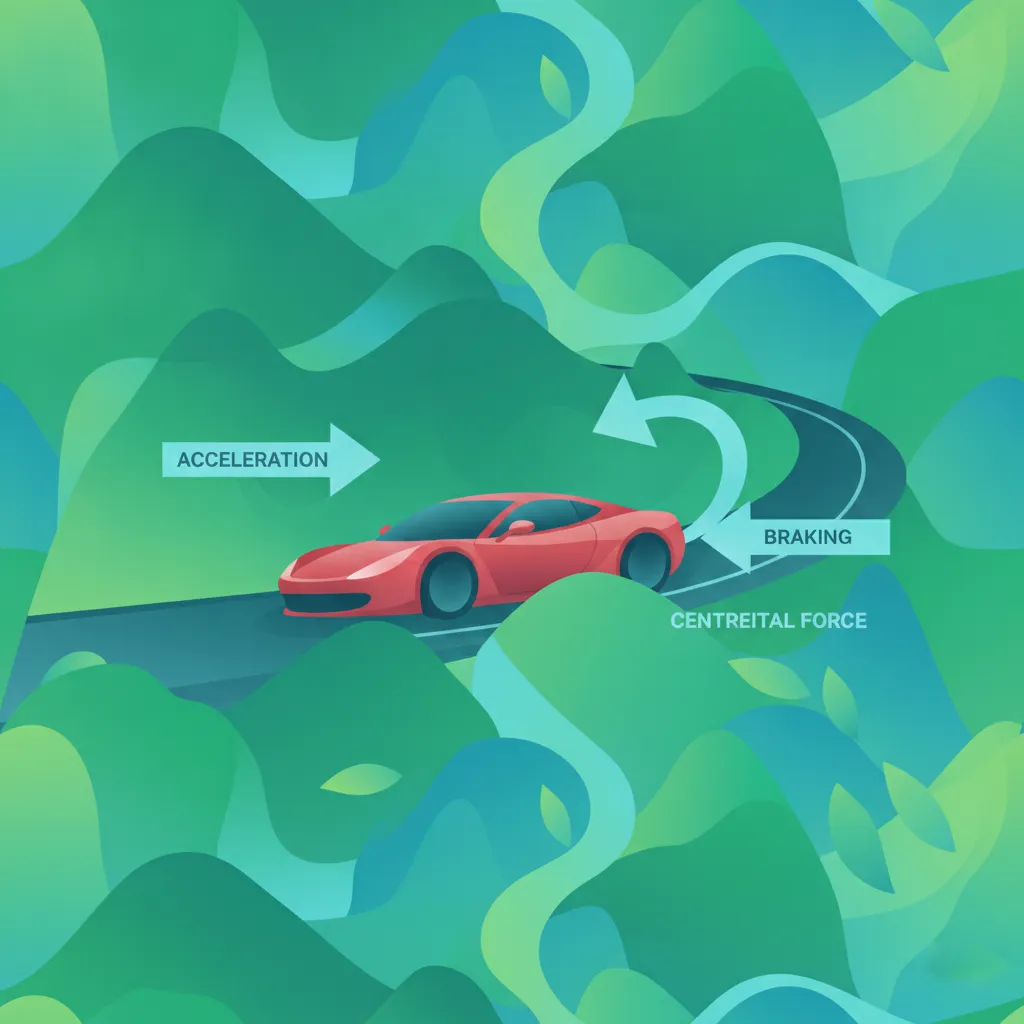
A load is not static; it is subjected to significant forces during transport. This lesson explains how acceleration, braking (deceleration), and cornering create powerful inertial forces that try to move the cargo. Load securing systems must be strong enough to counteract these forces to prevent the load from sliding forward during braking, backward during acceleration, or sideways when turning.

Adding a trailer (D1E) or driving an articulated bus (DE) changes the vehicle's dynamics significantly. This lesson covers the key differences in handling, braking, and reversing. It explains the concept of the pivot point and how to manage the increased length and swept path when turning and manoeuvring.

Driving in the Alps requires a high level of skill and vehicle sympathy. This lesson covers techniques for climbing steep gradients by selecting the correct gear to maintain momentum without straining the engine. It reiterates the critical importance of using low gears and auxiliary brakes for descending, to ensure the service brakes remain cool and effective for the entire descent.
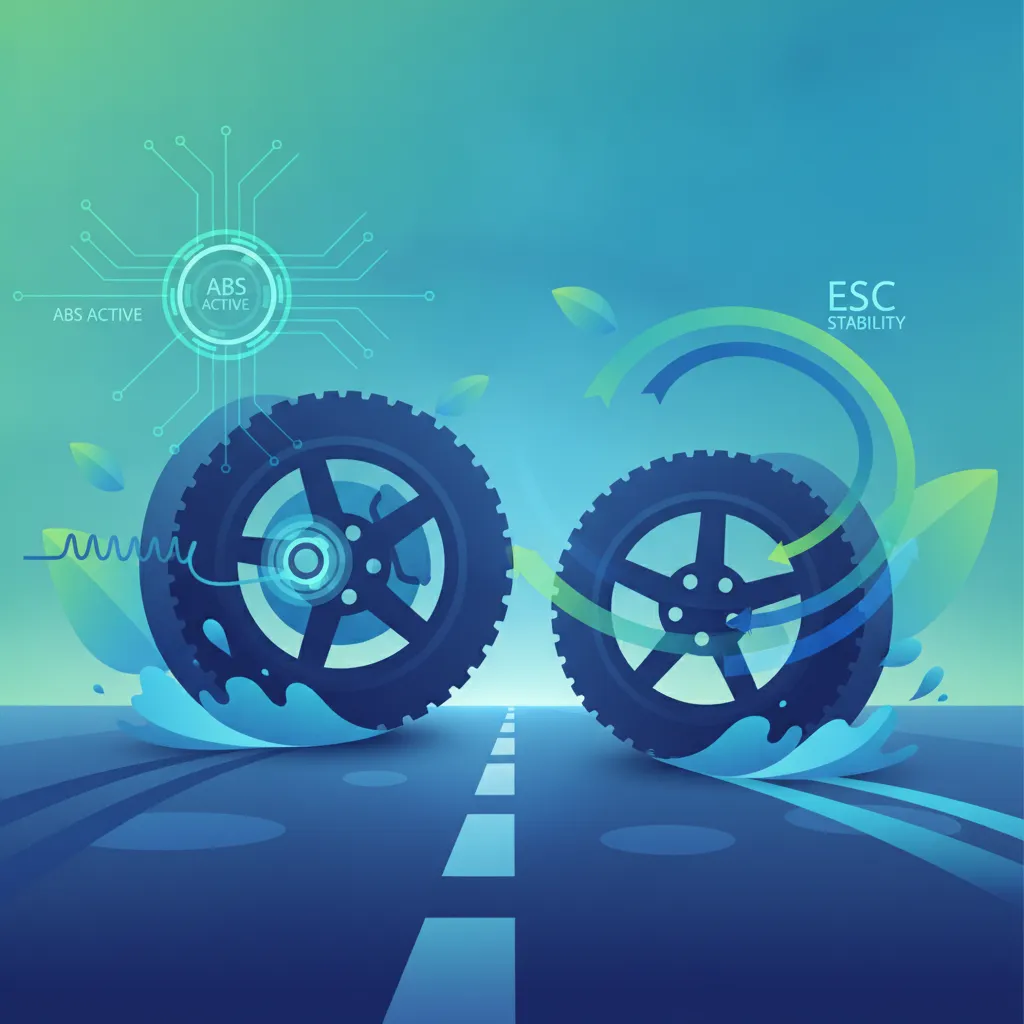
Modern lorries are equipped with advanced electronic safety systems. This lesson explains how the Anti-lock Braking System (ABS) prevents wheels from locking up during hard braking, allowing the driver to maintain steering control. It also covers Electronic Stability Control (ESC), which can detect and mitigate skids or potential rollovers by automatically applying individual brakes and reducing engine power.
Master essential defensive driving strategies for heavy goods vehicles in Switzerland. This lesson covers smooth braking, speed adaptation, and anticipatory driving techniques crucial for avoiding critical situations like jack-knifing and maintaining full control on Swiss roads.

Despite the complex mirror systems, large areas around a truck remain hidden from the driver's view. This lesson maps out these significant blind spots: directly in front, behind, and along both sides of the vehicle. It teaches drivers to be constantly aware of these 'no-zones' and to anticipate that smaller vehicles, cyclists, or pedestrians may be hidden within them, especially before changing lanes or turning.
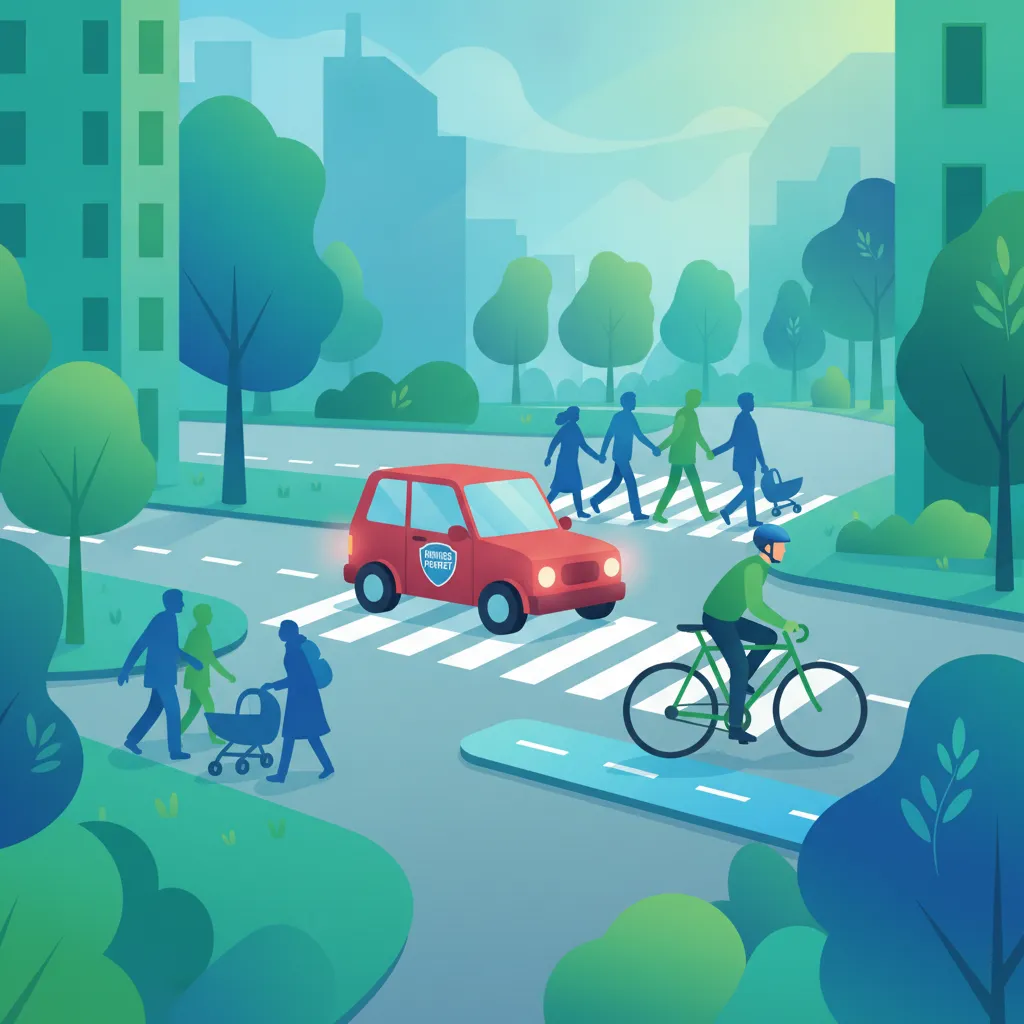
Pedestrians, cyclists, motorcyclists, and e-scooter riders are extremely vulnerable in any interaction with a heavy vehicle. This lesson instills a defensive mindset, teaching drivers to be hyper-aware of VRUs, especially near junctions, crossings, and cycle lanes. It focuses on anticipation and giving VRUs extra space, as they can be unpredictable and are often hidden in blind spots.

Rural roads present challenges like narrow lanes, poor surfaces, sharp bends, and limited visibility. This lesson teaches drivers how to position their large vehicle to maximize space and visibility, anticipate oncoming traffic at blind corners, and be aware of specific rural hazards. These hazards include slow-moving agricultural vehicles, animals on the road, and concealed farm entrances.
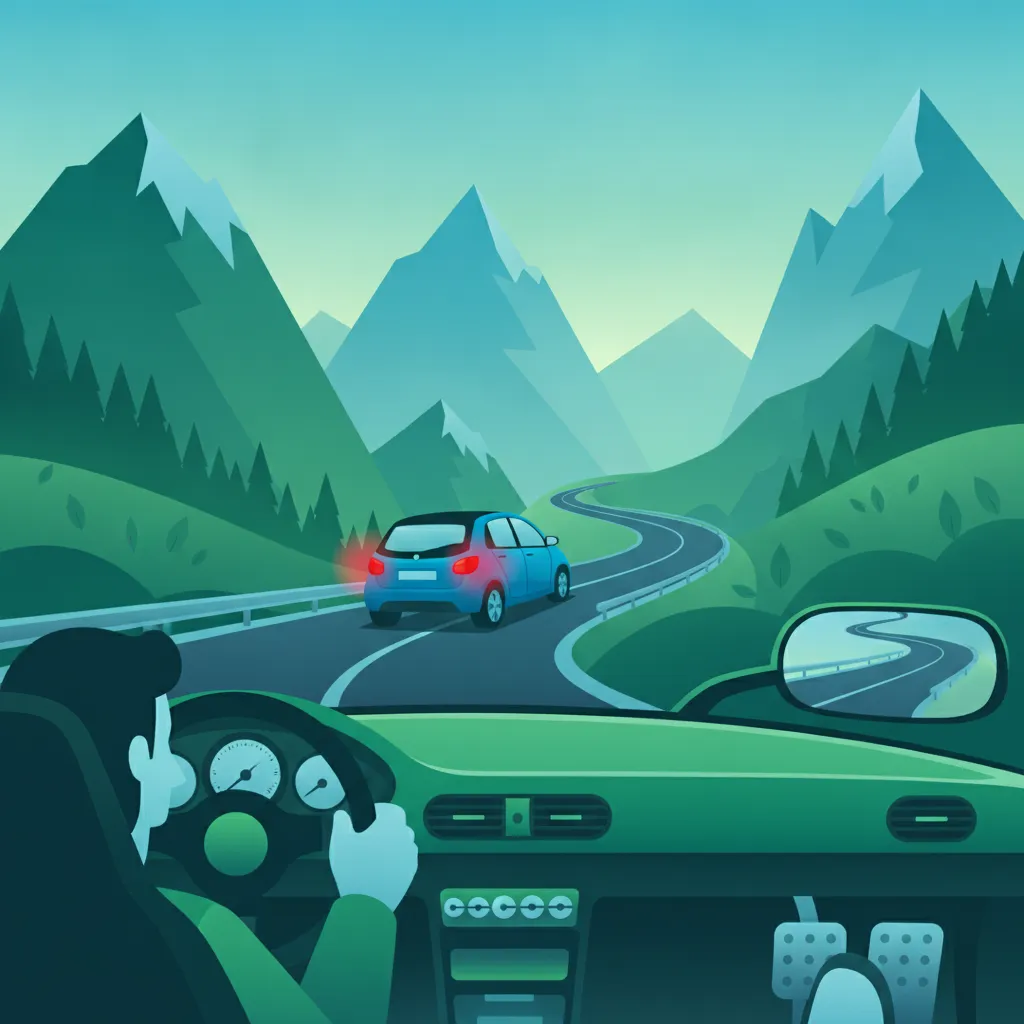
This lesson introduces defensive driving principles, focusing on hazard anticipation, continuous scanning, and proactive positioning. You will learn how to anticipate potential hazards by observing traffic patterns and maintaining situational awareness. Emphasis is placed on proactive speed management to avoid dangerous situations before they arise.
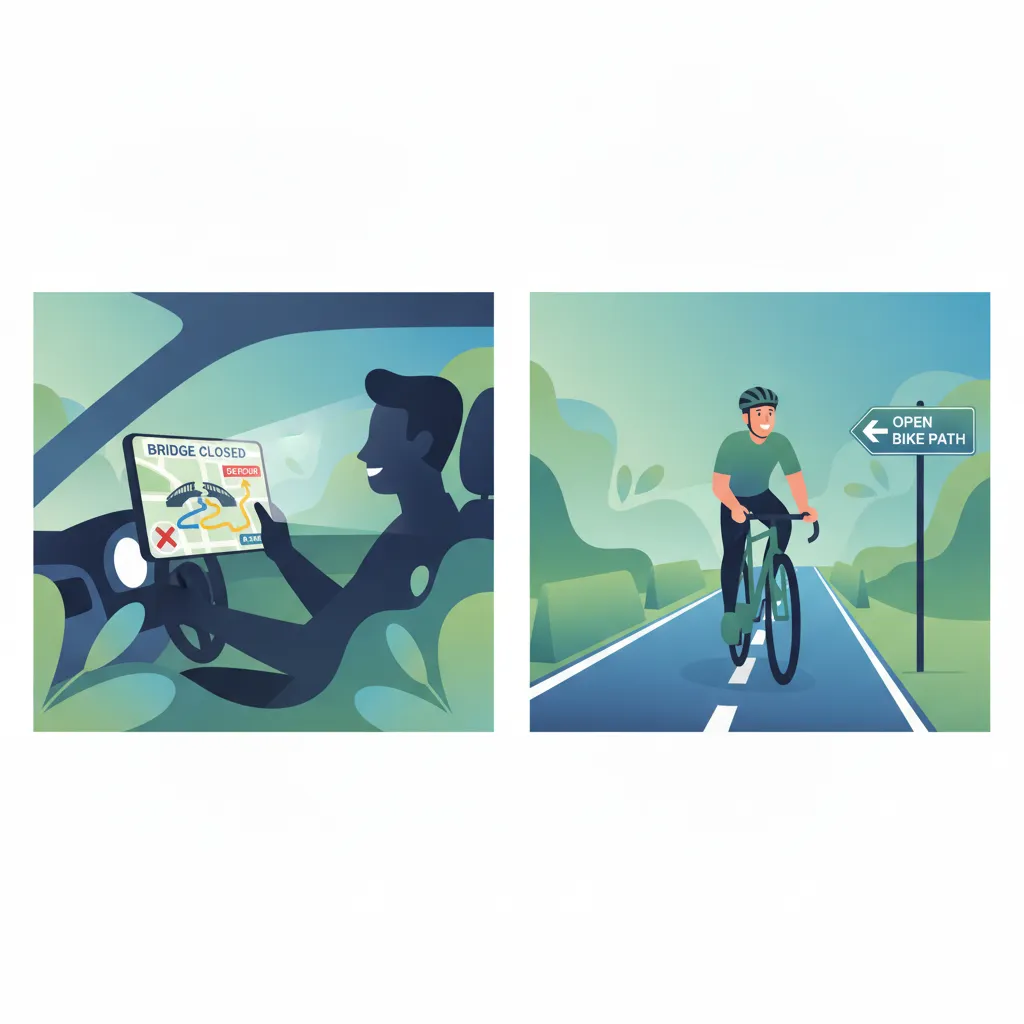
Unlike cars, heavy vehicles cannot travel on every road. This lesson stresses the importance of using HGV-specific satellite navigation systems or carefully checking maps to plan routes that avoid low bridges, weak bridges, and roads with weight or width restrictions. Proper planning saves time, fuel, and prevents dangerous situations or costly damage.
After stopping for an emergency, making the scene safe is the top priority. This lesson details the procedure: activate hazard warning lights, put on high-visibility clothing before exiting the cab, and place the warning triangle at the correct distance behind the vehicle (at least 100m on motorways). This warns approaching traffic and creates a safer environment for the driver and emergency responders.

Losing part of a load on the road creates an immediate and serious hazard for other drivers. This lesson outlines the driver's responsibilities: stop in a safe place, assess the situation from a safe distance, and immediately alert the police. The driver's primary role is to warn other road users and not to attempt to retrieve the load from a live carriageway.

Turning a long vehicle requires careful planning and execution. This lesson covers the correct procedure: approach, observation, signalling, and positioning the vehicle correctly to allow for the trailer's off-tracking without mounting the kerb. It also highlights the need for constant mirror checks throughout the turn to monitor for cyclists or other vulnerable road users who may enter the danger zone.

Wet or icy roads drastically reduce tyre grip and can double or triple braking distances. This lesson stresses the importance of significantly reducing overall speed and increasing following distances in such conditions. It advises on using brakes with extreme care to avoid skidding and explains how the vehicle's retarder should be used with caution as it can cause the drive wheels to lock up on slippery surfaces.

This lesson trains drivers to look beyond other vehicles and actively search for pedestrians, cyclists, and motorcyclists, especially those who may be distracted or unaware. It covers common behavioral patterns of different VRU groups. The goal is to see potential hazards developing early and create time and space to react safely.
Find clear answers to common questions learners have about The Dangers of Jack-knifing and How to Avoid It. Learn how the lesson is structured, which driving theory objectives it supports, and how it fits into the overall learning path of units and curriculum progression in Switzerland. These explanations help you understand key concepts, lesson flow, and exam focused study goals.
The most common cause is the drive axles losing traction, usually due to harsh braking or accelerating while the vehicle is not perfectly straight, which allows the trailer momentum to push the tractor sideways.
Low-friction surfaces like ice, snow, or wet leaves significantly reduce the traction available for your tyres. In these conditions, even minor braking force can trigger a slide that leads to a jack-knife.
Yes. An improperly secured or unbalanced load can shift during cornering or braking, creating unpredictable forces that push the trailer out of alignment and increase the likelihood of a jack-knife.
While ABS helps maintain steering control during heavy braking, it does not replace the need for speed adaptation and smooth inputs; you must still drive to the road conditions to prevent the trailer from swinging.
Pinpoint specific Swiss traffic rules, road signs, or driving situations you need to master. Use the practice search to start a focused revision session now and build confidence for your official driving theory exam.