
This lesson guides you through the essential road signs found on Spain's rural roads and major highways (autovías and autopistas). Understanding these DGT-specific signals, from directional guidance to service information, is vital for safe and confident navigation at higher speeds. It builds upon your general sign knowledge, preparing you for real-world driving and challenging questions on your Spanish B & BE theory exam.
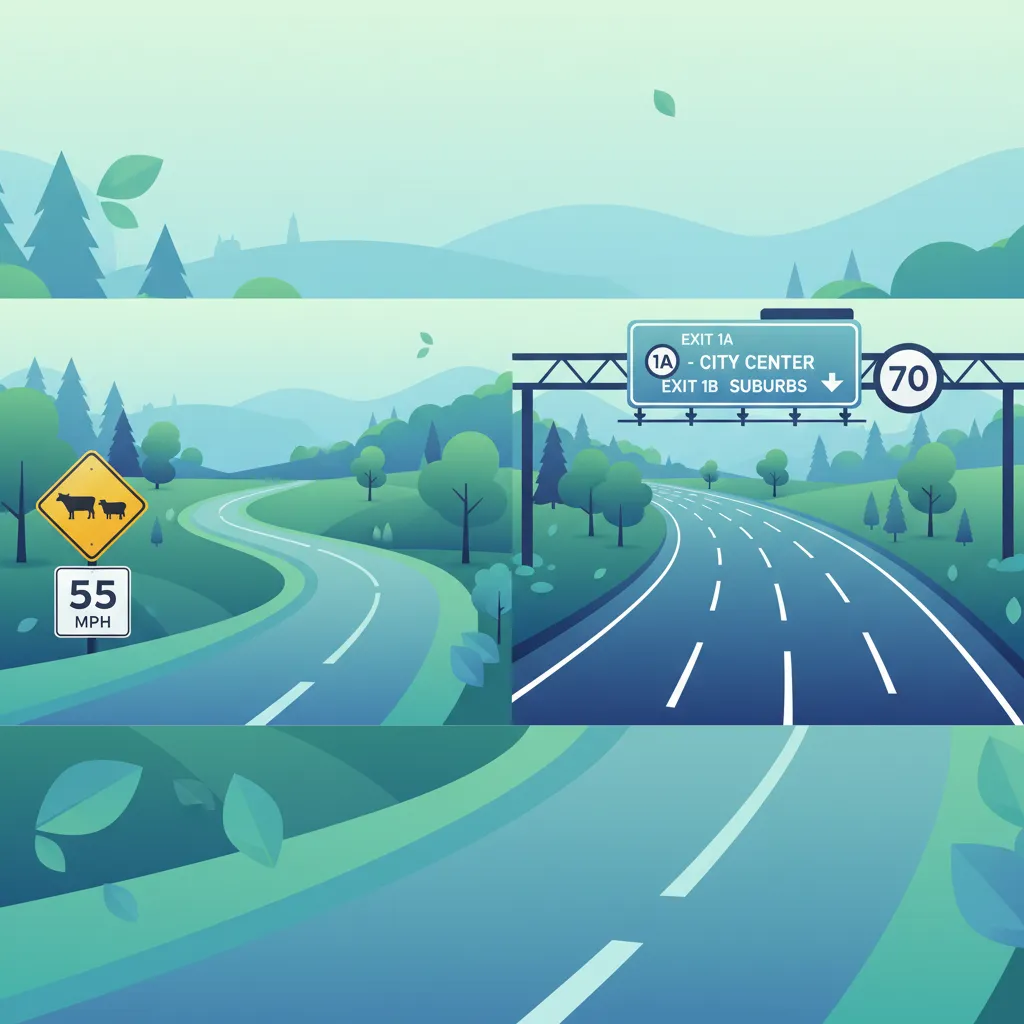
Lesson content overview
Navigating Spain's extensive network of rural roads, autovías, and autopistas requires a precise understanding of the signage system. Unlike urban environments, where speeds are lower and decision-making time is greater, high-speed driving demands instant recognition and interpretation of road signs. This lesson will equip you with the knowledge to safely and efficiently navigate these crucial road types, ensuring you understand directional information, plan exits, locate services, and adhere to lane regulations.
Road signs in rural and highway environments provide critical, real-time information that guides drivers on route choice, lane selection, and access to necessary facilities. At speeds typically exceeding 80 km/h, the ability to quickly and accurately interpret these signs is paramount. Misreading or failing to see a sign can lead to dangerous maneuvers, missed exits, or unintentional traffic violations.
Correctly interpreting Spanish highway signage is not just about avoiding getting lost; it is a fundamental aspect of safe driving. These signs are designed to standardize information, reduce reaction times, and align driver behavior with the intended flow of traffic, thereby minimizing conflict points and significantly improving safety margins. For anyone seeking a Spanish driving license for categories B & BE, a deep understanding of this signage system is indispensable.
This lesson builds upon foundational knowledge of basic traffic sign categories (prohibition, warning, mandatory, information) and speed limit rules. It extends concepts from Lane Discipline, Merging, and Exit Strategies, preparing you for topics like Hazard Perception & Defensive Driving by teaching you to anticipate sign-related hazards.
The Spanish road signage system, governed by the Reglamento General de Circulación (RGC) and Royal Decree 265/2010, operates on several core principles designed to enhance safety and efficiency, particularly in high-speed environments. These principles ensure consistency and predictability for all drivers.
All road signs in Spain adhere to strict specifications regarding shape, color, and symbols. This standardization ensures that drivers can instantly recognize the meaning of a sign, regardless of the specific region they are driving through. This consistency is vital for immediate understanding and appropriate driver response, significantly reducing the potential for misinterpretation at speed.
A critical principle for high-speed roads is the provision of adequate advance warning. Directional and exit signs are strategically placed a minimum distance before the actual decision point—typically 500 meters or more on autovías and autopistas. This crucial lead time allows drivers sufficient opportunity to process the information, plan their maneuvers, and safely execute lane changes or exits without sudden braking or erratic movements.
While all signs provide important information, some carry more legal weight than others. Mandatory signs, often circular with a blue background and white symbols (for directions or lane use) or with red borders (for prohibitions), take precedence over advisory or informational signs. These signs enforce legal obligations that directly affect road use and must be obeyed to avoid traffic infractions and ensure safety.
Spanish rural and highway environments feature a distinct set of signs tailored for higher speeds and longer distances. Understanding each category is fundamental for effective navigation and safe driving.
Directional signs are information signs that indicate destinations, distances, and route numbers. They are essential for confirming you are on the correct path and for planning upcoming turns or exits. These signs can feature single-direction arrows, dual-direction arrows, or junction arrows to guide traffic flow.
Signs for primary routes, specifically autopistas (toll motorways), typically feature a blue background with white lettering for destinations and route numbers (e.g., AP-7). These signs guide drivers on major national and international routes, often indicating a direct and fast connection between cities.
Signs for autovías (non-toll motorways) and national roads often have a green background with white lettering. These routes also connect major towns and cities but may have different design standards or incorporate more direct access points than toll roads.
Some directional signs are specifically placed above individual lanes or at the start of ramps, showing arrows that indicate the permissible direction of travel for that particular lane (e.g., straight, left, or right). These are crucial for proper lane discipline.
Exit signs are vital for safely leaving autovías and autopistas. They indicate upcoming exits and their corresponding exit numbers, usually displayed within a green panel. These signs are typically placed on the right side of the carriageway for most exits.
Drivers will typically encounter a series of advance exit signs, starting several kilometers before the actual exit (e.g., 5 km - Salida 12). These signs provide ample warning, allowing drivers to prepare their lane changes well in advance. After the maneuver, a smaller blue panel may confirm the exit number.
Once a driver commits to an exit, they must use the designated deceleration lane (carril de deceleración) to safely reduce speed before entering the service road or connecting route. Attempting to change lanes too late or exiting from the hard shoulder is extremely dangerous and illegal. The RGC Art. 91 mandates that drivers must be in the correct lane for an exit at least 500 meters before the exit sign, unless otherwise indicated.
Distance markers, also known as kilometer posts (hitos kilométricos), are small signs usually featuring white numbers on a green background. They are placed at regular intervals (typically every kilometer) along Spanish roads, indicating the distance from the road's origin or a major reference point.
These markers are navigational aids, allowing drivers to verify their position on a route and manage time-to-arrival estimates. It is a common misunderstanding to interpret these markers as speed limits; they convey distance information only.
Service area signs alert drivers to upcoming facilities such as fuel stations, restaurants, restrooms, and rest areas. These signs typically appear in a sequence, allowing drivers to prepare for a stop.
The sequence begins with a preliminary green rectangular sign indicating a forthcoming service area, often with the word SERVICIOS and the distance to the area (e.g., Servicio – 2 km). This initial warning allows drivers to plan their lane positioning.
Following the preliminary sign, individual blue signs with white icons denote the specific facilities available: a fuel pump for combustible (fuel), a fork and knife for restaurante (food), and WC for aseos (restrooms). Drivers must reduce speed and use the designated deceleration lane to enter service areas safely.
Lane-use signs, typically white arrows on a blue circular or rectangular background, are mandatory instructions indicating the permissible directions for traffic in specific lanes. These signs are critical for maintaining orderly traffic flow, especially on multi-lane highways and at junctions.
These arrows might indicate "straight only," "right-only," "left-only," or dual directions for lanes that split. Drivers must stay within the lane indicated by the arrow until they reach a point where a safe and legal lane change is permitted. Ignoring these signs and cutting across lanes is a traffic violation and can lead to dangerous conflicts.
The hard shoulder (arcén) is generally reserved for emergencies in Spain. Signs explicitly regulate its use. A common sign for the hard shoulder indicates its use for emergencies only (often denoted by a red diagonal stripe or clear text).
However, in specific circumstances, such as during road works or to alleviate congestion, signs may indicate that the hard shoulder can temporarily be used as an additional traffic lane (carril adicional). When this is permitted, drivers must signal their entry and adhere to any posted speed limits. Unauthorized use of the hard shoulder for regular travel is strictly prohibited and carries penalties.
Variable-message signs (paneles de mensaje variable) are digital panels that provide real-time, dynamic information to drivers. These electronic signs can display critical updates such as temporary speed limits, lane closures, traffic congestion warnings, weather alerts, or warnings about incidents ahead.
The instructions displayed on variable-message signs are mandatory and take precedence over permanent signs. For example, if a variable-message sign displays a speed limit of "80 km/h" in an area where the permanent limit is 120 km/h, drivers must immediately reduce their speed to 80 km/h. Ignoring these dynamic instructions can lead to violations and significantly increase accident risk.
Compliance with road signs in Spain is legally binding under the Reglamento General de Circulación (RGC). Understanding these regulations is crucial for safe and legal driving on rural roads and highways.
carril adicional) permits its use as an additional lane. Unauthorized use is illegal. (RGC Art. 45)Misinterpreting or ignoring rural and highway signs can lead to common violations, traffic incidents, and legal consequences.
carril adicional, the hard shoulder must remain clear. This results in a significant fine and potential points on your license.The effectiveness and interpretation of road signs can be influenced by various external factors. Drivers must learn to adapt their driving based on these contextual variations.
Adverse weather conditions like heavy rain, fog, or snow significantly reduce sign visibility. In such situations, drivers must increase their following distance, reduce speed, and use appropriate lighting (low beams) to ensure signs are readable. Variable-message signs are frequently used to issue reduced speed limits during poor visibility or hazardous weather, which drivers must obey.
While both autopistas and autovías are high-speed roads, there can be subtle differences in signage. Autopistas, being toll roads, often have more consistent, high-standard signage. Exit signs on autopistas might be placed even further in advance (e.g., 800m) compared to some autovías, and lane-use arrows may be more frequent due to higher lane counts and more complex junctions.
In construction zones, temporary signs are deployed, which take precedence over permanent signs. These temporary signs often feature orange or yellow backgrounds and may indicate altered lane configurations, reduced speed limits, or temporary detours. Variable-message signs are particularly common in these areas to communicate dynamic lane reductions or closures, requiring drivers to adapt to changing lane assignments and merge early if necessary.
The design and placement of Spanish highway signage are rooted in scientific principles aimed at maximizing safety and efficiency for all road users.
Let's look at how these concepts apply in real-world driving situations on Spanish roads.
You are driving on the AP-7 motorway at 100 km/h in clear weather, intending to exit for Cartagena.
Salida 12 – Cartagena – 5 km. Recognizing this as an advance warning, you check your mirrors, signal, and safely move to the rightmost lane. As you approach the exit ramp, you enter the deceleration lane (carril de deceleración) and smoothly reduce your speed to the posted limit for the exit ramp (e.g., 80 km/h) before merging onto the service road.You are driving on Autovía A-3 in moderate traffic at midday, feeling tired and needing a break.
Servicio – 2 km, followed by signs showing icons for fuel and food. You anticipate the need to stop, check your mirrors, signal, and safely move into the rightmost lane. You then use the designated deceleration lane to enter the service area, reducing your speed as appropriate and parking in a marked space.RGC Art. 45 and creating a dangerous situation.You are on a rural highway with a permanent speed limit of 120 km/h. Heavy rain begins, and visibility is reduced.
80 km/h. Recognizing this as a mandatory instruction overriding the permanent speed limit due to adverse weather, you immediately and smoothly reduce your speed from 120 km/h to 80 km/h, increasing your following distance to account for the wet conditions.You are approaching a temporary construction zone on a highway at night.
right-only arrow, indicating it leads to a temporary slip road due to construction. If you intend to proceed straight, you ensure you are in a lane marked with a straight-ahead arrow, avoiding the rightmost lane.Mastering the signage system for rural and highway environments is an indispensable part of safe and confident driving in Spain. By understanding directional signs, exit numbering, distance markers, service area indications, and the nuances of lane-use and hard-shoulder regulations, you equip yourself to make informed decisions at speed. Always remember that variable-message signs take precedence and that adequate advance planning for exits and services is key to avoiding dangerous maneuvers. Consistent adherence to these signs and their underlying principles not only ensures compliance with the Reglamento General de Circulación but significantly enhances your safety and the safety of others on the road.
This lesson covers the specific DGT road signage used on Spanish rural roads, autovías, and autopistas. Key sign categories include directional signs (blue for autopistas, green for autovías), exit numbering with advance warnings, distance markers, and service area sequences. Mandatory lane-use signs and hard shoulder regulations are legally enforceable under the RGC. Variable-message signs provide real-time mandatory instructions that override permanent signs. Understanding these sign types and their regulatory backing is essential for safe highway navigation and passing the Spanish driving theory exam for categories B and BE.
A short set of high-value points that capture the most important learning from this lesson.
Autopistas use blue background signs with white text (AP-7), while autovías and national roads use green backgrounds with white lettering (A-3, N-340).
Exit signs appear in advance sequences (e.g., 5km, 1km before), with green panels showing exit number and destination city.
Variable-message signs (paneles de mensaje variable) display mandatory instructions that override permanent signs, including temporary speed limits.
Lane-use arrows on blue signs are mandatory; you must stay in the lane indicated by the arrow until a legal lane change point.
Hard shoulder (arcén) is reserved for emergencies unless explicit signage indicates 'carril adicional' for temporary lane use.
Explore all units and lessons included in this driving theory course.
You must be in the correct exit lane at least 500 meters before the exit, per RGC Art. 91.
Service area signs follow a sequence: green 'SERVICIOS' advance sign, then blue signs with icons (fuel pump, fork/knife, WC) for specific facilities.
Distance markers (hitos kilométricos) indicate distance only, not speed limits.
Use the deceleration lane (carril de deceleración) to safely reduce speed before exiting, not the hard shoulder.
When entering a service area, obey any posted speed reduction signs (e.g., 30 km/h) within the area per RGC Art. 83.
Missing the correct lane for an exit by not moving early enough, causing dangerous late lane changes at high speed.
Using the hard shoulder as a regular driving lane when not explicitly permitted by 'carril adicional' signage.
Ignoring a temporary speed limit displayed on a variable-message electronic panel during adverse weather.
Attempting to turn from a lane marked 'straight only' by ignoring mandatory lane-use arrows.
Misinterpreting distance markers (kilometer posts) as speed limits when they indicate distance only.
Lesson content overview
A short set of high-value points that capture the most important learning from this lesson.
Autopistas use blue background signs with white text (AP-7), while autovías and national roads use green backgrounds with white lettering (A-3, N-340).
Exit signs appear in advance sequences (e.g., 5km, 1km before), with green panels showing exit number and destination city.
Variable-message signs (paneles de mensaje variable) display mandatory instructions that override permanent signs, including temporary speed limits.
Lane-use arrows on blue signs are mandatory; you must stay in the lane indicated by the arrow until a legal lane change point.
Hard shoulder (arcén) is reserved for emergencies unless explicit signage indicates 'carril adicional' for temporary lane use.
Explore all units and lessons included in this driving theory course.
You must be in the correct exit lane at least 500 meters before the exit, per RGC Art. 91.
Service area signs follow a sequence: green 'SERVICIOS' advance sign, then blue signs with icons (fuel pump, fork/knife, WC) for specific facilities.
Distance markers (hitos kilométricos) indicate distance only, not speed limits.
Use the deceleration lane (carril de deceleración) to safely reduce speed before exiting, not the hard shoulder.
When entering a service area, obey any posted speed reduction signs (e.g., 30 km/h) within the area per RGC Art. 83.
Missing the correct lane for an exit by not moving early enough, causing dangerous late lane changes at high speed.
Using the hard shoulder as a regular driving lane when not explicitly permitted by 'carril adicional' signage.
Ignoring a temporary speed limit displayed on a variable-message electronic panel during adverse weather.
Attempting to turn from a lane marked 'straight only' by ignoring mandatory lane-use arrows.
Misinterpreting distance markers (kilometer posts) as speed limits when they indicate distance only.
Explore search topics learners often look for when studying Signage for Rural and Highway Environments. These topics reflect common questions about road rules, driving situations, safety guidance, and lesson level theory preparation for learners in Spain.
Browse additional driving theory lessons that cover connected traffic rules, road signs, and common driving situations related to this topic. Improve your understanding of how different rules interact across everyday traffic scenarios.
Understand the specific signage for Spanish highways and rural roads. Covers directional signs, exit numbering, service area information, and mandatory lane usage. Crucial for safe navigation at high speeds and understanding DGT regulations.

This lesson presents the variety of signs that guide drivers through roundabout navigation. It explains the significance of the roundabout warning symbol, priority signs, lane arrows, and directional signs placed before and within the roundabout. Mastery of roundabout signage ensures that drivers follow legal requirements and maintain safe traffic flow.
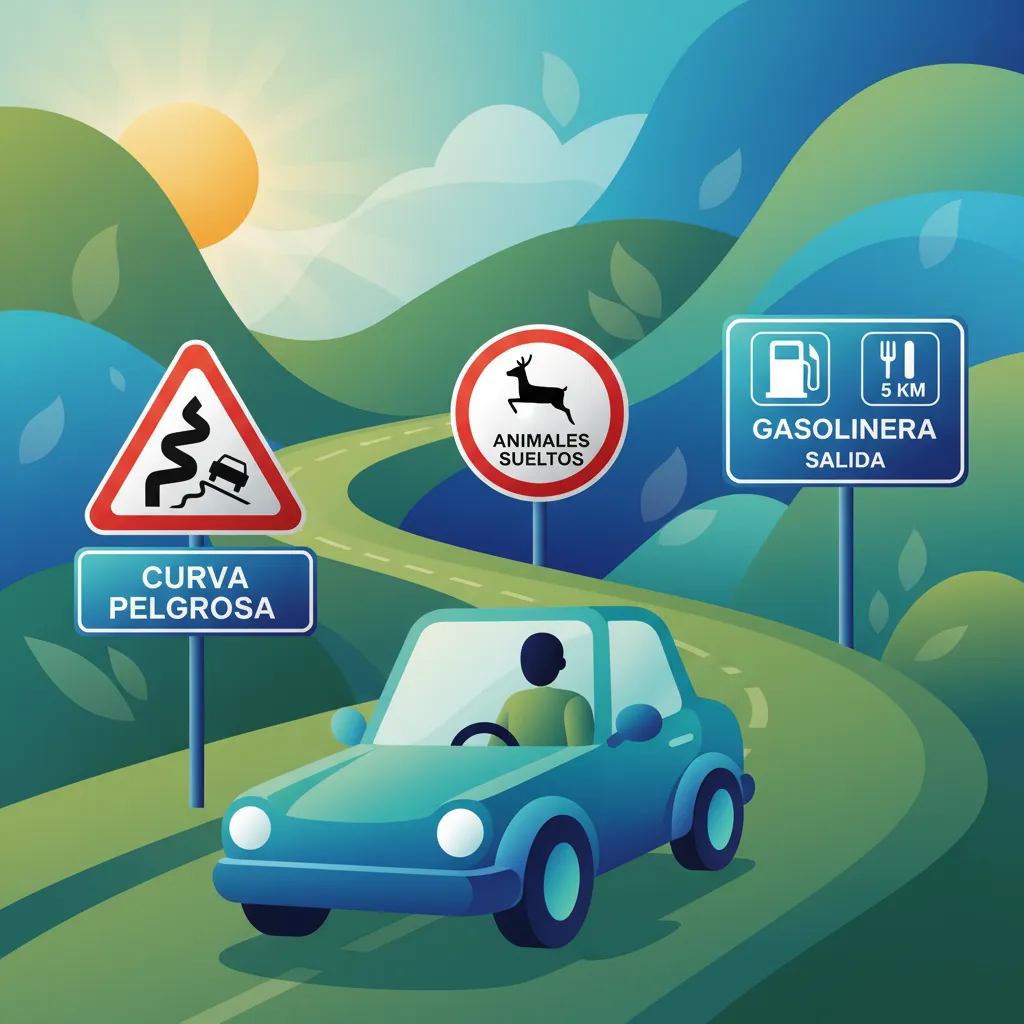
This lesson covers warning and informational signs, which are crucial for anticipating road conditions. It explains how triangular warning signs alert riders to upcoming hazards like sharp curves, slippery surfaces, or pedestrian crossings. The content also describes rectangular informational signs that provide directions, distances, and other useful guidance, helping riders to plan their route and adjust their driving in advance.
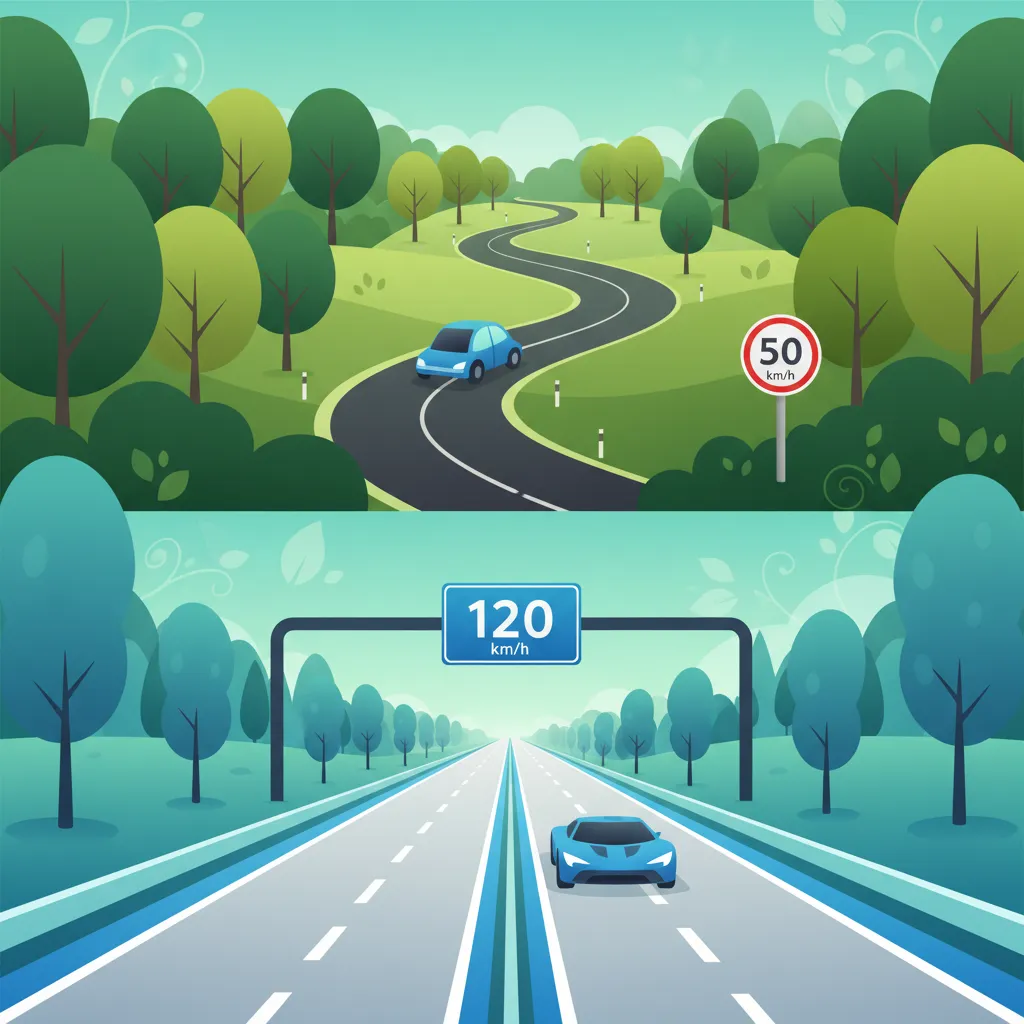
In this lesson, the different speed limits applied to rural roads and autovías (highways) are examined. Learners will understand the classification of road types and the DGT-mandated speed limits for each, including how to interpret variable speed limit signs. The lesson also includes techniques for maintaining speed control and adapting to road conditions and traffic flow.

This lesson introduces the visual language of road markings, focusing on the distinction between solid and broken lines and what they permit regarding lane changes and overtaking. It explains the meaning of directional arrows painted on the road surface, which guide drivers into the correct lane for their intended maneuver. Understanding these markings is crucial for maintaining proper lane discipline and navigating complex intersections and multi-lane roads.

This lesson introduces the regulatory signs that impose obligations or prohibitions on road users, with a focus on those pertinent to mopeds. It covers common signs such as speed limits, 'no entry', and mandatory turn directions, explaining how their shape and color indicate their function. Learners will be able to identify and correctly interpret these signs to navigate urban road networks legally and safely, avoiding potential fines.

This lesson explains the designated functions of different parts of a highway system. It covers the legal and appropriate use of carriageways, the specific emergency-only use of the hard shoulder (arcén), and the purpose of service roads. The content clarifies DGT regulations for each, ensuring drivers know where they can and cannot drive or stop.
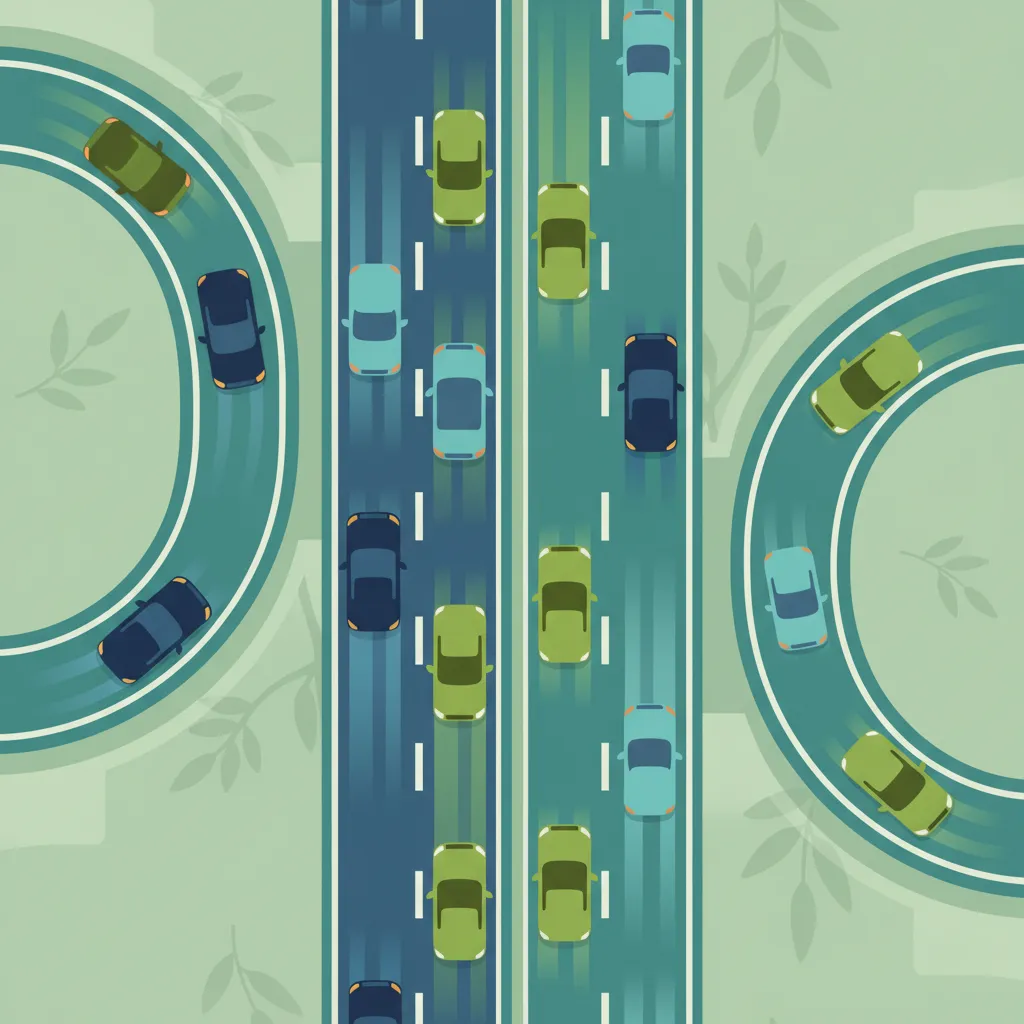
This lesson defines proper lane discipline on highways, emphasizing correct lane positioning and the rule to drive in the right-hand lane except when overtaking. It details safe merging onto main carriageways from an acceleration lane and effective exit strategies using deceleration lanes. Learners will understand DGT merge rules and the importance of signaling lane changes early.
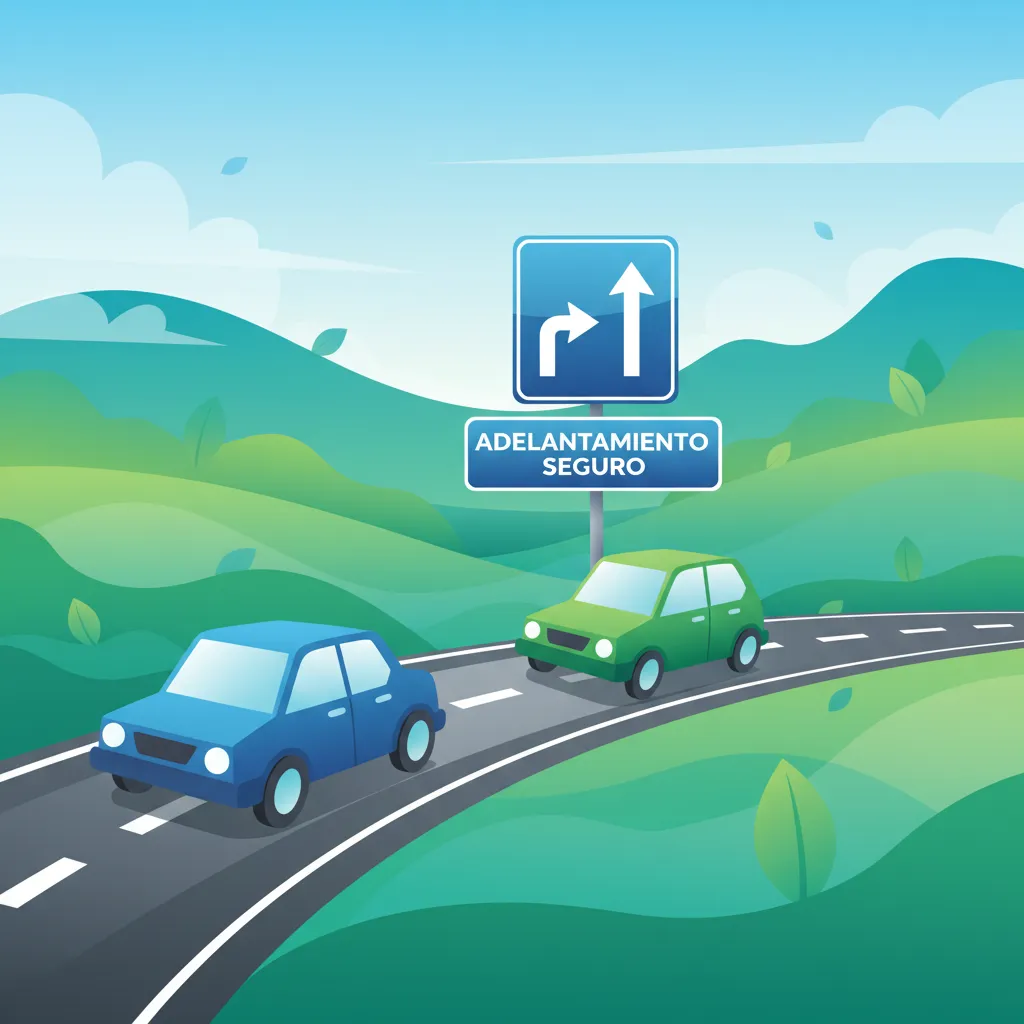
This lesson covers the legal overtaking procedures applicable on different road types, focusing on identifying safe passing zones and executing maneuvers correctly. Learners will be taught how to maintain adequate safety distances before, during, and after overtaking. The content includes DGT regulations for overtaking, appropriate signaling, and visibility checks to ensure safe completion of the maneuver.

This lesson examines the structural components of a typical Spanish roundabout, describing the central island, entry and circulating lanes, and the placement of yield signs. It outlines how DGT standards dictate the geometric design and entry/exit points to ensure smooth traffic flow. Understanding these design elements enables drivers to anticipate vehicle movements and navigate safely.
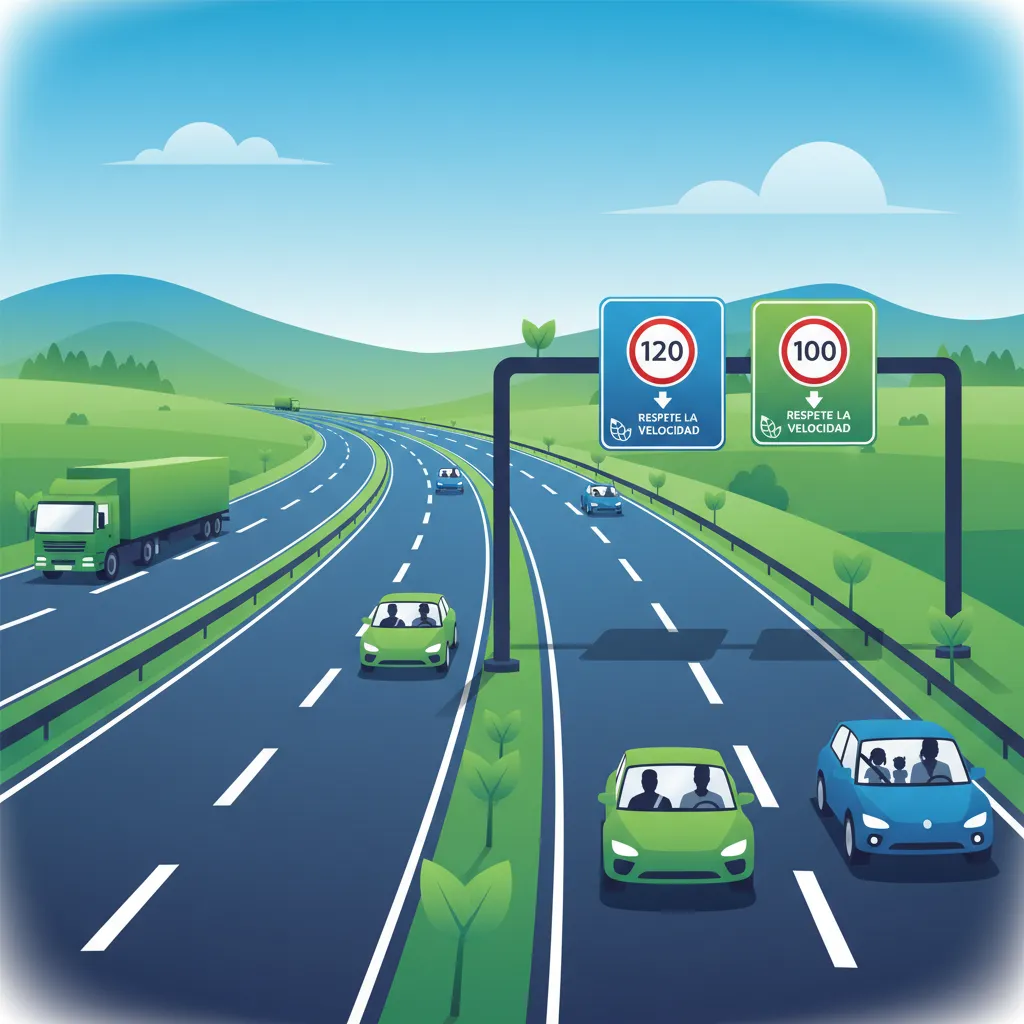
This lesson explains the classification differences between Spanish autovías and autopistas, detailing the specific speed limits and lane restrictions applicable to coaches on each. Learners will become proficient in interpreting motorway signage, adhering to minimum speed requirements, and recognizing vehicle type restrictions as enforced by the DGT. The module also covers the correct procedures for using entry and exit ramps to ensure safe and fluid traffic flow.
Learn about frequent misunderstandings and violations related to Spanish rural and highway signs. Focuses on misinterpreting exit signs, hard shoulder regulations, and variable message signs to avoid dangerous situations and fines.
This lesson covers warning and informational signs, which are crucial for anticipating road conditions. It explains how triangular warning signs alert riders to upcoming hazards like sharp curves, slippery surfaces, or pedestrian crossings. The content also describes rectangular informational signs that provide directions, distances, and other useful guidance, helping riders to plan their route and adjust their driving in advance.
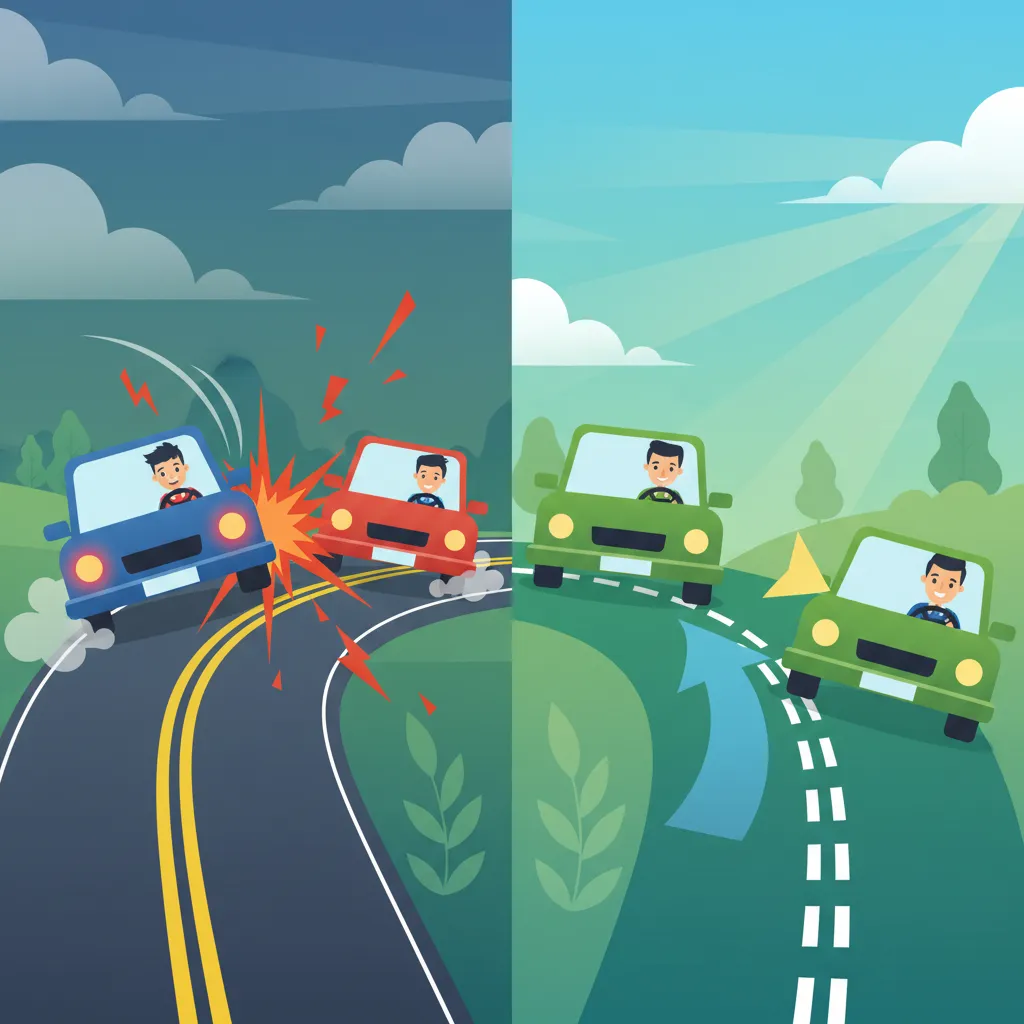
This lesson addresses common errors made by drivers when using roundabouts and presents corrective strategies. It covers issues such as entering from the wrong lane, failing to yield to circulating traffic, exceeding the recommended speed, and not signaling an exit correctly. By understanding these mistakes, drivers can improve their roundabout proficiency and reduce accident risk.
This lesson explains the designated functions of different parts of a highway system. It covers the legal and appropriate use of carriageways, the specific emergency-only use of the hard shoulder (arcén), and the purpose of service roads. The content clarifies DGT regulations for each, ensuring drivers know where they can and cannot drive or stop.
This lesson presents the variety of signs that guide drivers through roundabout navigation. It explains the significance of the roundabout warning symbol, priority signs, lane arrows, and directional signs placed before and within the roundabout. Mastery of roundabout signage ensures that drivers follow legal requirements and maintain safe traffic flow.
This lesson defines proper lane discipline on highways, emphasizing correct lane positioning and the rule to drive in the right-hand lane except when overtaking. It details safe merging onto main carriageways from an acceleration lane and effective exit strategies using deceleration lanes. Learners will understand DGT merge rules and the importance of signaling lane changes early.
This lesson introduces the visual language of road markings, focusing on the distinction between solid and broken lines and what they permit regarding lane changes and overtaking. It explains the meaning of directional arrows painted on the road surface, which guide drivers into the correct lane for their intended maneuver. Understanding these markings is crucial for maintaining proper lane discipline and navigating complex intersections and multi-lane roads.
This lesson introduces the regulatory signs that impose obligations or prohibitions on road users, with a focus on those pertinent to mopeds. It covers common signs such as speed limits, 'no entry', and mandatory turn directions, explaining how their shape and color indicate their function. Learners will be able to identify and correctly interpret these signs to navigate urban road networks legally and safely, avoiding potential fines.
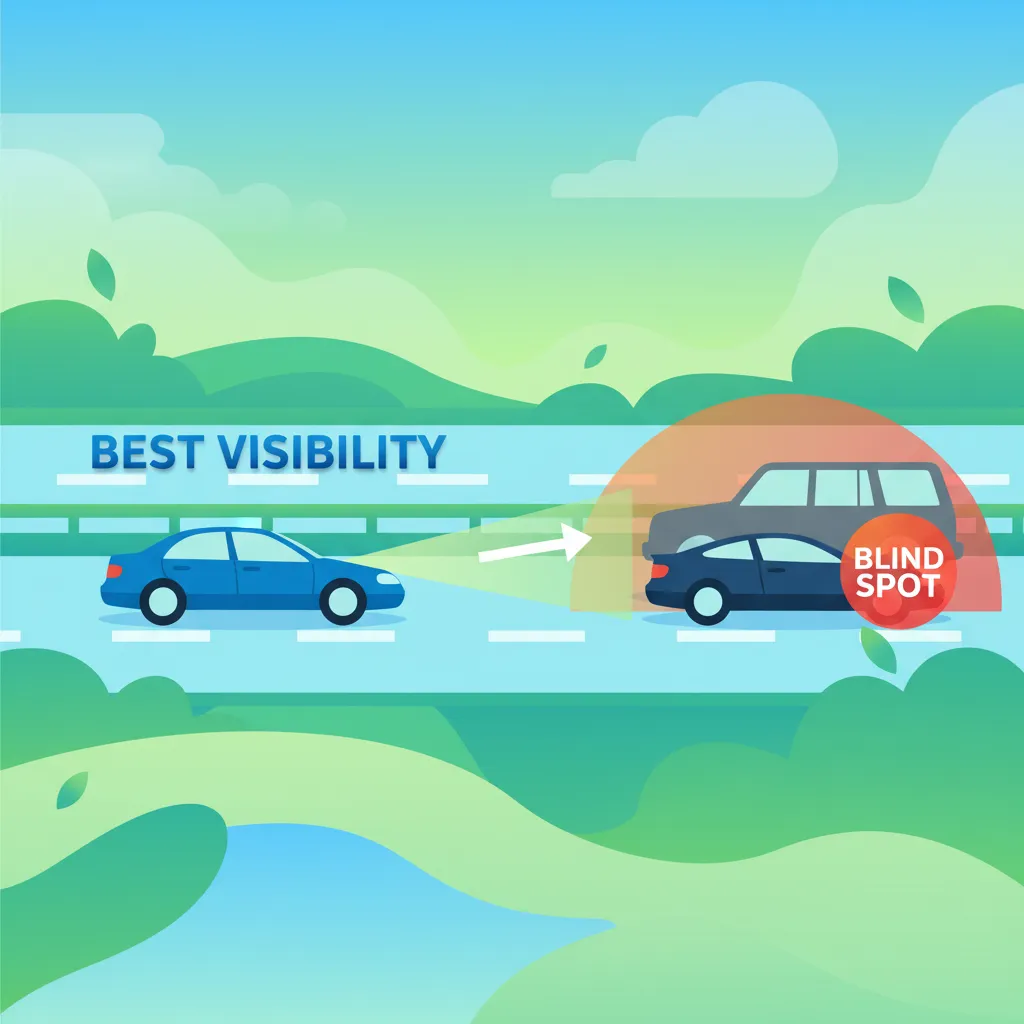
This lesson explores proper lane positioning, emphasizing strategic selection of traffic lanes for optimal visibility. It explains the importance of rider line of sight and peripheral vision in maintaining situational awareness. The content also covers legal aspects of lane splitting and correct usage of road shoulders, abiding by DGT regulations.

In this lesson, drivers learn the correct actions to take during a vehicle breakdown. It outlines steps for safely stopping on the hard shoulder, activating hazard lights, and deploying warning devices like the triangle or V16 light. The lesson covers DGT procedures for roadside emergencies, including wearing a high-visibility vest and contacting assistance safely.
This lesson explores the regulations for dedicated bus lanes in urban environments, detailing the correct interpretation of associated lane markings and traffic signage. Learners will understand the specified times of operation, rules for sharing lanes with other vehicles, and the legal consequences of unauthorized entry. The module also provides clear guidelines for entering and exiting bus lanes at designated points to maintain traffic flow.
Find clear answers to common questions learners have about Signage for Rural and Highway Environments. Learn how the lesson is structured, which driving theory objectives it supports, and how it fits into the overall learning path of units and curriculum progression in Spain. These explanations help you understand key concepts, lesson flow, and exam focused study goals.
On rural roads, directional signs might be green or white with black text, indicating local destinations or national routes. On autovías and autopistas (highways), directional signs are typically blue with white text, providing information about major cities, exits, and distances, often with exit numbers for clarity for DGT B license holders.
Exit numbers on Spanish highways generally correspond to the kilometre point of the exit along the road. They help drivers anticipate upcoming exits and are crucial for navigation. Familiarize yourself with how these numbers are displayed, often alongside the destination, to ensure correct interpretation during your theory test for B & BE.
Yes, you should recognize signs for fuel stations, rest areas, hospitals, and restaurants, which are crucial for planning long journeys on Spanish highways. These signs are typically blue or white with universally recognized symbols and are often accompanied by distances to the service points. Understanding them is important for DGT B and BE exam success.
If a sign shows multiple destinations in different colours, it usually indicates different types of roads or destinations. For example, blue typically denotes motorways (autovías/autopistas), green for national or primary roads, and white for local roads or points of interest. Always follow the colour and destination relevant to your intended route for DGT driving.
Warning signs for exits on Spanish autovías and autopistas typically appear at distances of 1000m, 500m, and sometimes 250m before the actual exit, depending on the road type and complexity. This graduated warning system allows drivers ample time to position their vehicles safely and reduce speed, a key aspect tested in the DGT exam for B & BE.
Use our powerful search functionality to pinpoint specific Spanish DGT driving theory practice sets. Filter by road sign categories, traffic law topics, or question difficulty to build custom study sessions and reinforce your knowledge precisely where it matters for your official exam.