
Welcome to the lesson on Turning Radii and Minimum Turning Circle, a key component of the Official DGT Theory Course for Spanish Truck Licences C & C1. Understanding how your truck maneuvers is critical for safe driving, especially when navigating tight spaces or complex junctions. This lesson builds on basic vehicle dynamics and prepares you for more advanced maneuvering scenarios covered later in the course.

Lesson content overview
Professional truck driving demands a precise understanding of vehicle dynamics, especially when navigating turns. Unlike passenger cars, heavy goods vehicles (HGVs) in categories C and C1 possess significantly larger dimensions, which fundamentally alter their turning characteristics. This lesson delves into the geometry of turning radii, the critical phenomenon of off-tracking, and how factors like wheelbase and overall length influence a truck’s ability to maneuver safely and compliantly.
Mastering these concepts is crucial for avoiding collisions, adhering to traffic regulations, and ensuring efficient operation in diverse environments, from congested urban intersections to expansive highway exits. A driver’s accurate judgment of the space required for turns directly impacts safety for themselves and other road users.
The way a truck turns is governed by fundamental physics and engineering principles, distinct from smaller vehicles. Due to their longer wheelbases and overall length, heavy vehicles require a greater turning envelope – the total area the vehicle occupies during a turn. This characteristic necessitates a specialized approach to driving that considers the unique path traced by each part of the truck.
Misjudging the space needed for a turn is a leading cause of incidents involving commercial vehicles. Such errors can result in collisions with street furniture, roadside obstacles, other vehicles, or even pedestrians. These risks are particularly elevated in confined spaces such as narrow city streets, complex roundabouts, tight intersection corners, and crowded loading bays. A thorough grasp of turning geometry is not just a theoretical exercise; it is a vital safety skill.
The steering geometry and the precise placement of axles and track width dictate the path each set of wheels will follow. A key phenomenon is "off-tracking," where the rear wheels follow a tighter, inward path compared to the front wheels. This occurs because the vehicle pivots around a point near the front axle, causing the rear to "cut the corner." Understanding this behavior is essential for anticipating the true spatial demands of a turn. This knowledge builds upon foundational concepts learned in Vehicle Dimensions & Limitations and Controls & Systems, and is a prerequisite for advanced maneuvering techniques like Reversing and Parallel Parking Techniques and Navigating Roundabouts and Intersections.
Several core principles define how a truck navigates a turn. Understanding these terms and their implications is foundational for safe driving.
The turning radius is a fundamental measurement for understanding how much space a vehicle needs to turn. For Category C and C1 truck drivers, it’s not just an abstract number but a crucial element for practical maneuvering.
The turning radius is defined as the radius measured from the theoretical centre of a turn to the centre of the vehicle’s front axle path when the steering wheel is turned to its maximum lock (full lock). It is important to note that this measurement is not from the centreline of the entire vehicle, but specifically from the centre of the front axle. This measurement provides the primary reference for the minimal space required for the front of the vehicle to complete a turn.
While the primary turning radius refers to the front axle, it's also useful to consider the paths of the inner and outer wheels. The outer turning radius describes the largest circle traced by the outermost point of the vehicle, typically the front outer wheel or a point on the vehicle's body. Conversely, the inner turning radius refers to the path of the innermost wheel. Understanding both ensures that the driver accounts for the entire lateral sweep of the vehicle during a turn.
For practical purposes, the turning radius determines the width of the lane or road space a truck needs to successfully execute a turn without veering into adjacent lanes, striking curbs, or encroaching on sidewalks. For example, a typical 12-ton rigid truck with a wheelbase of 3.5 metres might have an outer turning radius of around 8 metres. This means its outermost point will describe a circle with an 8-meter radius, requiring careful planning in tight spots.
Spanish DGT regulations implicitly require drivers to maintain Lane Integrity while executing a turn. This means the vehicle must remain fully within its designated lane boundaries unless the specific lane width safely accommodates a necessary deviation, such as for a very wide turn where road markings might allow for it. Failure to respect this rule can lead to encroachment into oncoming traffic lanes or collisions with vehicles in adjacent lanes, increasing accident risk. Drivers must use their knowledge of their truck's turning radius to anticipate the required space and position their vehicle accordingly before initiating a turn.
Closely related to the turning radius is the minimum turning circle, a specification that has significant implications for both vehicle design and road infrastructure.
The minimum turning circle refers to the smallest complete circular path a vehicle can describe. This measurement is typically taken from the outermost point of the vehicle – usually the front outer wheel or the furthest point of the vehicle body – as it completes a full 360-degree turn at maximum steering lock. It is often expressed as a diameter, meaning it is twice the minimum turning radius. For instance, if a truck has a minimum turning circle of 15 metres, it implies the vehicle can safely complete a full turn within a circular area with a diameter of at least 15 metres.
The minimum turning circle is a crucial parameter for civil engineers and urban planners. They use these specifications to design various road features, including the sweep of turning bays, the entry and exit angles of roundabouts, and the dimensions of parking lots and loading docks. By setting minimum turning circle standards for different vehicle categories, DGT ensures that vehicles can safely and efficiently navigate standard road infrastructure.
It is common for drivers to confuse "turning radius" with "turning circle." The turning radius is a measure from the centre of the turn to a specific point (usually the front axle path), while the turning circle is the full diameter of the path created by the outermost point of the vehicle. Essentially, the minimum turning circle is a representation of the complete space required for a vehicle to perform a U-turn or a full circle. Understanding this distinction is vital for accurate spatial judgment and planning, especially when dealing with official specifications or road signs that might reference either.
One of the most critical concepts for Category C and C1 truck drivers to master is off-tracking, as it directly impacts maneuverability and collision avoidance.
Off-tracking describes the geometric phenomenon where the rear wheels of a vehicle follow a path that is inside the path of the front wheels during a turn. This occurs because the vehicle pivots around a point that is effectively near the front axle. As the front wheels turn, the longer wheelbase of a truck causes the rear axle to "cut" the corner, tracing a tighter arc than the front. This inward deviation is negligible for the front axle itself but becomes significant for the rear axle, and even more so for any trailers attached to an articulated vehicle.
The magnitude of off-tracking is directly influenced by the vehicle's Wheelbase. A longer wheelbase generally results in more pronounced off-tracking, meaning the rear wheels will follow an even tighter path relative to the front. For this reason, articulated vehicles, with their inherently long effective wheelbases (from the tractor's front axle to the trailer's rear axles), exhibit the most significant off-tracking. Drivers must internalize that the entire vehicle does not follow the same circular path; the rear typically tracks up to 30% inside the front track in sharp turns.
The practical implication of off-tracking is that the driver must always allow extra clearance for the rear wheels when negotiating turns, especially tight ones. Failing to account for this can lead to the rear wheels (or trailer wheels) striking curbs, road signs, traffic islands, parked vehicles, or even pedestrians.
Consider a 90-degree turn: a truck with a 3-meter wheelbase might see its rear wheels traveling on a radius 0.5 metres smaller than the front wheels. To compensate, drivers often need to approach turns wider with the front of the vehicle, sometimes referred to as "swinging out," to ensure the rear clears the inner corner. This requires careful observation using mirrors and an understanding of the vehicle’s specific dimensions.
Beyond the general concepts of turning radius and off-tracking, two specific vehicle dimensions—wheelbase and track width—play a crucial role in determining a truck's turning envelope and overall maneuverability.
The effective wheelbase is the measured distance between the centre points of the front and rear axles. However, for a complete understanding of a vehicle's turning requirements, one must also account for any Overhangs. Overhangs are the portions of the vehicle that extend beyond the front or rear axles. For example, a semi-tractor with a 4.5-meter wheelbase and a 2-meter rear overhang will require a larger turning circle than a rigid truck with the same wheelbase but no significant overhang, because the overall length extending beyond the axles affects the vehicle's total sweep during a turn. Longer effective wheelbases generally increase the turning radius and, as previously discussed, also reduce off-tracking. DGT imposes maximum wheelbase lengths for various vehicle categories to ensure they can be safely maneuvered on public roads.
Track width is the lateral distance between the left and right wheels on the same axle. While it might seem less intuitive than wheelbase, track width significantly affects the clearance needed on each side of the vehicle during a turn. A wider track width means the vehicle occupies a greater lateral space. For instance, a truck with a track width of 2.5 metres will require a minimum lane width of at least 3 metres to complete a turn safely, ensuring the outermost points of the vehicle (including mirrors or bodywork) do not clip obstacles or encroach on adjacent lanes. Neglecting track width can lead to serious side-impact collisions, especially in narrow passages or during turns close to road edges.
Compliance with specific DGT regulations is paramount for all professional drivers operating Category C and C1 vehicles in Spain. These rules ensure safety, prevent obstruction, and standardize vehicle operation on public roads.
Rule: A driver must ensure the vehicle remains entirely within the boundaries of its designated lane while executing a turn. This applies unless the lane width is explicitly designed to exceed the vehicle’s required turning envelope, allowing for a safe, controlled deviation.
Applicability: This rule is mandatory for all turns on public roads and is codified in the DGT's Reglamento General de Circulación, specifically Articles 70-73. It prevents heavy vehicles from encroaching into adjacent lanes, which could cause collisions with traffic coming from the opposite direction or moving in parallel.
Rule: Category C and C1 vehicles must adhere to specified minimum turning radius limits established for their respective classes when operating on public roads.
Applicability: This is a mandatory requirement for all Category C and C1 vehicles, verified during mandatory technical vehicle inspections. It is designed to ensure that commercial vehicles can safely negotiate standard road features like roundabouts and intersections without causing excessive obstruction or damage.
Recommendation: Drivers should aim to maintain at least 1 metre of clearance between the turning vehicle’s outermost wheel and any roadside obstacles (such as curbs, poles, or signs) when making a turn.
Applicability: This is a recommended best practice, particularly crucial at urban intersections, roundabouts, and dedicated turning bays, rather than an explicitly codified law. It provides a safety margin to account for vehicle sway, minor steering adjustments, and driver reaction time, significantly reducing the risk of accidental contact.
Rule: Drivers of articulated vehicles or those towing trailers must actively account for off-tracking, ensuring that sufficient clearance is maintained for the rear wheels and trailer throughout the turn.
Applicability: This rule is mandatory for all articulated or semi-tractor configurations. It is reinforced by DGT directives and circulars concerning the operation of articulated vehicles. Its purpose is to prevent rear-wheel collisions with obstacles that the front of the vehicle may have already passed, mitigating the specific dangers posed by the tighter turning path of trailing units.
Rule: When operating a fully loaded vehicle, drivers must adjust their speed and turning expectations. The presence and distribution of the load can affect wheel pressure, suspension compression, and potentially slightly alter the effective turning radius.
Applicability: This is a mandatory consideration under general vehicle technical inspection standards and safe driving practices for any loaded Category C vehicle. Loaded vehicles typically have a higher centre of gravity and greater inertia, which can increase the turning circle subtly and heighten the risk of rollover if turns are executed at excessive speeds.
Understanding the rules and principles is one thing; applying them flawlessly in real-world driving is another. Several common errors can lead to dangerous situations or legal infractions for truck drivers.
The principles of turning radii and off-tracking are constant, but their application must be dynamic, adapting to changing environmental, road, and vehicle conditions.
When pedestrians, cyclists, or motorcyclists are present near a turning corner, the driver's responsibility to allow extra clearance extends beyond the prescribed 1-meter guideline. Large vehicles have significant blind spots, and the tail swing or off-tracking can easily catch vulnerable road users unaware. Drivers must check mirrors thoroughly, signal early, and yield the right-of-way, ensuring all vulnerable users are well clear before initiating or completing a turn.
Let's consider how these principles apply in real-world driving situations for a professional Category C or C1 truck driver.
Setting: Imagine a 12-ton rigid truck approaching a right-hand turn at a narrow city intersection. The designated lane width is 3 meters, and there is a curb on the inner corner.
Decision Point: The driver must quickly assess if the truck's outer turning radius (e.g., 2.8 meters) and the inward off-tracking of the rear wheels can be accommodated within the 3-meter lane width without striking the curb or encroaching into the adjacent lane.
Correct Behavior: The driver slows down significantly, positions the front of the truck slightly wider into the intersection before turning (a controlled "swing out" if necessary and safe), and ensures the rear wheels clear the inner curb by monitoring the side mirrors. They maintain a slow, steady turn, ensuring lane integrity.
Incorrect Behavior: The driver attempts the turn at too high a speed, cuts the corner sharply, and fails to account for off-tracking, causing the rear wheel to strike and potentially damage the curb or the vehicle's tyre.
Setting: An articulated truck (tractor-semitrailer) is entering a multi-lane roundabout with a 30-meter diameter. The driver intends to take the second exit.
Decision Point: The driver must meticulously consider the pronounced off-tracking of the semi-trailer’s rear axles, which will cut significantly inward.
Correct Behavior: The driver approaches the roundabout in the outermost lane, even if their intended exit might normally allow for an inner lane in a smaller vehicle. This allows for a sufficiently large radius to accommodate the trailer's tighter path, preventing it from striking the central island or encroaching on other lanes. The driver yields to traffic already in the roundabout and uses all mirrors to monitor the trailer's position.
Incorrect Behavior: The driver follows the inner lane, assuming the same turning circle as the front axle. This leads to the trailer’s rear wheels colliding with the central island or forcing other vehicles to take evasive action.
Setting: A fully loaded Category C truck is navigating a gentle curve on a wet highway.
Decision Point: The driver must adjust speed and potentially modify their turning approach due to the significantly reduced tyre adhesion on the wet surface and the increased inertia from the load.
Correct Behavior: The driver reduces speed well in advance of the curve, maintains a steady and smooth steering angle, and anticipates that the vehicle will track wider than it would on a dry road. Any sudden steering inputs are avoided to prevent skidding or loss of control.
Incorrect Behavior: The driver maintains a speed similar to dry conditions, resulting in understeer (the vehicle turns less sharply than intended) and a dangerous drift towards the outer lane barrier or into another lane.
To ensure safety and compliance on the road, professional truck drivers must fully grasp the following fundamental principles of turning dynamics:
wheelbase, track width, and overhangs are the primary geometric factors determining a truck's turning characteristics.turning radius (from the turn's centre to the front axle path) and minimum turning circle (the diameter of the smallest path the outermost point of the vehicle can describe).off-tracking as an inherent aspect of all turns, particularly pronounced in articulated vehicles, where rear wheels follow a tighter path than front wheels.lane integrity during turns, respecting specified minimum turning radius limits, ensuring adequate clearance from obstacles, and specifically accounting for off-tracking in articulated vehicles.vulnerable road users.Vehicle Dimensions & Limitations (Lesson 3) and prepare for advanced maneuvers like Reversing and Parallel Parking Techniques (Lesson 5.2) and Navigating Roundabouts and Intersections (Lesson 5.4).By diligently applying these principles, professional Category C and C1 truck drivers can navigate turns safely, efficiently, and in full compliance with Spanish traffic laws.
This lesson covers the fundamental physics of how Category C and C1 trucks turn, emphasizing that heavy vehicles require a larger turning envelope than passenger cars due to longer wheelbases and overall length. The critical concept of off-tracking means rear wheels follow a tighter path than front wheels during turns, which drivers must anticipate to avoid striking roadside obstacles. Spanish DGT regulations require maintaining lane integrity during turns and impose minimum turning radius standards verified during technical inspections. Drivers must adapt their techniques based on vehicle load, weather conditions, and road type, with particular attention to articulated vehicles where off-tracking is most pronounced.
A short set of high-value points that capture the most important learning from this lesson.
Turning radius is measured from the centre of a turn to the centre of the front axle path at maximum lock, not to the vehicle's outer edge.
Off-tracking causes rear wheels to follow a tighter path than front wheels during turns because the vehicle pivots near the front axle.
A longer wheelbase increases both the turning radius and the severity of off-tracking, making articulated vehicles the most challenging to maneuver.
The minimum turning circle equals twice the turning radius and represents the full diameter traced by the vehicle's outermost point during a complete turn.
Drivers must maintain lane integrity during turns unless lane width specifically exceeds the vehicle's required turning envelope.
Explore all units and lessons included in this driving theory course.
The turning radius measures to the front axle, while the minimum turning circle measures from the outermost point of the vehicle.
Rear wheels can track up to 30% inside the front track in sharp turns, requiring drivers to swing out wider with the front.
Effective wheelbase includes overhangs beyond the axle centres, which increase the turning circle beyond what wheelbase alone would suggest.
Maintain at least 1 metre clearance from curbs and obstacles during turns as a safety margin.
Loaded trucks have greater inertia and a higher centre of gravity, requiring slower speeds and smoother steering inputs.
Assuming the entire vehicle follows the same path as the front axle and underestimating lane width requirements.
Failing to account for off-tracking on tight turns, causing rear wheels to strike curbs, signs, or parked vehicles the front cleared.
Using the same turning speed and technique for a loaded truck as for an empty one, increasing rollover and jackknife risk.
Taking the inner lane at roundabouts with large vehicles, causing inner wheels to strike the central island.
Neglecting to signal early when performing a wide turn that swings out to accommodate the turning radius and off-tracking.
Lesson content overview
A short set of high-value points that capture the most important learning from this lesson.
Turning radius is measured from the centre of a turn to the centre of the front axle path at maximum lock, not to the vehicle's outer edge.
Off-tracking causes rear wheels to follow a tighter path than front wheels during turns because the vehicle pivots near the front axle.
A longer wheelbase increases both the turning radius and the severity of off-tracking, making articulated vehicles the most challenging to maneuver.
The minimum turning circle equals twice the turning radius and represents the full diameter traced by the vehicle's outermost point during a complete turn.
Drivers must maintain lane integrity during turns unless lane width specifically exceeds the vehicle's required turning envelope.
Explore all units and lessons included in this driving theory course.
The turning radius measures to the front axle, while the minimum turning circle measures from the outermost point of the vehicle.
Rear wheels can track up to 30% inside the front track in sharp turns, requiring drivers to swing out wider with the front.
Effective wheelbase includes overhangs beyond the axle centres, which increase the turning circle beyond what wheelbase alone would suggest.
Maintain at least 1 metre clearance from curbs and obstacles during turns as a safety margin.
Loaded trucks have greater inertia and a higher centre of gravity, requiring slower speeds and smoother steering inputs.
Assuming the entire vehicle follows the same path as the front axle and underestimating lane width requirements.
Failing to account for off-tracking on tight turns, causing rear wheels to strike curbs, signs, or parked vehicles the front cleared.
Using the same turning speed and technique for a loaded truck as for an empty one, increasing rollover and jackknife risk.
Taking the inner lane at roundabouts with large vehicles, causing inner wheels to strike the central island.
Neglecting to signal early when performing a wide turn that swings out to accommodate the turning radius and off-tracking.
Explore search topics learners often look for when studying Turning Radii and Minimum Turning Circle. These topics reflect common questions about road rules, driving situations, safety guidance, and lesson level theory preparation for learners in Spain.
Browse additional driving theory lessons that cover connected traffic rules, road signs, and common driving situations related to this topic. Improve your understanding of how different rules interact across everyday traffic scenarios.
Explore practical driving scenarios involving truck turning radii and off-tracking. Learn how to safely navigate complex urban intersections, roundabouts, and tight corners as required by Spanish DGT theory.
This lesson addresses the practical aspects of maneuvering a large vehicle in various environments. It explains concepts like turning radius, off-tracking, and the vehicle's total footprint, which determine the space needed for turns and other maneuvers. Learners will develop the spatial awareness required to navigate tight corners, loading bays, and urban streets while maintaining safe clearance from obstacles.
This lesson provides specific instructions on how to safely navigate complex junctions such as roundabouts and intersections with a large vehicle. It explains the rules of priority, the correct lane to use based on the intended exit, and the importance of proper vehicle positioning to account for off-tracking. The content also covers clear signaling to communicate intentions to other road users for safe and efficient passage.

This lesson provides theoretical guidance on the techniques for safely reversing a heavy vehicle, a high-risk maneuver. It emphasizes the correct use of mirrors, managing extensive blind spots, and the importance of using a spotter when available. The content also breaks down the geometric principles of parallel parking and backing into loading docks, focusing on vehicle positioning and spatial awareness.

This lesson provides a detailed guide to performing safe and legal overtaking maneuvers on the highway. It places strong emphasis on the techniques for thoroughly checking the large blind spots around a truck before initiating a lane change. The content also covers judging the necessary speed differential and distance required to complete the pass and return to the lane safely.

This lesson provides guidance on the practical aspects of parking and making deliveries in urban areas. It covers the techniques for safely maneuvering into and out of loading docks and designated delivery zones, which often involves precise reversing. The content also explains the specific parking regulations that apply to commercial vehicles and best practices for ensuring safety during loading and unloading.

This lesson focuses on the core principles of defensive driving as they apply to operating a large truck. It explains the importance of managing the space around the vehicle to create a safety buffer and always having an 'escape route' in mind. The content emphasizes anticipating the actions of other road users and being prepared to react calmly and safely to unexpected situations.

This lesson provides strategies for navigating dense and often unpredictable city traffic. It explains how to maintain a safe following distance and position the vehicle correctly in stop-and-go situations to optimize flow and visibility. The content emphasizes the importance of anticipation, patience, and defensive driving techniques to safely manage the challenges of urban congestion.

This lesson focuses on the principles of safe lane selection and overtaking on multi-lane roads and highways. It covers the importance of maintaining proper lane discipline and the legal protocols for executing a safe pass, including checking blind spots and ensuring sufficient speed differential. The content also stresses the need for clear signaling and judging adequate space before returning to the original lane.
This lesson focuses on the critical relationship between speed, following distance, and overall traffic safety on highways. It explains how to calculate a safe following distance based on speed and weather conditions, accounting for a truck's longer stopping distance. The content also teaches strategies for managing speed to adapt smoothly to changing traffic flow, enhancing both safety and fuel efficiency.

This lesson focuses on the critical skill of safely interacting with vulnerable road users, such as pedestrians and cyclists, in an urban setting. It highlights the extensive blind spots around a truck and teaches drivers to be extra vigilant, especially at intersections and crosswalks. The content covers the legal requirements for yielding and the importance of making eye contact to confirm intentions.
Understand the physics behind truck turning radius, wheelbase, track width, and off-tracking. This lesson provides detailed explanations crucial for Spanish Category C and C1 driving theory compliance and safe maneuvering.

This lesson addresses the dynamics of accelerating, braking, and turning while towing a trailer. It explains how to adjust for increased load inertia, the impact on stopping distances, and the need for wider turns to account for off-tracking. The content outlines DGT speed guidelines specific to towing and emphasizes smooth control to ensure stability.
This lesson addresses the practical aspects of maneuvering a large vehicle in various environments. It explains concepts like turning radius, off-tracking, and the vehicle's total footprint, which determine the space needed for turns and other maneuvers. Learners will develop the spatial awareness required to navigate tight corners, loading bays, and urban streets while maintaining safe clearance from obstacles.

This lesson explains the physical concept of the center of gravity and its critical importance in heavy vehicle stability. It details how the placement and distribution of cargo can raise or lower the center of gravity, affecting rollover risk and handling. The content also covers factors that contribute to vehicle sway and the principles of load balancing to maintain control during turns and maneuvers.

This lesson details the standard dimensions of buses and coaches, including length, width, height, and wheelbase. It explains how these measurements determine the vehicle's turning circle and its ability to maneuver in tight urban spaces with lane constraints. Learners will understand how to calculate necessary clearance zones and anticipate spatial needs to ensure safe and efficient operation.
This lesson focuses on the core principles of defensive driving as they apply to operating a large truck. It explains the importance of managing the space around the vehicle to create a safety buffer and always having an 'escape route' in mind. The content emphasizes anticipating the actions of other road users and being prepared to react calmly and safely to unexpected situations.
This lesson focuses on the coordination of acceleration and deceleration to maintain vehicle stability. It explains how to modulate the accelerator pedal for smooth acceleration and how to apply the brake pedal for controlled deceleration. The content covers the role of the ABS system, the calculation of stopping distances, and the importance of maintaining stability during speed changes.
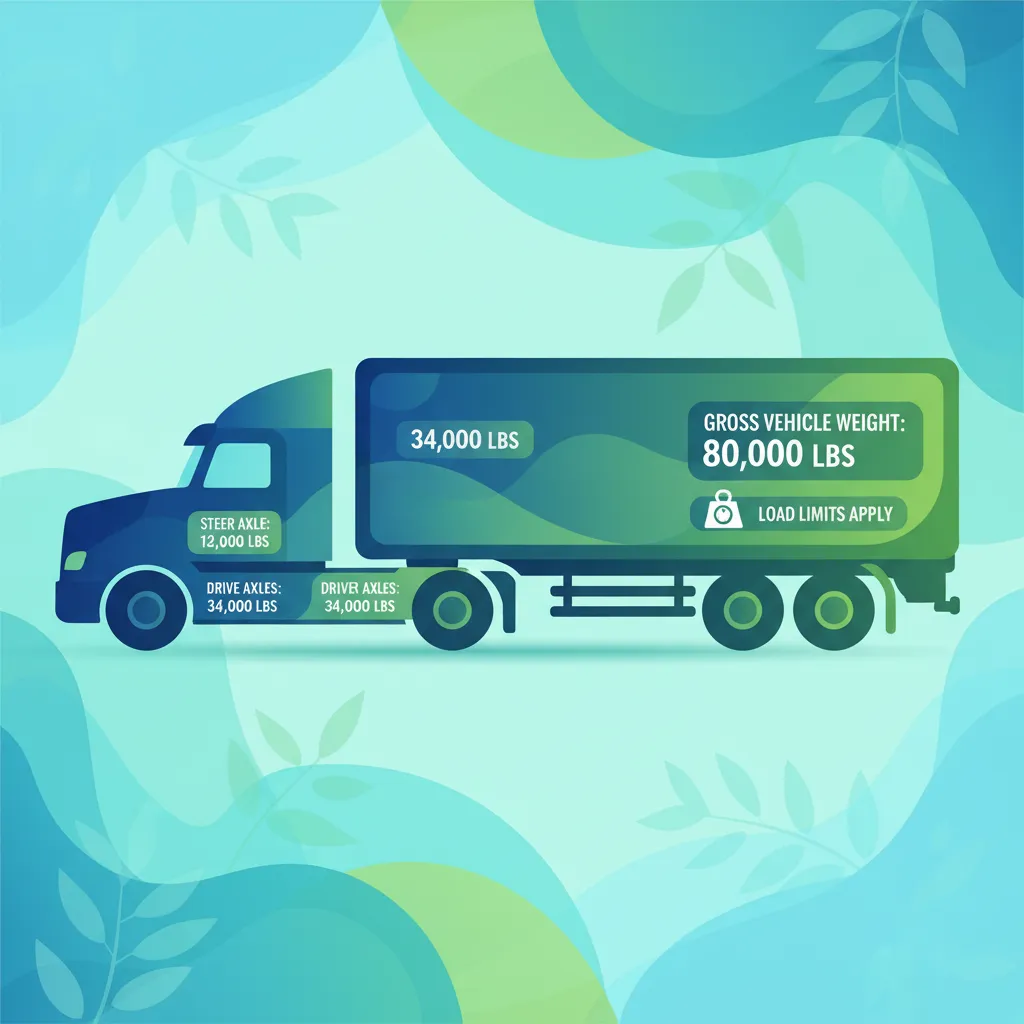
This lesson covers the critical regulations concerning vehicle weight, including Gross Vehicle Weight (GVW) and individual axle load limits. Learners will understand how to calculate tare weight and maximum payload to avoid overloading. The content also explains how proper weight distribution is essential for vehicle stability, braking efficiency, and minimizing road surface damage.
This lesson focuses on the critical relationship between speed, following distance, and overall traffic safety on highways. It explains how to calculate a safe following distance based on speed and weather conditions, accounting for a truck's longer stopping distance. The content also teaches strategies for managing speed to adapt smoothly to changing traffic flow, enhancing both safety and fuel efficiency.
This lesson provides a detailed guide to performing safe and legal overtaking maneuvers on the highway. It places strong emphasis on the techniques for thoroughly checking the large blind spots around a truck before initiating a lane change. The content also covers judging the necessary speed differential and distance required to complete the pass and return to the lane safely.
This lesson provides specific instructions on how to safely navigate complex junctions such as roundabouts and intersections with a large vehicle. It explains the rules of priority, the correct lane to use based on the intended exit, and the importance of proper vehicle positioning to account for off-tracking. The content also covers clear signaling to communicate intentions to other road users for safe and efficient passage.
Find clear answers to common questions learners have about Turning Radii and Minimum Turning Circle. Learn how the lesson is structured, which driving theory objectives it supports, and how it fits into the overall learning path of units and curriculum progression in Spain. These explanations help you understand key concepts, lesson flow, and exam focused study goals.
Off-tracking is the phenomenon where the rear wheels of a vehicle follow a different, tighter path than the front wheels when turning. For trucks, this difference is significant due to their long wheelbase. Understanding off-tracking is crucial to avoid the rear wheels hitting curbs, other vehicles, or road barriers during turns, especially at intersections or in tight urban areas.
A longer wheelbase generally results in a larger minimum turning circle and more pronounced off-tracking. This means longer trucks require more space to complete a turn compared to shorter vehicles. Drivers must be aware of their truck's specific wheelbase to accurately judge the necessary clearance.
Yes, the DGT theory exam for truck categories C and C1 often includes questions that test your understanding of turning dynamics. These questions might present scenarios requiring you to select the safest maneuver or identify potential hazards related to off-tracking and required clearance.
The turning radius is the distance from the center of the turn to the center of the vehicle's turning wheels (usually the front). The minimum turning circle is the diameter of the smallest circle the vehicle can trace. While related, understanding both helps visualize the space a vehicle occupies during a turn.
While this is a theory lesson, you can visualize the concepts by observing how different trucks maneuver. Imagine the path of the rear wheels when a truck turns a corner. In practice, always allow extra space and consider your truck's specific dimensions, especially the rear overhang and axle positions.
Use our powerful search functionality to pinpoint specific Spanish DGT driving theory practice sets. Filter by road sign categories, traffic law topics, or question difficulty to build custom study sessions and reinforce your knowledge precisely where it matters for your official exam.