This lesson is crucial for your motorcycle safety, covering how to handle unexpected emergencies and accidents according to DGT guidelines. Building on defensive riding and hazard perception, you'll learn vital procedures for post-incident care and legal compliance, ensuring you're prepared for challenging situations on Spanish roads.

Lesson content overview
Riding a motorcycle offers unparalleled freedom and exhilaration, but it also demands a high level of preparedness for unforeseen events. This lesson, crucial for anyone preparing for the Spanish Motorcycle Theory Exam (A, A1, A2 Licence Prep Course), provides a comprehensive guide to handling emergency situations and accidents. Understanding these procedures is not merely about passing an exam; it's about safeguarding your life, the lives of others, and fulfilling your legal obligations on the road.
We will explore critical skills like emergency braking and hazard avoidance, delve into the official DGT (Dirección General de Tráfico) accident reporting protocol, and outline essential rider protective actions and post-crash first aid. Mastery of these topics ensures you can react decisively and correctly when faced with a critical incident, minimizing harm and managing the aftermath effectively.
Emergency braking is a fundamental skill for every motorcyclist, allowing for rapid deceleration to avoid a collision or reduce speed significantly in critical moments. It involves a controlled yet forceful application of the motorcycle's braking system, aiming for the shortest possible stopping distance while maintaining stability and control.
When you brake, the motorcycle's weight transfers forward, significantly increasing the load on the front wheel. This phenomenon, known as load transfer, means the front brake becomes the primary stopping force, often contributing up to 70% or more of the total braking power in ideal conditions. Neglecting the front brake, or relying solely on the rear, is a common error that severely compromises stopping ability and stability.
The effectiveness of your braking is heavily influenced by road surface conditions, tire grip, and your technique. On wet or slippery surfaces, the available traction is reduced, necessitating a more gentle and progressive application of the brakes to prevent wheel lock-up.
Motorcyclists typically employ two main approaches to emergency braking, depending on the immediacy and severity of the threat:
Practice emergency braking in a safe, controlled environment to develop muscle memory and an understanding of your motorcycle's braking limits. Focus on smooth, progressive pressure application.
To execute emergency braking effectively, adopt the following practices:
Sometimes, braking alone is insufficient to prevent a collision. In such cases, hazard avoidance maneuvers, which involve proactive evasive actions, become critical. These maneuvers include swerving, controlled deceleration, and planning escape paths, all designed to circumvent a developing danger while maintaining a safe trajectory.
Evasive swerving is a rapid lateral movement used to bypass an obstacle in your path. It requires quick decision-making and precise execution:
Evasive swerving requires space and quick judgment. It should only be attempted when braking would clearly not be enough and an escape path is clear.
Beyond immediate emergency braking, controlled deceleration involves reducing speed to gain more reaction time and options. This might mean:
Effective hazard avoidance starts long before an emergency by continuously planning potential escape paths. This is a core principle of defensive riding:
In Spain, the Dirección General de Tráfico (DGT) mandates specific procedures for anyone involved in a traffic accident. Adhering to this protocol is not only a legal requirement but also ensures that injured parties receive timely assistance and that vital evidence is preserved.
The first and most critical step after any accident, regardless of its apparent severity, is to stop your vehicle safely. According to Article 55-2 of the Reglamento General de Circulación (RGC), all drivers involved in an accident must stop at the scene without undue delay. Fleeing the scene is a serious offense, often referred to as a "hit-and-run," carrying severe legal consequences.
Protect the scene (P): Ensure no further accidents occur. If possible, move your motorcycle to a safe location off the main carriageway, such as the hard shoulder or a safe berm. Activate your hazard warning lights immediately.
Alert others: Don your high-visibility reflective vest (mandatory when stopped on public roads). If possible and safe to do so, place a warning triangle at the legally prescribed distance (30 meters on conventional roads, 150 meters on motorways, ensuring visibility from at least 100 meters).
Alert emergency services (A): Call 112 immediately if there are any injuries, significant damage, or if the other party leaves the scene. Provide a precise location and details of the incident.
Aid the injured (S): Render reasonable assistance to any injured parties. This includes administering basic first aid as far as you are able.
Article 94 of the RGC explicitly obliges drivers to provide assistance to injured persons. This is a moral and legal duty designed to preserve life and stabilize injuries until professional medical help arrives. Even if you were not directly involved in the collision, if you are one of the first to arrive at the scene, you have a duty to assist.
Once the immediate safety and assistance needs are addressed, you must exchange information with other involved parties. This includes:
It is mandatory to call emergency services (112) without delay if:
When calling 112, remain calm and provide clear, concise information about your exact location, the nature of the emergency, and the number of people involved or injured.
After an incident, a motorcyclist must take immediate steps to secure personal safety and prevent further hazards. These "rider protective actions" are vital for minimizing secondary injuries and alerting other road users to the danger.
The priority after a crash is to move yourself and your motorcycle to a safe area, away from the flow of traffic. This prevents further collisions and provides a secure space to assess the situation.
Visibility is paramount, especially after a stop or incident on the road. The use of high-visibility apparel is not just recommended but often legally required in Spain.
Alerting other drivers to your presence is crucial to prevent secondary accidents.
Knowing basic first aid can be the difference between life and death after an accident. All drivers, including motorcyclists, are legally obliged under the RGC to assist injured persons. This often means providing immediate, life-saving interventions before professional help arrives.
Before approaching any victim, ensure the scene is safe. Check for ongoing dangers such as traffic, fire, or hazardous spills. Once safe, perform a primary survey using the ABC method:
Unless there is immediate danger (e.g., fire), do not move an injured rider without first stabilizing their head and spine. Spinal injuries are common in motorcycle accidents and improper movement can cause permanent paralysis.
Beyond ABC, focus on immediate threats:
When calling 112, be prepared to provide crucial information:
Ensuring roadside safety after an incident or breakdown is paramount to prevent further accidents. The RGC specifies equipment and procedures for alerting other road users.
Hazard warning lights (luces de emergencia) are designed to alert other drivers to a stationary or exceptionally slow-moving vehicle that poses a temporary obstruction or danger.
The warning triangle (triángulo de preseñalización de peligro) is a critical piece of safety equipment.
The high-visibility reflective vest (chaleco reflectante) is a mandatory piece of personal protective equipment for motorcyclists when stopped on the roadway in Spain.
Understanding your legal obligations after a motorcycle incident in Spain is crucial. Non-compliance with traffic laws and emergency protocols can lead to severe penalties.
The RGC clearly defines a driver's duties after an accident:
Failing to stop or provide assistance after an accident, often termed a "hit-and-run" (omisión de socorro or abandono del lugar del accidente), carries significant legal ramifications in Spain. Depending on the severity of the accident and whether injuries or fatalities occurred, this can range from substantial fines and loss of licence points to criminal charges with prison sentences.
While not strictly mandatory for all motorcycles in Spain in the same way it is for cars, carrying a first-aid kit that meets the specifications of the Spanish Ministry of Health is highly recommended. Some categories of vehicles or professional uses may have specific requirements. It is a proactive measure that aligns with the legal obligation to assist injured persons.
Emergency procedures are not one-size-fits-all. They must be adapted to various external conditions and situational factors to ensure the safest and most effective outcome.
When an emergency involves pedestrians or cyclists, extra caution is required.
Understanding the physics of braking, human reaction times, and the psychology of panic forms the foundation of effective emergency response.
Mastering emergency situations and accident procedures is an indispensable part of safe motorcycling. It is about more than just reacting; it's about developing a proactive mindset, understanding the underlying principles, and being prepared to execute precise actions under pressure. By internalizing these techniques and protocols, you not only enhance your chances of passing the Spanish Motorcycle Theory Exam for your A, A1, or A2 licence but, more importantly, you cultivate the skills and confidence necessary for a lifetime of safer riding on Spain's roads. Your preparedness protects yourself, your passengers, and all other road users.
This lesson covers critical emergency response procedures for motorcyclists in Spain, including emergency braking techniques where the front brake provides most stopping power through load transfer, and hazard avoidance through swerving and controlled deceleration. The official DGT accident protocol uses the PAS sequence (Protect, Alert, Aid) and references specific RGC articles governing legal duties to stop, assist injured parties, and exchange information using the Declaración Amistosa de Accidente form. Post-crash first aid follows the ABC assessment method while avoiding unnecessary helmet removal or spinal movement. Roadside safety requires immediate hazard light activation and correct warning triangle placement at mandated distances, with high-visibility reflective vests being legally required when stopped on interurban roads.
A short set of high-value points that capture the most important learning from this lesson.
Front brake provides up to 70% or more of total braking power due to load transfer during deceleration, making it the primary stopping force.
The DGT accident protocol follows the PAS sequence: Protect the scene, Alert emergency services by calling 112, and provide Aid to injured parties.
Warning triangles must be placed 30 metres on conventional roads and 150 metres on motorways, ensuring visibility from at least 100 metres.
The ABC primary survey checks Airway, Breathing, and Circulation before addressing bleeding and shock in post-crash first aid.
Leaving an accident scene without stopping or assisting (omisión de socorro) is a criminal offense in Spain under the RGC, carrying severe penalties.
Explore all units and lessons included in this driving theory course.
Progressive braking is the preferred technique—gradually increasing pressure allows you to feel the traction limit and avoid wheel lock-up.
Only remove a helmet if absolutely necessary to access an airway, and only if trained, as improper removal can worsen spinal injuries.
The Declaración Amistosa de Accidente is the standardized friendly accident report form used to streamline insurance claims in Spain.
Under stress, follow structured protocols like PAS to counteract panic-induced tunnel vision and ensure critical steps are not missed.
Higher speeds and wet conditions dramatically increase stopping distances—anticipation and greater following distances are essential.
Relying solely on the rear brake, which provides minimal stopping power and can destabilize the motorcycle during emergency braking.
Neglecting to place warning triangles at the correct legal distance, which reduces visibility for approaching traffic and violates RGC requirements.
Moving an injured rider without first stabilizing their head and spine, which risks causing permanent paralysis from spinal injuries.
Confusing the distances for triangle placement between urban/conventional roads (30m) and motorways (150m) when responding to incidents.
Forgetting to activate hazard warning lights immediately upon stopping, leaving other road users without critical visual warning.
Lesson content overview
A short set of high-value points that capture the most important learning from this lesson.
Front brake provides up to 70% or more of total braking power due to load transfer during deceleration, making it the primary stopping force.
The DGT accident protocol follows the PAS sequence: Protect the scene, Alert emergency services by calling 112, and provide Aid to injured parties.
Warning triangles must be placed 30 metres on conventional roads and 150 metres on motorways, ensuring visibility from at least 100 metres.
The ABC primary survey checks Airway, Breathing, and Circulation before addressing bleeding and shock in post-crash first aid.
Leaving an accident scene without stopping or assisting (omisión de socorro) is a criminal offense in Spain under the RGC, carrying severe penalties.
Explore all units and lessons included in this driving theory course.
Progressive braking is the preferred technique—gradually increasing pressure allows you to feel the traction limit and avoid wheel lock-up.
Only remove a helmet if absolutely necessary to access an airway, and only if trained, as improper removal can worsen spinal injuries.
The Declaración Amistosa de Accidente is the standardized friendly accident report form used to streamline insurance claims in Spain.
Under stress, follow structured protocols like PAS to counteract panic-induced tunnel vision and ensure critical steps are not missed.
Higher speeds and wet conditions dramatically increase stopping distances—anticipation and greater following distances are essential.
Relying solely on the rear brake, which provides minimal stopping power and can destabilize the motorcycle during emergency braking.
Neglecting to place warning triangles at the correct legal distance, which reduces visibility for approaching traffic and violates RGC requirements.
Moving an injured rider without first stabilizing their head and spine, which risks causing permanent paralysis from spinal injuries.
Confusing the distances for triangle placement between urban/conventional roads (30m) and motorways (150m) when responding to incidents.
Forgetting to activate hazard warning lights immediately upon stopping, leaving other road users without critical visual warning.
Explore search topics learners often look for when studying Emergency Situations and Accident Procedures. These topics reflect common questions about road rules, driving situations, safety guidance, and lesson level theory preparation for learners in Spain.
Browse additional driving theory lessons that cover connected traffic rules, road signs, and common driving situations related to this topic. Improve your understanding of how different rules interact across everyday traffic scenarios.
Understand the official DGT accident reporting procedures for motorcyclists in Spain. Covers legal obligations, immediate actions, roadside safety measures, and essential first aid to ensure compliance and rider safety after an incident.

This lesson details the formal and legal obligations for reporting a traffic accident to the authorities. It clarifies the circumstances under which police must be called to the scene and the procedures for completing the official European Accident Statement form ('parte amistoso'). Understanding these responsibilities ensures that the rider complies with Spanish law and that the incident is properly documented for insurance and liability purposes.

This lesson provides guidance on responding to a road accident, following the 'Protect, Alert, Assist' protocol. It details the steps for securing the scene, notifying emergency services, and providing basic aid if necessary. The content covers the legal responsibilities of the driver, including completing an accident report form (parte amistoso) and exchanging insurance information.
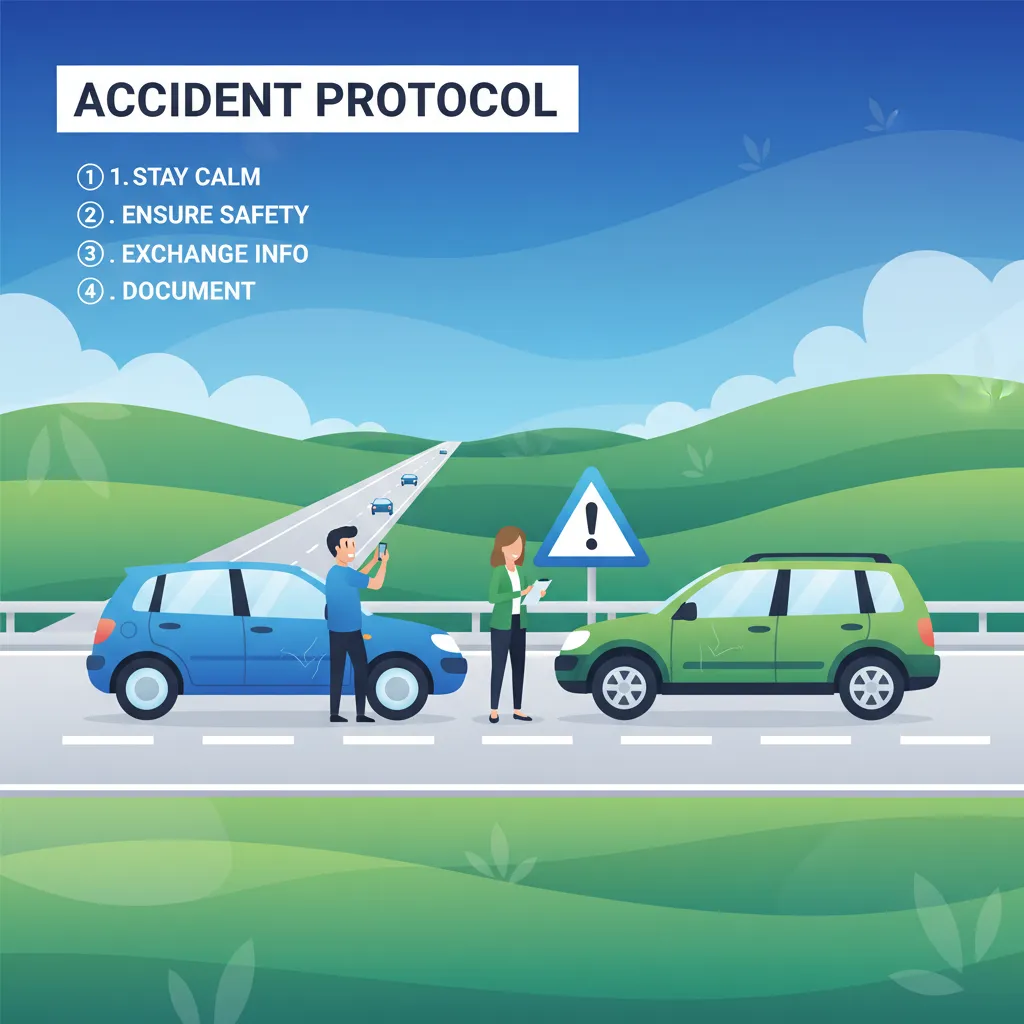
This lesson provides a clear checklist of actions to take in the immediate aftermath of a traffic accident. It prioritizes safety by explaining how to secure the scene and check for injuries before anything else. The content guides learners on the legal requirement to exchange information with other parties involved and the importance of documenting the scene with photos and collecting witness details for insurance and legal purposes.
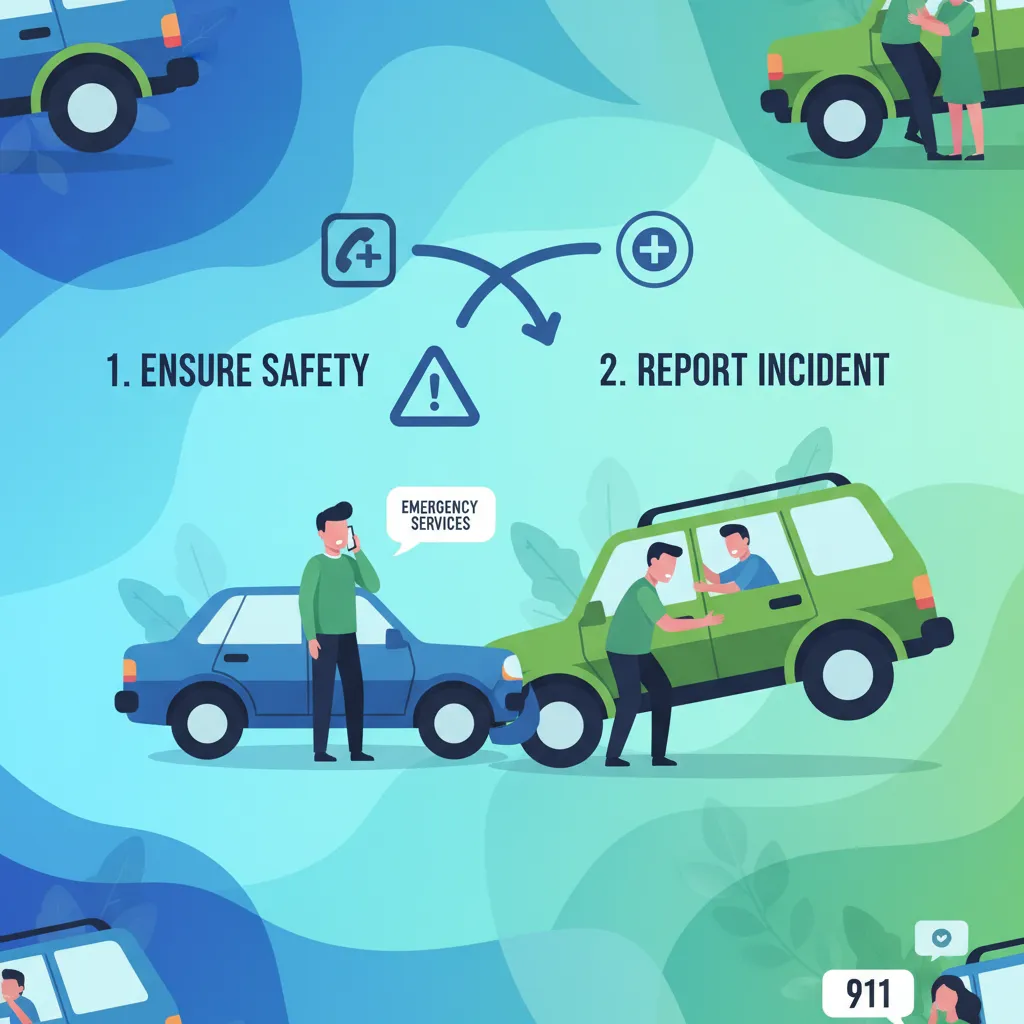
This lesson outlines the comprehensive steps required to safely manage an accident scene, including securing the area and providing immediate aid to any injured parties. Learners will be taught the legal reporting requirements, how to properly notify the DGT, and the specific documentation needed for insurance claims. The module also covers the process for collecting witness statements and interacting effectively with responding police authorities.
This lesson outlines the correct and legally required procedures to follow in the event of a traffic incident or accident. It covers the driver's immediate responsibilities at the scene, including securing the area and contacting emergency services. The content details the process for documenting the incident and formally reporting it to the DGT and insurance companies as required by law.

This lesson examines the legal framework for motorcyclists in Spain, including mandatory registration, compulsory insurance, and equipment standards enforced by the DGT. It covers the legal necessity of a homologated helmet, reflective clothing, and compliance with noise and emission standards. Learners also review documentation checks, vehicle inspections, and penalties for non-compliance.
Learn essential motorcycle emergency braking techniques and hazard avoidance maneuvers. Explore how to adapt these skills for various road and weather conditions, including rain, fog, and night riding in Spain.

This lesson teaches riders how to react effectively in a sudden, critical situation. It explains the technique for applying maximum braking force without locking the wheels, ensuring the shortest possible stopping distance while maintaining stability. The content also covers how to perform a swift and controlled swerve to avoid an obstacle when stopping is not possible, emphasizing the importance of looking where you want to go.

This lesson details the protocol for performing an emergency stop, emphasizing full-force application of both front and rear brakes while maintaining optimal rider posture. It covers the importance of visual fixation and the role of ABS in stabilizing the bike under panic conditions. Learners also study the calculation of stopping distances based on speed and road conditions.

This lesson focuses on safe nighttime riding, covering headlight alignment, rear-light visibility, and the use of reflective gear to enhance conspicuity. It explains DGT night riding requirements, including mandatory lighting standards. Topics also include managing glare from oncoming vehicles and mitigating rider fatigue during low-light conditions.

This lesson introduces anticipation techniques that improve a rider’s ability to predict potential hazards before they manifest. It covers scanning ahead, evaluating traffic patterns, and applying DGT risk assessment criteria. Emphasis is placed on developing a defensive riding mindset and maintaining safety margins to reduce accident likelihood.

This lesson presents advanced cornering scenarios common on Spanish roads, such as mountain hairpins and high-speed autovía exits. It outlines specific techniques for descent control, ascent maneuvers, and safely merging into traffic after cornering. Interaction with cyclists and emergency cornering strategies are also covered in accordance with DGT regulations.

This lesson examines the impact of rain, wind, and heat on motorcycle dynamics and rider comfort. It discusses wet road grip, hydroplaning risk, and appropriate speed adaptation to maintain traction. Wind gust compensation techniques are presented, along with methods for managing heat-related tyre pressure changes and rider cooling.
This lesson focuses on strategies for maximizing rider visibility in daylight and nighttime conditions, covering high-visibility apparel, reflective vests, and LED accessories. It delves into rider posture and lane positioning that improve sightlines and reduce collision risk. The content aligns with DGT regulations for illumination levels on motorcycles.

This lesson focuses on adapting braking techniques for wet and slippery roads. Topics include hydroplaning risk, reduced tire friction, and how ABS assists in preventing wheel lock-up. Learners are taught to employ progressive braking, reduce speed, and assess tire tread depth to maintain adequate grip.

This lesson focuses on the specific techniques required for riding in rainy and slippery conditions. It explains how water on the road surface reduces tire grip and significantly increases braking distances. Learners will be taught to reduce speed, use controls smoothly and progressively, and be particularly cautious of painted lines and manhole covers, which become extremely slippery when wet.

This lesson teaches the crucial skill of adapting speed to match prevailing environmental conditions. It explains that the posted speed limit is a maximum for ideal conditions and that riders must slow down significantly in rain, fog, or darkness. The content emphasizes maintaining a larger safety margin to account for reduced visibility and longer stopping distances, ensuring the rider can always stop within the distance they can see clearly.
Find clear answers to common questions learners have about Emergency Situations and Accident Procedures. Learn how the lesson is structured, which driving theory objectives it supports, and how it fits into the overall learning path of units and curriculum progression in Spain. These explanations help you understand key concepts, lesson flow, and exam focused study goals.
The DGT requires you to ensure safety first, assist any injured parties, and notify emergency services (112) if necessary. For minor incidents, exchanging details is sufficient, but reporting is mandatory for serious injury or damage. Always remain at the scene until authorities permit you to leave.
Motorcycle emergency braking requires careful modulation of both front and rear brakes to prevent wheel lock-up. The front brake provides most of the stopping power, but improper use can lead to loss of control. Advanced systems like ABS significantly aid this process, but understanding weight transfer is still crucial.
While not strictly mandated for theory exam purposes, carrying a basic first-aid kit, a high-visibility vest (which should be worn in case of breakdown or accident), and a mobile phone is highly recommended for real-world emergencies in Spain. Check your motorcycle's mandatory equipment requirements.
The absolute priority is the safety of yourself and others. This includes securing the scene if possible to prevent further accidents, checking for injuries, and administering basic first aid if trained. Only then should you consider reporting the incident or exchanging details.
Maintaining a stable, upright riding position is vital during an emergency stop. Avoid leaning forward excessively or tensing up, as this can upset the bike's balance. Focus on smooth, firm application of the brakes while keeping your body aligned with the motorcycle's movement.
Use our powerful search functionality to pinpoint specific Spanish DGT driving theory practice sets. Filter by road sign categories, traffic law topics, or question difficulty to build custom study sessions and reinforce your knowledge precisely where it matters for your official exam.