
This lesson focuses on the specific parts of a highway system, explaining the correct and legal use of carriageways, the emergency-only function of the hard shoulder (arcén), and the role of service roads. Understanding these distinctions is crucial for safe driving on autovías and autopistas and for passing your Spanish driving theory exam for categories B and BE.
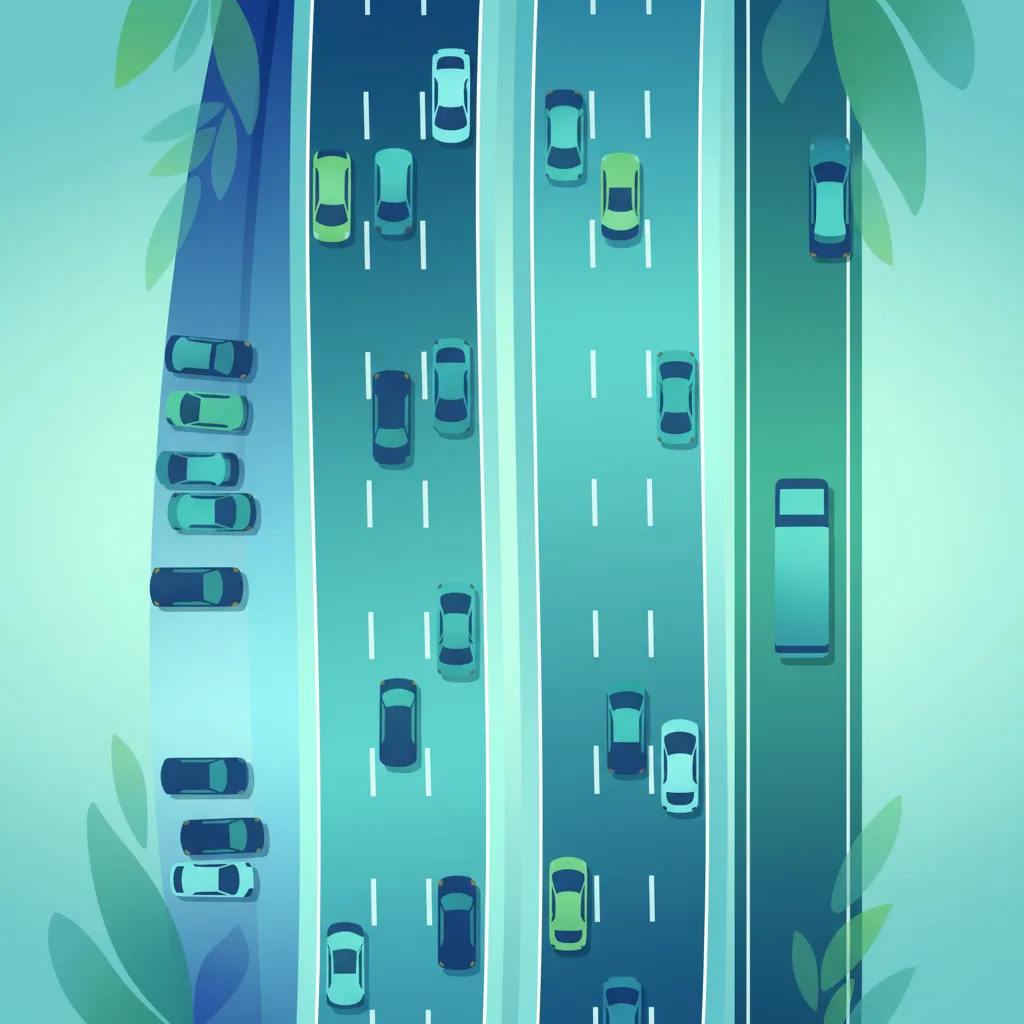
Lesson content overview
Driving safely and legally in Spain, especially on highways and rural roads, requires a clear understanding of the different parts of the roadway and their designated uses. This lesson will define carriageways, hard shoulders (arcenes), and service roads (vías de servicio), explaining the specific DGT regulations for each. Knowing where you can and cannot drive or stop is fundamental for maintaining traffic flow, responding to emergencies, and ensuring overall road safety.
The carriageway (or vía de circulación) is the primary part of any road designed for the normal flow of vehicle traffic. It encompasses the marked lanes where drivers are expected to travel, adhere to speed limits, and perform maneuvers like overtaking. Its main purpose is to provide an organized and efficient route for through-traffic.
Carriageways can vary in their configuration:
When driving on a carriageway, you must:
A common misunderstanding is to mistake an exit lane for a hard shoulder. An exit lane is still part of the carriageway, designated for vehicles leaving the main road, and should not be used for emergency stops or bypassing traffic.
For instance, when driving on an autovía, you will remain within the designated lanes of the carriageway, following the flow of traffic and using the right-hand lane for normal travel, moving to the left lanes only for overtaking or when traffic conditions require it.
The hard shoulder or arcén is a dedicated strip of road running alongside the carriageway, typically marked by a continuous solid line. Its primary purpose is to provide a safe refuge for vehicles in emergencies and for authorized service vehicles. It is not intended for regular driving or non-emergency stopping.
Strict DGT regulations dictate that the hard shoulder can only be used in specific emergency situations:
Using the hard shoulder to bypass traffic, shorten a journey, or for any non-emergency stop (such as for rest, fuel, or to make a phone call) is illegal and extremely dangerous. It carries significant fines and drastically increases the risk of serious accidents, especially rear-end collisions.
If you must stop on the hard shoulder due to an emergency:
Signal your intention to move to the right using your right indicator.
Carefully decelerate and steer your vehicle fully onto the hard shoulder, ensuring it is as far to the right as possible and clear of the carriageway.
Immediately activate your hazard lights (luces de emergencia) to warn approaching traffic.
Put on your reflective safety vest before exiting the vehicle.
Place your warning triangles (señales de preseñalización de peligro) according to regulations: at least 50 metres behind your vehicle (and 50 metres in front if on a single-carriageway road), ensuring they are visible from at least 100 metres.
If possible, all occupants should exit the vehicle on the side farthest from traffic and wait behind the safety barrier, if one exists.
Call for roadside assistance or emergency services.
Hard shoulders can vary: some are paved and relatively wide, particularly on newer autovías, potentially equipped with emergency phones. Others, especially on older or rural roads, might be unpaved, narrow, or less defined, making emergency stops more challenging. Always be aware of the specific road conditions.
A service road (also known as vía de servicio or vía auxiliar) is a road that runs parallel to a main carriageway, such as an autovía or autopista. Its purpose is to provide local access to properties, businesses, or smaller towns without disrupting the high-speed flow of traffic on the main road. This segregation of traffic types improves both safety and efficiency.
Always check road signs carefully when approaching a service road. They will indicate whether it is an access road for all traffic or if its use is restricted to certain vehicle types or purposes.
An example would be a delivery truck using a service road to reach a logistics center located directly off an autovía, avoiding the need to join the fast-moving traffic. Conversely, a private car would use a service road to access a small town situated alongside the motorway.
Lane markings are crucial for guiding drivers and defining the permissible use of different parts of the road. Understanding these painted lines on the road surface is essential for safe and legal driving in Spain.
Mistaking a broken white line for permission to drive onto the hard shoulder is a dangerous error. Broken lines relate to movements within the carriageway unless explicitly forming a dedicated merge lane onto the hard shoulder, which is very rare and specifically signed.
Correct interpretation of these markings is critical for complying with traffic regulations and predicting the behavior of other drivers, reducing the risk of collisions.
Adhering to DGT (Dirección General de Tráfico) regulations regarding carriageways, hard shoulders, and service roads is not just about avoiding fines; it's about ensuring safety for all road users.
| Rule | Applicability | Legal Status | Rationale |
|---|---|---|---|
| Emergency Use of Hard Shoulder Only | On all roads with a hard shoulder | Mandatory (Reglamento General de Circulación) | Prevents obstruction of high-speed traffic, reduces accident risk, ensures emergency access. |
| No Stopping/Parking on Hard Shoulder for Non-Emergencies | On highways, autovías, and any road with an arcén | Mandatory (Reglamento General de Circulación) | Reserves space for genuine emergencies, prevents hazards from stationary vehicles. |
| Yield When Merging from Service Road | At all merge points from service roads | Mandatory (Reglamento General de Circulación) | Allows safe integration of slower traffic onto faster streams, prevents collisions. |
| Obey All Lane Markings | At all times, on all road types | Mandatory (Reglamento General de Circulación) | Guarantees predictable vehicle behavior, reduces side-swipe incidents, defines legal maneuvers. |
| Respect Speed Limits on Service Roads | Wherever service roads are present | Mandatory (Reglamento General de Circulación) | Reflects differing design speeds, enhances safety for local access. |
Violating these rules can lead to significant fines and penalty points on your license, in addition to increasing the likelihood of an accident. The legal framework is designed to create a predictable and safe driving environment.
Ignoring the rules governing carriageways, hard shoulders, and service roads is a frequent cause of accidents and penalties. Being aware of these common mistakes can help you drive more safely and legally.
By consciously avoiding these common errors, drivers contribute significantly to overall road safety and prevent unnecessary legal complications.
The rules for using carriageways, hard shoulders, and service roads remain constant, but how you apply them can vary based on specific driving conditions.
Understanding these conditional variations ensures that even when facing challenging circumstances, you can apply the core rules in a way that maximizes safety and compliance.
The DGT regulations for carriageways, hard shoulders, and service roads are not arbitrary. They are built upon clear principles of safety, efficiency, and legal predictability.
These cause-and-effect relationships demonstrate that correct use of each road component directly translates to a safer, more efficient, and predictable driving experience for everyone.
A thorough understanding of how to correctly use carriageways, hard shoulders, and service roads is paramount for any driver seeking a Spanish driving license. The carriageway is for normal, uninterrupted traffic flow. The hard shoulder (arcén) is an emergency-only zone, vital for safety when breakdowns or accidents occur, and must never be used for convenience or non-emergency stops. Service roads (vías de servicio) facilitate local access, keeping slower traffic separate from high-speed routes, but require careful merging and adherence to specific local speed limits and restrictions.
By respecting lane markings, understanding the legal hierarchy of these road components, and always prioritizing safety, you contribute to a more efficient and accident-free road network. These principles are not just theoretical; they are daily practices that underpin responsible driving in Spain.
This lesson covers the correct use of carriageways, hard shoulders (arcén), and service roads under Spanish DGT regulations. The carriageway handles normal traffic flow, while the hard shoulder is strictly for emergencies only—never for convenience stops or bypassing congestion. Service roads provide local access but require drivers to yield when merging onto faster main carriageways. Lane markings define these zones: a solid white line separates the carriageway from the hard shoulder and must not be crossed except in genuine emergencies. Understanding these distinctions is essential for safe highway driving and passing your Category B/BE theory exam.
A short set of high-value points that capture the most important learning from this lesson.
The carriageway (vía de circulación) is the main road section for normal traffic flow, while the hard shoulder (arcén) is reserved exclusively for emergencies
The hard shoulder may only be used for breakdowns, accidents, authorized emergency services, or to avoid an immediate collision
Service roads (vías de servicio) run parallel to main carriageways and are intended for local access; drivers must yield when merging onto the main road
Solid white lines separate the carriageway from the hard shoulder and may not be crossed except in genuine emergencies
Non-emergency stops on the hard shoulder—such as for rest, phone calls, or checking a map—are prohibited and carry significant penalties
Explore all units and lessons included in this driving theory course.
When making an emergency stop on the hard shoulder: signal right, activate hazard lights, wear your reflective vest, and place warning triangles at least 50 metres behind the vehicle
Broken white lines permit lane changes within the carriageway but do not authorize driving onto the hard shoulder, which is always separated by a solid line
Speed limits on service roads are typically 80 km/h or lower—do not carry over higher speeds from the main carriageway
Yield priority when merging from a service road onto the main carriageway; traffic already on the main road has priority
Exit lanes remain part of the carriageway and must not be used for emergency stops or bypassing traffic
Using the hard shoulder to bypass traffic congestion is illegal and extremely dangerous, risking rear-end collisions with stationary vehicles
Confusing exit lanes with the hard shoulder—exit lanes are still part of the carriageway and subject to normal traffic rules
Stopping on the hard shoulder for non-emergencies such as rest stops, phone calls, or checking directions instead of using designated rest areas
Failing to yield when merging from a service road, causing dangerous side-swipe collisions with main carriageway traffic
Disregarding restricted service roads marked 'Solo Servicio' (Service Vehicles Only) to take a shortcut
Lesson content overview
A short set of high-value points that capture the most important learning from this lesson.
The carriageway (vía de circulación) is the main road section for normal traffic flow, while the hard shoulder (arcén) is reserved exclusively for emergencies
The hard shoulder may only be used for breakdowns, accidents, authorized emergency services, or to avoid an immediate collision
Service roads (vías de servicio) run parallel to main carriageways and are intended for local access; drivers must yield when merging onto the main road
Solid white lines separate the carriageway from the hard shoulder and may not be crossed except in genuine emergencies
Non-emergency stops on the hard shoulder—such as for rest, phone calls, or checking a map—are prohibited and carry significant penalties
Explore all units and lessons included in this driving theory course.
When making an emergency stop on the hard shoulder: signal right, activate hazard lights, wear your reflective vest, and place warning triangles at least 50 metres behind the vehicle
Broken white lines permit lane changes within the carriageway but do not authorize driving onto the hard shoulder, which is always separated by a solid line
Speed limits on service roads are typically 80 km/h or lower—do not carry over higher speeds from the main carriageway
Yield priority when merging from a service road onto the main carriageway; traffic already on the main road has priority
Exit lanes remain part of the carriageway and must not be used for emergency stops or bypassing traffic
Using the hard shoulder to bypass traffic congestion is illegal and extremely dangerous, risking rear-end collisions with stationary vehicles
Confusing exit lanes with the hard shoulder—exit lanes are still part of the carriageway and subject to normal traffic rules
Stopping on the hard shoulder for non-emergencies such as rest stops, phone calls, or checking directions instead of using designated rest areas
Failing to yield when merging from a service road, causing dangerous side-swipe collisions with main carriageway traffic
Disregarding restricted service roads marked 'Solo Servicio' (Service Vehicles Only) to take a shortcut
Explore search topics learners often look for when studying Use of Carriageways, Hard Shoulders, and Service Roads. These topics reflect common questions about road rules, driving situations, safety guidance, and lesson level theory preparation for learners in Spain.
Browse additional driving theory lessons that cover connected traffic rules, road signs, and common driving situations related to this topic. Improve your understanding of how different rules interact across everyday traffic scenarios.
Learn to interpret Spanish road markings, including solid and broken white lines, that define carriageways, hard shoulders, and lanes. Essential knowledge for navigating highways and understanding traffic rules in Spain.

This lesson introduces the visual language of road markings, focusing on the distinction between solid and broken lines and what they permit regarding lane changes and overtaking. It explains the meaning of directional arrows painted on the road surface, which guide drivers into the correct lane for their intended maneuver. Understanding these markings is crucial for maintaining proper lane discipline and navigating complex intersections and multi-lane roads.
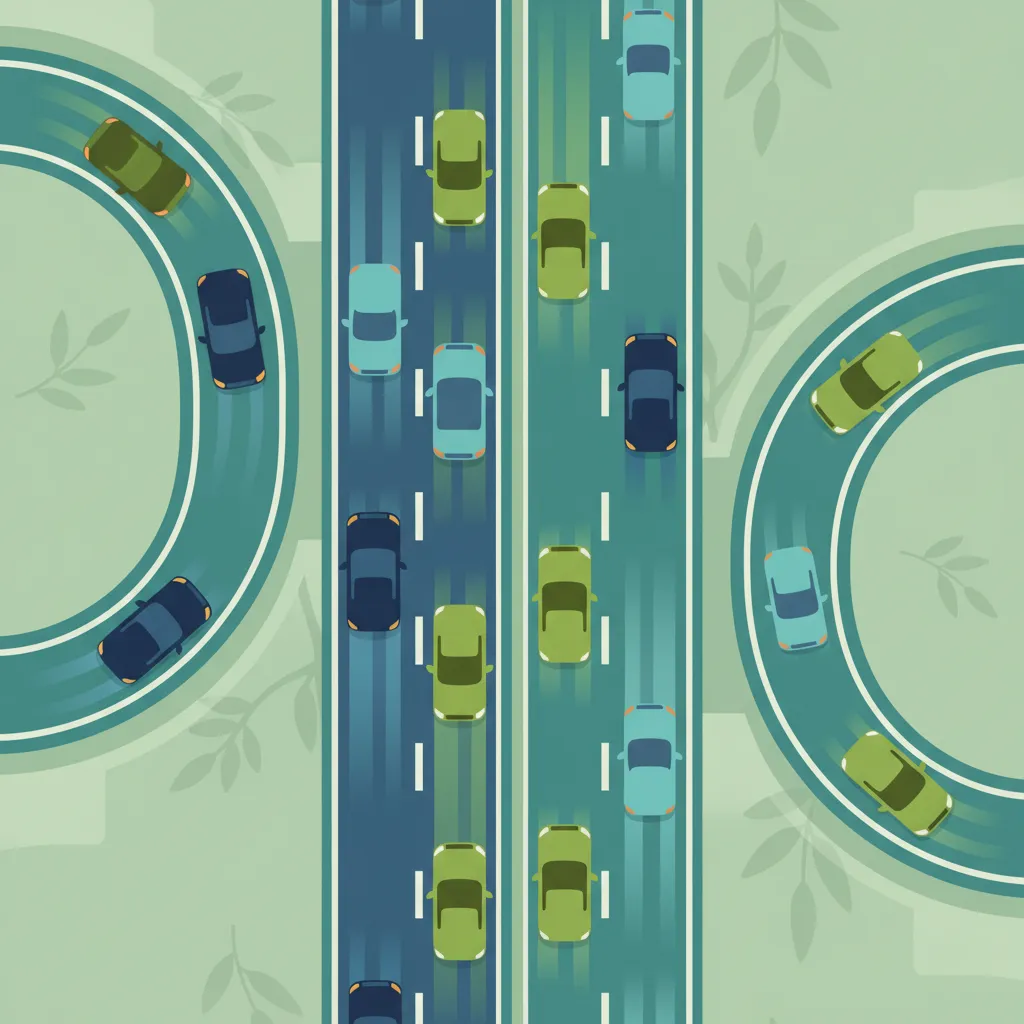
This lesson defines proper lane discipline on highways, emphasizing correct lane positioning and the rule to drive in the right-hand lane except when overtaking. It details safe merging onto main carriageways from an acceleration lane and effective exit strategies using deceleration lanes. Learners will understand DGT merge rules and the importance of signaling lane changes early.
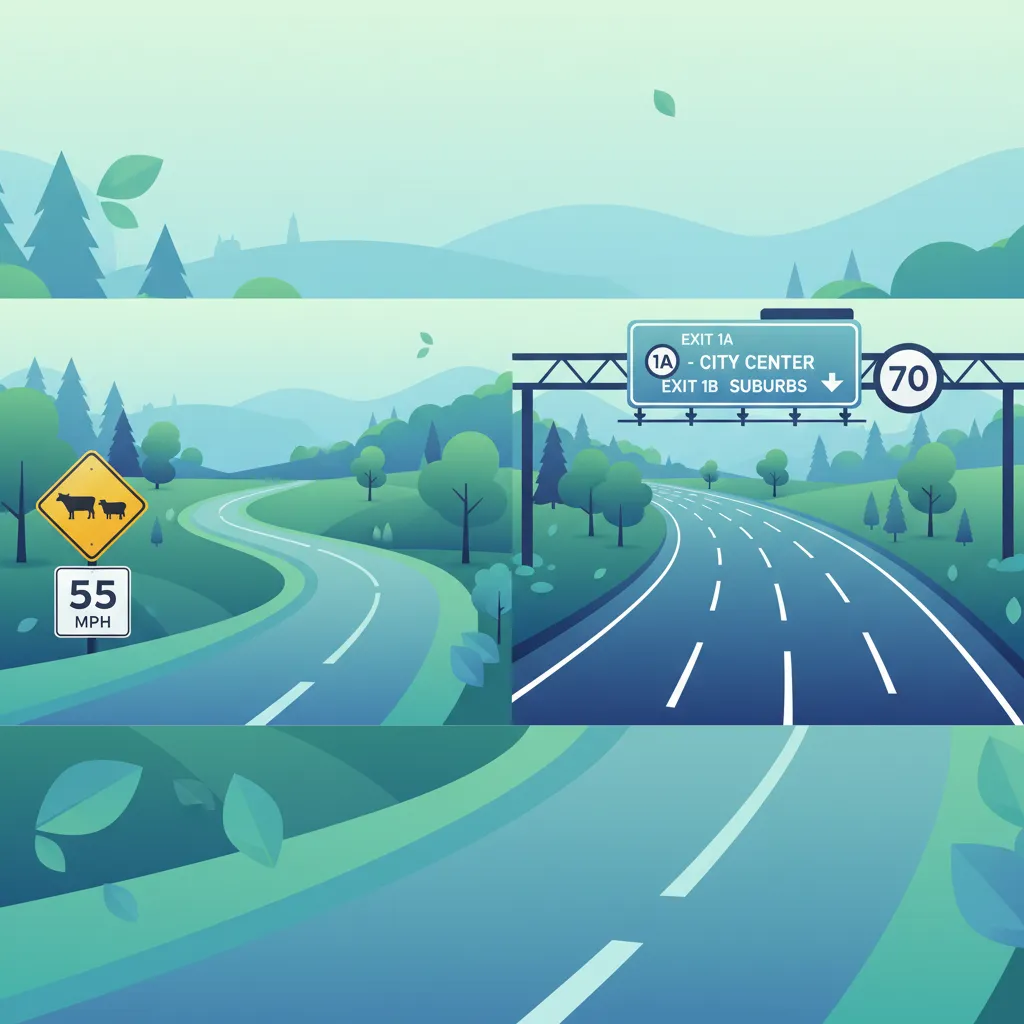
This lesson focuses on the specific signage systems used in rural and highway environments in Spain. It explains how to interpret directional signs, exit numbering, distance markers, and signs for services like fuel and rest areas. Understanding these signs is crucial for effective navigation and safe driving at high speeds.
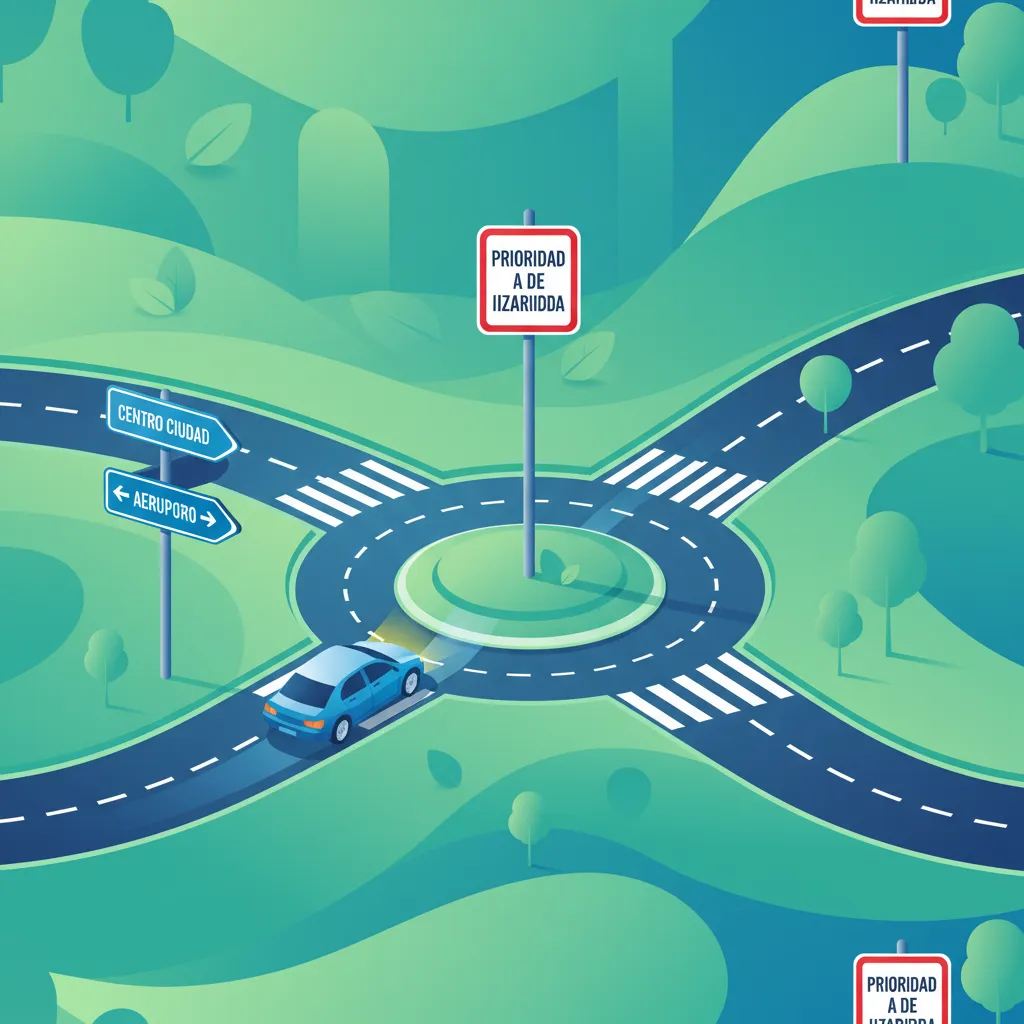
This lesson presents the variety of signs that guide drivers through roundabout navigation. It explains the significance of the roundabout warning symbol, priority signs, lane arrows, and directional signs placed before and within the roundabout. Mastery of roundabout signage ensures that drivers follow legal requirements and maintain safe traffic flow.
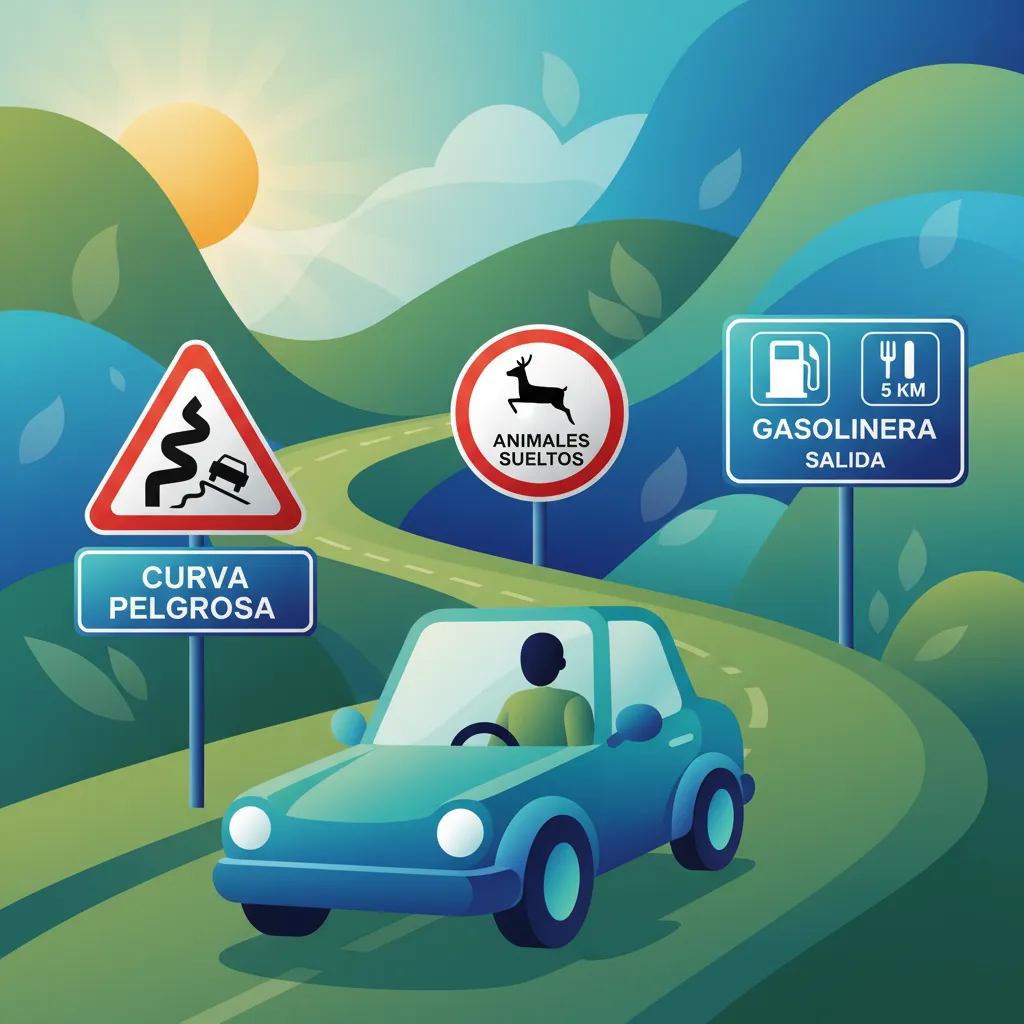
This lesson covers warning and informational signs, which are crucial for anticipating road conditions. It explains how triangular warning signs alert riders to upcoming hazards like sharp curves, slippery surfaces, or pedestrian crossings. The content also describes rectangular informational signs that provide directions, distances, and other useful guidance, helping riders to plan their route and adjust their driving in advance.
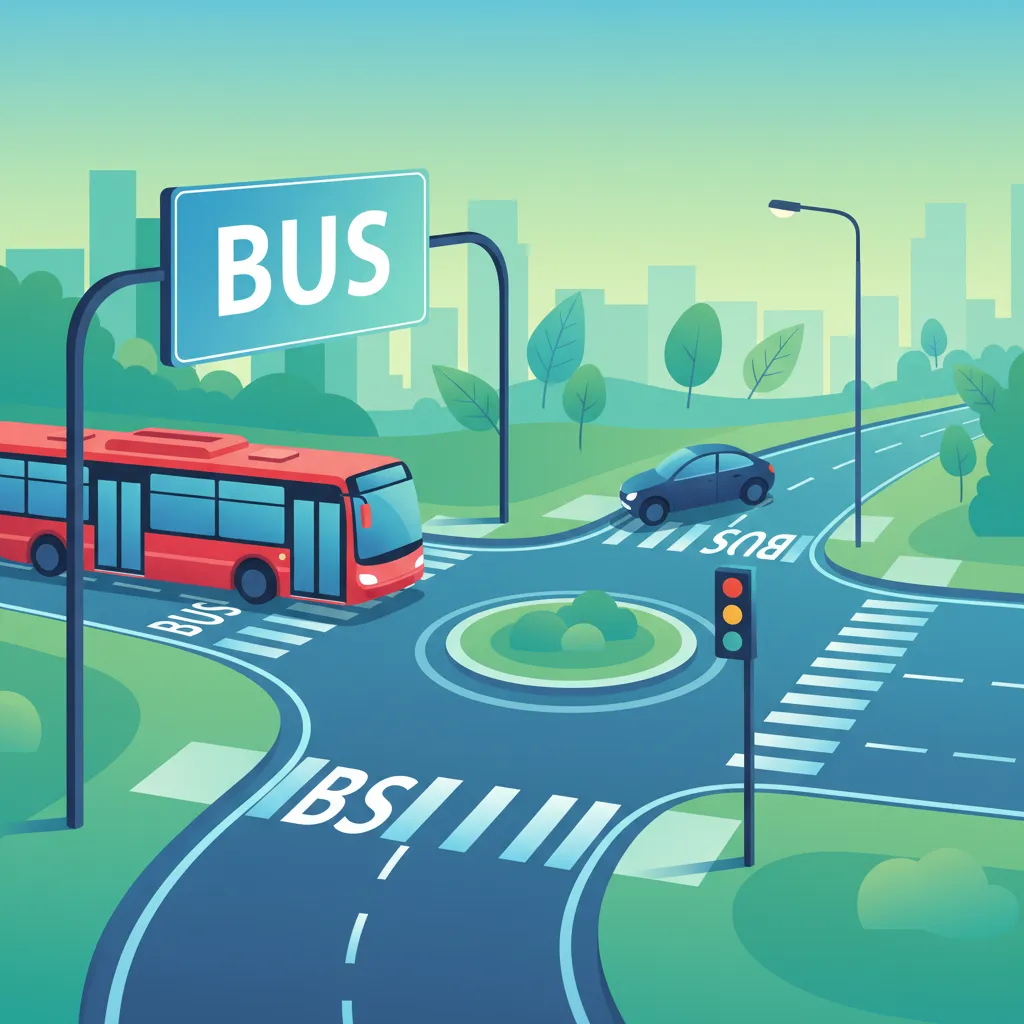
This lesson explores the regulations for dedicated bus lanes in urban environments, detailing the correct interpretation of associated lane markings and traffic signage. Learners will understand the specified times of operation, rules for sharing lanes with other vehicles, and the legal consequences of unauthorized entry. The module also provides clear guidelines for entering and exiting bus lanes at designated points to maintain traffic flow.
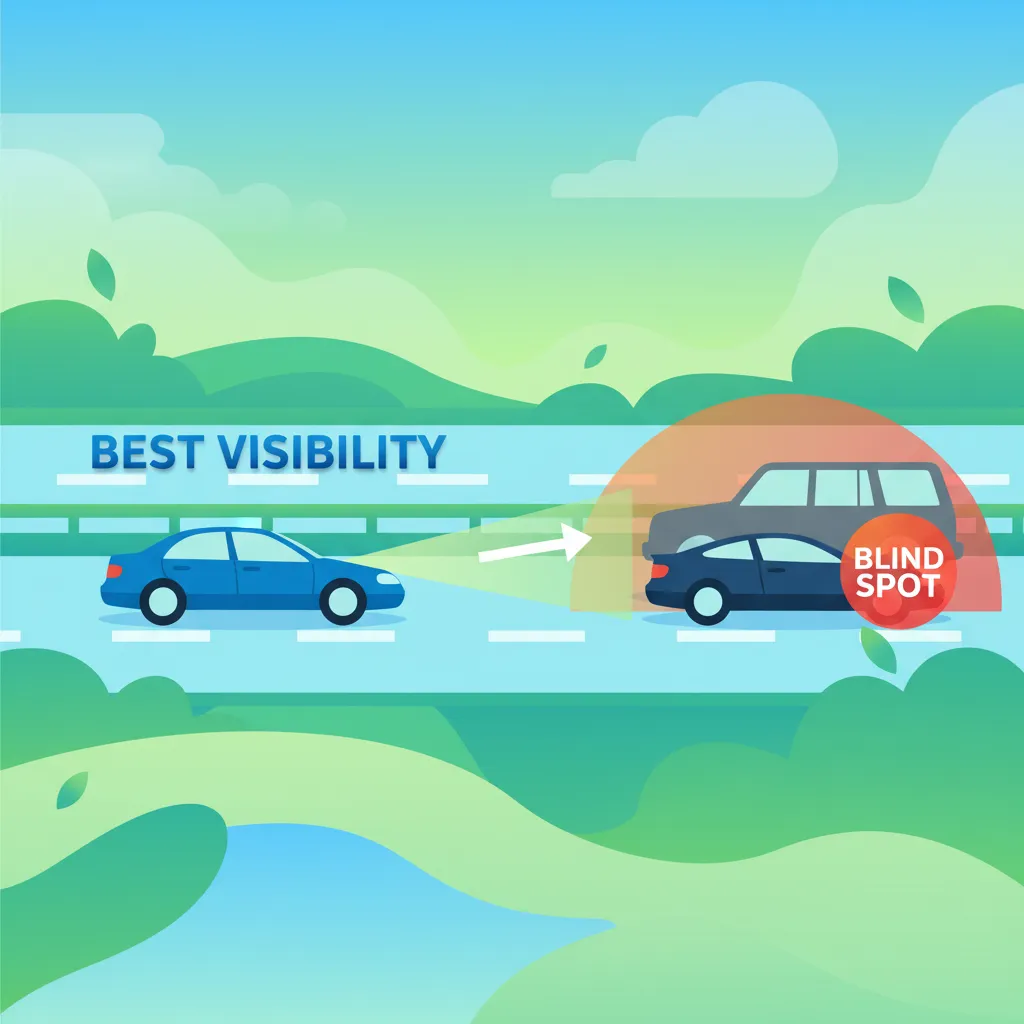
This lesson explores proper lane positioning, emphasizing strategic selection of traffic lanes for optimal visibility. It explains the importance of rider line of sight and peripheral vision in maintaining situational awareness. The content also covers legal aspects of lane splitting and correct usage of road shoulders, abiding by DGT regulations.

This lesson focuses on the comprehensive understanding of traffic light signals and their timing sequences. It defines the meanings of steady red, amber, and green lights, as well as flashing amber and arrow signals. The content also covers pedestrian and cyclist phases, describing the actions drivers must take during each signal change to maintain safety and compliance.

This lesson focuses on the primary components displayed on a vehicle's dashboard and their functional significance. Learners will identify instruments like the speedometer and fuel gauge and understand the meaning of key warning lights, including ABS, oil pressure, and check engine. The lesson explains how to interpret these signals while driving and the immediate actions required upon their illumination.

This lesson focuses on the yielding hierarchy that governs roundabout usage in Spain. It clarifies that vehicles already circulating have priority over those entering and explains the proper lane positioning based on the intended exit. The content includes the correct use of signals for changing lanes and exiting, and safe merging techniques.
Understand the correct and legal use of Spanish highways, focusing on carriageways, emergency-only hard shoulders (arcén), and service roads. Learn DGT regulations for safe stopping, merging, and general road usage for your theory exam.
This lesson defines proper lane discipline on highways, emphasizing correct lane positioning and the rule to drive in the right-hand lane except when overtaking. It details safe merging onto main carriageways from an acceleration lane and effective exit strategies using deceleration lanes. Learners will understand DGT merge rules and the importance of signaling lane changes early.
This lesson introduces the visual language of road markings, focusing on the distinction between solid and broken lines and what they permit regarding lane changes and overtaking. It explains the meaning of directional arrows painted on the road surface, which guide drivers into the correct lane for their intended maneuver. Understanding these markings is crucial for maintaining proper lane discipline and navigating complex intersections and multi-lane roads.
This lesson focuses on the specific signage systems used in rural and highway environments in Spain. It explains how to interpret directional signs, exit numbering, distance markers, and signs for services like fuel and rest areas. Understanding these signs is crucial for effective navigation and safe driving at high speeds.
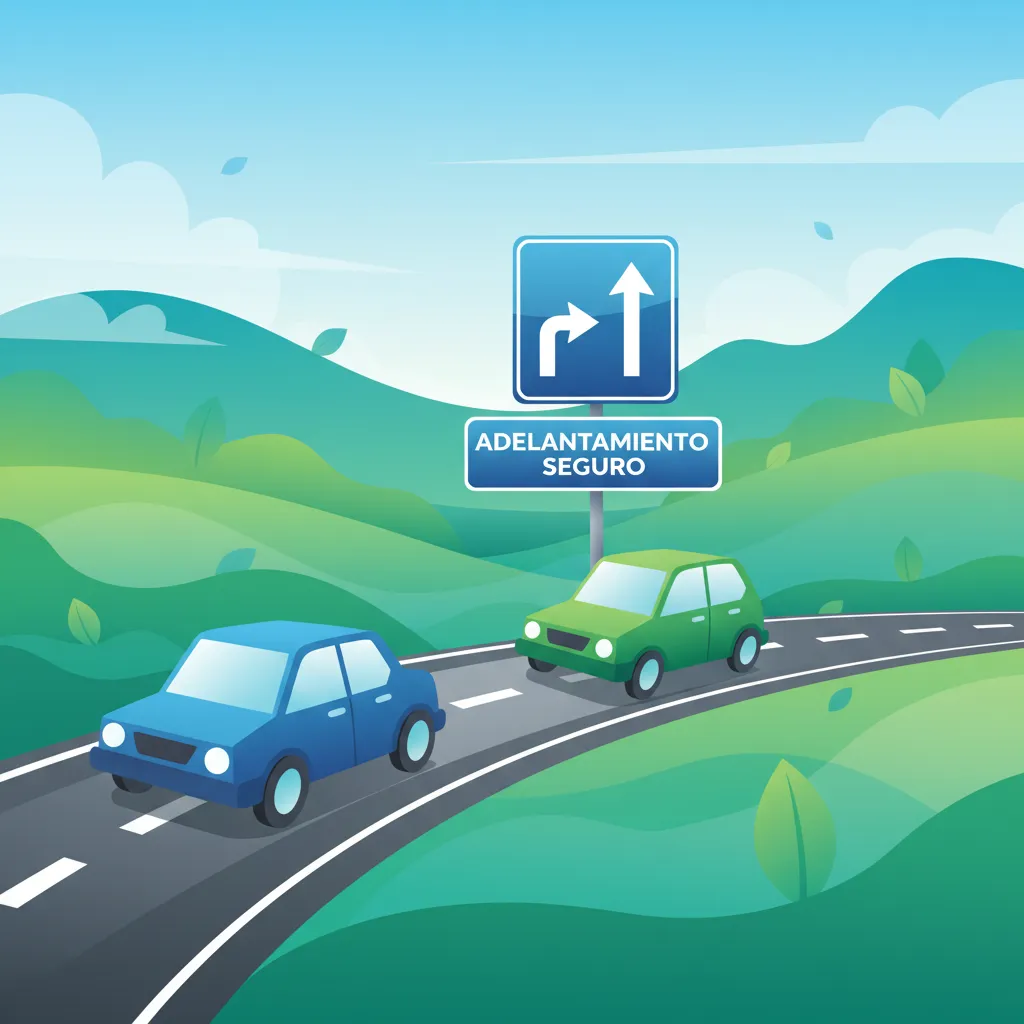
This lesson covers the legal overtaking procedures applicable on different road types, focusing on identifying safe passing zones and executing maneuvers correctly. Learners will be taught how to maintain adequate safety distances before, during, and after overtaking. The content includes DGT regulations for overtaking, appropriate signaling, and visibility checks to ensure safe completion of the maneuver.
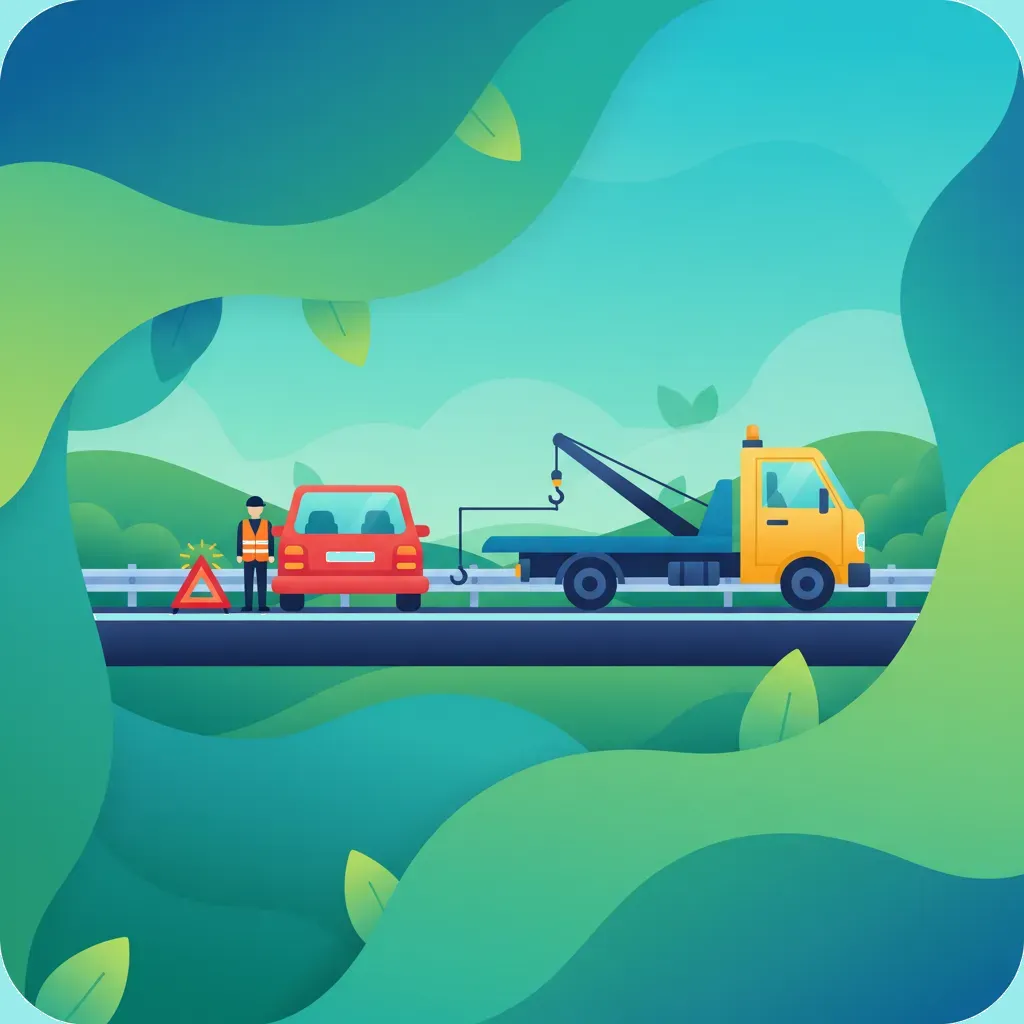
In this lesson, drivers learn the correct actions to take during a vehicle breakdown. It outlines steps for safely stopping on the hard shoulder, activating hazard lights, and deploying warning devices like the triangle or V16 light. The lesson covers DGT procedures for roadside emergencies, including wearing a high-visibility vest and contacting assistance safely.
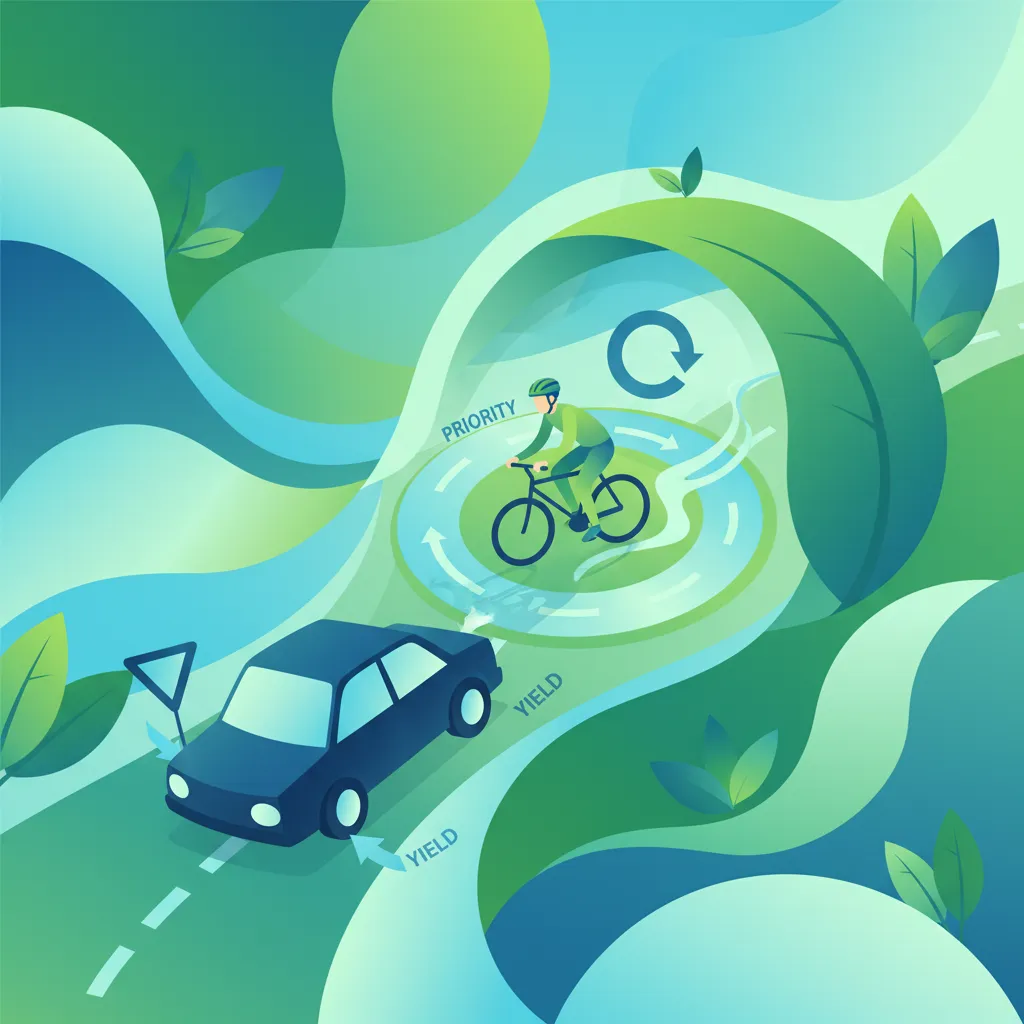
This lesson clarifies the primary rule for roundabouts: all vehicles entering must yield to traffic already on the circular roadway. It explains how to approach a roundabout, select the appropriate lane based on the intended exit, and merge safely into the flow of traffic. Proper signaling before exiting is also covered, ensuring other drivers can anticipate the rider's movements for a smooth and safe negotiation of the junction.
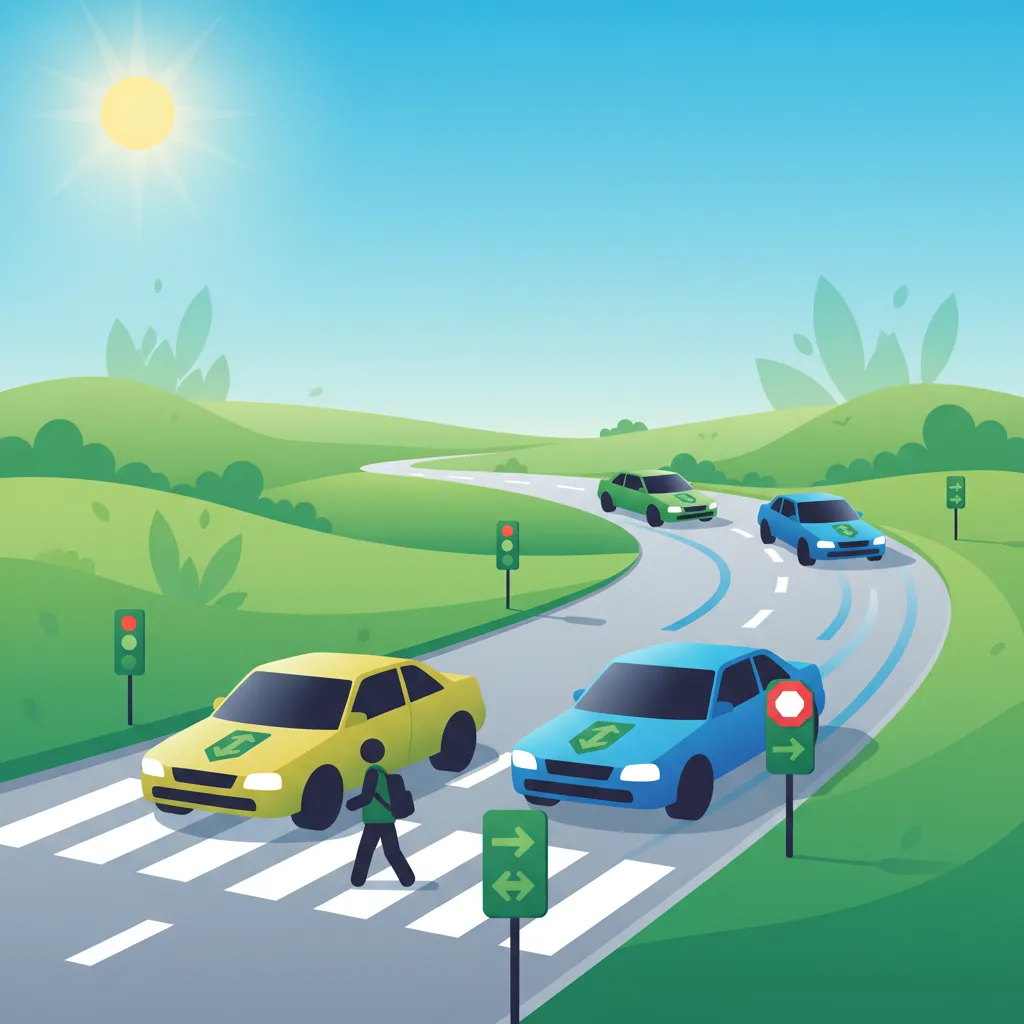
This lesson provides a broad overview of the key traffic regulations in Spain that directly impact professional truck drivers. It details the rules of priority at intersections, the interpretation of different road markings, and the principles of correct lane discipline. Furthermore, it explains the specific speed limits applicable to heavy vehicles and the legal protocols for safe overtaking and signaling.
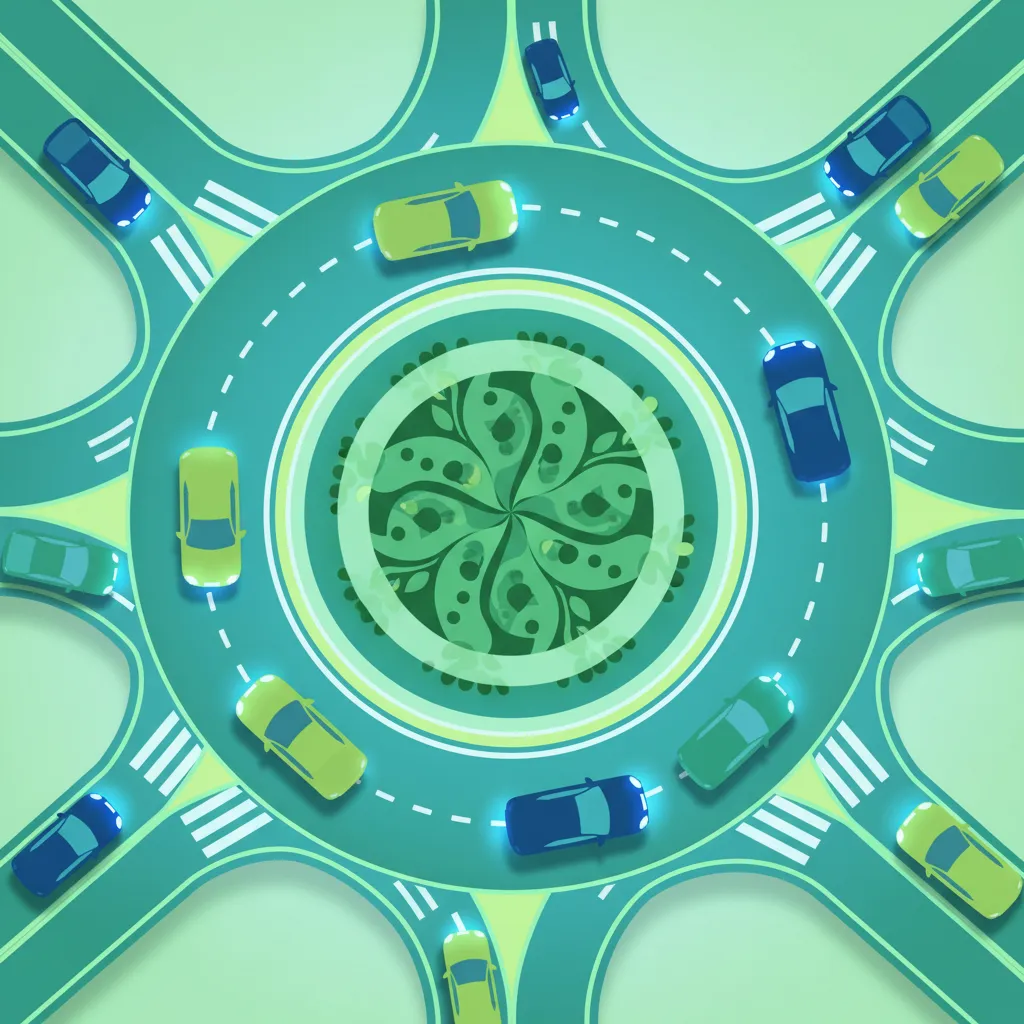
This lesson examines the structural components of a typical Spanish roundabout, describing the central island, entry and circulating lanes, and the placement of yield signs. It outlines how DGT standards dictate the geometric design and entry/exit points to ensure smooth traffic flow. Understanding these design elements enables drivers to anticipate vehicle movements and navigate safely.
This lesson provides specific instructions on how to safely navigate complex junctions such as roundabouts and intersections with a large vehicle. It explains the rules of priority, the correct lane to use based on the intended exit, and the importance of proper vehicle positioning to account for off-tracking. The content also covers clear signaling to communicate intentions to other road users for safe and efficient passage.

This lesson explains the specific legal framework governing truck operations on Spain's high-speed road network. It details the different speed limits for trucks on autovías versus autopistas and the regulations regarding which lanes heavy vehicles are permitted to use. Learners will also understand how to interpret specific highway signage relevant to commercial vehicles and any applicable toll regulations.
Find clear answers to common questions learners have about Use of Carriageways, Hard Shoulders, and Service Roads. Learn how the lesson is structured, which driving theory objectives it supports, and how it fits into the overall learning path of units and curriculum progression in Spain. These explanations help you understand key concepts, lesson flow, and exam focused study goals.
In Spain, the hard shoulder (arcén) is primarily for emergencies. You may stop there ONLY if your vehicle has broken down, you are experiencing a medical emergency, or if directed to do so by a traffic officer. Stopping for rest, a phone call, or any non-emergency reason is strictly prohibited and results in a penalty.
The carriageway is the part of the road intended for normal vehicle traffic. The hard shoulder (arcén) is the paved strip adjacent to the carriageway, typically on the right, reserved for emergency stops or authorized vehicles. It is not part of the normal traffic flow.
No, you cannot drive on the hard shoulder to bypass traffic congestion. The hard shoulder is for emergencies only. Driving on it when not permitted is a serious infraction and can lead to fines and points deductions.
Service roads run parallel to highways (autovías/autopistas) and provide access to properties, businesses, or residential areas without directly entering the main highway. They are also used for slower local traffic and sometimes offer amenities like fuel stations or rest stops, but they are separate from the main carriageway and hard shoulder.
The DGT theory exams frequently include questions testing your knowledge of highway rules, including the proper use of carriageways, hard shoulders, and service roads. Understanding these distinctions is crucial for correctly answering scenarios related to stopping, overtaking, and general road usage on high-speed roads.
Use our powerful search functionality to pinpoint specific Spanish DGT driving theory practice sets. Filter by road sign categories, traffic law topics, or question difficulty to build custom study sessions and reinforce your knowledge precisely where it matters for your official exam.