
Welcome to the essential lesson on Speed Limits, Following Distances, and Flow Management within our Official DGT Theory Course for Spanish Truck Licences. This section builds on your understanding of highway driving by focusing on maintaining safe speeds and appropriate gaps between vehicles, crucial for heavy goods vehicles. Mastering these concepts is vital for both passing your Category C/C1 theory exam and ensuring safe, efficient driving on Spain's autovías and autopistas.
Lesson content overview
Driving a heavy goods vehicle (HGV) like a truck (Category C & C1) requires an advanced understanding of road dynamics, far beyond what is expected of car drivers. This lesson, part of the Official DGT Theory Course for Spanish Truck Licence Category C & C1, delves into the critical relationship between speed, following distance, and proactive traffic flow management. Mastering these concepts is not merely about obeying the law; it is about ensuring your safety, the safety of your cargo, and the safety of all other road users.
Due to their significant mass, trucks possess immense kinetic energy – the energy of motion – which directly impacts their stopping capabilities. A truck's increased kinetic energy means longer braking distances and greater potential for severe damage in a collision compared to lighter vehicles. Consequently, Spanish traffic law (DGT regulations) imposes stricter speed limits and mandates specific safe following distances for heavy vehicles.
By the end of this comprehensive chapter, you will understand how to calculate and maintain safe gaps, adapt your speed to various conditions, and contribute to smooth, efficient traffic flow, significantly reducing collision risk and optimising fuel consumption.
Speed limits are legally prescribed maximum velocities that vehicles may not exceed on specific road categories. For Category C and C1 professional truck drivers in Spain, these limits are distinct from those for passenger cars and are designed to account for the truck's size, weight, and inherent stopping limitations. Adhering to these limits is paramount for safety and legal compliance.
On Spanish Autopistas (motorways) and Autovías (dual carriageways), the general speed limit for most trucks (vehicles over 3.5 tonnes Gross Vehicle Weight - GVW) is 90 km/h. However, a crucial distinction applies: if the truck is carrying a load exceeding 5 tonnes, the maximum speed limit is further reduced to 80 km/h. It is vital for drivers to be aware of their vehicle's GVW and load at all times to correctly apply these regulations. These limits apply uniformly across the network unless variable speed signs indicate a lower temporary maximum.
When operating on Carreteras (conventional highways) outside urban areas, the speed limit for trucks (Category C & C1) is typically 80 km/h. This limit is further reduced to 70 km/h in designated mountainous sections, which are often clearly signposted. These roads typically have only one lane per direction and may feature oncoming traffic, necessitating lower speeds for safety. Always be vigilant for specific signage that may lower these limits further.
Within urban areas, towns, and cities, the general speed limit for all vehicles, including trucks, is 50 km/h unless otherwise signposted. However, many urban roads now feature lower limits of 30 km/h or even 20 km/h in residential zones or areas with heavy pedestrian traffic. Truck drivers must exercise extreme caution in urban environments, not only due to lower speed limits but also because of increased interactions with vulnerable road users such as pedestrians and cyclists.
Exceeding the speed limit in a heavy goods vehicle can lead to severe penalties under DGT regulations. Violations typically result in substantial fines and the deduction of penalty points from your driving licence. The severity of the penalty increases with the degree of speeding. For example, minor infringements might incur a fine of €200 and 3 points, while very serious infringements can lead to fines of €500 or more and 6 points, potentially even licence suspension.
Understanding and strictly adhering to these limits is non-negotiable for professional drivers. It directly impacts road safety, compliance with Spanish traffic law, and the professional standing of the driver.
A safe following distance, also known as a safe gap or headway, is the longitudinal space a driver maintains between their vehicle and the vehicle directly in front of them. This distance is crucial for allowing enough time to perceive a hazard, react, and bring the truck to a complete stop without collision. Unlike cars, trucks require significantly more space due to their mass and longer braking distances.
For Category C and C1 trucks on dry roads with good visibility, the minimum recommended following distance is the two-second rule. This rule dictates that you should pick a fixed point on the road (e.g., a sign or a bridge) and count "one thousand one, one thousand two" after the vehicle in front passes that point. If your front bumper reaches that same point before you finish counting, you are following too closely.
This two-second interval is considered the absolute minimum to account for an average driver's reaction time and the initial braking distance under ideal conditions. At a speed of 90 km/h, a two-second gap translates to approximately 50 metres. At 70 km/h, it is roughly 38 metres. These distances are the bare minimum and do not account for adverse conditions or heavier loads.
The two-second rule is a baseline; professional truck drivers must always increase their following distance when conditions are anything less than ideal. The DGT recommends increasing the gap to at least four seconds in adverse weather conditions or situations that reduce visibility or road adhesion.
Factors requiring an increased following distance:
Stopping a vehicle involves three distinct phases, each contributing to the total stopping distance:
The combination of perception and reaction time, often collectively referred to as reaction time, is generally estimated at around 1.5 seconds for an alert, professional driver under ideal conditions. However, this can be significantly extended by factors such as fatigue, distraction, alcohol, drugs, or even adverse weather conditions reducing visibility. At 90 km/h, a 1.5-second reaction time means your truck will travel approximately 38 metres before your brakes even begin to engage. This distance is added to the actual braking distance.
The sheer mass and speed of a truck dramatically influence its stopping capability. Understanding the physics behind stopping a heavy vehicle is crucial for safe driving.
Kinetic energy (KE) is the energy an object possesses due to its motion. It is calculated by the formula ( KE = \frac m v^2 ), where 'm' is the mass and 'v' is the velocity (speed). This formula reveals a critical principle for truck drivers:
When you apply the brakes, the kinetic energy must be converted into other forms of energy (mostly heat and sound) through friction. The distance required for this conversion is the braking distance. Therefore, greater kinetic energy directly translates to a longer braking distance. For example, a fully loaded 12-ton truck traveling at 90 km/h might need around 112 metres to brake to a complete stop on dry pavement, in addition to the perception and reaction distances.
The weight and distribution of cargo, known as load distribution, significantly influence a truck's braking performance and overall handling. A fully loaded truck (operating at or near its Maximum Permissible GVW) will always have a longer braking distance than an empty or lightly loaded one, even with the same braking system efficiency.
Furthermore, improper load distribution can negatively affect stability during braking. An overloaded rear axle can reduce front-wheel adhesion, potentially leading to instability, while an unevenly distributed load can cause dangerous weight shifts during hard braking or cornering. Professional drivers must always ensure their cargo is properly secured and distributed to maintain the vehicle's centre of gravity within safe limits, thus optimising braking efficiency and stability. When operating at maximum permissible load, it is a mandatory safety measure to add an extra safety margin, for instance, by increasing the following distance by at least one second.
Modern heavy goods vehicles are equipped with sophisticated air brake systems, which use compressed air to actuate the brakes. These systems are powerful and reliable but operate differently from the hydraulic systems found in most cars. Key aspects for drivers include:
Beyond simply obeying speed limits and maintaining a safe gap, professional truck drivers are expected to practice flow management. This involves adapting your speed and spacing to maintain a consistent traffic flow, which reduces congestion, improves safety, and enhances fuel efficiency.
Effective flow management means avoiding sudden acceleration and braking. Instead, drivers should anticipate changes in traffic ahead and gently adjust their speed to match the prevailing flow. This "pace-keeping" principle helps prevent the stop-and-go waves that often lead to congestion and rear-end collisions. By driving smoothly and maintaining a consistent speed relative to the traffic density, you reduce wear and tear on your vehicle's brakes and tyres, while also lowering fuel consumption.
Cruise control is an electronic system that maintains a set speed, helping drivers avoid unintentional speeding and contribute to smooth flow. For trucks, cruise control is permitted and often recommended on clear motorways (autopistas/autovías), especially during long journeys, as it can reduce driver fatigue and improve fuel economy.
However, cruise control should never be used in congested traffic, adverse weather conditions (rain, fog, snow), on winding roads, or on steep downgrades where engine braking and manual gear selection are necessary to control speed. In such situations, manual speed adjustment is critical to respond safely to changing circumstances.
Maintaining good lane discipline is a key aspect of flow management. Heavy vehicles generally should use the rightmost available lane, only moving to the left lane(s) for overtaking. When overtaking, ensure you have sufficient visibility and space, and complete the manoeuvre efficiently but safely, without exceeding speed limits. Never overtake on the right, unless traffic is moving very slowly in the left lane(s) and the right lane is specifically designated for through traffic or overtaking in specific situations, which is rare and highly regulated in Spain (STAR 403 generally prohibits it).
After overtaking, return to the rightmost lane as soon as it is safe to do so, allowing faster traffic to pass unhindered. This prevents blocking lanes and disrupting the overall traffic flow.
Truck drivers must constantly assess and adapt their driving strategy based on environmental and situational factors. Adverse weather, reduced light, and specific road conditions demand significant adjustments to speed and following distances.
Weather conditions like rain, fog, snow, and ice drastically reduce road adhesion (the friction coefficient, μ) and visibility. This directly impacts braking distance and perception time. As a rule of thumb:
Night driving presents unique challenges due to reduced visibility. Even with high-beam headlights, the range of vision is limited compared to daylight. This effectively increases your perception and reaction distances. Therefore, it is advisable to:
Driving a heavy truck on steep downhill gradients requires careful speed management. Gravity will naturally accelerate the vehicle, and relying solely on the service brakes can lead to dangerous brake fade (overheating and reduced effectiveness).
The correct technique involves:
Anticipate the downgrade and select an appropriate lower gear before beginning the descent.
Use engine braking to control your speed, ensuring it remains within legal limits and a safe margin.
Apply the service brakes in short, firm bursts to further reduce speed if needed, then release to allow cooling.
Maintain a significantly increased following distance, as braking effectiveness can be reduced on gradients.
Compliance with DGT regulations is fundamental for all professional drivers in Spain. These regulations are designed to enhance safety, protect infrastructure, and ensure efficient traffic flow.
The core regulations governing speed and following distances for heavy vehicles are primarily outlined in DGT Order 2/1999 (for speed limits) and DGT circular 2018/03 (for following distances), among other articles in the Spanish Traffic Code. These documents define the specific limits and requirements detailed throughout this lesson. Drivers are legally obliged to:
Many violations stem from common misunderstandings or negligence. To avoid penalties and, more importantly, accidents:
Understanding and applying the principles of speed limits, following distances, and flow management are fundamental skills for any professional Category C or C1 truck driver in Spain. These elements are interconnected and directly impact road safety, operational efficiency, and legal compliance.
By diligently applying these principles, you will not only fulfil your legal obligations but also significantly enhance your professional driving competence, safety, and efficiency on Spanish roads.
This lesson covers the critical relationship between speed limits, safe following distances, and traffic flow management for Category C and C1 truck drivers in Spain, including specific legal limits on autovías, autopistas, convencional carreteras, and urban roads. It explains the physics of stopping heavy vehicles, emphasising that kinetic energy increases with the square of speed and that trucks require longer stopping distances due to their mass, which must be factored into the two-second minimum following distance rule. The content also addresses adapting speed and spacing for adverse weather, night driving, heavy loads, and steep gradients, while outlining the dangers of improper cruise control use and insufficient air brake maintenance. Understanding and applying these principles ensures both DGT exam success and safe, compliant driving on Spanish roads.
A short set of high-value points that capture the most important learning from this lesson.
Speed limits for trucks on Spanish highways are stricter than for cars: 90 km/h on autopistas/autovías, reduced to 80 km/h when carrying loads over 5 tonnes, and 80 km/h on conventional carreteras with further reductions in mountainous sections.
The two-second rule is the absolute minimum following distance for trucks in ideal conditions, translating to approximately 50 metres at 90 km/h and 38 metres at 70 km/h, and must be increased to four seconds or more in adverse weather.
A truck's kinetic energy increases with the square of its speed, meaning doubling speed quadruples stopping distance, making speed management critical for heavy vehicles.
Perception, reaction, and braking distances together form the total stopping distance; at 90 km/h, reaction time alone covers approximately 38 metres before brakes engage.
Effective flow management requires anticipatory driving, smooth speed adjustments, proper lane discipline, and responsible cruise control use to reduce congestion and improve fuel efficiency.
Explore all units and lessons included in this driving theory course.
Trucks exceeding 3.5 tonnes GVW on autopistas/autovías: 90 km/h general limit, 80 km/h if load exceeds 5 tonnes; on conventional carreteras: 80 km/h standard, 70 km/h in mountainous sections.
Always increase following distance to at least four seconds when rain, fog, snow, ice, heavy loads, towing a trailer, night driving, or poor visibility are present.
Stopping distance equals perception distance plus reaction distance plus braking distance; reaction time alone at highway speeds spans roughly 38 metres.
On steep downgrades, use engine braking by selecting a lower gear before descending, and supplement with short, firm brake applications followed by releases to prevent brake fade.
Cruise control should only be used on clear motorways; deactivate it in congestion, adverse weather, winding roads, or steep descents.
Assuming a fixed following distance in metres is safe without adjusting for current speed; distances must be calculated using the time-based rule to account for varying speeds.
Failing to recalculate safe following distance when load weight changes; a fully loaded truck requires significantly longer braking distance than an empty one.
Using cruise control inappropriately in poor conditions or heavy traffic, preventing the immediate speed adjustments needed for safety.
Relying solely on service brakes to control speed on steep downgrades, leading to dangerous brake fade and potential loss of braking effectiveness.
Neglecting to check brake lag and air pressure in air brake systems before driving, which can add critical fractions of a second to overall stopping distance.
Lesson content overview
A short set of high-value points that capture the most important learning from this lesson.
Speed limits for trucks on Spanish highways are stricter than for cars: 90 km/h on autopistas/autovías, reduced to 80 km/h when carrying loads over 5 tonnes, and 80 km/h on conventional carreteras with further reductions in mountainous sections.
The two-second rule is the absolute minimum following distance for trucks in ideal conditions, translating to approximately 50 metres at 90 km/h and 38 metres at 70 km/h, and must be increased to four seconds or more in adverse weather.
A truck's kinetic energy increases with the square of its speed, meaning doubling speed quadruples stopping distance, making speed management critical for heavy vehicles.
Perception, reaction, and braking distances together form the total stopping distance; at 90 km/h, reaction time alone covers approximately 38 metres before brakes engage.
Effective flow management requires anticipatory driving, smooth speed adjustments, proper lane discipline, and responsible cruise control use to reduce congestion and improve fuel efficiency.
Explore all units and lessons included in this driving theory course.
Trucks exceeding 3.5 tonnes GVW on autopistas/autovías: 90 km/h general limit, 80 km/h if load exceeds 5 tonnes; on conventional carreteras: 80 km/h standard, 70 km/h in mountainous sections.
Always increase following distance to at least four seconds when rain, fog, snow, ice, heavy loads, towing a trailer, night driving, or poor visibility are present.
Stopping distance equals perception distance plus reaction distance plus braking distance; reaction time alone at highway speeds spans roughly 38 metres.
On steep downgrades, use engine braking by selecting a lower gear before descending, and supplement with short, firm brake applications followed by releases to prevent brake fade.
Cruise control should only be used on clear motorways; deactivate it in congestion, adverse weather, winding roads, or steep descents.
Assuming a fixed following distance in metres is safe without adjusting for current speed; distances must be calculated using the time-based rule to account for varying speeds.
Failing to recalculate safe following distance when load weight changes; a fully loaded truck requires significantly longer braking distance than an empty one.
Using cruise control inappropriately in poor conditions or heavy traffic, preventing the immediate speed adjustments needed for safety.
Relying solely on service brakes to control speed on steep downgrades, leading to dangerous brake fade and potential loss of braking effectiveness.
Neglecting to check brake lag and air pressure in air brake systems before driving, which can add critical fractions of a second to overall stopping distance.
Explore search topics learners often look for when studying Speed Limits, Following Distances, and Flow Management. These topics reflect common questions about road rules, driving situations, safety guidance, and lesson level theory preparation for learners in Spain.
Browse additional driving theory lessons that cover connected traffic rules, road signs, and common driving situations related to this topic. Improve your understanding of how different rules interact across everyday traffic scenarios.
Explore advanced DGT regulations and calculations for truck speed limits and safe following distances. Learn to adapt to complex scenarios including varying loads, adverse weather, and specific road types on Spanish Autovías and Autopistas.
This lesson explains the specific legal framework governing truck operations on Spain's high-speed road network. It details the different speed limits for trucks on autovías versus autopistas and the regulations regarding which lanes heavy vehicles are permitted to use. Learners will also understand how to interpret specific highway signage relevant to commercial vehicles and any applicable toll regulations.
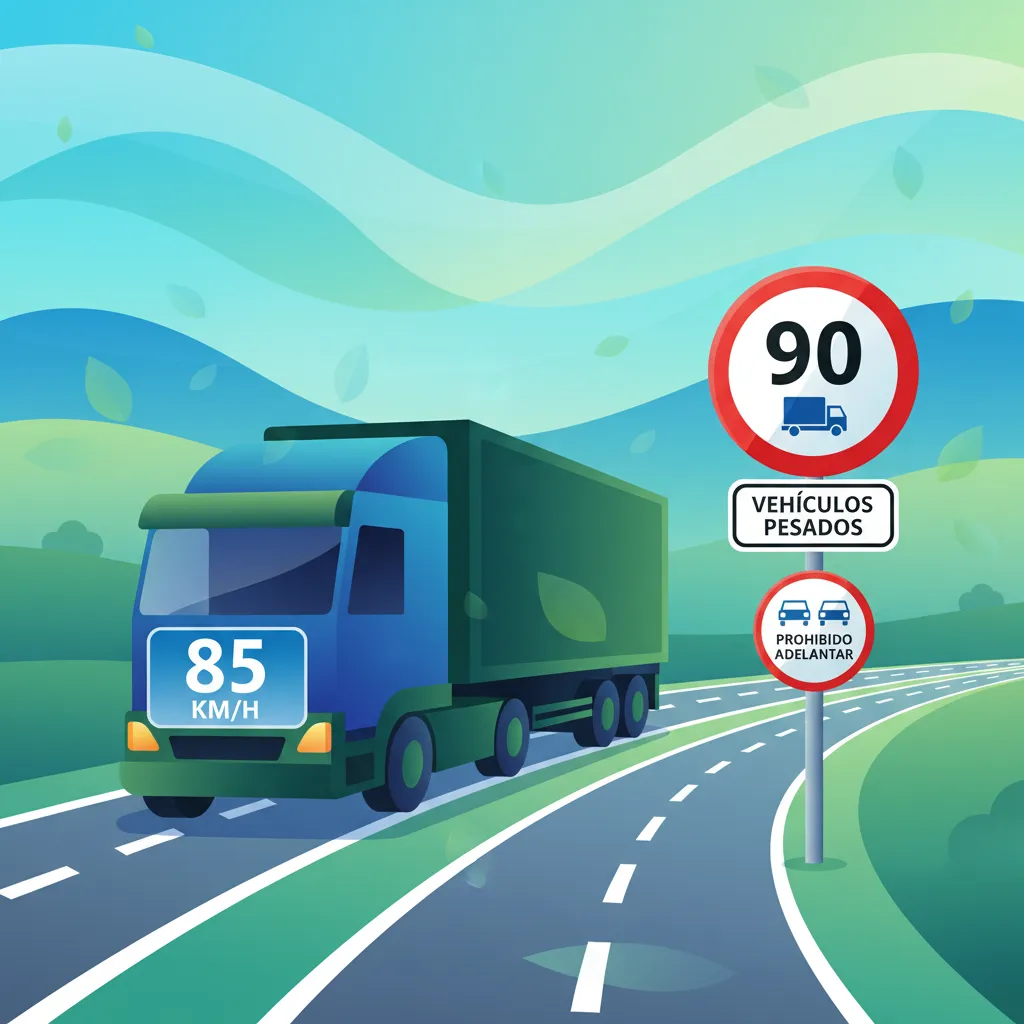
This lesson details the specific legal speed limits that apply to heavy passenger vehicles on Spanish highways, including variable speed zones that adjust based on traffic and weather conditions. Learners will understand the methods for speed monitoring, the function of speed control devices, and the legal consequences of non-compliance. The content also provides guidance on calculating a safe operating speed based on vehicle load and road conditions.
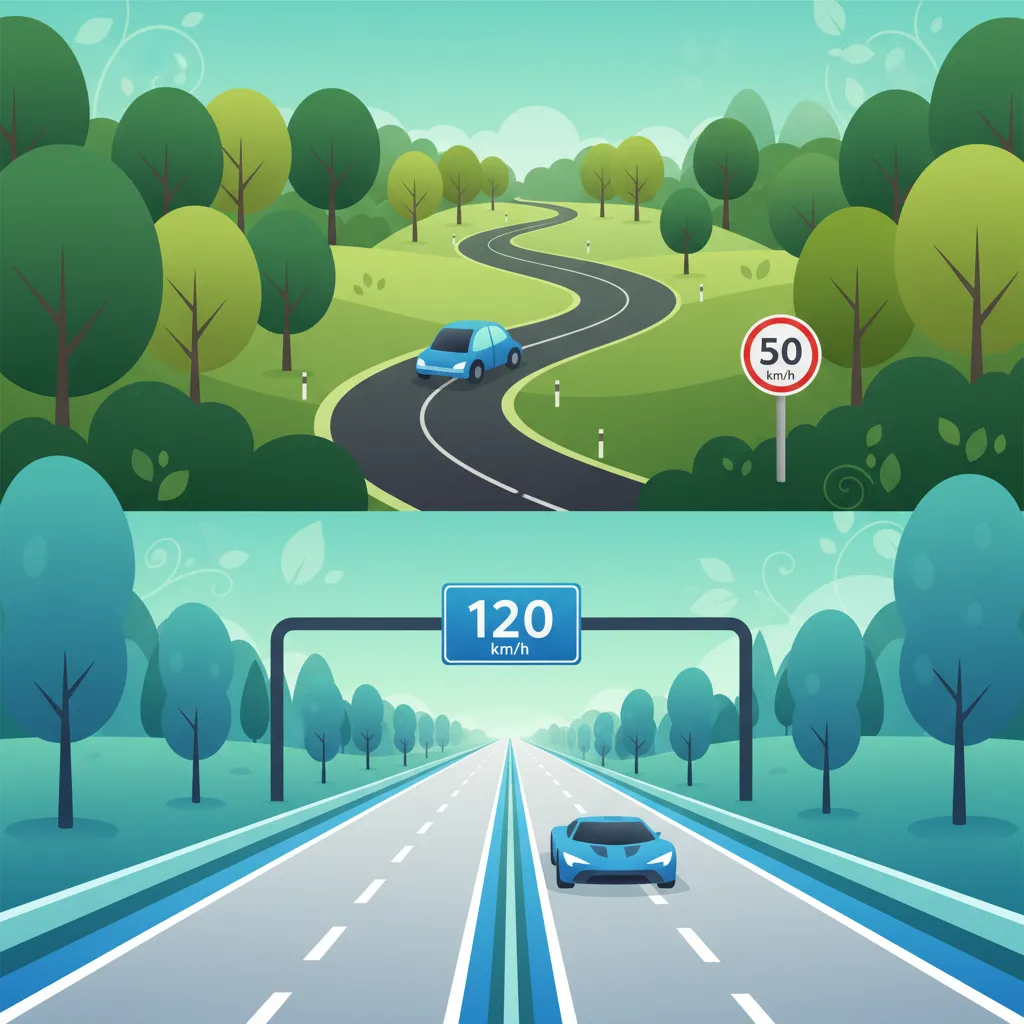
In this lesson, the different speed limits applied to rural roads and autovías (highways) are examined. Learners will understand the classification of road types and the DGT-mandated speed limits for each, including how to interpret variable speed limit signs. The lesson also includes techniques for maintaining speed control and adapting to road conditions and traffic flow.
This lesson provides a broad overview of the key traffic regulations in Spain that directly impact professional truck drivers. It details the rules of priority at intersections, the interpretation of different road markings, and the principles of correct lane discipline. Furthermore, it explains the specific speed limits applicable to heavy vehicles and the legal protocols for safe overtaking and signaling.
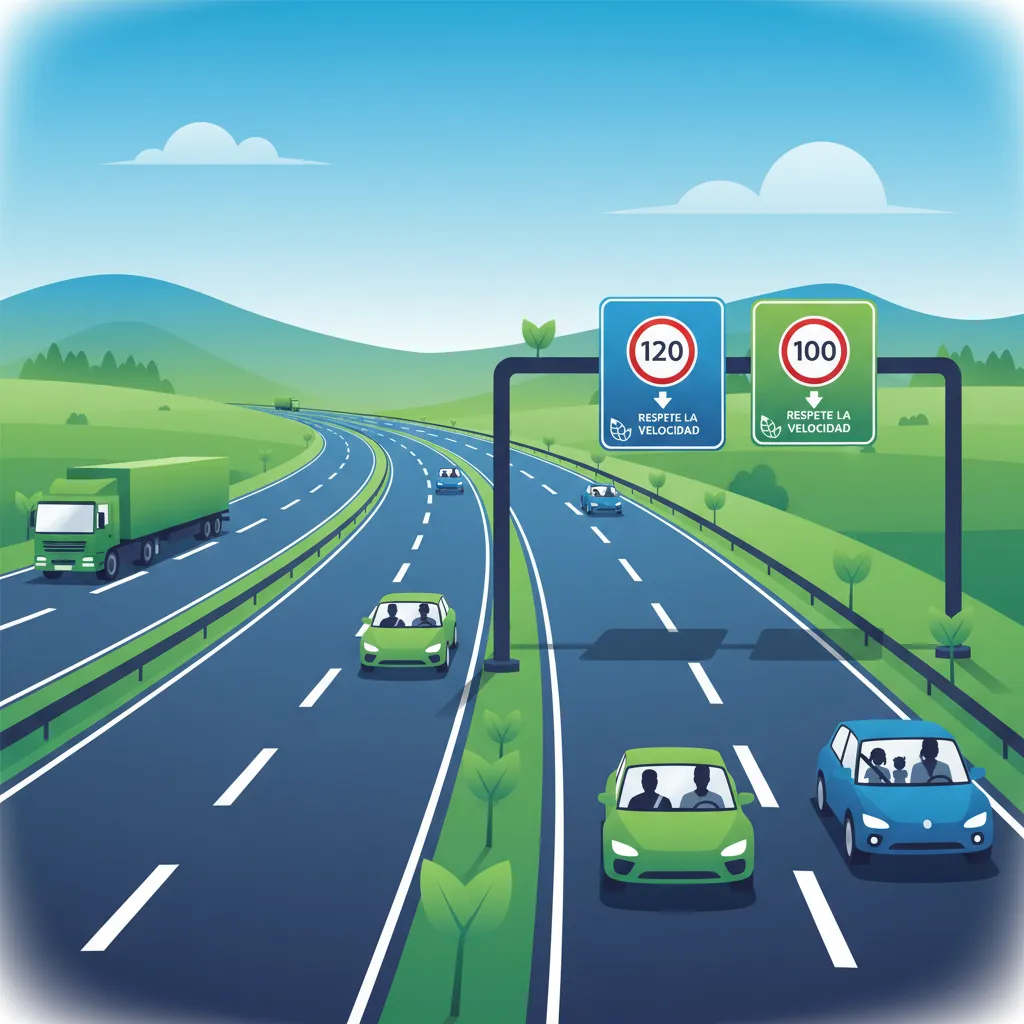
This lesson explains the classification differences between Spanish autovías and autopistas, detailing the specific speed limits and lane restrictions applicable to coaches on each. Learners will become proficient in interpreting motorway signage, adhering to minimum speed requirements, and recognizing vehicle type restrictions as enforced by the DGT. The module also covers the correct procedures for using entry and exit ramps to ensure safe and fluid traffic flow.
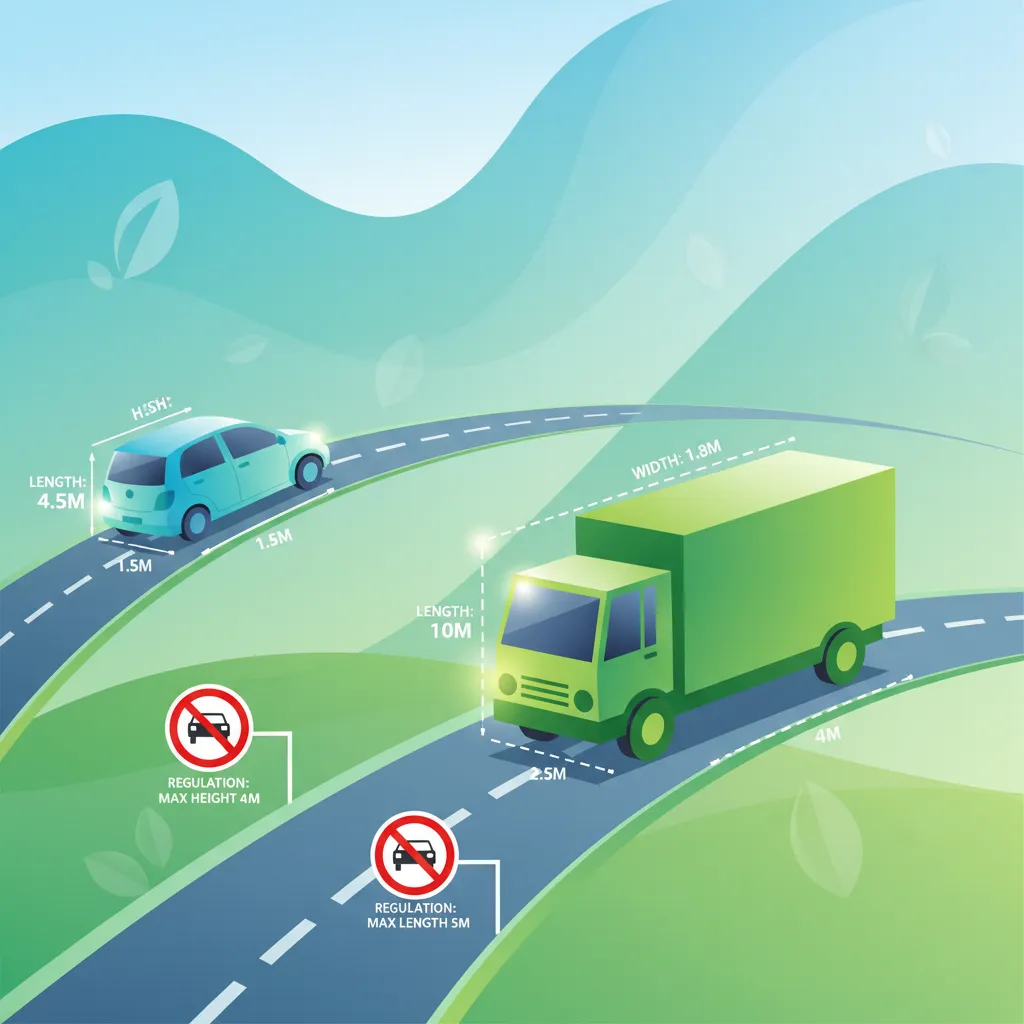
This lesson provides a detailed breakdown of the maximum permissible length, width, and height for heavy vehicles according to Spanish and EU regulations. It explains how these dimensions are measured and how they affect vehicle classification and route planning. The content emphasizes the critical importance of respecting clearance signs for bridges, tunnels, and other overhead structures to prevent accidents.

This lesson focuses on the principles of safe lane selection and overtaking on multi-lane roads and highways. It covers the importance of maintaining proper lane discipline and the legal protocols for executing a safe pass, including checking blind spots and ensuring sufficient speed differential. The content also stresses the need for clear signaling and judging adequate space before returning to the original lane.
Delve into the physics behind truck stopping distances, including kinetic energy, load distribution, and air brake system performance. Essential theory for calculating safe gaps and understanding braking limitations for professional Spanish truck drivers.

This lesson explores the direct relationship between a vehicle's load and its braking and acceleration performance. It explains how increased mass significantly increases the vehicle's inertia, resulting in longer stopping distances and slower acceleration. Understanding these physical principles helps drivers adjust their driving style, such as increasing following distances, to compensate for the effects of a heavy load.

This lesson explains the concept of turning radius and how it is influenced by a truck's wheelbase and overall length. It introduces the principle of off-tracking, where the rear wheels follow a tighter path than the front wheels during a turn. Understanding these dynamics is essential for drivers to accurately judge the space needed to navigate corners and turns without incident.

This lesson focuses on the core principles of defensive driving as they apply to operating a large truck. It explains the importance of managing the space around the vehicle to create a safety buffer and always having an 'escape route' in mind. The content emphasizes anticipating the actions of other road users and being prepared to react calmly and safely to unexpected situations.

This lesson addresses the practical aspects of maneuvering a large vehicle in various environments. It explains concepts like turning radius, off-tracking, and the vehicle's total footprint, which determine the space needed for turns and other maneuvers. Learners will develop the spatial awareness required to navigate tight corners, loading bays, and urban streets while maintaining safe clearance from obstacles.

This lesson provides theoretical guidance on the techniques for safely reversing a heavy vehicle, a high-risk maneuver. It emphasizes the correct use of mirrors, managing extensive blind spots, and the importance of using a spotter when available. The content also breaks down the geometric principles of parallel parking and backing into loading docks, focusing on vehicle positioning and spatial awareness.

This lesson introduces fundamental road safety principles applicable to all drivers, with a special emphasis on heavy vehicles. It covers defensive driving techniques, including the importance of anticipating potential hazards and managing speed appropriately for conditions. Learners will also study how to establish and maintain safe following distances and understand the hierarchy of road users to ensure safe interactions.

This lesson focuses on the critical skill of safely interacting with vulnerable road users, such as pedestrians and cyclists, in an urban setting. It highlights the extensive blind spots around a truck and teaches drivers to be extra vigilant, especially at intersections and crosswalks. The content covers the legal requirements for yielding and the importance of making eye contact to confirm intentions.

This lesson covers the importance of proper air brake maintenance for ensuring optimal stopping power and safety. It explains the process of checking and adjusting slack adjusters to compensate for brake lining wear. Learners will understand how to perform routine pre-trip inspections, including checking for air leaks and ensuring the system is balanced for even braking performance.
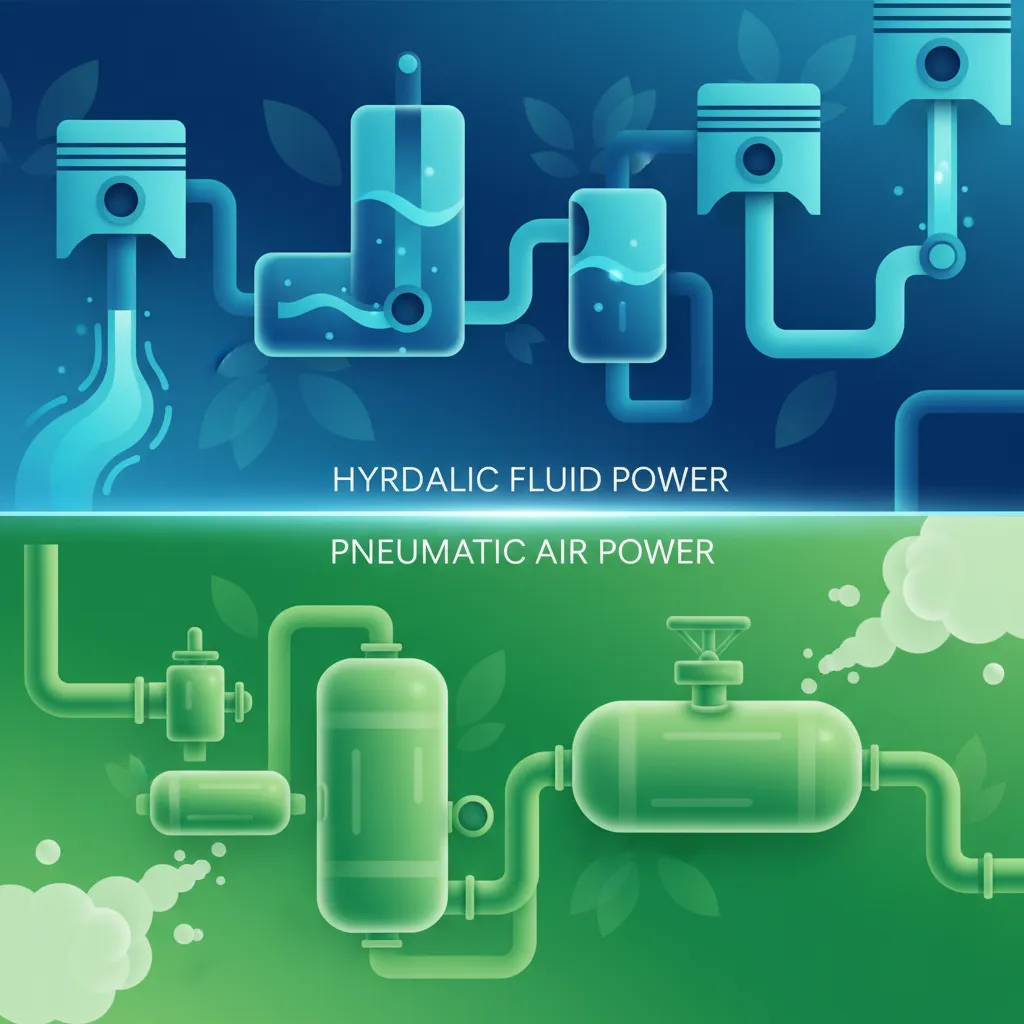
This lesson provides a comparative overview of hydraulic and pneumatic (air) braking systems. It explains the fundamental differences in how each system generates and transmits force, one using liquid and the other using compressed air. The content highlights why pneumatic systems are standard for heavy trucks due to their power and reliability over long vehicle combinations.

This lesson examines the complex braking systems found in heavy passenger vehicles, with a focus on air brakes and anti-lock braking systems (ABS). It covers how these systems impact stopping distance, brake fade, and overall safety under different load and weather conditions. Learners will also study the required maintenance schedules and safety checks to ensure the braking components remain in optimal working order.
Find clear answers to common questions learners have about Speed Limits, Following Distances, and Flow Management. Learn how the lesson is structured, which driving theory objectives it supports, and how it fits into the overall learning path of units and curriculum progression in Spain. These explanations help you understand key concepts, lesson flow, and exam focused study goals.
In Spain, a common guideline for safe following distance for trucks is the 'two-second rule' in good conditions, which means you should maintain enough space so that at least two seconds pass between your vehicle and the one in front. This should be increased to three or four seconds in adverse weather (rain, fog) or poor road conditions, and significantly more if carrying a heavy load, due to extended braking distances.
Yes, trucks generally have lower speed limits than passenger cars on Spanish roads. On conventional roads, limits can be 10-20 km/h lower, and on motorways (autovías and autopistas), trucks typically have a limit of 90 km/h, compared to 120 km/h for cars. Always check signage for specific restrictions.
Effective traffic flow management, by adapting speed and maintaining proper distances, is crucial for trucks to ensure safety, especially in dense traffic. It prevents sudden braking, reduces the risk of chain collisions, helps maintain smooth movement on highways, and contributes significantly to fuel economy by avoiding unnecessary acceleration and deceleration cycles.
Absolutely. A heavier load significantly increases a truck's braking distance. Therefore, the safe following distance must be increased accordingly when carrying a full load compared to an empty or lightly loaded truck, especially when approaching descents or junctions.
DGT exam questions often test your knowledge of specific speed limits for trucks on motorways (autovías/autopistas), dual carriageways, and single-lane roads. You'll need to recall the general limits for Category C/C1 vehicles and be aware of potential variations indicated by road signs. The key is to know the base limits and how to interpret signs.
Use our powerful search functionality to pinpoint specific Spanish DGT driving theory practice sets. Filter by road sign categories, traffic law topics, or question difficulty to build custom study sessions and reinforce your knowledge precisely where it matters for your official exam.